
“Forget about intelligence.” That was Secretary of State Marco Rubio‘s response to a CBS News reporter on national television when she asked if the Trump administration’s attack on Iran was motivated by new and compelling intelligence that that country had moved closer to obtaining a nuclear weapon.
You don’t get bon mots like that every day.
It’s not a Freudian slip because that’s when one says the truth accidentally. This was more like an unintentionally telling double entendre, which economically encompassed both the stupidity of the attack and the deceitfulness of it.
The fact is, the Trump administration had no such intelligence. It didn’t attack Iran because of any change in the strategic situation, let alone actionable intel that Tehran had moved closer to getting the Bomb. It did so because Donald felt like it, because he wanted to look “tough,” because he’d been itching to do so since his first term, because he wanted to do something previous presidents had been too prudent to do, because Netanyahu had manipulated him into it, and because he thought Bibi’s airstrikes on Iran were “playing well” in the American press (it’s always about ratings with Donny) and he wanted to get in on that. Yes, he may have also believed that the strikes would “obliterate” the Iranian nuclear program, as he immediately and falsely claimed afterward, but that was a secondary or tertiary motive at best.
Of course, when it comes to attacking Middle Eastern nations on the deceitful grounds that those nations are about to acquire weapons of mass destruction, particularly nations that begin with the letters “Ira,” the GOP has a long and ugly track record. Trump himself has repeatedly ridiculed his own party for its lies over Saddam’s alleged WMD when it suited his purposes, even though he himself eagerly brought into those lies when it mattered. (That shameless reversal should’ve been our first clue way back when, at the 2016 Republican presidential debate, and the very beginning of Trump’s political career, that we were about to enter a whole new gaslit world of “alternative facts” and the brazen denying of objective reality. We’ve always been at war with Eurasia indeed.)
But it’s worth digging into Rubio’s comment a little deeper. He said it on the June 22 broadcast of CBS’s “Face the Nation” to host Margaret Brennan, who had been pressing him about his use of the deceptive term “weaponization ambitions,” which can cover a helluva lot of ground. (Belize may have “weaponization ambitions” too, and so may New Zealand, and Liechtenstein, and Chad for that matter. Are we gonna bomb them next?) Here’s the literal exchange, which begins with a question about Iran’s head of state, the Ayatollah Khameini:
Brennan: Are you saying the US did not see intelligence that the Supreme Leader had ordered weaponization?
Rubio: That’s irrelevant.
Host: No, that’s a key point.
Rubio: No it’s not. Forget about intelligence. What the [International Atomic Energy Agency] knows is they are enriching uranium well beyond anything you need for a civil nuclear program. So why would you enrich uranium at 60% if you don’t intend to one day use it to take it to 90% and build a weapon? Why are you developing [intercontinental ballistic missiles]?”
So atop his broader dismissal of the traditional need for proof before going to war (how quaint!), Lil Marco’s justification for bombing Iran was simply that it was enriching uranium to weapons grade. In other words, he was not saying the US had new intel that Iran had moved dangerously closer to obtaining a nuclear weapon, or even taken any kind of major step in the direction. He was not even saying that the White House had such intel but could not share it with the public because it was too classified (which would have been risible in its own right—though a classic—especially coming from a president who stole classified nuclear secrets and kept them in his bathroom). All he was saying was that the current administration believes Iran has an active nuclear weapons program.
But that has been the case for years. And PS, that program was meaningfully suppressed by the 2008 JCPOA agreement—the so-called Iran deal—until Trump peevishly withdrew us from it. So why bomb them now? See above re Donald’s whims.
THE FIRST CASUALTY OF WAR
Rubio’s comment betrays the administration’s sheer dishonesty in launching these strikes. But as I wrote last week, its absurd claims about the attack’s alleged effectiveness were suspect from the start, and as I predicted, are already proving to be an absolute joke.
It was only a few days after the strikes, and Trump’s boast that he had “obliterated” Iran’s nuclear weapons program, that the Defense Intelligence Agency assessed that the damage set the Iranian program back mere months, not even years, let alone totally destroyed it. Trump, of course, insisted his own intel analysts was wrong and was livid that the classified report was somehow made public. Speaking at the Hague (of all places), Trump went apeshit. “CNN is scum. MSDNC is scum. The New York Times is scum. They’re bad people. They’re sick. And what they’ve done is they’ve tried to make this unbelievable victory into something less.” So the White House insists that the DIA report is untrue, but it’s also furious that it got out at all? Which is it? Hegseth subsequently announced, “We are declaring a war on leakers.” (Because one war, with Iran, isn’t enough.) This from the guy who conducted war planning on Signal and accidentally looped in an Atlantic reporter to boot.
Trump and his minions like Pete kept braying that the strikes on Iran were a military triumph on the order of Hiroshima (I’m not kidding), just in case you weren’t already clear on their shaky grasp of military affairs. Yet daily the evidence continues to mount that they were anything but. It turns out that Hegseth’s “proof” that the strikes totally destroyed Iran’s nuclear program were his own pre-strike AI models of what the administration hoped would happen, as opposed to real life battle damage assessment of what really did happen. No doubt the US Intelligence Community is currently under intense pressure to reverse its assessments so that they align more perfectly with the administration’s agenda. (See Tulsi Gabbard’s recent 180.) Like the Big Lie, fealty to the “total obliteration” of Iran’s nuclear program is now a pass/fail loyalty test for everyone in Trump World. But childishly insisting that reality is what you want, rather than what it really is, is a difficult way to conduct a coherent or successful foreign policy.
Intelligence is meant to be an ideologically neutral discipline: like (ahem) science, an endeavor carried out on a level playing field where only facts and facts alone—not opinions, not goals, not biases or objectives or agenda—matter. It should go without saying that politicizing intelligence turns the process on its head. When the decision-makers pressure their intelligence professionals to tell them only what they want to hear—or dictate it to them outright—the process becomes a mere kabuki drama in which the answer is pre-determined and the formality of presenting evidence is nothing but stagecraft. The 2003 Iraq war is the best example one could ask for, but the Bush White House was far from alone in that distortion of the intelligence process. In fact, it is the norm in autocratic or otherwise corrupt regimes….a group in which the contemporary United States can now firmly count itself.
BATTLE DAMAGE ASSESSMENT
But even if “Operation Midnight Hammer” had been far more successful than it really was—on the order of Israel’s 1981 airstrike on the French-built Osirak nuclear reactor in Iraq, for instance—it could not possibly have accomplished what the hawks would dearly like us to believe. (Fwiw, I spent a number of years working on a film project about the Iraqi uranium enrichment program, including extensive interviews with its former head, Dr. Mahdi Obeidi. I recommend Dr. Obeidi’s 2004 memoir The Bomb in My Garden, co-written with the American journalist and war correspondent Kurt Pitzer. I highly recommend it as a primer on how a robust and successful uranium enrichment campaign can go on for years, in secret, and is far better policed by inspections than by military attack.)
I also won’t belabor my longstanding argument that it’s impossible to bomb an aspiring nuclear power into giving up its ambitions. But I will say that the failure of Midnight Hammer (also what Hegseth calls his house parties) bolsters my point, in spades. Credible intel suggests that the Iranians moved their HEU and centrifuges out of Fordow in advance of the US attacks—which makes sense, knowing what Trump was contemplating—so that the US strikes had little to no impact. In retrospect, it would be hard to believe that they would not have done so. There is also intel suggesting that while the strikes may have collapsed the entrances to the Iranian facilities, they did not destroy the heavily hardened underground labs themselves. The damage that was done may have been serious, but it only represented a temporary setback for a regime that has shown great patience and determination in pursuing the Bomb.
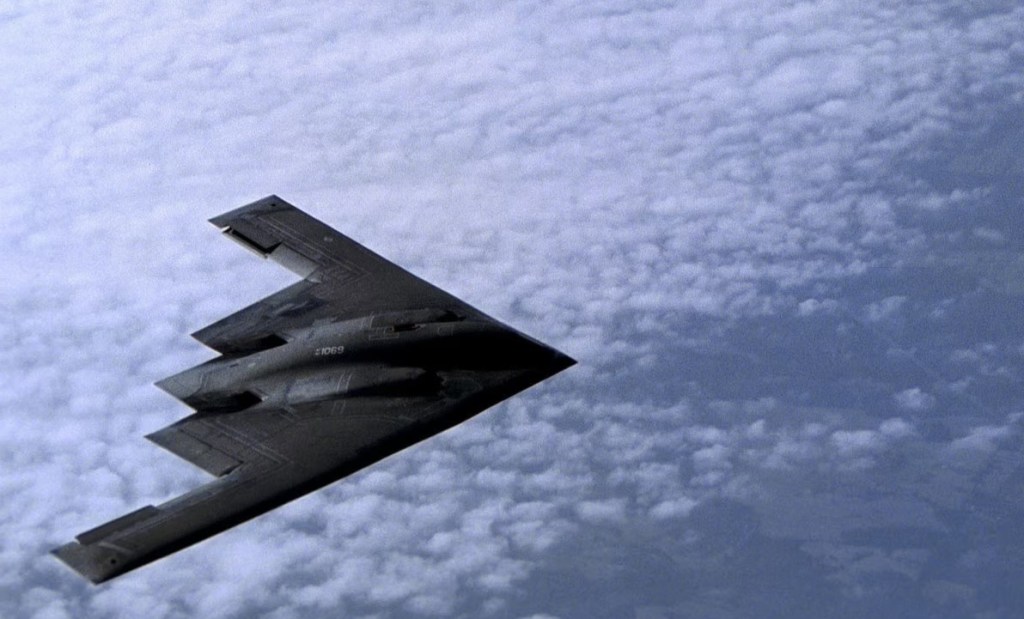
According to the best estimates, the US inventory of GBU-57 Massive Ordnance Penetrators was about twenty as of mid June. So Trump used 14 of them to set Iran’s nuclear program back by only a matter of months, while risking massive and unforeseeable consequences. A real life uniformed military commander who made such a reckless and foolhardy decision would be immediately relieved.
Yet the number of respectable anti-Trump pundits—like David Frum and David Ignatius—who were willing to praise the alleged boldness of the strikes, and to suggest (even with extensive qualifications) that they were the right call, was astounding. Likewise the even larger number of observers who took for granted that the strikes severely damaged Iran’s nuclear capabilities, setting its program back years, if not completely destroying it. The usually sober and reliable Ignatius in particular has been vocal in his support of the intel Trump allegedly had, despite Marco’s comment. That really gives Bush-era WMD, as the kids would say.
Incredibly, even the revelation of the failure of the strikes did not automatically dent these cheerleaders’ enthusiasm, nor cause them to re-think the wisdom of the decision, or lack thereof. In The Atlantic, Missy Ryan and Ashley Parker wrote:
It’s not clear, however, that one attack will be enough. Assessments of the operation’s impact on Iran’s nuclear capability are divided, and Tehran is already vowing to push ahead, suggesting that additional US action may be required if a diplomatic solution isn’t reached.
That’s a funny way of putting it. Another would be: “Bombing didn’t work, so let’s keep bombing.”
We can leave aside, for now—as I’ve harped on repeatedly—the screaming hypocrisy of the arrogant American belief that we get to decide who’s allowed to have the Bomb, or even the more generous claim that the US and the other members of the nuclear club are altruistically acting in the interest of the whole world in trying to stem nuclear proliferation. Self-interest is one thing, but moralizing is another.
In fact, far from bringing Iran to the negotiating table as the Trump administration claims, Heather Cox Richardson notes that the strikes might have had exactly the opposite effect, convincing Iran “to abandon negotiations and commit to building a nuclear weapon.” (Here yet again I feel compelled to point out that the Obama administration had ALREADY achieved a diplomatic agreement with Iran to do that, one that appeared to be working perfectly well, before a certain 72 year-old toddler impetuously destroyed it in 2018.)
HCR quotes Enrique Mora, formerly a top European Union nuclear negotiator with Iran (via Laura Rozen of Diplomatic):
This unprecedented strike has shown, for the second time, the Islamic regime that nuclear diplomacy is reversible, fragile and vulnerable to changes in leadership in Washington. There will not be a third time. If Iran now decides to move towards a bomb, it will do so following a clear strategic logic. No one bombs the capital of a nuclear-armed country. June 21, 2025 may go down in history not as the day the Iranian nuclear program was destroyed, but as the day a nuclear Iran was irreversibly born.
WHILE YOU WERE SLEEPING
And what else has Team Trump been up to while all this deadly tomfoolery with Iran has been going on?
Well, Donald‘s announcement of a cease-fire between Iran and Israel approved to be about as accurate as his announcement that Iran’s nuclear facilities had been completely obliterated. (How many ceasefires are in a Scaramucci anyway?) The Great Statesman, who is so thirsty for a Nobel Peace Prize that he’s redefined the industry standard for the word (but hey, Kissinger has one, so who knows?), was reduced to pathetically pleading in ALL CAPS on “Truth Social” for Tel Aviv and Tehran to stop bombing each other.
On the domestic front, the administration announced plans for what can only be called a concentration camp—Alligator Alcatraz—outdoors in the Everglades. (Trump is set to visit for the grand opening.) It’s been pushing through a vast reimagining of the federal budget and tax policy that would shift even more wealth to the richest Americans on the backs of increased tax burden for everyone else, while adding some $3.4 trillion to the deficit that they once claimed to be so worried about (and lie about it in the process), and also take health care away from roughly 11 million Americans. It’s quadrupling ICE’s detention budget and increasing its overall budget for internal immigration to $80 billion, giving it more money than the entire federal Bureau of Prisons, and creating what one observer called “a domestic army for ethnic cleansing.” It’s directly commissioning four senior tech executives from Meta, OpenAI and Palantir as lieutenant colonels in the US Army despite their collective military experience of zero minutes, and without even the usual cursory weeks of pre-commissioning training. It’s loosening gun laws and gutting the protocols for childhood vaccines. (RFK Jr. announced the move in an official memo titled “HHS Moves to Restore Public Trust in Vaccines.”) Speaking of ICE, the administration is also continuing to use police state tactics to abduct people it doesn’t like—because of their skin color, or their country of origin, or their political views—and send them to foreign prisons without recourse, which the US Supreme Court has said is OK, part of that Court’s servile obedience to the White House and endorsement of the vast expansion of executive power. Prominent in that cause: the right wing supermajority on that Supreme Court has given Trump an enormous advantage in fending off judicial restraint, and ancillary to that decision, opening the door for him to end birthright citizenship, which until now has been constitutionally protected under the 14th Amendment.
And then there is Zohran Mamdani, whose surprise win in the NYC Democratic mayoral primary has scared the right wing more than anything since the arrival of Barack Hussein Obama on the national stage in 2004. As Mamdani is the presumptive favorite in November’s general election, right wingers are already calling for him to be deported—their new go-to move for everything—on whatever spurious grounds they can find. (I notice there is no such impetus to deport Kash Patel, who is of similar Indo-Ugandan heritage.) The real reason, of course, is that he scares the living shit out of them.
Trump, in full Joe McCarthy mode, accused Zohran of being a communist and threatened to pull federal funding for New York City if he “doesn’t behave” as mayor, once again showing how Donald views the world, which is that certain people (especially Brown and Black ones) need to stay in their place. He’s not alone, of course. As a Ugandan-born naturalized citizen with dual citizenship, a “funny” name, an ambitiously progressive platform, and a Muslim to boot, Zohran is tailor-made to incite apoplexy among the likes of Trump, Bannon, Miller, et al. Indeed, they are already fundraising off that fear and loathing, although some of their tactics, like listing the things he intends to do for New York—a freeze on rent increases, free childcare, building affordable housing, a 2% annual wealth tax on people with over a million dollars in assets—unintentionally double as campaign ads for him. The scariest thing of all for the right is that he’s wildly popular (for now), igniting a passion among left-of-center voters that has not been seen in a long time.
It’s no wonder they want a war to distract us from all that.
THANKS DON
The long term repercussions of the June 2025 attack on Iran will take months or years to play out—decades perhaps—and will likely include terrorist attacks on American soil and/or American citizens, perhaps devastating ones. The broader impact on the contours of Middle Eastern geopolitics and nuclear proliferation are harder to predict. Echoing Enrique Mora, Karim Sadjadpour, a scholar at the Carnegie Endowment for International Peace and former analyst with the International Crisis Group in Tehran, recently told David Remnick of The New Yorker: “Will we look back and say this prevented an Iranian bomb or insured one? Similarly, have we hastened the demise of the regime, or have we entrenched it? The modern history of the Middle East does not give favorable answers to these questions.” Sadjadpour’s questions are really rhetorical, and his closing tips his pessimism. Sadly, I am confident in predicting that one of the chief outcomes of last week’s events will be that the Islamic Republic of Iran obtains a nuclear weapon, joining that elite but growing club. And we will have Donald Trump to blame for it.
*******
Photo: From the Deep State archives, Agent 86 and the Chief in the Cone of Silence at CONTROL headquarters, circa 1967.
 thekingsnecktie.com