“Forget About Intelligence”

“Forget about intelligence.” That was Secretary of State Marco Rubio‘s response to a CBS News reporter on national television when she asked if the Trump administration’s attack on Iran was motivated by new and compelling intelligence that that country had moved closer to obtaining a nuclear weapon.

You don’t get bon mots like that every day.

It’s not a Freudian slip because that’s when one says the truth accidentally. This was more like an unintentionally telling double entendre, which economically encompassed both the stupidity of the attack and the deceitfulness of it.

The fact is, the Trump administration had no such intelligence. It didn’t attack Iran because of any change in the strategic situation, let alone actionable intel that Tehran had moved closer to getting the Bomb. It did so because Donald felt like it, because he wanted to look “tough,” because he’d been itching to do so since his first term, because he wanted to do something previous presidents had been too prudent to do, because Netanyahu had manipulated him into it, and because he thought Bibi’s airstrikes on Iran were “playing well” in the American press (it’s always about ratings with Donny) and he wanted to get in on that. Yes, he may have also believed that the strikes would “obliterate” the Iranian nuclear program, as he immediately and falsely claimed afterward, but that was a secondary or tertiary motive at best.

Of course, when it comes to attacking Middle Eastern nations on the deceitful grounds that those nations are about to acquire weapons of mass destruction, particularly nations that begin with the letters “Ira,” the GOP has a long and ugly track record. Trump himself has repeatedly ridiculed his own party for its lies over Saddam’s alleged WMD when it suited his purposes, even though he himself eagerly brought into those lies when it mattered. (That shameless reversal should’ve been our first clue way back when, at the 2016 Republican presidential debate, and the very beginning of Trump’s political career, that we were about to enter a whole new gaslit world of “alternative facts” and the brazen denying of objective reality. We’ve always been at war with Eurasia indeed.)

But it’s worth digging into Rubio’s comment a little deeper. He said it on the June 22 broadcast of CBS’s “Face the Nation” to host Margaret Brennan, who had been pressing him about his use of the deceptive term “weaponization ambitions,” which can cover a helluva lot of ground. (Belize may have “weaponization ambitions” too, and so may New Zealand, and Liechtenstein, and Chad for that matter. Are we gonna bomb them next?) Here’s the literal exchange, which begins with a question about Iran’s head of state, the Ayatollah Khameini:

Brennan: Are you saying the US did not see intelligence that the Supreme Leader had ordered weaponization?

Rubio: That’s irrelevant.

Host: No, that’s a key point.

Rubio: No it’s not. Forget about intelligence. What the [International Atomic Energy Agency] knows is they are enriching uranium well beyond anything you need for a civil nuclear program. So why would you enrich uranium at 60% if you don’t intend to one day use it to take it to 90% and build a weapon? Why are you developing [intercontinental ballistic missiles]?”

So atop his broader dismissal of the traditional need for proof before going to war (how quaint!), Lil Marco’s justification for bombing Iran was simply that it was enriching uranium to weapons grade. In other words, he was not saying the US had new intel that Iran had moved dangerously closer to obtaining a nuclear weapon, or even taken any kind of major step in the direction. He was not even saying that the White House had such intel but could not share it with the public because it was too classified (which would have been risible in its own right—though a classic—especially coming from a president who stole classified nuclear secrets and kept them in his bathroom). All he was saying was that the current administration believes Iran has an active nuclear weapons program.

But that has been the case for years. And PS, that program was meaningfully suppressed by the 2008 JCPOA agreement—the so-called Iran deal—until Trump peevishly withdrew us from it. So why bomb them now? See above re Donald’s whims.

THE FIRST CASUALTY OF WAR

Rubio’s comment betrays the administration’s sheer dishonesty in launching these strikes. But as I wrote last week, its absurd claims about the attack’s alleged effectiveness were suspect from the start, and as I predicted, are already proving to be an absolute joke.

It was only a few days after the strikes, and Trump’s boast that he had “obliterated” Iran’s nuclear weapons program, that the Defense Intelligence Agency assessed that the damage set the Iranian program back mere months, not even years, let alone totally destroyed it. Trump, of course, insisted his own intel analysts was wrong and was livid that the classified report was somehow made public. Speaking at the Hague (of all places), Trump went apeshit. “CNN is scum. MSDNC is scum. The New York Times is scum. They’re bad people. They’re sick. And what they’ve done is they’ve tried to make this unbelievable victory into something less.” So the White House insists that the DIA report is untrue, but it’s also furious that it got out at all? Which is it? Hegseth subsequently announced, “We are declaring a war on leakers.” (Because one war, with Iran, isn’t enough.) This from the guy who conducted war planning on Signal and accidentally looped in an Atlantic reporter to boot.

Trump and his minions like Pete kept braying that the strikes on Iran were a military triumph on the order of Hiroshima (I’m not kidding), just in case you weren’t already clear on their shaky grasp of military affairs. Yet daily the evidence continues to mount that they were anything but. It turns out that Hegseth’s “proof” that the strikes totally destroyed Iran’s nuclear program were his own pre-strike AI models of what the administration hoped would happen, as opposed to real life battle damage assessment of what really did happen. No doubt the US Intelligence Community is currently under intense pressure to reverse its assessments so that they align more perfectly with the administration’s agenda. (See Tulsi Gabbard’s recent 180.) Like the Big Lie, fealty to the “total obliteration” of Iran’s nuclear program is now a pass/fail loyalty test for everyone in Trump World. But childishly insisting that reality is what you want, rather than what it really is, is a difficult way to conduct a coherent or successful foreign policy.

Intelligence is meant to be an ideologically neutral discipline: like (ahem) science, an endeavor carried out on a level playing field where only facts and facts alone—not opinions, not goals, not biases or objectives or agenda—matter. It should go without saying that politicizing intelligence turns the process on its head. When the decision-makers pressure their intelligence professionals to tell them only what they want to hear—or dictate it to them outright—the process becomes a mere kabuki drama in which the answer is pre-determined and the formality of presenting evidence is nothing but stagecraft. The 2003 Iraq war is the best example one could ask for, but the Bush White House was far from alone in that distortion of the intelligence process. In fact, it is the norm in autocratic or otherwise corrupt regimes….a group in which the contemporary United States can now firmly count itself.

BATTLE DAMAGE ASSESSMENT

But even if “Operation Midnight Hammer” had been far more successful than it really was—on the order of Israel’s 1981 airstrike on the French-built Osirak nuclear reactor in Iraq, for instance—it could not possibly have accomplished what the hawks would dearly like us to believe. (Fwiw, I spent a number of years working on a film project about the Iraqi uranium enrichment program, including extensive interviews with its former head, Dr. Mahdi Obeidi. I recommend Dr. Obeidi’s 2004 memoir The Bomb in My Garden, co-written with the American journalist and war correspondent Kurt Pitzer. I highly recommend it as a primer on how a robust and successful uranium enrichment campaign can go on for years, in secret, and is far better policed by inspections than by military attack.)

I also won’t belabor my longstanding argument that it’s impossible to bomb an aspiring nuclear power into giving up its ambitions. But I will say that the failure of Midnight Hammer (also what Hegseth calls his house parties) bolsters my point, in spades. Credible intel suggests that the Iranians moved their HEU and centrifuges out of Fordow in advance of the US attacks—which makes sense, knowing what Trump was contemplating—so that the US strikes had little to no impact. In retrospect, it would be hard to believe that they would not have done so. There is also intel suggesting that while the strikes may have collapsed the entrances to the Iranian facilities, they did not destroy the heavily hardened underground labs themselves. The damage that was done may have been serious, but it only represented a temporary setback for a regime that has shown great patience and determination in pursuing the Bomb.

According to the best estimates, the US inventory of GBU-57 Massive Ordnance Penetrators was about twenty as of mid June. So Trump used 14 of them to set Iran’s nuclear program back by only a matter of months, while risking massive and unforeseeable consequences. A real life uniformed military commander who made such a reckless and foolhardy decision would be immediately relieved.

Yet the number of respectable anti-Trump pundits—like David Frum and David Ignatius—who were willing to praise the alleged boldness of the strikes, and to suggest (even with extensive qualifications) that they were the right call, was astounding. Likewise the even larger number of observers who took for granted that the strikes severely damaged Iran’s nuclear capabilities, setting its program back years, if not completely destroying it. The usually sober and reliable Ignatius in particular has been vocal in his support of the intel Trump allegedly had, despite Marco’s comment. That really gives Bush-era WMD, as the kids would say.

Incredibly, even the revelation of the failure of the strikes did not automatically dent these cheerleaders’ enthusiasm, nor cause them to re-think the wisdom of the decision, or lack thereof. In The Atlantic, Missy Ryan and Ashley Parker wrote:

It’s not clear, however, that one attack will be enough. Assessments of the operation’s impact on Iran’s nuclear capability are divided, and Tehran is already vowing to push ahead, suggesting that additional US action may be required if a diplomatic solution isn’t reached.

That’s a funny way of putting it. Another would be: “Bombing didn’t work, so let’s keep bombing.”

We can leave aside, for now—as I’ve harped on repeatedly—the screaming hypocrisy of the arrogant American belief that we get to decide who’s allowed to have the Bomb, or even the more generous claim that the US and the other members of the nuclear club are altruistically acting in the interest of the whole world in trying to stem nuclear proliferation. Self-interest is one thing, but moralizing is another.

In fact, far from bringing Iran to the negotiating table as the Trump administration claims, Heather Cox Richardson notes that the strikes might have had exactly the opposite effect, convincing Iran “to abandon negotiations and commit to building a nuclear weapon.” (Here yet again I feel compelled to point out that the Obama administration had ALREADY achieved a diplomatic agreement with Iran to do that, one that appeared to be working perfectly well, before a certain 72 year-old toddler impetuously destroyed it in 2018.)

HCR quotes Enrique Mora, formerly a top European Union nuclear negotiator with Iran (via Laura Rozen of Diplomatic):

This unprecedented strike has shown, for the second time, the Islamic regime that nuclear diplomacy is reversible, fragile and vulnerable to changes in leadership in Washington. There will not be a third time. If Iran now decides to move towards a bomb, it will do so following a clear strategic logic. No one bombs the capital of a nuclear-armed country. June 21, 2025 may go down in history not as the day the Iranian nuclear program was destroyed, but as the day a nuclear Iran was irreversibly born.

WHILE YOU WERE SLEEPING

And what else has Team Trump been up to while all this deadly tomfoolery with Iran has been going on?

Well, Donald‘s announcement of a cease-fire between Iran and Israel approved to be about as accurate as his announcement that Iran’s nuclear facilities had been completely obliterated. (How many ceasefires are in a Scaramucci anyway?) The Great Statesman, who is so thirsty for a Nobel Peace Prize that he’s redefined the industry standard for the word (but hey, Kissinger has one, so who knows?), was reduced to pathetically pleading in ALL CAPS on “Truth Social” for Tel Aviv and Tehran to stop bombing each other.

On the domestic front, the administration announced plans for what can only be called a concentration camp—Alligator Alcatraz—outdoors in the Everglades. (Trump is set to visit for the grand opening.) It’s been pushing through a vast reimagining of the federal budget and tax policy that would shift even more wealth to the richest Americans on the backs of increased tax burden for everyone else, while adding some $3.4 trillion to the deficit that they once claimed to be so worried about (and lie about it in the process), and also take health care away from roughly 11 million Americans. It’s quadrupling ICE’s detention budget and increasing its overall budget for internal immigration to $80 billion, giving it more money than the entire federal Bureau of Prisons, and creating what one observer called “a domestic army for ethnic cleansing.” It’s directly commissioning four senior tech executives from Meta, OpenAI and Palantir as lieutenant colonels in the US Army despite their collective military experience of zero minutes, and without even the usual cursory weeks of pre-commissioning training. It’s loosening gun laws and gutting the protocols for childhood vaccines. (RFK Jr. announced the move in an official memo titled “HHS Moves to Restore Public Trust in Vaccines.”) Speaking of ICE, the administration is also continuing to use police state tactics to abduct people it doesn’t like—because of their skin color, or their country of origin, or their political views—and send them to foreign prisons without recourse, which the US Supreme Court has said is OK, part of that Court’s servile obedience to the White House and endorsement of the vast expansion of executive power. Prominent in that cause: the right wing supermajority on that Supreme Court has given Trump an enormous advantage in fending off judicial restraint, and ancillary to that decision, opening the door for him to end birthright citizenship, which until now has been constitutionally protected under the 14th Amendment.

And then there is Zohran Mamdani, whose surprise win in the NYC Democratic mayoral primary has scared the right wing more than anything since the arrival of Barack Hussein Obama on the national stage in 2004. As Mamdani is the presumptive favorite in November’s general election, right wingers are already calling for him to be deported—their new go-to move for everything—on whatever spurious grounds they can find. (I notice there is no such impetus to deport Kash Patel, who is of similar Indo-Ugandan heritage.) The real reason, of course, is that he scares the living shit out of them.

Trump, in full Joe McCarthy mode, accused Zohran of being a communist and threatened to pull federal funding for New York City if he “doesn’t behave” as mayor, once again showing how Donald views the world, which is that certain people (especially Brown and Black ones) need to stay in their place. He’s not alone, of course. As a Ugandan-born naturalized citizen with dual citizenship, a “funny” name, an ambitiously progressive platform, and a Muslim to boot, Zohran is tailor-made to incite apoplexy among the likes of Trump, Bannon, Miller, et al. Indeed, they are already fundraising off that fear and loathing, although some of their tactics, like listing the things he intends to do for New York—a freeze on rent increases, free childcare, building affordable housing, a 2% annual wealth tax on people with over a million dollars in assetsunintentionally double as campaign ads for him. The scariest thing of all for the right is that he’s wildly popular (for now), igniting a passion among left-of-center voters that has not been seen in a long time.

It’s no wonder they want a war to distract us from all that.

THANKS DON

The long term repercussions of the June 2025 attack on Iran will take months or years to play out—decades perhaps—and will likely include terrorist attacks on American soil and/or American citizens, perhaps devastating ones. The broader impact on the contours of Middle Eastern geopolitics and nuclear proliferation are harder to predict. Echoing Enrique Mora, Karim Sadjadpour, a scholar at the Carnegie Endowment for International Peace and former analyst with the International Crisis Group in Tehran, recently told David Remnick of The New Yorker: “Will we look back and say this prevented an Iranian bomb or insured one? Similarly, have we hastened the demise of the regime, or have we entrenched it? The modern history of the Middle East does not give favorable answers to these questions.” Sadjadpour’s questions are really rhetorical, and his closing tips his pessimism. Sadly, I am confident in predicting that one of the chief outcomes of last week’s events will be that the Islamic Republic of Iran obtains a nuclear weapon, joining that elite but growing club. And we will have Donald Trump to blame for it.

*******

Photo: From the Deep State archives, Agent 86 and the Chief in the Cone of Silence at CONTROL headquarters, circa 1967.
Brief Notes on War with Iran

So, no Nobel Peace Prize, I’m guessing?

It took Donald Trump only four months in office to use the US military against domestic protesters, and only five months to start a war with Iran. Are there any other things we were assured he would never do that we can expect to see? (Yes, in fact, and trying to stay in office for a third term is at the top of the list.)

But it’s foolish to complain that Trump lied—about this war or anything else—or that he’s a hypocrite, or that he’s an ignoramus who is wildly unfit for office and inflicting untold damage on the whole world. Let’s just concern ourselves with the limited parameters of this particular crisis. Which are bad enough.

NUCLEAR FAIRYTALES REDUX REDUX

Remember George W. Bush’s MISSION ACCOMPLISHED banner just six weeks into the Iraq war? Trump put that in “hold-my-beer” terrain when he announced the US attack on Iran, saying: “Tonight, I can report to the world that the strikes were a spectacular military success. Iran’s key nuclear enrichment facilities have been completely and totally obliterated.”

These predictable claims—echoed by Hegseth, Vance, and others—should be taken with an ocean of salt. Did you expect these cretins to say anything less? The truth, following the general rule for any statement by this administration, is likely exactly the opposite. (For its part, Iran claims the damage was inconsequential, though of course, one cannot trust the mullahs either.) In any case, no one in the West really knows, because it will take days at least to do any kind of proper battle damage assessment, and even then the long term consequences will be unknown until they play out over months and years. So only time will tell.

The fantasy that complex political objectives can be achieved by airpower alone is as old as Billy Mitchell, reaching its apotheosis with retired USAF General Curtis LeMay’s 1965 recommendation that we settle matters in Southeast Asia by bombing the Vietnamese “back into the Stone Age.” We tried, and still lost the war. It did not work with Hanoi and it will not work with Tehran. The rest of the story is just the bloody details that will describe the shape of our failure and foolishness. In that regard, the US strike was the opposite of the Ukrainian drone strike against Russia of last month. Where that was a brilliantly innovative asymmetrical solution by a beleaguered underdog, this was the richest kid on the block using the biggest, bluntest, most expensive high tech weaponry, and with questionable effectiveness.

Even allowing for their questionable efficacy, were the strikes justifiable because Tehran was on the verge of obtaining a nuclear weapon? Almost certainly not. As I wrote last week, we in the general public aren’t privy to the classified info necessary to make that judgment, though as recently as March the US Intelligence Community assessed exactly the opposite. Even Tulsi Gabbard said so, to Congress…..until just days ago when Donald told her to reverse herself. It’s similarly absurd to ask us to take the word of Netanyahu, as he’s been making that claim about Iran regularly for 30 years. (Bibi played Trump like a fiddle, in my view.)

It’s even more absurd to be asked to take it on Trump’s say-so. Contrary to what he now claims, Trump supported the 2003 US invasion of Iraq, then turned around and ran a presidential campaign shamelessly insisting he did not, and repeatedly ridiculed the US Intelligence Community for spouting politicized intel that Saddam had weapons of mass destruction. Now that same con man wants us to take his word that Tehran was two weeks away from getting the Bomb and therefore he had to attack it. That would be risible even if Trump were not a proven pathological liar on a world-beating level. Trump and Netanyahu both had personal, domestic reasons for wanting to attack Iran. (And lest we forget, as we have previously discussed, there are Trump’s repeated predictions that Obama would bomb Iran to deflect attention from problems at home. With Donald, every accusation is a confession, isn’t it?)

But all that is actually beside the point. Even as we all agree that nuclear proliferation is, uh, bad, and that having the Bomb in the hands of the medieval theocrats of Tehran would be especially unwelcome, the sheer hypocrisy of the members of the Nuclear Club insisting that they alone have a God-given right to such a weapon speaks for itself.

So here’s my surmise at this early stage: Iran’s nuclear enrichment facilities may have been degraded by yesterday’s strikes, but they have almost certainly not been permanently obliterated, and the reason for the attack is spurious at best. Most likely, the strikes dealt short-term damage to Iran’s nuclear program, setting it back a few months or years. But in the long term, they may well have contributed to the near-certainty that Iran will now pursue the Bomb even more aggressively, and will eventually get it. And there is a simple reason for that.

I have already argued at length in these pages, and over many years, that any industrialized nation that is sufficiently determined to obtain a nuclear weapon cannot permanently be prevented from doing so by military force alone, only through painstaking diplomacy. That was the conclusion that Robert Oppenheimer came to as early as 1945, and unsuccessfully failed to convey to the national security state, and for which he was crucified. But it remains true today no matter how much the hawks insist it does not. That thinking has never found purchase even in the relatively sane (if interventionist) circles of previous Republican administrations, so it’s unsurprising that it couldn’t penetrate the cocoon of idiocy that envelops Trump World, not even if it were itself taped to the nose of a GBU-57 bunkerbuster. But having seen how a lack of nuclear capability opens it up to attack—e.g., Saddam Hussein and Iraq—while actually possession of that capability protects a country from that scenario—e.g., Kim Jong-un and North Korea—Tehran will now look to step up its efforts to obtain the Bomb, and may well succeed within a decade. You’ll know, because within a few years, Trump or one of his successors will tell us we have to bomb Iran again, even though they told us they got the job done last time around.

Similarly, the US attack may hasten the fall of the current regime in Tehran, which is another thing Trump’s cheerleaders are promising…..or it may shore up that regime by causing the Iranian people to rally around the hardliners at a time when their nation is being attacked by the Great Satan. (The latter, it must be noted, is the usual historical pattern for nations subjected to strategic bombing, from Vietnam to Afghanistan and beyond.)

So let’s hold off on the victory parade for the moment, let alone any emergency meetings of the Nobel committee in Oslo.

HANGING UP HIS BONE SPURS

I’m not too bothered about the unconstitutionality of the Iran strikes, but not because I think they were kosher: only because we have become inured over the past sixty years to US presidents acting unilaterally when it comes to employing force without a declaration war, despite the War Powers Resolution of 1973. If Ford and Carter and Reagan and Bush 41 and Clinton and Bush 43 and Obama did it, you could be damned sure Donald Trump would do it, too, and without so much as a batted eye. It’s still an outrage, but it’s not an outrage unique to Trump. Rather than the issue of legality, what’s more worrying to me is Trump’s utter stupidity, incompetence, and dishonesty in wielding that power, compared to even the worst of those predecessors.

In The Atlantic, Tom Nichols, a retired professor at the US Naval War College, writes:

President Donald Trump has done what he swore he would not do: involve the United States in a war in the Middle East. His supporters will tie themselves in knots (as Vice President J.D. Vance did last week) trying to jam the square peg of Trump’s promises into the round hole of his actions. And many of them may avoid calling this “war” at all, even though that’s what Trump himself called it tonight….(but) it is war by any definition of the term, and something Trump had vowed he would avoid.

Nichols goes on to note that Trump’s fans “will want to see it as a quick win,” and they may get their wish. He concedes Trump’s superhuman good luck (“He has survived scandals, major policy failures, and even impeachment, events that would have ended other administrations”) and muses that he might get lucky with this crisis too. But the odds are against it. Will it split his MAGA base along America Firster / Old School Warmonger lines? Maybe. It will depend a lot on how things unfold and how bad this gets. If we do get into a protracted war with Iran—a country almost four times as big as Iraq, with twice the population—it will certainly test the limits of Donald’s lifelong good fortune and the durability of his coalition…..particularly since it will be a war with a clown car of imbeciles, drunks, religious nuts, and others managing our end of it. Though to be fair, Hegseth did a good job not looping Ayatollah Khameini into the warplanning chat on Signal.

It will also now be harder than ever for the US to moralize to Putin about bombing Ukraine, even though the two situations are not remotely alike. Putin, of course, doesn’t care, but America’s perch on the moral high ground will be difficult to maintain in the eyes of the rest of the world. Some—like the Saudis, and even the EU—will secretly hope the strikes do the job, but, as Nichols writes, “if the Iranian regime survives and continues even a limited nuclear program, those same nations may sour on what they will see as an unsuccessful plan hatched in Jerusalem and carried out by Washington.” The odds of that outcome are high.

And what of the domestic impact of this bombing, as regards Trump’s war on democracy here in the US?

Almost certainly, as Robert Kagan recently wrote, Trump’s domestic dictatorial tendencies will be increased exponentially if he has an ongoing shooting war to use as justification to suppress domestic dissent and unilaterally expand his powers. While Trump surely thinks that military action will work against Iran (because he’s a simpleton and a Neanderthal), he also ultimately doesn’t care, because his purposes are very well served no matter what the result.

Like Kagan, James B. Greenberg, a professor emeritus of anthropology at the University of Arizona, writing on Substack, notes how Trump will exploit the war as “justification for emergency powers: expanded surveillance, media suppression, repressive policing. Legal norms aren’t abolished outright; they’re suspended, selectively enforced, or theatrically bypassed,” as “the rule of law becomes conditional and civic life is subordinated to the demands of ‘national security’.” At the far end of this? “Elections can be delayed. Protest can be criminalized. The extraordinary becomes normalized.”

Greenberg therefore describes the attack on Iran as “a political theater in which Trump can cloak his vulnerabilities in the symbols of strength” as he is granted “the role of wartime president—commander, protector, strongman.”

Legal scrutiny recedes. Indictments look like interference. The opposition becomes “disloyal,” the media “unpatriotic.” Dissent is cast as danger.

Trump’s war isn’t only fought abroad. It’s narrated at home—as a continuation of the domestic culture war by other means. Iran, already demonized as a theocratic, defiant, and alien adversary, now becomes the perfect enemy: religiously distinct, non-Western, and “irrational.” It satisfies both geopolitical and symbolic functions.

And this logic spills inward. Foreign enemies are mirrored by domestic ones. Muslims abroad, migrants at the border, political opponents at home—all folded into a singular, civilization-defining narrative. The line between foreign and domestic threat collapses.

So there’s that.

TRIED PEGGY SUE

So where does all that leave us?

The best case scenario is that the United States’s active combat involvement in the war between Israel and Iran is limited to these strikes. That does not mean this is over by any means. Iran will retaliate against us—there is no question about that. It might take years to do so, and it might take many forms, from mere economic leverage, to missile strikes on US bases abroad or ships at sea, to terrorist attacks on US soil and/or US citizens and soft targets worldwide, to cyberwarfare, or any combination of the above. A few hundred Americans killed in the downing of a US airliner, or in a missile attack on a US base, or in a bomb set off at a public event, will certainly change how the American people look at the events of June 21. Even short of that, if Iran decides to close (or just mine) the Straits of Hormuz, the whole global economy will rattle, though it has selfish reasons for not doing so, such as not angering its friends in China. The Times of Israel, citing CBS News, reports that in hopes of forestalling such retaliation, the White House has signaled to Tehran through backchannels that the US strikes “were limited to the Islamic Republic’s nuclear program and that Washington is not seeking regime change.” We shall see how much good that does.

But in one form or another retaliation will come. Even if the United States avoids becoming embroiled in long-term combat operations against Iran, just the military action we have already taken will almost certainly lead to a major terrorist attack or series of attacks in the next decade, much as the Gulf war brought on 9/11 ten full years later. The Persians are very patient—far more so than we are. Iran has had plenty of time to prepare for a possible US attack—years—and may well have devious counterattacks in mind that we cannot even conceive. (And if it’s far enough down the road, Trump and his defenders will blame whoever is in power in the US at the time…..unless it’s still them). For that matter, such counterattacks were probably already in the works just on the basis of our logistical and intelligence support for Israel prior to the strikes of June 21, contrary to government denials from both Washington and Tel Aviv.

Fear of reprisal in and of itself is not grounds for making strategic decisions, of course—that is foolish and cowardly. But it is worth remembering as we make our calculations. That is what warfare is, even though as Americans we are very accustomed to dishing out and then being wildly offended when anyone gives it back to us. It would be a lot easier to stomach those sacrifices if the initial action made sense, and was not the impulsive, ignorant, lashing out of a narcissistic man-child and his team of drunk right wing TV hosts, Russian assets, and craven opportunists.  

The oldest line in the military book is that no plan survives first contact with the enemy. (Per the 19th-century Prussian field marshal Helmuth von Moltke the Elder. Don’t mix him up with Junior.) Trump’s only plan was to pretend he’s a tough guy, distract from his domestic woes Wag the Dog style, and expand his authoritarian power. But now we will see what Iran has to say about all that, as our dear leader pursues a mulish path that arrogant fools like him have followed for eighty years. Though few before him have been in his league.

********

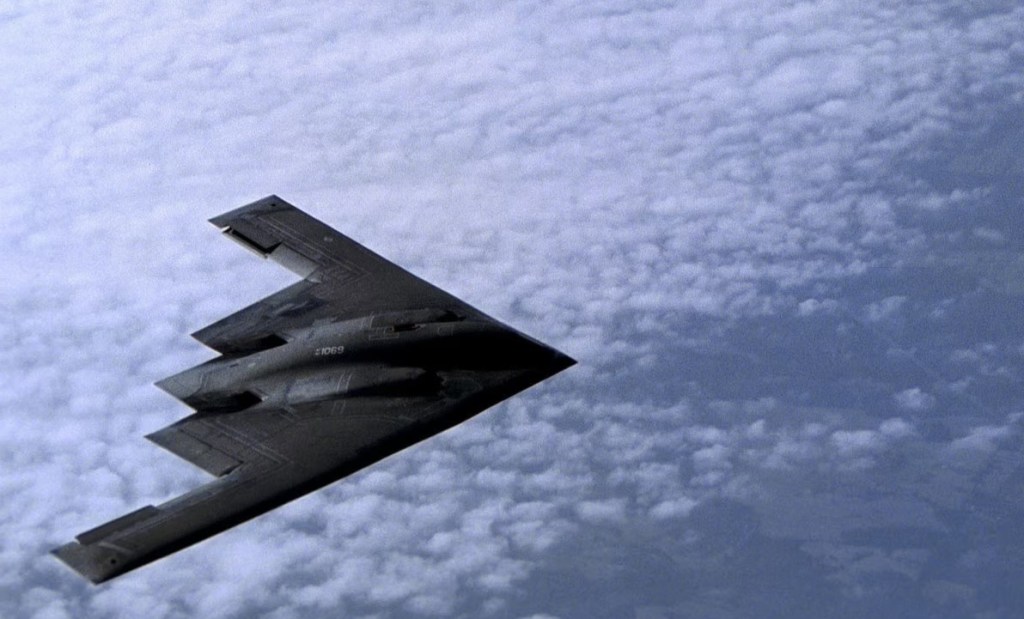
Photo: B-2 “Stealth” bomber of the type used against Iran. Credit: US Air Force/Gary Ell.

Thanks to Thomas Anthony Farmer for pointing me to James Greenberg’s Substack.

Paging Martin Niemöller

An alarming acceleration of Donald Trump’s authoritarian takeover of the United States took place this week when ICE agents went into the home of a legal permanent resident and arrested him simply because Trump and his followers do not like his political views.

That man, you probably know by now, is named Mahmoud Khalil, a recent graduate of Columbia’s School of International and Public Affairs, who was one of the leaders of the student protests at that university over the war in Gaza. The administration most certainly chose him because it believes he is an individual few Americans would rise up to defend, part of a small and very vulnerable minority (see also: trans people), and one who is easily demonized for much of the general public, even if it requires a wantonly dishonest distortion of (if not outright lies about) his views and activities. But that is how the descent into autocracy traditionally begins.

Khalil—who was born in a refugee camp in Syria and is a citizen of Algeria—quickly vanished into the archipelago of ICE detention centers, with his family and lawyer initially unaware of his location and unable to contact him. First thought to be in a jail in New Jersey, he turned out be in one of the government’s most remote and inaccessible facilities, in rural Louisiana, where he now faces deportation on specious grounds that bode ill for us all. What is happening to him is a terrifying precedent and a terrible omen of where the Trump administration is headed, and what it intends to do going forward.

TRIAL AND ERROR

For the rest of this blog, I feel like I could just repost Adam Serwer’s excellent piece about the case in The Atlantic. But since I’m told by some sticklers that that is not journalistically ethical, I will confine myself to merely quoting big chunks of it. (Happy now, hairsplitters?)

Serwer’s piece described Khalil’s detention as a “trial run,” noting that he was arrested without due process simply for exercising his Constitutional right to free speech. The administration’s feeble efforts to gin up a more defensible pretext are deeply alarming in themselves, as they indicate that Trump & Co. intend to criminalize political views they don’t like and dissent full stop.

Khalil has committed no crime. The ICE agents did not even allege that he had done so when they went into his home in university-owned housing, at night, and arrested him in front of his wife, an American citizen who is eight months pregnant, threatening her with arrest as well.

Initially the agents told Khalil that his student visa was being revoked; when he explained that he was not on a visa, but was a legal permanent resident, they quickly changed their story and announced that it was his green card that was being rescinded. (Revoking the status of LPRs generally requires a hearing before an immigration judge and evidence of specific wrongdoing.)

His removal to a mysterious detention center was predicated on the specious claim that he represents a threat to the United States under the Immigration and Nationality Act, a portion of which authorizes the expulsion of an “alien whose presence or activities in the United States the Secretary of State has reasonable ground to believe would have potentially serious adverse foreign policy consequences for the United States.” Pretty goddam vague and ripe for abuse, wouldn’t you say? Especially if—hypothetically—some bad actors were in the White House and were predisposed to abuse it in that way.

You know whose views, in my considered and pretty well-informed opinion, REALLY “have potentially serious adverse foreign policy consequences for the United States”?

Donald J. Trump.

But I don’t see no SWAT team coming to arrest him. (Yet. See: Rodrigo Duterte.)

DHS spokesperson Tricia McLaughlin issued a statement saying that Khalil was detained “in support of President Trump’s executive orders prohibiting anti-Semitism,” and claimed—without evidence—that he “led activities aligned to Hamas.” But the administration has provided no proof of these alleged ties to Hamas, or what unspecified “activities” Mr. Khalil engaged in: ya know, the kind of thing the authorities usually have to produce when they put a person in handcuffs and throw them in jail and then out of the country.

As the blogger John Ganz writes in Unpopular Front:

(T)he law is clear: it’s only unlawful for a person to provide “material support” for an FTO, which is clearly defined as “any property, tangible or intangible, or service, including currency or monetary instruments or financial securities, financial services, lodging, training, expert advice or assistance, safehouses, false documentation or identification, communications equipment, facilities, weapons, lethal substances, explosives, personnel (1 or more individuals who maybe or include oneself), and transportation, except medicine or religious materials.”

But Trump administration officials have not made any such charges against Khalil. Instead, that deliberately ambiguous phrase “aligned with Hamas” is doing a lot of heavy lifting. Serwer:

They do not accuse him of being a member of, fighting for, or providing material support to any terrorist group, all of which are prosecutable crimes. The phrasing aligned to implies that if Trump-administration officials think the views of a green-card holder are unacceptable, they can deprive him of his freedom. How does one even prove they are not “aligned” with Hamas, a subjective and arbitrary judgment that could be thrown at anyone deemed too critical of the Israeli government?

In other words, the administration has bluntly announced that it will find a way to equate dissent with a criminal threat to the security of the United States, punishable under the law. (“Law” in quotes.) This is not a novel strategy for budding authoritarians, which is precisely why we should be alarmed when we see it unfolding. Ganz also notes that Khalil’s ordeal is taking place “in a climate of mob activity and at the incitement of demagogues,” with racist and fascist organizations having specifically targeted him online and encouraging the Trump administration’s actions.

Trump himself bragged about the arrest and incarceration and impending deportation.

The chilling effect of Khalil’s arrest speaks for itself. As Serwer writes, “Trump has styled himself a champion of free speech, but this is what Trumpists mean by ‘free speech’: You can say what Trumpists want you to say or you can be punished.”

Trump has announced as much, declaring that the administration would not tolerate “pro-terrorist, anti-Semitic, anti-American activity”…. The administration is using the power of the state to silence people who express political views that Trump dislikes. And it is worth noting that Trumpists define any criticism of Trump as “anti-American.”

Above all, Serwer warns us that Khalil “will not be the last” to suffer this fate. Indeed, that is the very point of what the administration is doing:

Leaders who aspire to absolute power always begin by demonizing groups that lack the political power to resist, and that might be awkward for the political opposition to defend. They say someone is a criminal, and they dare you to defend the rights of criminals. They say someone is a deviant, and they dare you to defend the rights of deviants. They call someone a terrorist, and they dare you to defend the rights of terrorists. And if you believe none of these apply to you, another category might be “traitor,” the label that Trump and his advisers, including the far-right billionaire Elon Musk, like to give to anyone who opposes them.

Trump’s assault on basic First Amendment principles may begin with Khalil, but it will not end with him. Trump’s ultimate target is anyone he finds useful to target. Trump and his advisers simply hope the public is foolish or shortsighted enough to believe that if they are not criminals, or deviants, or terrorists, or foreigners, or traitors, then they have no reason to worry. Eventually no one will have any rights that the state need respect, because the public will have sacrificed them in the name of punishing people it was told did not deserve them.

See why I saw no need to write this blog, when Adam already said it, and dropped the mic?

ANTI-DEFAMATION FOR ME, BUT NOT FOR THEE

Another sinister aspect of the Khalil scandal is the administration’s cynical claim to be fighting anti-semitism, which is connected to its disturbing equation of unpopular speech with criminal behavior.

The Anti-Defamation League, of all people, which might have stood up against the egregious violation of the rule of law and what it bodes for freedom of expression in America, instead did the opposite, applauding the Trump administration for its “bold set of efforts to counter campus anti-semitism” by “holding alleged perpetrators responsible for their actions.”

To say this view is short-sighted is an insult to the blind. The former US Attorney Joyce Vance notes what should be bleedingly obvious to all but the most deluded MAGA supporters is that “this is not an attempt to protect Jewish Americans from anti-semitism….This is about using anti-semitism to justify unconstitutional actions, and no one, least of all the Jewish community, benefits when a dictator begins to seize people who have not been charged with any crime.”

As Serwer writes, “If there is one obvious lesson of Jewish history, it is that when governments persecute people based on their political views and ethnic background, it is unlikely to end well for Jews.”

This sort of reaction, where a self-styled civil-rights organization endorses depriving people of their basic rights of speech and due process because they find the target unsympathetic, is what the Trumpists are counting on….They are counting on the public deciding that free speech and due process are optional for this category of people or that one, and that they will be safe, as they have done nothing wrong. The Trump administration wishes to lull people into this complacency until it is too late to react….

Despots are always in need of powerful enemies to justify an insatiable drive for absolute power. Where none exist, they will invent them. Mass graves across the world are full of those who believed they had nothing to fear.

Dear Republicans: I regret to inform you that anti-semitism, while vile, is protected speech so long as it doesn’t cross into incitement to violence, which is the standard for defining hate speech. Kinda like your own vile views. Trump can no more sign an executive order banning anti-semitism than he could sign one preventing people from liking Nickelback. (An old and dated dis, I know, but I’m old and dated myself.)

Indeed, it’s rich that a party full of white nationalists, neo-Nazis, and other brazen Jew-haters wants us to believe that it’s a great opponent of anti-semitism. Trump’s Vice President is stumping for the AfD in Germany and lecturing EU leaders to embrace the far right; his Secretary of Defense has Crusader tattoos; and his unelected co-president, a child of apartheid (and also a proponent of the AfD) goes around giving Nazi salutes. Trump even pardoned the J6 insurrectionist who stormed the Capitol in a “Camp Auschwitz” sweatshirt with the motto, “6MWE,” meaning “six million wasn’t enough.” So the administration’s alleged commitment to anti-semitism is rather performative, and shamelessly so. Khalil was chosen to pander to Trump’s right wing Jewish supporters even as the GOP carries on its long tradition of Jew-hating, and as cover for it.

(The Trump administration also recently withdrew $400 million in funding to Columbia, accusing it of being soft on anti-semitism on campus, a crippling blow to an academic institution, and doubly ironic since Columbia was actually among the harshest in cracking down on student protests. In that regard, the Republican auto-da-fé of college presidents in December 2023 looks in retrospect like a calculated preparation of the battlefield for what is happening now.)

I have no idea what Mahmoud Khalil’s specific political views are on Israel or Gaza except in the broadest sense, let alone the incendiary accusation of “alignment” with Hamas, apart from the fact that there has been no allegation of actionable material support, let alone evidence of it. None of that matters, though. All that is protected speech under the First Amendment, and as soon as we say it is not, that is the slipperiest of slopes, which as Vance writes, is something everyone should be worried about, conservatives included:

Perhaps your Christian beliefs run afoul of Christian nationalist designations of some sects as heterodox—maybe you’re suddenly the “wrong kind” of Protestant. Or could it be that this week’s attack is against labor unionists, LGBTQ people, or pro-democracy advocates? Once you accept the arrest of a person for no reason other than their speech, we are all in danger.

We already know that leopards are eating people’s faces right now faster than they can digest them, even as many Trump supporters are convinced that his draconian measures—from mass firings of public servants to the obliteration of the public health system to self-destructive tariffs to extrajudicial deportations—affect only the ”bad people,” and will never happen to them. But conservatives, right wing Jews, and others who are unbothered by what is happening to Mahmoud Khalil, or even openly enthusiastic about it, should take heed. Serwer again:

This is what is important: It does not matter if you approve of Khalil’s views. It does not matter if you support the Israelis or the Palestinians. It does not matter if you are a liberal or a conservative. It does not even matter if you voted for Trump or Kamala Harris. If the state can deprive an individual of his freedom just because of his politics, which is what appears to have happened here, then no one is safe. You may believe that Khalil does not deserve free speech or due process. But if he does not have them, then neither do you. Neither do I.

ALS SIE KAMEN

The title of this essay refers to the German Pastor Martin Niemöller’s famous poem about complacency and complicity under the Nazis. If it has become hackneyed of late, that is even more reason for us to be alarmed, as that would not be the case in a healthy nation. What is happening to Mahmoud Khalil could not be a more perfect illustration of that dynamic if we cooked it up in a lab. (Niemöller himself was put in a concentration camp, though he survived.)

And the authoritarian movement is not even trying to hide it.

“This is the first arrest of many to come,” Donald Trump posted on Truth Social. “We know there are more students at Columbia and other Universities across the Country who have engaged in pro-terrorist, anti-Semitic, anti-American activity, and the Trump Administration will not tolerate it.”

Well, we won’t be able to say he didn’t warn us. Joyce Vance one last time:

This is the moment where we must all stand up for what we believe in. If we are willing to turn a blind eye when other people are at risk, we lose. If we cede our democracy to the Trump administration out of fear—fear that what they are doing to other people, they might do it to us—we lose. There is no reason to believe they will stop; they will be emboldened. For people who believe they have the ability to sit it out without being affected personally, just how much are they willing to watch happen to others while they continue on with their own lives?

federal judge has ordered the government to not deport Mahmoud Khalil until the court has a chance to review the case: a hearing on that matter is scheduled for today, March 12, followed by an initial hearing in immigration court in Louisiana on March 21. What happens after that will tell us a lot about what is going to happen in the United States of America over the coming months and years. As John Ganz writes, “The state cannot make it up as it goes along. It can’t seize people in the night and invent flimsy pretexts later. And if it does, then we no longer live under the rule of law, we live in a police state. And don’t kid yourself: They will not stop at non-citizens.”

In other words, this is a test, folks—one very deliberately put before us by Trump and his minions. What happens next is likely to be a harbinger of just how fast authoritarianism is taking hold in the United States, and how readily both “the system,” and we the American people, will allow it.

*********

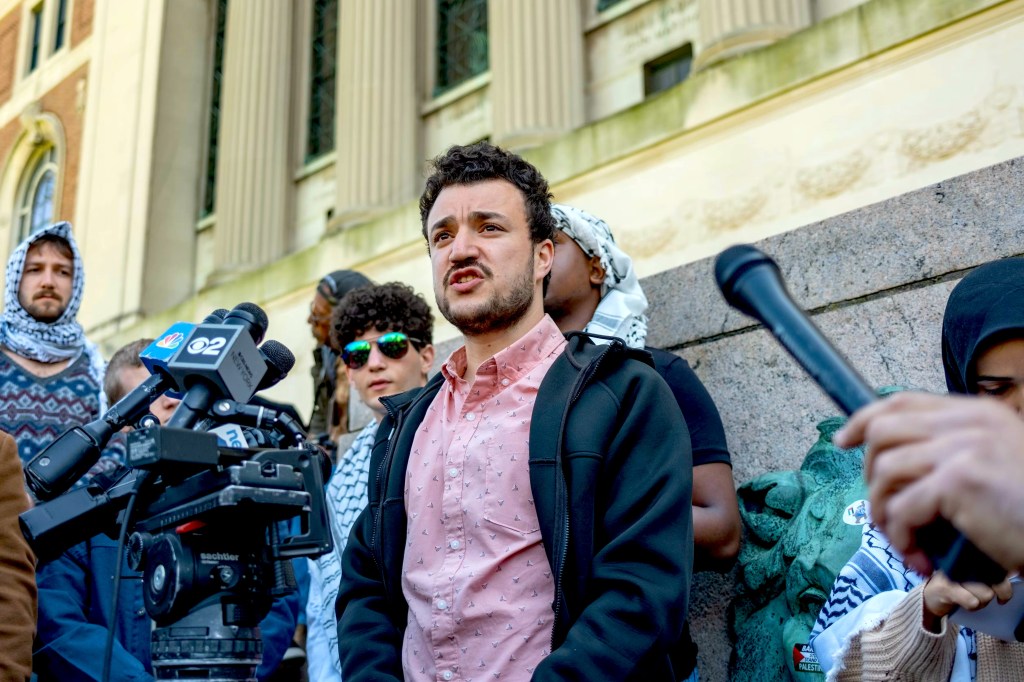
Photo: Mahmoud Khalil speaking to the press in 2024. Credit: Stella Ragas / Photo Editor, The Columbia Spectator

The Siren Song of Violence

Consequence Forum is an online literary magazine that, in its own words, “addresses the consequences, realities, and experiences of war and geopolitical violence through literature, art, and community events.” CF provides “the public with works and voices from around the world to promote a clearer and more nuanced understanding of what’s at stake in choosing to wage war or engage in conflict.”

In the words of Hal David, that is certainly what the world needs now.

It was my pleasure to have a piece there a few weeks ago, on the heels of some previous work over the past couple of years. What follows is a slightly expanded version of that new essay. Thank you to Consequence’s Executive Editor Matthew Krajniak and to my dear friend Alexandra Marshall for putting us together.

*********

The Siren Song of Violence

As we speak, two major land wars are raging in the world, involving two of the most powerful militaries on the planet, with vast assistance from even more powerful players abroad. The level of violence and human suffering is on a scale above and beyond even the already bloodsoaked baseline of the late 20th and early 21st centuries—what we typically call the postwar period. The name is proving a tragic misnomer.

The repercussions of each of these two wars, let alone the two taken together, promise to be so tectonic that they will reshape geopolitics for decades to come. Zhou Enlai-like, it is far too early even to begin to contemplate their long term consequences. But this much we can say with confidence: They have lowered the public’s threshold for the use of force as a tool of statecraft, and prompted a disturbing uptick in self-righteous, even fanatical cheerleading for killing people in pursuit of political ends.

For American observers, the war in Ukraine reignited a World War II-style righteous passion for the use military force that had largely lain dormant since the fall of Berlin. Certainly in the ensuing 79 years there had been idealistic fervor aplenty for using violence to advance the cause of democracy—to a fault, some would say, be it the starry-eyed naivete of progressivism or the self-deluding rationalization of neoconservatism—and often as cover for less noble goals. But brazen Russian aggression against Kyiv had even old hippies waxing poetic about the bravery of the Ukrainian army, adorning their windows and blue-and-yellow flags, and ending their Facebook posts with Slava Ukraini!

They were not wrong. Who could begrudge the Ukrainian people the right to self-defense against a ravenous, bullying neighbor, led by a monstrous despot? Only resort to the force of arms could defend the country, even as the craven, pro-autocratic Trumpist GOP continues to do its level best to stand on Zelenskyy’s neck and prevent that from happening.

But even among Ukraine’s American supporters, that sense of gung ho has noticeably dimmed as the war has grinded on, and the romance of blackening Putin’s eye (remember the sinking of the Moskva?) has given way to the monochromatic tedium of warfare of a nearly Great War variety. Even the proliferation of combat porn on Reddit has grown repetitive. That our solidarity with the Ukrainian people proved so flimsy did not reflect well on the self-flattering fervor of its early days.

The rise of other high-profile conflicts have also intervened—one in particular—eclipsing the sense of Ukraine as a once-in-a-lifetime global conflagration.

For sheer complexity and unyielding, often blind fervor by the two sides, the war in Gaza is surely the most Gordian political crisis of any of our lifetimes. (The Cuban missile crisis still retains the crown for most dangerous, but it lasted only thirteen days.) In the US, it has scrambled old allegiances, created odd new political bedfellows, and even thrown a highly unpredictable new element into the presidential campaign. Among its most disturbing aspects, many supporters both of Israel and of the Palestinian cause show a remarkable lack of empathy for the suffering of anyone but their own…..and that is true not only of the extremists, but of people who heretofore have been widely considered moderates.

Imagine a group of people filled with righteous anger over the injustices they have suffered. Their legitimate pain and frustration and fury is so great that they have come to believe that anything they do in retaliation is justified, to include the most terrible acts of barbarity against innocent non-combatants, little children among them. These people are quick to cite sophisticated intellectual doctrines and theories to support such action, some of which have the imprimatur of the most highbrow, moral thinkers. But the blood that is shed is just as red.

Imagine now that both parties feel this way. Imagine the rest of the world looking on and taking sides, often without a thorough and nuanced understanding of this ancient and byzantine situation.

In purely practical terms, it would have been unrealistic to expect that Israel would not respond militarily to the attack of October 7, and unreasonable to expect that it should not. The contours and duration of that response, however, are a different matter. It was not hard to predict that an overreaction by the Netanyahu government would ensue. In fact, that was surely one of Hamas’s chief goals, and it’s impossible dispute that it succeeded on that count.

Historically, young people—college students especially—have been passionate about protesting human rights abuses. For their trouble, they are frequently scorned by older generations as disproportionately idealistic, uninformed, and immature. Some of that criticism is on the mark, some not. But notwithstanding those qualifiers, just as frequently, those young people prove to have been remarkably correct. At the same time, righteous anger has frequently tipped into apologia for atrocities committed by one’s own side (adopted or otherwise). We have heard the repetition of slogans that the chanters don’t begin to understand, and the name Nat Turner evoked, and comparisons to the Vietnam-era student left, along with debates over whether such activism helps or hurts the cause, and the presidential candidates it might inadvertently elect or defeat. For idealistic and aggrieved young people especially, a Fanonist belief that revolutionary violence is justified, even required is romantic, and intoxicating….and wildly dangerous.

But maybe even Fanon is too tame. Perhaps we are in Robespierre territory.

On the other side of the divide, enthusiasm for an all-but-unrestrained response by the Netanyahu government has gripped a large section of America, cutting across traditional ideological lines. Once reliably liberal American Jews have been heard to comment on how Fox News actually makes a lot of sense. Irrationally, they have allied themselves with the far right wing of American politics—which is to say, the mainstream of the Republican Party—whose affection for Israel is transactional at best, given its simultaneous embrace of neo-Nazis. Jewish Americans who have been critical of Israel haven been vilified by some in their own community, as a vast paradigm shift is underway in both progressivism and American Jewry at large.

Across the board and irrespective of stance on Gaza, many of us have all found old friendships strained and once civil discourse turned into angry recriminations. We have been surprised by the intransigent, doctrinaire views of people we thought we knew, or with whom we presumed to have a shared worldview and set of values. Even Jerry Seinfeld, as apolitical and proudly anti-substantial an entertainer as any in the modern era, has suddenly had an ideological awakening—or alternatively, chosen to voice his political opinions for the first time—and taken significant heat for it. Even the mildest and most anodyne observation can barely be offered these days without giving offense to someone, let alone a stronger opinion—which has not stopped very many people from offering them, with varying commands of the facts.

But what is most disturbing is the casual advocacy for the use of violence, and half-baked ethical justification for it.

Without wading into a doctoral thesis-length discussion of moral philosophy, generally speaking, most people would instinctively agree that there are acts that are beyond the pale, even in a just war. That is why we have the very term “war crime.” But we need not drag morality into it. Whether one supports it or condemns it, Benjamin Netanyahu’s military campaign in Gaza is exposing the persistent delusion that force can solve all problems, and exposing the limits of violence as a tool of national policy. That is a simple matter of pragmatic reality separate from any moral considerations of who is right and wrong. (As if the thorniest geopolitical problem of the postwar era could be broken down into such Manichean terms.) Yet some of Netanyahu’s fiercest critics simultaneously hew to a celebration of force and violence on behalf of the other side that is just as terrible.

Ukraine provided an almost unicorn-rare example of a conflict the cleaved neatly into good and evil, as the naked aggression of one side contrasted so starkly with the valor of the other. Apart from a small—but politically powerful—pro-autocratic faction of Americans that lionizes Putin, overlapping with a miniscule group of no-exceptions isolationists, and a handful of reflexively contrarian elements, it was easy to swell with vicarious passion for the outgunned, beleaguered Ukrainian underdogs. (Unless you’re a Republican.) Almost too easy. As if made to order, the war in Gaza offered a diametrically opposed counterexample, as complicated and morally gray as possible. Yet even that assertion of grayness will rankle some, both pro-Israel and pro-Palestinian, who point to the ghastliness of their antagonist’s actions, eliding those of their own, which only proves the complexity. Even my comment that hackles will be raised is itself likely to raise hackles. The rabbit hole is very deep.

Even calling what’s going on in Gaza a “war” is controversial. It is certainly an armed conflict between two military forces, albeit a highly asymmetrical one. Some will say that October 7 can only be characterized as an act of terrorism, undeserving of designation as a military operation, which lends it undue legitimacy. Likewise, the operational imbalance of the response, and its attendant, near-apocalyptic destruction, felt most painfully by the civilian populace, has led some to argue that a word like “massacre” is more descriptive of ongoing events than “war.”

Both arguments have some semantic merit, but both ignore the quasi-Clausewitzean understanding of war as the infliction of pain to force submission to a desired political end. Everything else is just arguing with the refs. But both Ukraine and Gaza ought to remind us that that technique does not always work, and that a self-congratulatory ruthlessness, even born of a legitimate grievance, cannot justify slaughter without quarter, by anyone, state actor or non.

Even under the best of circumstances, mankind is remarkably quick to reach for the weapons of war…..and we are currently not operating in the best of circumstances. The siren song of violence is at high volume at the moment, loudest of all in places far from harm’s way, where the human toll of the violence is very abstract and distant, where tribal allegiances—as real and as deeply felt as they are—nevertheless feel like those of passionate supporters at a spectator sport. When we calculate the casualties of the Gaza crisis, first and foremost are the very real ones, in flesh and blood. But another more abstract casualty has been the loss of perspective—and humanity—among those observing from the safety and comfort of home.

*********

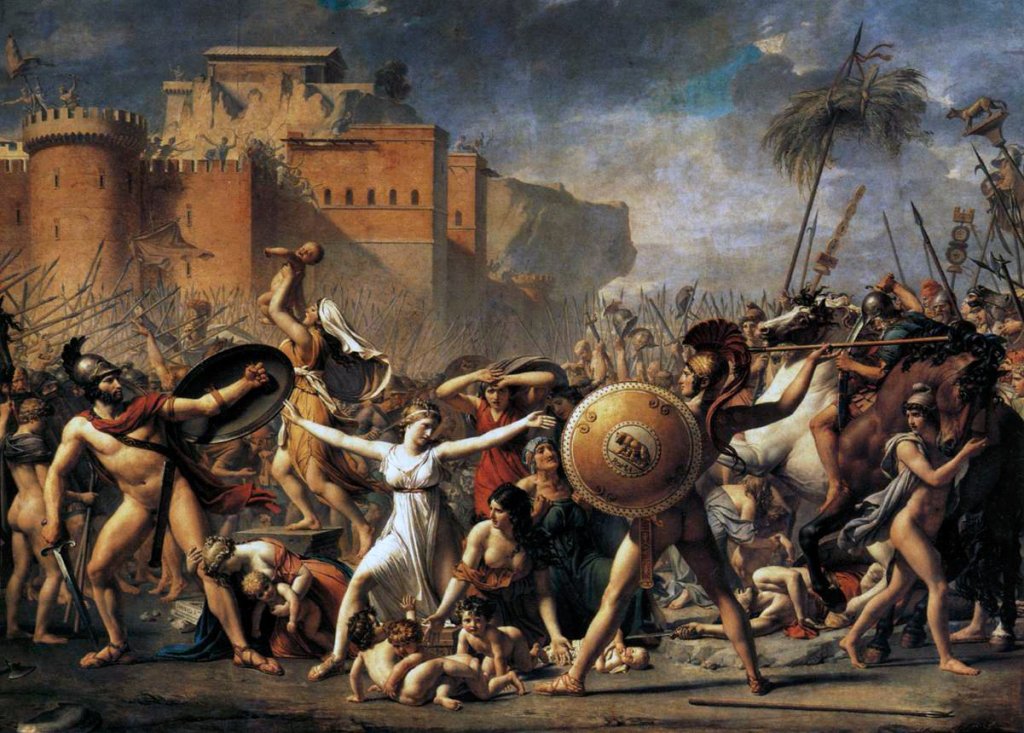
Illustration: The Intervention of the Sabine Women, Jacques-Louis David, 1799