This blog is not known for its sunny optimism. In my experience, the light at the end of the tunnel usually turns out to be the headlamp of an oncoming train.
That said, I am guardedly upbeat about the chances that we will defeat Donald Trump on Election Day 2024. (The notion that he will not be the GOP nominee is no longer on the table.) I won’t exhale until that happens, since nothing is certain, as we learned to our lasting chagrin on Election Day 2016. The economy could tank. The Kremlin—or China, or someone else—could intervene with a targeted PSYOPS campaign and gaslight the American public, again. Biden could pass away in a tragically ill-timed RBG-like manner. And most worrying of all, the Republicans—knowing that they’re in deep electoral doo-doo—could ramp up their efforts to subvert the election process and just steal the damned thing, which as we have seen, they are not at all above trying to do.
So I ain’t relaxing yet. But I do feel encouraged.
Trump is in trouble. He is under indictment in four major criminal cases, two at the federal level and one each at the state and local, facing sentences that could put him in prison for the rest of his natural life, not to mention a civil suit in New York state that could bankrupt him, and the potential for further litigation still pending. Yes, we all know that those indictments have only raised his poll numbers and his fundraising with the Republican base, tightening his hold on the nomination into a death grip (and I do mean “death”). But that success is in the realm of preaching to the choir. Primary voters, of course, tend to be even more partisan than the general electorate, so Trump’s popularity within the party is not surprising. (Meanwhile, Russell Berman reports that even that support inside the GOP may be overstated, due to poorly worded questioning by pollsters.)
The general election is a whole different story—a diametrically opposed one. The numbers show that his legal troubles are in fact hurting him with the broader public, as they should, and in what promises to be a tight race with Biden even a small shift can be decisive. (That it’s tight in the first place is a headshaker for another day.) Some objective observers are even predicting a historic ass-kicking for the erstwhile Grand Old Party. Wouldn’t that be something?
Even beyond his legal jeopardy, Trump is not the candidate he was four or eight years ago. (Christ, have we been dealing with this for that long?) His act has worn thin with the majority of the American people. He’s old, he’s tired, and he’s shown us what a monster he is. He’s no longer some novelty, but a candidate with a record he has to defend, and for most sentient citizens, it’s not a pretty one. A lot of low information voters who were once amused have soured on him, and a fair number of “moderate” Republicans who were once willing to give him a shot (pause for wave of nausea) have had enough. The opposition is energized as ever, if not more so, while the public appetite for four more exhausting years of this shitshow has vanished.
And Donny’s not alone on Danger Island. Eight years ago Putin was the Master Troll, mounting a historically successful intelligence operation to ratfuck the US presidential election and install his obedient servant in the White House. Today he is bogged down in a disastrous land war that makes US involvement in Vietnam look like a fender bender. Even more shocking, he was recently the target of a brazen coup d’état from within his own circle, and not just some assassin tiptoeing through the Kremlin in the night but an outright military challenge to his power, a sign of weakness and vulnerability on his part that was unthinkable just a few years ago.
So yeah, I am liking our odds at the moment. Still…..
TRIAL AND ERROR
Trump faces trial in most or all of those criminal cases between now and Election Day. Depending on how fast the adjudications move, we may see the candidate of a major party convicted, sentenced, and even incarcerated before we go to the polls. It’s mind-boggling. And it’s worth remembering that a number of the crimes themselves relate to trying to steal an election.
Trump could become the presumptive GOP nominee in the 2024 presidential election at the same time as his lawyers are in court for his trial for seeking to steal the last election. Neither political scientists nor legal scholars have really anticipated such a scenario, so no technical term exists to describe it, but I can suggest one: a huge mess.
Trump, of course, with his demagogue’s instincts, is trying to frame all this as a desperate attempt by his enemies to keep him out of the White House. Graham again:
One common thread through all four of Trump’s felony indictments is that he has claimed that they are “election interference” on the part of Democrats who want to hobble his attempt to return to office. This is a doubly ironic claim, given that in this case Trump is literally charged with attempting to thwart the will of voters. It is a demand that he be handled with kid gloves while doing his own dirty work with the gloves off.
I have previously written about the infuriatingly gentle treatment Trump has gotten from the justice system, particularly in the Mar-a-Lago documents case. But in Fani Willis, Jack Smith, and Judge Tanya Chutkan, he has clearly run into some folks who didn’t come to play. He may still wriggle out and get acquitted—he has a history of so doing, as we know all too well—but thus far it’s been gratifying to see him and his usual legal hijinks slapped down for a change.
What would I like to see come out of these trials? Well, I’d like to see Trump held accountable for his various crimes, duly convicted and sentenced, publicly disgraced (in the eyes of rational Americans, that is, carrying on a process begun with his impeachments), and locked up. On the political front, I’d like to see him beaten like a red-headed stepchild in November ’24 and go down to his second successive ignominious electoral defeat, affirming that sanity is still alive and well with the majority of the American people, and cease to be a player in American politics ever again..
But I don’t for a moment imagine that any of that, or even all of it in concert, will end Trumpism or put an end to his influence, though I’d like to believe it will damage it. We all know that the right wing faithful will still vote for Don even if he’s wearing stripes, and still idolize him even if he is thoroughly repudiated and cast into permanent political exile. They would vote for him even if he went on national television and wiped his ass with an American flag while singing the Russian national anthem and torturing a puppy. But that cult of brain-dead devotees is a minority, passionate though they are, and is not getting any bigger, while Trump’s woes continue to mount. So I think we stand a pretty good chance of my dreams coming true.
But suppose that happens. Suppose we beat Trump two Novembers from now, and even convict him of major crimes. (Order may be swapped as necessary.) What happens then?
It hardly bears noting that this situation is unlike anything we have even remotely encountered in 240 some years of American history; we are sailing into treacherous and uncharted waters regardless of the outcome.
If Trump continues his lifelong streak of wildly undeserved good luck and beats the rap in all four cases, irrespective of whether he then wins re-election or not, we will have a miscarriage of justice that undercuts the legitimacy of the criminal justice system and encourages Trump-brand skullduggery from all manner of folks at the highest levels in the future.
If he is convicted of any or all of these charges, we may see a US president ruling while imprisoned (even if it’s only house arrest).
If he is defeated, Trump will surely run his 2020 playbook again, claiming the election was stolen from him, inspiring his followers to violence—as Salon’s Chauncey DeVega asks, what does he have to lose?—and further destabilizing the US political system, as right wing America becomes even more deeply entrenched in its anti-democratic nihilism.
In other words, even in the best case scenario of criminal conviction(s) and electoral defeat, we will still be faced with tens of millions of his aggrieved supporters (fewer than the number of Trump voters, but still a sizable bunch) who don’t accept Biden’s legitimacy, who will go to their graves believing Donald is a hero and a martyr, and who will be further committed to their conviction that “the system is rigged.”
This is the toxic legacy Donald has bequeathed on our country, semi-permanently at the very least.
You saw how Republican voters and elites behaved in the aftermath of 2020. Do you think that if Trump is convicted and then loses the election these same people will say: “Well, daggum it. I guess the jury has spoken and people didn’t like us running a convict. We’ll have to try something else.”
He’s right on the mark. But it’s also his final bullseye before his argument begins to break down.
Last argues that there is only possible outcome of the current situation that will avoid crisis: a Trump conviction and a clear Biden win in November ’24. But we had a clear Biden win in November ’20 and that didn’t stop the crazies, now did it? He also contends thatthe “scenarios in which we do not have a verdict by Election Day all lead to crisis, because there is not a voting outcome Trump’s supporters will accept as legitimate while the legal process is ongoing.”
True. But there is nothing that is damaging to Trump that those supporters will ever accept as legitimate. So trying to appease them, or even worrying about what the hell they think, is a waste of time (except prophylactically, in preparing to protect against violence on their part).
As a very wise, very old sergeant major once said to me, “Don’t worry about the nitwits.” Words to live by, people, words to live by.
I like Last a lot, as a sane conservative voice at a time when that description has become all but oxymoronic, but IMHO he goes completely off the rails when he writes:
This is why prosecuting a man running for president is so dangerous. Trump’s prosecutions invite future “retaliation” from Republicans, delegitimize an electoral system already under active assault, (and) undermine respect for the rule of law in a large minority of the population.
With all due respect, this is nonsense. Yes, prosecuting a former head of state is fraught, but letting them get away with major crimes is far worse.
Trump’s prosecutions invite retaliation only from lawless cretins who brook no accountability for him for anything he’s done. Meekly backing away from legal action for that reason is a surrender to terrorism. The electoral system Last fears for is already under active assault BY THOSE PEOPLE. Rather than delegitimizing the system, holding Trump to account is part of defending it. And it’s not possible to “undermine respect for the rule of law in a large minority of the population” when that large minority plainly has no respect for the rule of law in the first place.
So they can go fuck themselves. We should not spend any time worrying about them or their hypocritical, proto-authoritarian worldview, except to oppose it with every fiber of our collective being.
CELLBLOCK TANGO
Returning to The Atlantic’s David Graham one last time, he writes that “the political and criminal-justice systems are not only not designed to work together, but are in fact constructed to pretend the other doesn’t exist. “The only safe prediction” for how all this might play out, he contends, “is chaos.”
That, my friends, is a safe bet. But it’s the road we are on, and we have no other rational path.
Any way you slice it, we’re in for a rough ride for the next few years, if not longer. The process of restoring American democracy to good health is going to be slow and painful, and for that I blame Donald Trump, even though I understand that he is only the avatar of a broader revanchist movement. Addressing that dilemma will require a profound reckoning with the original sin of America itself, and confronting the retrograde, grievance-driven, authoritarian-friendly, violence-prone faction of our countrymen who insist that the United States is a White Christian nation where all others must bend the knee.
I told you optimism was not my forte.
But if my options are a second Trump term or a second Biden one beset by an angry segment of cretinous White nationalists who don’t accept his re-election any more than they did his election in the first place, I’ll take Door #2 in a New York minute. Let’s concentrate on bringing that scenario about, rather than worrying about how difficult it will be.
So I am cautiously bullish, but in no mood to relax. The specter of Hillary’s shocking defeat still hangs over many of us like a bad case of PTSD; let’s use that chilling memory to our advantage to protect ourselves against complacency. Let’s take morale-boosting encouragement from watching the wheels of justice grinding at last, ever so slowly, and hope that they deliver Donald Trump the comeuppance he so richly deserves. Along the way perhaps that process will also deal him sufficient damage to keep him out of the Oval Office, and maybe—just maybe—mark the beginning of the end of the fanatical cult of nitwits and nutjobs that he commands.
*******
Illustration: “Stable Genius,” Ralph Steadman-esque portrait of Donald Trump by Dutch artist Siegfried Woldhek, October 12, 2019
That’s because—simple math—I love summer. Like the song goes, it’s my time of year. Part of it is just me, part of it is being a water sports guy (ha ha, I know), part of it is the seasonal scaries that so many of us have as the grind of regular life beckons with the falling leaves and falling temperatures.
I am also of the feral child generation, when summer meant unstructured and nearly unrestricted freedom of a sort that these days would get Child Protective Services called on you. That’s a kind of muscle memory that never goes away, which is why for many of us it will always be associated with the season. Atop all that, I was an Army brat, and moved almost every May, so fall meant starting over yet again in yet another new school, which wasn’t exactly super fun, but built character, as they say. (Don’t get me started on “New Kid in Town,” and not just because it’s an Eagles song, but because it’s written from the perspective of a local kid moaning woe-is-me over the eponymous new arrival, who, in the narrator’s telling, is an instant hero. Gimme a fucking break.)
But I digress.
Three years ago in these pages I wrote a piece called “Summer’s End” in which I covered a lot of that same ground, but added two other factors that made the looming autumn of 2020 especially worrisome.
The first was the fear of returning to the dark days of the COVID-19 lockdown, from which we had only tentatively begun to emerge, as the warm weather receded and we were forced back indoors again. (As I wrote back then, thanks to the pandemic, my then-nine-year-old daughter’s unscheduled, free-range summer of 2020 resembled those of my own childhood more than in any previous year.) Apropos of that summertime respite, and how COVID would ultimately play out, I asked which Bergman movie it would turn out we were in, The Seventh Seal, with its medieval plague, or Smiles of a Summer Night, with its uncharacteristically lighthearted, un-Bergman-like farce? (Though speaking of summer, if we’re picking Bergman movies to inhabit, can I just be in Summer with Monika please?)
The other factor weighing on me, like so many of us, was the presidential election.
But in the end the former issue was avoided because of the latter, and because of the return of competent adult leadership to the White House, which at last got the pandemic under control thanks to rational adherence to science, rather than a magical belief in horse tranquilizer.
Even so, we were right to be anxious, as I wrote ahead of the looming election:
I am still deeply worried that (Trump) will still manage to ratfuck his way to a second term, even if it means fighting in the streets….
The only way to avoid that fate is to keep working as hard as we can for an electoral blowout that minimizes Trump’s intention—the one that he has overtly been signaling—that he intends to remain in office regardless.
As it turned out, even an electoral blowout—Biden won by seven million votes—was not enough to forestall that fate. What transpired next was almost that worst case scenario, or at least second place, one shy of Trump invoking the Insurrection Act and martial law in an effort to get the US military into the streets to keep him in power. Even now he remains the most dire threat to the republic since Elvis shook his hips on “Ed Sullivan.”
But I do feel better than I did three Augusts ago. The pandemic is behind us now and COVID is just another manageable virus. While the threat of future pandemics remains, a new one doesn’t feel imminent, and our understanding and capacity to respond have improved.
As for the next presidential race, I remain concerned —very concerned—but am guardedly optimistic. The wheels of justice have ground very slowly—very slowly—but Donald Trump is now under indictment in four separate criminal cases at both the federal and state levels, and for some of the most serious crimes imaginable. I am by no means certain that any of that, or even the accumulated weight of all of it taken together, will keep him out of the White House for a return engagement (notice how we’ve stopped even talking about the delusion that he might not be the Republican nominee?), but I do believe that it is significantly hurting his general election prospects. The GOP base and fundraising are a different story, which just speaks to the depths of Republican insanity and the danger it still poses. But Donny does seem to be on his heels.
Then again, I have learned not to discount any possibility, no matter how far-fetched, as it’s clear that my own powers of political prognostication are poor. (I learned that on November 8, 2016.)
The election is still a little over a year away, so my anxiety has not yet peaked, and a shit-ton can happen between now and then. In fact, this trending against the GOP may prove to be the very thing that we have to worry about—that the Republicans, knowing that they can’t win a free and fair presidential election, will find a way to rig the game, and/or contest the results in an even more violent and destabilizing way than last time. Do you put it past them?
So check with me next Labor Day for an update on my blood pressure and ulcer.
FEEL FLOWS
The irony of my late summer dread is that I quite like the autumn, once it is undeniably upon us and I’ve made my annual peace with it.
(Stick with me here, because I’m still down at the shore for the bitter end of the season, and edibles are legal in Jersey now.)
In 2004 the New York Times Magazine published a memorable interview with the Beach Boys’ Brian Wilson. Like most surfers, I harbor a real animosity for the Beach Boys and the insipid music that is permanently associated with the sport, thanks in large part to them. (Dick Dale, though—that’s cool.)
I feel a little better, spitefully so, that it’s been a curse for the band, too, or at least for Brian, a passing fad that he and the band were involuntarily wedded to, and that indelibly stamped their public image. It’s an association that they’ve spent years trying to shake, with self-consciously arty LPs like the decades-in-the-making Smile, or 1971’s ironically titled Surf’s Up, with its cover art referencing the 19th century sculptor James Earle Fraser’s “The End of the Trail,”a grim depiction of a weary Native American on an emaciated horse standing on the western edge of the continent, an image so stark and at odds with summertime fun fun fun that you can almost hear the cold wind blowing. For my money Surf’s Up is also far and away their best album, beating—yes—the perfectly fine but overplayed and overrated Pet Sounds. (Fight me.)
Whoa, these edibles are no joke. Remind me to take only a half next time.
Let me qualify that bit about how the band hates its “surf music” image. The sensitive, famously bedridden Brian certainly did, but his odious cousin Mike Love—a Trump supporter, whom the comedian John Mulaney called “simultaneously the leader of the band and its least important member”—has always seemed fine with it, on the band’s perennial, Brian-less, cash cow oldies tours.
(In fact Mulaney has eviscerated Love on several occasions, including his assessment of Love’s speech on the occasion of the band’s 1988 induction into the Rock & Roll Hall of Fame: “That was like an uncle giving a toast at a wedding and the uncle hadn’t been invited,” Mulaney quipped. “He dressed like he rents speedboats. He had that hat with a tux—and he thinks Brian’s the unstable one.”)
Anyway, that Times interview ends with the reporter—Deborah Solomon—asking Brian about the surf music thing, and he notes that he’s never surfed in his life, never wanted to, and hasn’t even been to the beach in a decade.
“Is summer your favorite season?” Solomon asks.
“No,” Brian answers. “I like fall.”
It’s so heartbreaking: this genius who was exploited and abused—even by his own father—and is permanently associated with a season and a sport and a whole bullshit fake lifestyle that he never wanted and that never represented who he was. You can feel his melancholy as surely as you can hear the howling wind battering that Seneca warrior on the cover of Surf’s Up. And the Times knew it, because they ended the piece with it.
Then again, in that same interview Brian also opines that Phil Spector would be acquitted of murder because it was all just an accident. So maybe he wasn’t yet 100% well in ’04.
ARE WE GREAT AGAIN YET?
Which brings us back to the shortening days of summer, and the uncertainty that looms ahead.
In that 2020 piece, I wrote about being down at the Jersey shore in May of that year, for the first time since the lockdown began:
The weather was still raw, and the boardwalk was a ghost town, spooky and depopulated. A Cessna flew over towing a banner reading TRUMP PENCE 2020: MAKE AMERICA GREAT AGAIN. Irony, thy name is Donald.
I also wrote about the likely circumstances we would face after that November’s election:
The best case scenario—let’s not fool ourselves—is a protracted legal battle and constitutional crisis; the worst, a new civil war. Alarmism, you say? I invite your attention to the news. Increasingly frequent clashes between armed supporters of the two sides—the most recent just last weekend, in Louisville, on Kentucky Derby Day—has made that once absurd and unthinkable possibility feel more and more plausible.
As I have written before, it’s time we stop viewing these acts as isolated incidents, or dismissing them as the irrational acts of angry loners, and recognize them for what they are: part of an insurgency, an ongoing campaign of ideologically-driven violent extremism, even if the ideology is nothing more than hateful retrograde nihilism.
Since 2020 the fanatic far right has seized upon the trans community as its favorite target, casting its members—our fellow Americans—in the role of scapegoat, a prerequisite in all neo-fascist movements. But like all neo-fascist movements, it is the craven, nodding complicity of mainstream conservatives that allows that hate to metastasize, making those allegedly “moderate” accomplices just as culpable as the extremists, and even more dangerous.
Then there was this, also from my 2020 piece:
And of course Trump might win, legitimately or not. But it will be a disaster of another kind even if he loses, because he has openly announced that he will view any Biden victory as fraudulent by definition.
The Big Lie has since become the defining issue of contemporary American life. It was adjudicated to death in 62 court cases that Trump brought, losing in resounding fashion in 61 of them (the only exception being a brief TRO in one Georgia recount). It will be adjudicated again in the Jack Smith, Fani Willis, and—indirectly—Alvin Bragg prosecutions. But the verdict that will count the most is the one at the ballot box on November 6, 2024, and not even shackles and an orange jumpsuit (or more likely, an ankle monitor and exile to Elba-Lago) will necessarily tip that.
Let’s be clear. The United States is dealing with a domestic terrorist movement, and Donald Trump is at its head. That’s right: a mentally deficient D-list celebrity / slash / con man-turned-game show host turned politician is at the front of a racist, homo- and transphobic White nationalist theocratic movement that represents a lethal threat to American democracy. And it ain’t going away any time soon, whether he goes to prison or not.
The people who support Trump, even now, even after all we’ve seen, even in mulish denial of objective facts, are so deep down the rabbit hole that we’ve lost all radio communication. They are unreachable, and would be irrelevant…..except that the leadership of the GOP remains in Sorcerer’s Apprentice-style thrall to them, and too few of the aforementioned moderates are willing to break ranks. One recent poll shows Trump voters trust him more than their own family members or religious leaders. (Yes, and Dracula should be in charge of the blood bank.)
The mind reels.
So yeah, things are a lot better than they were three years ago this time. But only a fool would relax.
FLIPPER DROPPED IN ON ME
Last week I was surfing in the early morning before the beach came to life, and there was a pod of dolphins swimming within 25 meters of me, which actually happens with some frequency. That is the kind of moment when I am not thinking about politics at all. But it’s also a psychological luxury—one that can’t be maintained forever.
We have one more trip around the sun before another crucial decision point for our democracy. So leave me alone in the ocean for a few more weeks, and then bring on the red and orange leaves, drifting down lazily from the treelimbs, and blanketing the streets and lawns. I like fall, too….which is a good thing because it’s coming whether we like it or not.
On the heels of a federal judge rejecting the Hunter Biden plea deal, Merrick Garland has announced the appointment of a special counsel to look into the matter. My friend Tom Hall, who writes the superb blog The Back Row Manifesto, has called out the absurdity of what he dubs this “self-own” by the DOJ, and how the left continually, maddeningly feeds the right wing’s narrative by accepting its false equivalences. He’s quite right, of course.
But let’s dig into the Garland decision a little more, because it tells us a lot about the current state of play in American politics, and what kind of strategy the forces of small ‘d’ democracy ought to pursue in the coming, crucial fifteen months as we head into Election Day 2024.
INSTITUTIONALIZED
By now it’s become tedious to say that Garland is an “institutionalist,” which is part of why it’s taken two and a half years to finally bring indictments against Trump for his various crimes. (Then again, no one goes around saying Fani Willis is an institutionalist and it took her that long to bring indictments, too.)
I don’t have the patience to restate the particulars of Hunter’s legal woes (you can read about them here, if you wish), but apparently they involve illegally obtaining an unlicensed firearm, drug abuse, and some shady business dealings trading on his father’s name. Suffice it to say that this is the tawdry but mundane stuff that attends many presidents and their circle of relatives, from Donald Nixon to Billy Carter to Roger Clinton. (But by the way, shouldn’t the right wing be championing Hunter over the gun thing?)
I don’t condone a politician’s child—especially a US president’s—exploiting their parent’s position for financial advantage, with foreign entities least of all. Hunter must face the music for that, and he is being made to do so. But four years of relentless Republican digging into the matter has in no way implicated his father and almost certainly never will.
Hold onto your hats, but it’s beginning to look like all the Republicans are trying to do—gasp!—is use Hunter’s problems as a cudgel to batter his dear old dad, an effort that is as transparent as it is groundless. They would do that with any Democratic president, of course, but they have a special incentive at the moment because they are trying to defend the most openly criminal and corrupt president in US history, who just happens to be the most recent Republican occupant of that office. In mounting that defense it is very useful for the GOP to try to paint the subsequent Democratic administration as just as bad or worse.
They would also like to piss on our heads and tell us it’s rain.
Of course there is also the matter of the GOP’s wanton hypocrisy, as the very same Republicans lighting their hair on fire over Hunter and Burisma had zero fucks to give about the Trump children doing much, much worse, with utter impunity. (Exhibit A: the sweetheart $2 billion equity deal Jared made with the Saudis, thanks to his father-in-law deputizing him to be his agent in the Middle East, the KSA in particular.)
But by now we are inured to Republican shamelessness.
Hunter Biden is now correctly enmeshed in the criminal justice system; I say, let the investigation proceed, and—like Benghazi, or the Dunham inquiry, or the select House committee on the alleged “weaponization” of the government under Biden, or any number of other specious GOP ploys—the non-chips will fall where they may. It worries me not.
But does it really call for a special counsel? On its merits, certainly not. Hunter’s offenses are rather two-bit (in fact, they might be one-bit), except for the allegation of influence-peddling. The president’s enemies would like us to believe the father is somehow implicated in the sins of the son, but years of inquiry have turned up zero evidence to support that partisan claim. That would seem to argue for winding down the investigation, not putting it on steroids. Instead, for the sake of optics or some other unfathomable reason, the DOJ is playing into Republican hands.
Compare the charges for which special counsels have been appointed to investigate Donald Trump: colluding with a foreign power in a presidential election, stealing top secret US war plans and obstructing demands for their return, and attempting to overthrow the US government—the latter two still ongoing. By elevating the charges against Hunter Biden to that level (along with the attendant Republican-ginned innuendo against his father), Merrick Garland is lending dangerous credence to the alternative universe in which tens of millions of benighted right wing Americans live, one where “the Biden crime family” is as much a threat to democracy—more!—than the guy who tried to have his own vice president murdered and an election overturned.
The federal judge’s rejection of the plea deal doesn’t necessarily demand an escalated response. Why not let the case work itself out at the lower level? Not only that, but this new special counsel in question is a Trump appointee, US Attorney for Delaware David Weiss, who opened this investigation in 2019 and has been carrying on with it ever since. So really what we are seeing isn’t the opening of a new investigation at all but simply investing Weiss with the title of special counsel and its attendant powers. (Evidently, Weiss himself requested the appointment.)
As The Daily Beast’s legal commentator Shan Wu notes, the need to bring charges outside the state of DuPont—er, I mean Delaware—is not the issue: Garland could have given Weiss that authority under 28 U.S.C. section 515. (In fact, he stated in June that Weiss was authorized to bring charges anywhere in the country.) Wu also notes the irony that Garland—a famous stickler for the rules—is breaking them in keeping Weiss in his US Attorney position while he now assumes this special counsel role as well, apparently in contravention of arcane DOJ rules that I don’t pretend to know or understand.
As I have noted many times, page one of the fascist playbook is to accuse your enemies of your own crimes. The GOP excels at this. Republicans are desperate for false equivalences—anything they can use to undermine the credibility of their Democratic critics by way of a specious bothsidesism, the same way their hero Mr. Putin is ever alert for ways to claim that Western democracy is just as hollow and dishonest as Russian autocracy. It matters not that these equivalences are absurd—that’s why they’re called “false” in the first place.
Republicans don’t even care if the investigation goes nowhere. If it comes up with bupkes—as all attempts to implicate Biden in his son’s troubles have thus far—so what? The mere existence of a special counsel is sufficient to imply to low-information voters that Joe Biden is as corrupt as Don is. (More so!)
And there are hardly any voters who are more low-information than the people who can be persuaded to pull the lever for Donald Trump.
IN THE REALM OF REASON
In announcing the special counsel decision, Garland said, “Upon considering (Weiss’s) request, as well as the extraordinary circumstances relating to this matter, I have concluded that it is in the public interest to appoint him as special counsel.”
Awesome! So, MAGA Nation must have been super impressed by that and applauded it, right?
Wrong ‘em boyo. The very next day, the Murdoch-owned New York Post ran a cover headlined: “COVERUP: GOP cries whitewash as AG appoints Hunter Biden special counsel—who already botched case.”
Only in Republican World can resuscitating a dead case that is damaging to a sitting president and catapulting it back onto the front pages counts as a “whitewash.”
But of course, you can’t take at face value anything the Republicans say. It’s all bullshit and they know it. Or at least their leadership does. But even as they know better, senior Republicans—the Cruzes and Grahams and Ron Johnsons and the rest—have no qualms about spewing the most vile lies in the interest of their own raw power. And they are preaching to a Kool-Aid drunk choir for whom up is down, day is night, freedom is slavery, and—above all—ignorance is wisdom. One small example, courtesy of my friend Kate Steinberg: a Republican voter from Bergen County, New Jersey called into WNYC’s Brian Lehrer Show last week to inform the public radio audience that, (paraphrasing), “Joe Biden is an aristocrat, while Donald Trump is a hardworking real estate developer,” and that “the January 6th insurrection came about because of Democratic influence.”
And we think these people will be impressed by Merrick Garland’s institutionalism?
It was the same when the plea deal was first announced last June. The right had been screaming for criminal accountability for Hunter even while his dad was still just a candidate for the presidency. So when his own Justice Department delivered that precise criminal accountability, did it make Republicans admit that the Biden administration is in fact even-handed, that its criminal inquiries into Trump & Co are not unfair and partisan at all, that it should be praised for subjecting Joe’s own flesh-and-blood to that very same legal scrutiny and due process? Did it make Republicans say, “Whoa, so dope—the Biden Administration respectfully let the system work, and the president’s son is being held to account like anyone else!”
(Pause for laughter).
All it did was make them double down on their claims of a “double standard” because Hunter wasn’t clapped in irons and shipped off to the Florence, Colorado, to join the federal supermax prison softball team alongside El Chapo, Ramzi Ahmed Yousef, Terry Nichols, and FBI double agent Robert Hanssen.
Strike that—who are we kidding? Even that wouldn’t have satisfied them. And this special counsel announcement won’t either. Nothing the left does will mollify the right, ever. That is because the right is not engaged in good faith politics at all, nor operating in the realm of reason, only in one of Gingrichian bloodpsort where if you ain’t cheatin’ you ain’t tryin.’
So I can sum up the feeble Democratic attempts to appease them in two words:
The. Sudetenland.
PEACE IN OUR TIME
Hunter Biden (Yale Law Class of ’96) is a troubled dude and ought to take his lumps like any American citizen. Unlike the Trump children, he seems to recognize that—or been forced to, which the Trump kids pointedly have not—because he submitted to the aforementioned plea deal, in the first place, which is precisely how the system is supposed to work. (I’m sure it wasn’t easy growing up in the shadow of his deceased golden brother Beau either, he of the service in Iraq and the Attorney Generalship of Delaware and the tragically premature death from brain cancer.) It’s true that your average defendant might not have gotten the terms he did, but that is an indictment of privilege, not an indication of any malfeasance on the part of Hunter Biden, let alone his papa.
But the admirable refusal of Hunter’s dad to marginalize his boy in order to limit the political damage—which I’m sure most of his advisors would prefer—says a lot about the humanity of Joe Biden. I don’t know the numbers, or even if anyone has measured them, but my wholly unscientific suspicion is that the President’s response—embracing his troubled second son, rather than shunning him—might even win him some votes, as there are many many Americans with troubled adult children, a lot of them with drug problems, who can empathize. (Uncle Joe even had his son at a White House state dinner just two days after the plea deal was announced. Where Republicans saw the Corleones, a lot of Americans saw a dad who loved his child no matter what.)
Ironically, Republicans had long demanded that Weiss be made a special counsel in the Hunter Biden investigation; now that he has, they’re furious.“ David Weiss can’t be trusted and this is just a new way to whitewash the Biden family’s corruption,” according to a statement from Russell Dye, a spokesperson for House Judiciary Chair Jim Jordan (R-Ohio). “The Biden Justice Department is trying to stonewall congressional oversight as we have presented evidence to the American people about the Biden family’s corruption,” said Rep. James Comer (R-Ky.), chair of the House Committee on Oversight and Accountability, in a separate statement, declaring that his committee would continue its own inquiry into Hunter’s case.
I bet it will.
Of course, the reason the GOP is down on Weiss, despite being a Trump appointee, is that they don’t like the original plea deal, when they were hoping for the electric chair. Who would they like as special counsel in this case? Oh, I dunno—maybe a Great White shark who was one of the J6 rioters and published a paper in the Claremont Review arguing that lynching ought to be legal. (Maybe. Need to vet the shark’s position on abortion first.)
But we don’t need to go on about Republican deceitfulness and hypocrisy. It’s as plain as the smoke from the bong Robert F. Kennedy Jr. and Woody Harrelson are sharing. Let’s talk instead about what Garland is doing and what Democrats ought to do going forward.
WHEN THEY GO LOW
Clearly, Garland is operating, as always, on the principle of Caesar’s wife. But since that appears to have less than zero impact on American politics, is there any point in even playing this game?
To answer that, let us survey the possible justifications for the appointment of this special counsel:
ONE: Because it’s the right thing to do. I am sure that this is the only aspect of the debate that Garland thinks about, and not any political ramifications. Sadly, the rest of us do not have that luxury.
But is it the right thing to do? As we have noted, the case can’t possibly be said to merit a special counsel outside of the presidential angle, which appears to be non-existent. How long are we going to let the GOP pursue it for partisan ends….and not just let them, but abet them? Clearly Republicans are taking the aforementioned Benghazi strategy, which is to say: investigate long enough and you’ll eventually find something you can use, even if it requires world class gaslighting. Benghazi, after all, led to the non-scandal of Hillary’s emails, which arguably cost her the presidency, with a behind-the-back-pass assist from Jim Comey.
So this ostensible “right thing” must be weighed against the potential damage, which would be very much the wrong thing.
TWO: Because we hope it will prevent Republicans from claiming—however unfairly—that there is a double standard. Not worth discussing. They are already claiming that, and their base believes them. See above.
THREE: Because we hope to woo reasonable centrist voters. In practical, realpolitik terms, this is the only rationale that really matters. Garland’s actions are never going to convince the MAGA base, nor will the reprehensible Republican leadership ever give him (or Biden) his props. The only people who might be swayed are that small sliver of fence-sitting undecideds—mythical though they may be—people who might possibly take Garland’s move as evidence that the Democrats are in fact the more principled and honorable party. Do such unicorns really exist, and if so, in sufficient numbers to justify a maneuver like this, with all its attendant risks?
I don’t know. I can’t ask the questions and have all the answers, people.
FOUR Because we imagine that someday, in the distant future, history will look back and reward Democrats for taking the high road. Maybe, and maybe that is wise. But if these actions empower the far right by allowing it to energize its base, trumpet its false narrative, and win over that small number of “swing” voters, history’s verdict will hardly matter. In fact, that verdict might be harsh, damning us for our naivete, on the order of “They brought a feather duster to a flamethrower fight.”
Or, if you prefer, “They were playing badminton while the Republicans were playing rollerball.”
TIME THE AVENGER
The Hunter Biden special counsel may feel like small beer in a week when a fourth criminal indictment of Donald Trump has been handed down, a case that is beyond federal pardon power or the ability of the accused (or one of his GOP cronies) to squash, one that truly could put Trump in prison for the rest of his godforsaken life. But Trump could get convicted in all those cases and still win the presidency. If you doubt it, I invite your attention back to the Republican voter who called into WNYC—the one who described him as “a hardworking real estate developer”—as a measure of the depths of his followers’ madness. Now add to that the willingness of the GOP leadership to stick with this Faustian bargain to the bitter end and see how well you sleep tonight.
Trump’s final defeat, should we manage to achieve it, will be a political one, not a legal one. Therefore anything that bolsters Republican gaslighting, like the Hunter Biden fiasco, is worthy of our attention.
Ultimately, what the special counsel decision really does is expose the starkness of our political divide and the wildly different approaches of the two parties. In The Bulwark, Jonathan V. Last writes:
One side of our political divide routinely castigates itself for being in a bubble. One side expends a lot of energy trying to figure out how to appeal to people who don’t vote for them. One side talks a lot about persuasion and understanding the people across from them.
Not coincidentally, that side is the same side that can no longer wield executive power nationally without winning a sizable popular majority.
The other side does not seem to worry about the media bubble it lives in. This side does not expend much energy trying to understand the 51 percent of the country which votes against it. It does not deal in persuasion so much as power politics: How can it use existing power to reward allies, punish enemies, and shape the electoral battlespace.
Not coincidentally, this is the side that can now hold national power with minority support from the voting public.
In light of that dynamic, is it better for the forces of democracy to try to woo whatever small segment of undecided voters is still out there, including independents, disaffected Republicans who can be persuaded to see reason, and others who are still unsure whether a second Trump administration would be a good thing? (I can’t believe there’s anyone still unsure about that, but obviously there are.) Or in so doing, are we giving ammunition to a Terminator-like right wing disinformation machine that already threatens to lay waste to democracy and leave it a smoking ruin?
I tend to think that latter, in spades, but Merrick Garland shockingly failed to consult me, so it’s a moot point.
As I used to write—at 4 a.m.—at the end of all my undergraduate history papers, “Only time will tell.” But the price of getting it wrong is….oh, how what’s the Latin phrase? Loftus fornicatum.
Faithful readers of this blog would be forgiven for thinking that, after a week that saw the long-awaited Big Indictment of Trump, one could turn to these pages for some pontification about it it. It’s coming, trust me. For now, The Washington Post summarized it neatly, noting that while Trump’s previous two indictments—for hush money paid to a porn star and the theft of classified documents—were serious, this one is “fundamentally more consequential.”
Tuesday’s indictment accuses a former president of the United States with attempting to subvert the democracy upon which the nation rests. And with Trump again running for the White House, the charges he faces pose an extraordinary test to the rule of law, experts say. “This gets right to the question of how elections work, how power is transferred peacefully,” said Jon Grinspan, a curator of political history at the National Museum of American History. “This is really a question about the functioning of American democracy.”
Laurence Tribe, a Harvard University legal scholar, said, “The crimes indicted are an order of magnitude beyond anything that has been committed against this country by any American citizen, let alone a former president.”
The big question now is: will it make any difference? There will be plenty of time for us to ponder that in the weeks and months ahead.
In the mean time, I want to write some more about music.
I’ve been on vacation in Massachusetts, and the other day as the wife and I strolled down the main street of some little seaside town, a huge black pickup truck roared past us with two giant American flags flying from its back, blasting Luke Combs‘ version of Tracy Chapman’s “Fast Car.” No “Let’s Go Brandon” decals, but I’m pretty sure I know how that guy voted, twice.
(Actually, even without the flags and the song, it’s been my experience that the make, model, and muffler status of a speeding black pickup is a pretty good giveaway.)
I’m trying hard to think of a hit song that’s a weirder cover. And it wasn’t just a hit: Combs’s track spent four weeks at number one on Billboard’s country chart, and is still in the top five as I write this, making it the most successful cover on that chart ever.
We all know that in Western pop music there is a looooong tradition of White musicians ripping off Black ones. That is a harsh characterization, but a correct one in many cases. Even the most generous interpretation—in which a genuinely talented White artist with real understanding of, and affection for, music rooted in Black culture achieves massive success by playing it—is discomfort-making. Elvis, the Stones, Paul Simon, Eminem….the examples are infinite, because almost all popular American music is rooted in Black culture. The list of grievances of Black people in the United States is pretty long, so that one might not crack the top ten, but it is certainly infuriating nonetheless.
Even so, this one is extra strange. Dreadlocked Black lesbians aren’t exactly a mainstay of country radio. Has a hit song been this misunderstood and usurped since “Born in the USA”? (Silver medal: “Every Breath You Take.”)
Tracy Chapman had a top ten hit on the pop charts with her original version back in 1988, and won a Grammy for Best Female Pop Vocal Performance, capping a debut album that was a generational juggernaut. She has been very complimentary of Comb’s version and gracious toward him, and it’s great that she’s getting this payday, royalties-wise. I don’t know if, privately, she relishes the irony or is infuriated by it, but practicing a kind of civility that is demanded of women and people of color in this country.
Lots of other people have noted the irony— many of them bitterly—of a giantly popular White male country star having a monster hit with a song by an artist from a marginalized community that many in the country audience openly despise, particularly at a time when those overlapping communities—Black, LGBTQIA+, and politically progressive—are under renewed attack as pluralistic democracy fights for its very life. That is indisputable.
But then again, if you listen to the lyrics, it’s not so weird at all that this song is a hit on country radio, even beyond the obvious quality of the composition, bittersweet melody, and infectious guitar lick. It’s a song about being downtrodden, about having a shitty life, about sick parents and bad jobs and romances turned sour, and being stuck in a life that’s going nowhere and dreaming of a better one. In that regard, the fact that it speaks to the country audience is not surprising at all.
In fact, “Fast Car” is squarely in the tradition of country & western songs, per 1971’s “You Never Even Call Me By My Name,” written by Steve Goodman and an uncredited John Prine, and covered by David Allan Coe (who had a hit with it), sometimes called the “perfect country song,” because it sums the genre up in the single line:
“I was drunk the day my ma got out of prison.”
“Fast Car” is a song about the broken American dream. Should we be taken aback that it resonates across cultural lines…..or just frustrated that the implications of that appear lost on a great many listeners?
LUKE, I’M YOUR DIDDY
Country music ain’t what it used to be, of course. Hank Williams and Johnny Cash and Willie and Waylon and the boys—to say nothing of Loretta Lynn, June Carter, and Patsy and Dolly—have largely been replaced by glossy, formulaic “New Country” which is all but indistinguishable from mainstream pop. It’s ubiquitous even in big cities and in the North; it’s the music of Republicanism and has become a tribal marker as much as anything else.
For my taste, Combs’s recording is rather boring in its faithfulness to the original arrangement, which raises the question: why bother? I suppose the obvious answer is that when a White dude does it, it can shoot to the top of the country charts. I don’t question the love for the song that he has expressed, reportedly one of the first he learned to play when he picked up the guitar. I just think it would have been more interesting if he’d had some sort of new take on it, beyond his Y chromosome and pigmentation. In fact, the most interesting thing about the cover is its absolute faithfulness, right down to the fact that Combs didn’t even change the sex of the narrator. (“So I work in a market as a checkout girl.”) I’m surprised country fans are cool with that.
Is that snotty stereotyping on my part? Uh, OK. I grew up in the South of the 1960s and ‘70s. I was born at night, but it wuddn’t last night.
If we get beyond the Elvis-ness of it all, and accept that the poignant lyrics of “Fast Car” do speak to people across lines of race and sex and ethnicity, maybe it’s possible to turn that bitter irony into a dawning realization that we’ve been the victims of a very very long con in this country….maybe going all the way back to its very dawn.
Memo from the Department of Blinding Obviousness: In the US, the powers that be have always used race to divide us. Poor White people and poor Black people who are natural allies have been successfully kept from making common cause by the plutocracy, and there can be no better example than Trump’s ascent to the White House in 2016. Was there alienation and anger among working class White people when they went to the polls that year? Sure. Did it make sense for them to turn for salvation to self-styled Richie Rich from Manhattan who had a golden toilet and whose entire persona centered on bragging about how elite he was? You tell me. To that point, subsequent scholarship has shown that racial panic, not economics, was the greatest indicator of support for Trump. As a certain Southern gas station attendant-turned- US Marine used to say, surprise surprise surprise.
So I’d like to think that Luke Combs’s “Fast Car” isn’t so weird at all, but a reminder that ordinary working Americans of all races actually are all in the same boat—er, Chevrolet. Then maybe one day we’ll turn on country radio and hear Tracy’s “Talkin’ Bout a Revolution”:
Talking about a revolution? It sounds like a whisper / While they’re standing in the welfare lines / Crying at the doorsteps of those armies of salvation / Wasting time in the unemployment lines, sitting around waiting for a promotion / Poor people gonna rise up and get their share / Poor people gonna rise up and take what’s theirs
Maybe, and wouldn’t that be something?
Except if “Talkin’ Bout a Revolution” were to crack the country charts, I fear the “revolution” in question would be the Capitol insurrection kind, with Confederate flags and AR-15s.
SIDE BY SIDE ON MY PIANO KEYBOARD, OH LORD
In closing, let me circle back to the J6 indictment. If the election of Donald Trump in 2016 was a shocking demonstration of the comfort level with fascism of an alarmingly large swath of the American people, the possibility that we might re-install him as president in 2024 after the events of the last eight years is almost incomprehensible. Even if it is just a fanatical minority that brings it about, it would require a blind tribalism and submersion in an alternate reality that beggars the imagination. But as the great Adam Serwer writes in The Atlantic: “Those defending Trump after his indictment over his attempted autogolpe are not opposing the politicization of justice; they are demanding it.”
We’re not really capable of that, are we? I like to think not. But then I think of that Trump supporter in the black pickup blasting “Fast Car.”
The indictment is an essential step toward trying to preserve our democracy. The trial will be a crucial test, and irrespective of its outcome, election day will foretell whether the republic is going to stand or not. Here’s David Remnick of The New Yorker:
So far, tens of millions of Americans are willing to overlook not only the multiple criminal indictments of Donald Trump but also his lethal mismanagement of covid-19; his inhumane handling of children at the border; his myriad statements of bigotry and misogyny; his assaults on the free press and the rule of law; his indifference to national security and the climate emergency; his affection for autocrats around the world, his impeachments; his many schemes to enrich his family.
According to the Times poll, Biden and Trump are tied in a hypothetical rematch at forty-three per cent. Sooner or later, a great reckoning is coming.
If we inexplicably return this traitorous cretin to the White House, ain’t a NASCAR racing car fast enough to get me outta here.*
********
*Just kidding. If that happens, exodus is not the answer. The struggle will only be beginning.
There are pop stars, and then there are artists for whom the audience’s personal connection and emotional investment go way beyond mere fandom, and not always in a healthy way. That can be a testament to the power of the art, but it’s not always great for the artist either.
I think the first time I ever saw or heard Sinéad O’Connor was a live televised performance of “Mandinka,” a rocker off her 1987 debut album, The Lion and the Cobra. Like legions of us who would become her passionate admirers, I was knocked on my ass. This stark, doe-like beauty who seemed so small and fragile, except—uh—she was positively snarling, singing with a force that was almost not to be believed, a voice that had both aching vulnerability and searing intelligence, but also volcanic power. Clearly, this was Not a Woman to Be Fucked With.
And that was only the smallest first taste of what made her such a transformational artist.
SOON I CAN GIVE YOU MY HEART
From the moment we saw her, my brother—a musician—and I became enormous Sinéad fans, not only because of her talent and the thrilling impact of her work, but because of her uncompromising integrity, her ferocious independence, and her obvious struggle to be her own person—and artist—in a heartless and exploitative world…..what The New Yorker’s Amanda Petrusich, writing in memoriam, called her “unapologetic brilliance.” Which is about as pithy and accurate a two-word description of Sinéad O’Connor as there could ever be.
Petrusich writes of Sinéad’s “thrashing against the dumb, stultifying demands of capitalism and pop stardom even before she was famous.” That, I think, is a large part of what attracted so many of her fans to her, not unlike the reasons people worship John Lennon, another artist who met an awful fate due in part to the poisonous effects of fame. In last year’s feature documentary, Nothing Compares, the home videos of a very young, gamine-like Sinéad fronting a rock band at the start of her career are worth the price of admission all by themselves. The A&R guys who signed her would have had to be both deaf and blind to have missed what was in front of them, or the fact that this Irish waif—or so she seemed—was destined to be a giant star.
But they had no idea who they were dealing with. She immediately rebelled against the conventional rock & roll sex symbol they were planning to turn her into. Hence the shaved head….except that it served only to emphasize her beauty—especially the giant, soulful, haunted eyes—and to mark her as an artist as visually striking and defiant as she was audibly so. “I always had that sense that it was quite important to protect myself, make myself as unattractive as I possibly could,” she would say later. It was the first of many times in her career when, ironically, an attempt to give a middle finger to stardom only wound up propelling her further into it.
Infamously, Sinéad’s early life was marked by terrible abuse by her family (her mother, in particular) and the repressiveness of the Catholic Church. She escaped it only to suffer similar mistreatment by the music business and the broader culture. The best analog I can think of is Judy Garland or Amy Winehouse, except that Sinéad was never quite as self-destructive as Judy, or as forgiving of her tormentors as Amy.
It was of course her cover of Prince’s “Nothing Compares 2 U” that made her a star, a gorgeous rendition, and not coincidentally an inspired video smack in the heyday of the MTV era. (Reportedly, Prince wrote it about a beloved housekeeper who’d been suddenly called away due to a family emergency.) It’s such a good rendition that it’s actually withstood being overplayed beyond human comprehension.
But for my money, “The Last Day of Our Acquaintance” from that same breakthrough LP, 1990’s I DoNot Want What I Haven’t Got, is the most powerful and emblematic song of Sinéad’s whole career. It’s ethereally beautiful, with vocals that go from a whisper to a scream, instrumentation that starts with a barely audible acoustic guitar and ends in a firestorm, and lyrics that convey all the naked emotional honesty, pain, and heartbreak that defined her. Go on YouTube: there are a dozen jawdropping live versions of it, but for me the greatest—unavailable as far as I know—is from her first-ever appearance on “Saturday Night Live,” on September 29, 1990. (She had previously pulled out of a scheduled appearance the previous May, in protest over host Andrew Dice Clay.) Marco Pirroni of Adam and the Ants is on lead guitar, with a hollow body Gretsch—a big fat guy playing a big fat guitar. Going into the climax of the song, when Marco rips off a series of violent power chords, and the drummer kicks in…..well, if that doesn’t send a thrill down your spine, you might be dead.
That SNL appearance was on my 27th birthday, as it happened, six days before I reported to US Army Ranger School, on my way to join my unit in the Persian Gulf, where Saddam Hussein had recently invaded Kuwait, so I was pretty tightly wound myself at that moment, emotionally speaking. When I got to Saudi, and on into Iraq, I had only two cassette tapes with me for the duration of the deployment, back in those pre-MP3 days of the Walkman, and I Do Not Want was one of them. I had already played the LP to death over the preceding ten months since its release, and I gave that hissy homemade cassette another workout there in the big sandbox. I spent hours laying under the star-filled Arabian night sky, listening to Sinéad as we waited to cross the border into Iraq, and many more after that once we stopped our march and sat there in postwar limbo in the middle of nowhere, for weeks, waiting to go home. When I hear that album today that is still the image it recalls for me.
YOU GOT A LOTTA NERVE TO SAY YOU ARE MY FRIEND
Two years later Sinéad appeared on SNL again, performing a stark, acapella version of Bob Marley’s “War,” and then infamously ripping up a photo of Pope John Paul II to protest the abuses of the Catholic Church, declaring “Fight the real enemy.” I remember watching it live and thinking, “Uh-oh.”
Uh, people were upset. Frank Sinatra and Joe Pesci took public shots at her, both of them invoking their desire to inflict physical violence on her. (You know, just like Jesus would do.) Hardly anyone, whether they were critical of Sinéad’s action or not, bothered to object to that. In fact, a lot of people cheered it. Even Madonna, who had previously made disparaging comments about Sinéad’s appearance, put her down for disrespect to the Church, which was rich considering how she had monetized blasphemy of Catholic iconography in her own career. (Her name is Madonna, for starters.)
To be precise, Sinatra’s beef wasn’t about SNL per se but about Sinéad previously declining to have the national anthem played before a concert in New Jersey, where Frank’s name now adorns a rest stop on the Garden State Parkway. At the time Sinéad opined, “Anthems just have petrifyingly contagious associations with squareness unless they’re being played by Jimi Hendrix.” Hard to argue, and the anthem continues to be a flashpoint even now. Ask Colin Kaepernick.
Two weeks after the SNL incident, the crowd at Madison Square Garden booed her just for walking onstage at a 30thanniversary tribute concert for Bob Dylan. Sinéad stood ramrod straight at the mic and stoically endured the abuse, then angrily waved off the band, who were going into Dylan’s “I Believe in You,” which she was supposed to sing, and instead defiantly roared out that same acapella version of “War,” part of what had pissed off those troglodytes in the first place.
Even then it was astonishing to me that a crowd at a Bob Dylan tribute, of all things, would be so fucking retrograde. Shameful doesn’t begin to describe it. But clearly there is a level of stardom—the one at which the man from Hibbing has long resided—where one attracts casual fans, and even more than casual ones, who represent everything the artist is diametrically opposed to. (See also: Springsteen.) Sinéad endured a lot of indignities in her life, but having fans like that wasn’t ever one of them.
When those assholes booed her, it was Kris Kristofferson who walked onstage, leaned in close, and whispered in her ear, “Don’t let the bastards get you down.” Sinéad can be seen visibly replying “I’m not down.” She also reportedly told him, “I don’t need a man to rescue me, thanks,” although it seems clear that she was appreciative of his support when he embraced her again as she came offstage and let her guard down.
(Sidenote: I like to think that, in that moment at the Garden, Kristofferson was channeling instincts from his own earlier life as a US Army officer. In the early ‘60s he was a Rhodes Scholar-turned helicopter pilot in Germany, in the aviation squadron garrisoned across the street from my dad’s infantry battalion, where the anonymous, clean-shaven Kristofferson used to sit on the steps of his unit’s headquarters and sing and play guitar. “That chopper pilot is a pretty good singer,” my dad told me he remembers thinking at the time.)
NOTHING COMPARES INDEED
Sinéad has since said that having a number one hit was the worst thing that ever happened to her career, and that the opprobrium that followed the SNL incident was the best, putting her back on the fiercely independent track where she always belonged. (A pity the similarly misunderstood Kurt Cobain didn’t get a moment like that.) It was certainly the crisis to which her public outspokenness had been building for several years.
At the 1989 Grammys, she sang “Mandinka” with the Public Enemy logo painted on the side of her head to protest the Grammys’ shabby treatment of hip-hop artists. In 1991, she boycotted the Grammys altogether, even as she went on to win something called Best Alternative Music Performance. (Alternative to what?)
The albums she went on to make in the three decades that followed covered a vast range of musical styles, in what felt like a deliberate attempt to confound expectations and declare her independence (not unlike choices in her private life, like becoming a female priest in a renegade, offshoot faction of the Catholic Church, or later converting to Islam). Just a brief survey of what, for my taste, are some of her finest recorded moments: “Three Babies,” “Black Boys on Mopeds,” “The Emperor’s New Clothes,” the aforementioned “Mandinka,” a cover of Loretta Lynn’s “Success Has Made a Failure of Our Home” from her idiosyncratic album of big band standards Am I Not Your Girl? (which also includes an incredible “Don’t Cry for Me Argentina”), “Reason with Me,” “Empire” (with Bomb the Bass), “Just Like U Said It Would B,” and “You Made Me the Thief of Your Heart,” to name just a few.
In 1998 I saw Sinéad in concert twice in the same week, a pair of shows that provided a perfect portrait of her troubled career. The first was a solo show at the Warfield in San Francisco, a beautiful old venue that was built in 1922. She came onstage in a high-necked, form-fitting Vietnamese ao dai, in brilliantly colored, embroidered silk, and gave one of the best concerts I ever saw. (Close second, also at the Warfield: Patti Smith, with Tom Verlaine on guitar.)
But later that same week I saw her outdoors, at a huge outdoor musical festival at a dusty racetrack in San Jose, sponsored by Guinness and advertised as a fleadh (Gaelic for festival). It was like 145 degrees, no shade, everyone drunk, and she was totally out of her element in front of the shitfaced crowd of frat boys. (Good bill, though, including Wilco and Billy Bragg, and the Pogues. They wheeled Shane McGowan out on a handtruck, like Hannibal Lecter, and propped him up at the mic. The audience loved it, like the crowd at a stock car race that had come just to see the crashes.)
It’s an understatement to say that Sinéad stirred strong emotions in her critics and her fans alike. Let’s walk back that word “critic”—haters is a better term. The vitriol aimed at her was beyond irrational, and it’s obvious why. In every way she represented an affront to privileged, lemming-like douchebags of all kinds: with her refusal to be a conventional model of femininity (or even a conventional “rock chick”), her earnestness, her critique of organized religion, her astonishing emotional openness, her defiance of authority, her singular artistic vision, and with her insistence on being herself even against the machinations of the machine at its most vile.
In other words, the same things that made the haters hate her made us, her fans, love her.
What was most gratifying, though, was to see the way that she never backed down in the face of insult, misogyny, or ridicule, let alone the know-nothing criticism of people who wanted to tell her how to live her life or run her career, or sneered that the injustices that outraged her were no big deal. And over the ensuing decades she has largely been validated.
“The culture in some ways has caught up to her,” Hanif Abdurraqib wrote in the most recent The New Yorker, “about the hyper-commercialization of the Grammy Awards, the role of the national anthem before concerts or sporting events, and, most notably, the epidemic of abuse within the Catholic Church.” He continues:
Her greatest crime, underlying all of these defiant actions, was that she didn’t seem to be a gracious pop star, grateful for the sales that pushed her single to No. 1 and her album to platinum status in the United States, where such levels of success are expected to be met with dutiful compliance, especially if the pop star in question is a young woman.
Sinéad’s departure has already set off what I called the Tito Puente Effect, which I wrote about in these pages in the wake of David Bowie’s death— that is, a sudden outpouring of affection by what I called “bandwagon-jumping arrivistes claiming longtime allegiance to the deceased,” and a collective amnesia about how shittily they were treated when they were alive. It’s a grotesque phenomenon neatly captured in the Smiths’ “Paint a Vulgar Picture,” as observed by Morrissey in his pre-fascist incarnation, or at least before he showed those true colors. (“At the record company meeting, on their hands a dead star / And oh, the plans they weave, and oh, the sickening greed.”)
The cruel playpen of fame gushes with praise for Sinéad today….with the usual moronic labels of ‘icon’ and ‘legend.’ You praise her now ONLY because it is too late. You hadn’t the guts to support her when she was alive and she was looking for you.
He may be a racist and a neo-fascist, but he’s not wrong, even if couldn’t resist making it about himself as well, adding “There is a certain music industry hatred for singers who don’t ‘fit in’ (this I know only too well).”
Ironically, Sinéad is being somewhat spared that vile spectacle because the polarization surrounding her is still very much in effect. All the tributes dutifully recall the abuse and the attacks; no one has forgotten how badly this immensely gifted, immensely vulnerable—yet simultaneously immensely strong—young woman was treated.
Yet.
YOU THINK I JUST BECAME FAMOUS AND THAT’S WHAT MESSED ME UP
The adoration of artistic idols—musicians especially, for some reason—has always been a little bit askew. We don’t really know those people, and they certainly don’t know us. The person we imagine them to be, one who is so intimate and important to us, is often nothing like the real person, and the way they speak to our most private dreams and fears and desires is largely illusory. That doesn’t mean we can’t love them, or that their work isn’t genuinely meaningful, but it does mean that the grief we feel for losing them is not like the grief of losing a real, flesh-and-blood person in our actual lives.
It’s the same with the associations connected to albums and even individual songs, powerful catalysts of memory (second only to smell), which often have nothing to do with what the artist intended or what inspired the work. I know that I Do Not Want What I Haven’t Got does not remind most people of the Iraqi desert. Fleetwood Mac’s Rumours, which came out when I was a teenager in Hawaii, for me will always conjure up images of Oahu, not of the recording studio in Sausalito where that musical soap opera was recorded. I suspect Gerry Rafferty isn’t psyched that “Stuck in the Middle with You” will forever make people think of a Van Gogh-like ear amputation, but he can console himself with the royalties. Little Alex is definitely unhappy that Beethoven’s Ninth was ruined for him.
But all that is OK, as long as one knows it and bears it in mind. The imaginary artist we adore can still be incredibly powerful and meaningful in our lives. For so many, Sinéad, or at least Sinéad as we imagined her, certainly was.
“The Last Day of Our Acquaintance” is about a divorce, but in a purely literal sense, the simple notion of having her gone from our world is hard to accept. She led a life filled with trauma and mistreatment and mental anguish, exacerbated by a vicious, heartless public that treated this rare talent and gentle soul like dogshit. The suicide of her teenaged son Shane in January of 2022 was surely the final straw. As she tweeted: “Been living as undead night creature since. He was the love of my life, the lamp of my soul. We were one soul in two halves. He was the only person who ever loved me unconditionally. I am lost in the bardo without him.”
A lot of people are a little bit lost in that bardo without you, too.
Sinéad O’Connor endured a terrible amount of abuse and pain for any one human being, but it took an unspeakable family tragedy like that to break her, in a way that none of the crap that the culture subjected her to ever could.
Christopher Nolan does not know who I am, but he has been messing with me for the better part of two decades.
THE BATMAN MOVIE THAT NEVER WAS
Around 2002, when Warner Bros. decided to reboot the Batman franchise, my agent at CAA put me up for the job of writing the new movie that would eventually be called Batman Begins (2004). I pitched them a take that began: “With Batman, the darker the better. He is after all, a man who turns into a bat.”
My idea was to pit our hero against a much more chilling, realistic villain—someone like a Hannibal Lecter—and make their battle a gothic, Edgar Allan Poe-style detective story with the Caped Crusader hunting this Jack the Ripper-like serial killer. The intent was to be genuinely creepy and scary, more like a smart horror film—think Seven—than a superhero movie. (I was subsequently informed that there was already a contemporary Batman graphic novel that took that approach, by Frank Miller, perhaps? It’s not really my milieu.)
In my version, (the) Batman is old and retired, having given away the Wayne fortune and decamped to a Buddhist monastery for a life of asceticism to try to put his demons to rest. He has left Gotham City in the hands of the Boy Wonder, who is now a grown-ass man who insists on being called Robin-Man. (He is the Superhero Formerly Known as Prince.) But Batman casts a long shadow. Everywhere Robin goes, he is compared to his mentor, assaulted with questions about the old man, deluged with requests to recount the good old days, and so forth. He’s annoyed by it.
Meanwhile, the serial killer menacing Gotham taunts Robin with clues about his next victim—more Son of Sam or Zodiac than the Riddler. When he takes Robin hostage and tortures him in a Silence of the Lambs-like lair, an arthritic, AARP-eligible Batman returns to save the day. His bones creak a bit, and he has to rely on ingenuity as much as sheer brawn (see: Wizards-era Michael Jordan). He is also not entirely pleased with the way his surrogate son has been running the family business. For one thing, Robin has taken this merchandising thing to the extreme: Gotham City is awash in Robin lunchboxes, Robin candy bars, Robin lawn fertilizer, Robin-endorsed Viagra, etc etc. He even sold naming rights to the Federal Express Batcave. The crimefighting world has changed as well. With Robin-Man around, some critics argue, can’t we cut the police budget? Gotham is also being hit with lawsuits and insurance claims arising from this freelance civilian involvement in law enforcement. Some of the super-villains are able to tie up their cases in the courts for years because of irregularities in the way Batman bulled his way through the Constitution in apprehending them.
Anyway, blah blah blah. Spoiler alert: I didn’t get the gig. (Bonus: I was told the studio thought my take was “too conventional.”) Instead, Warners hired the Anglo-American writer/director Christopher Nolan, fresh off the success of Memento and Insomnia.
You know the rest.
THE VIEW FROM THE GRASSY KNOLL
A few years later, around 2007 or so, CAA sent me American Prometheus, the Pulitzer Prize-winning biography of Robert Oppenheimer by Kai Bird and Martin Sherwin, published the previous year. Sam Mendes was attached to direct it for Dreamworks, and I was put up for the job of adapting it for the screen.
I loved the book, which struck me as one of the most important cautionary tales—if not the most important—of postwar American life. It felt especially central to the issues roiling our country in the era of Iraq and WMD: tribalism and the hyperpartisan state of American politics; fearmongering and the right to dissent; the weaponization of disinformation and character assassination; and the insidious subordination of facts, science, and empirical truth itself to a political agenda. It has only grown more relevant in the intervening years.
I had a nice meeting with Mr. Mendes, but ultimately the playwright Jeffrey Hatcher got the job. But by then I was obsessed with the Oppenheimer story. I kept my eye on the project over the next few years, hoping Dreamworks’ option would lapse and I could snap it up. Sure enough it did, around 2010, and I grabbed it, in partnership with my friend, the producer Carol Polakoff. We got a grant from Sundance and the Sloan Foundation (thank you, Doron Weber and Anne Lai) and I wrote a script. Several drafts, in fact. It was a true labor of love.
Carol and I labored for six or seven years to set up our version of American Prometheus, but were repeatedly told that the story was too dark, too uncommercial, too cerebral, lacked anyone in a cape or with a radioactive spider bite—the usual objections. Over those years, I also became friends with the authors, which—aside from the sheer privilege of immersing myself in the Oppenheimer saga—was for me the great joy that came out of that endeavor. In fact, my infant daughter’s first solid food was Marty Sherwin’s homemade matzoh ball soup, served at his Washington DC home in 2012. (Tragically, he passed away from lung cancer in October 2021.)
My version of American Prometheus was highly non-linear and used the 1954 security clearance hearing—the part of the story that interested me the most—as a framing device for intertwined narratives. (Hmmm, what a good idea.) One of my thoughts was to stage the story in modern dress, as if it were a contemporary production of a Shakespearean drama: Leslie Groves in camouflage fatigues, the security clearance hearing as it might have been covered by Fox News, and so forth.
You may be beginning to understand why my version didn’t get made.
From the start I was adamant about directing it myself, although as a show of good faith Carol and I talked to a few bigshot helmers (that’s Variety-speak, folks) who liked the script and were interested in coming aboard. One was Oliver Stone, who—incredibly—wanted to know how much of the dialogue in our security hearing scenes was verbatim from the historical record, and how much I had invented.
That’s right: the director of JFK was grilling me about historical accuracy.
But Carol and I never could get traction. We renewed the option a time or two over those years, but eventually we had to let it lapse. We asked Kai and Marty to give us a head’s up if another suitor appeared and they graciously agreed. One did, and we lost the property to him for a while, then joined forces for a bit, but the project petered out again. C’est la showbiz. A few more years went by, until one day in October 2021, Kai emailed me to let me know the terrible news that Marty had passed away, just as they got confirmation that a new filmmaker was optioning the book and going into production.
Christopher Nolan.
What could Carol and I say except vaya con dios? When one of the biggest and most respected film directors in the world wants to adapt your book—certainly in the top three or four in the English language, by any measure—you’ve hit the jackpot. (Yeah, there may be a few more adored arthouse darlings, but short of Scorsese or Spielberg, no one has the unique combination of commercial and critical clout that Chris Nolan does.) I told Kai that he could be sure that Nolan would do a superb job, which was no less than their book deserved, and would deliver a film that would be seen by millions, probably be in the running for a bunch of Oscars, and go into the canon.
I am certainly not in Chris’s directorial league (although I am very comfortable playing shortstop for the Peoria Mudsquids down here in single A), but it turns out I am a pretty good prognosticator.
THE DAY AFTER TRINITY
SPOILERS AHEAD, real ones this time. You have been warned.
If most Americans knew anything at all about Oppenheimer before this movie, it was that a) he built the atomic bomb, and b) wasn’t he some kind of Communist, or maybe even a Soviet spy? It is a bitter irony that tarring him with that lie is exactly what his enemies hoped to achieve, and a testament to how successfully they did their job. Hell, until I read American Prometheus, in my forties, I was a victim of—and accomplice to—that exact travesty. (And my undergraduate degree is in history. Shameful.)
Oppenheimer’s story is compelling from the cradle to the grave, but here I will jump ahead to the pertinent part, with apologies to anyone who already knows these rough outlines.
At the end of World War II, Robert Oppenheimer was a household name, the most famous and admired scientist on the planet, viewed by many as the savior of Western civilization. (More on that in a moment.) Undeniably he loved the spotlight, but was also wrought over the weapon he had unleashed on the world. By contrast, from the very dawn of the Atomic Age, American chauvinists—giddy at the idea of an all-powerful “Doomsday Weapon”—fantasized that somehow the US could maintain its nuclear monopoly forever. Drunk on the notion of this godlike power, they imagined that the Bomb was, in Oppenheimer’s scathing critique, like a pistol the United States could wave at the rest of the world to get whatever we wanted. The absurd conviction that no other nation had any right to such a weapon was twinned with the delusion that the US could somehow prevent them from acquiring it. The appeal of this “Doomsday Weapon” was so alluring that it overwhelmed reason.
Like all America’s nuclear scientists, except maybe Edward Teller, Oppenheimer knew this was madness. In hopes of avoiding a deadly arms race, he began speaking out in favor of international control of nuclear weapons, knowing that the Russians would soon get the Bomb no matter how much American hawks insisted they wouldn’t. In particular he was against development of the hydrogen bomb—the Super, as it was known among nuclear scientists of that time—believing it an instrument of such genocidal power that it made a mockery of any pretense of purely “military” use, and was therefore both strategically unnecessary and morally indefensible.
The US security establishment had long been leery of Oppenheimer because of his left-wing associations, and his fame and esteem made him a dangerous obstacle to the aggressive foreign policy they intended to pursue. In fact, Oppenheimer was the most dangerous foe imaginable precisely because of that fame and esteem. The hawks had a beautiful story that served their purposes perfectly—the triumph of American know-how in the desert of Los Alamos, culminating in a mushroom cloud over Japan. It wouldn’t do to have the hero of that story going around making noises about disarmament and the folly of building more and more and bigger and better bombs.
For his temerity in taking those positions, Robert Oppenheimer—the reluctant father of those very weapons—would be hounded, defamed, and ultimately destroyed in a McCarthyite auto-da-fé.
For his part, Oppenheimer foolishly thought his fame would protect him. It did not. Inarguably arrogant and enamored of his fame and influence, he had long been making compromises and rationalizations to maintain his privileged position in the national security apparatus. He did not recognize the danger he was in, nor the self-destructive folly of trying to appease his tormentors to maintain that position.
In some ways, Oppie and Lewis Strauss, the head of AEC who engineered his destruction, were quite alike: both strivers, both from assimilated Jewish families, and both very eager to be accepted as Washington insiders. But politically they were polar opposites, with Strauss a fanatic anti-communist who wanted the US to stockpile A-bombs as fast as we could. He was also known for being vindictive and ruthless toward his enemies. (In Nolan’s movie, he is played by Robert Downey Jr., whose name is being engraved on a Best Supporting Actor Oscar right now, according to the Philip K. Dick Minority Report Department of Pre-Nomination Certainty.)
Yet for all his villainy, Strauss truly believed that Oppenheimer was a danger to the United States, that nuclear war with the Soviets was inevitable, and that the US had been chosen by God to control the world’s nuclear arsenal. He was crazy, but sincere—a combination that ought to be familiar to many of us in the present day.
Nolan’s movie proceeds at such a breakneck, metabolism-of-a-thriller pace that some of the details of this part of the story are inevitably elided, so please indulge me while I go into a few of them here.
Oppenheimer’s brother Frank warned Robert that Strauss was gunning for him and advocated a pre-emptive strike, telling him that he should resign from the AEC in protest of the security clearance hearing—a trial in all but name. But a confident Oppie saw no reason why he should martyr himself the way Frank had by refusing to cooperate with the HUAC, and argued he could do more good for the cause of peace by maintaining his position and working within the system—another echo of our present moment. Frank—who deserves a biopic of his own—had always been in the shadow of his more famous older brother. But now it was he who had the much clearer vision of the ugliness that lay ahead.
On Christmas Eve 1953 FBI agents arrived at Oppenheimer’s Princeton home and seized all his classified papers. It was clear that this whole “security hearing” was going to be rigged. Strauss was allowed to handpick the panel that would hear the case; by contrast, Oppie’s defense team wasn’t even given access to his own file. As Oppenheimer strategized with his lawyers ahead of the hearing, the FBI was listening in on their conversations and feeding reports to Strauss, who continued to orchestrate a smear campaign in the press, even spreading false rumors that Oppie might defect to the USSR on a submarine. Strauss’s tactics were so extreme that even the FBI was troubled by them. (You know you’ve crossed a line when J. Edgar Hoover thinks you’re out of control.)
Like his brother, Oppie’s friends and family pleaded with him not to go through with this kayfabe. He couldn’t win, so why not use this opportunity to take a public stand against not only the arms race but McCarthyism as well? Einstein himself advised Oppenehimer to give the government the middle finger and not dignify its attack by participating in the hearing. (“Tell them to go to hell” were his exact words.) But a wrenched Oppenheimer, deeply invested in his role within the national security apparatus, insisted on “clearing his name,” as he saw it. In the same way he once thought he could outsmart the FBI and Army counterintelligence, he stubbornly believed that he could prevail….or perhaps was just unwilling to surrender the fame and influence he held so dear. As a disappointed Einstein later quipped to a colleague, and alluded to in Nolan’s film, “Oppenheimer’s problem is that he loves a woman who doesn’t love him back: the US government.”
AMERICAN DREYFUS
The top secret government hearing of April 1954 to determine Oppenheimer’s loyalty and patriotism is one of the darkest episodes in postwar American history, a kangaroo court that recalled the inquisition of Galileo (or of Dreyfus), resulting in his public disgrace, effectively ending his career, and all but breaking him as a human being. Oppenheimer was stripped of his security clearance just one day before it was due to expire anyway; the panel specifically cited his dissent on the H-bomb as one of the main reasons for the decision, asserting that it showed his disloyalty to the United States. That is to say, in the end, Oppenheimer was punished not for any breaches of security, which the prosecution failed to prove, but simply for holding an opinion that certain elements of the government disliked. In the broader sense, he was persecuted for the greater, unforgivable sin of opposing the bellicose orthodoxy of American exceptionalism. Yet his defrocking from the nuclear priesthood did not change the inconvenient but undeniable facts that he had been so ungracious as to point out.
But Oppie also knew how much he contributed to his own Shakespearean downfall, abetting his enemies with his hubris, his errors in judgment, and his desperate desire to cling to his position of power. In fact, “Shakespearean” may be understating it. Oppenheimer’s fall is a tale straight out of a Greek tragedy.
(In The New Republic, Martin Filler reminds us that Oppenheimer’s willingness to bend to the demands of his tormentors extended to naming names, arguing: “It was only because his security clearance was revoked at the end of the show trial that he is now seen principally as a victim of McCarthyism, and thus escaped obloquy akin to that heaped on the theater and film director Elia Kazan, who had informed on colleagues to the House Un-American Activities Committee two years earlier.”)
An even more tragic coda was Oppenheimer’s infuriating refusal to speak out after hisexcommunication, as so many—like Frank—urged him to do. After his public shaming, Oppenheimer and Kitty largely retreated to the rustic cabin he had built in the Virgin Islands, where he spent most of his remaining years until his death in 1967 from throat cancer. (He was a heavy, lifelong smoker.) Ironically, though now freed from any constraints on his public statements, and with nothing left to lose, he chose to keep quiet, still hoping to rehabilitate his image and show everyone that he was a real patriot after all—a company man to the bitter end. In the process, maddeningly, he gave his enemies an even bigger victory than they actually won, clinging to the useless hope that he could “earn” his way back into the system by trying to appease the very people who had destroyed him.
That is why, for me, the story of Oppenheimer, and the subordination of scientific truth for the sake of politics, is the essential story of postwar American history, and could not possibly be more topical for the current moment in American life.
I would be less than honest—or human—if I didn’t admit that the acclaim for Oppenheimer stings a little. Imagine if you spent seven years trying to make a musical about, say, Genghis Khan, and then Lin-Manuel Miranda came along and made it. (Opening number: “Oh My Lord / It’s a Mongol Horde.”)
I hear that Chris Nolan is a lovely guy, which is especially high praise for a gigantic A-list Hollywood director. He is certainly a brilliant filmmaker. Back in 2000, I loved Memento so much that I bought a VHS tape of it and digitized it into Final Cut Pro (!) so I could recut it in chronological order and see if it still made sense. (I didn’t actually do that, as my wife likes to remind me, but I like saying that I did. Print the legend.)
Part of me dreaded seeing his Oppenheimer movie. If it was a masterpiece, I’d be gutted; if it was a disaster (you thought I was gonna saw “bomb,” didn’t you?) that might be even worse. I had briefly hoped that Nolan would confine his film to the story of Los Alamos, as the trailers understandably do, and leave the 1954 hearing alone. Of course he did not. It was naive to imagine that he would not seize on the hearing as the centerpiece of his movie; its inherent drama is patently obvious, and an artist of his acumen was not likely to miss it.
But I am happy to report that, as soon as the movie started, I settled in, forgot my own pity party, and just enjoyed watching this incredibly compelling story that I know so well, told so well onscreen.
Nolan eschews the recently popular Capote model of biopic, which limits itself to the carefully circumscribed story of just one instructive episode in a famous figure’s life. His is a maximalist vision. So much is crammed into this film that it might obviously have been a miniseries, except that that is not Nolan’s métier. Frankly, it would not have been nearly so impactful—a reminder of the now oft-dismissed power of cinema, rumors of its demise being greatly exaggerated.
For those who know American Prometheus and the Oppenheimer story, the film is chock-a-block with faithful details. A favorite for me: In The Day After Trinity, the Oscar-nominated 1980 feature documentary about Oppie by my friend and mentor Jon Else, there is an interview with Frank Oppenheimer, who lived until 1985, matter-of-factly dismissing the famous anecdote of his brother somewhat pretentiously quoting the Bhagavad Gita at the time of the Trinity test: “Now I am become Death, destroyer of worlds.” Frank laughs, ruefully: “I think all we said was, ‘It worked’.” The fictional Frank has that line of dialogue in Nolan’s film, amid the collective shock after the first atomic blast— a nuclear “shot,” as the scientists would come to call them—on July 16, 1945.
(NB: Else also directed Wonders Are Many, a feature documentary about John Adams’ Oppenheimer opera Doctor Atomic.)
But even in a three-hour movie you can’t jam in every great thing from Kai and Marty’s 700-page book, a masterpiece in its own right. For my taste, I could have used more time on the Chevalier incident, in its various Rashomon versions, as it is the central episode in the allegations that Oppenheimer had “spied” for the USSR. Among those details: the FBI’s postwar interrogation of Chevalier that led to the security hearing; other G-men trying to get Frank to flip on his brother with the promise of an end to his blacklisting (Frank angrily refused); the loathsome government lawyer Roger Robb making the Kafkaesque allegation that Oppenheimer’s lack of a Communist Party membership card was in fact proof that he was a secret member of the Party; and Oppie disastrously changing his story about the Chevalier incident, not knowing his original conversation with Boris Pash was on tape. Confronted with those decade-old recordings, he could only stammer and fall back on the defense that he was simply trying to protect his friend. But by not telling the whole truth back in 1943, he was also of course trying to protect himself, and not lose the power and the “insider” status he loved.
Ironically, it was that very effort to hold onto his status that later made him lose it.
OMISSION IMPOSSIBLE
I do have one complaint about Christopher Nolan’s otherwise superb film that I feel compelled to raise.
In a pivotal scene where Oppenheimer and the other national security muckety mucks meet with Secretary of War Henry Stimson to discuss whether to drop the Bomb on Japan, Stimson blithely tells the group that he has classified information (which he says he cannot share) confirming that the Japanese will never surrender, implying that either an invasion or the use of the Bomb will be necessary. That was certainly the conventional wisdom, then and now.
The hair on my neck stood up when the principled and honorable Stimson (an excellent James Remar, who has spent most of his career playing villains) uttered those lines, as that is the central fiction of the Pacific war that has been drilled into the collective American consciousness. Nolan leaves it hanging for a great many minutes, and the whole time I was waiting and hoping he would close the loop. Eventually he did, but only sort of.
Quite a bit later, after the Bomb has been dropped, a wrenched Oppenheimer off-handedly mentions that Stimson is now telling him that Japan was essentially defeated. The remark is so casual and lacking in detail that it will almost certainly go by most audience members, particularly as it is not explored or explained any further. But it is one of the most crucial myths that a film like this could have obliterated.
Like the rest of the American people, Oppenheimer had been told that dropping the atomic bomb on Japan was necessary to save the lives of hundreds of thousands of GIs, and Japanese too, in case anyone cared. (He and the other top atomic advisers were told that before Hiroshima; the public, after.) Ever since, it has been an almost-universally accepted fiction in the American narrative. But subsequent scholarship and declassified files eventually revealed that Washington knew from coded messages intercepted late in the war that Tokyo was ready to surrender before we dropped the Bomb; its only condition was that the Emperor be allowed to stay on the throne. Belying the myth that the Bomb won the war, Japan remained unwilling to waive that demand and surrender even after having not just one but TWO atomic bombs dropped on it. Tokyo capitulated only when Washington relented and agreed to leave the Emperor in place, if only as a figurehead.
In other words, we got the terms of surrender after dropping two atomic bombs on Japan that we had been offered before we dropped them.
Would we have as readily dropped the Bomb on the already defeated white people of Germany as we did on the similarly defeated yellow people of Japan? That continues to be an open question. In any event, the United States remains the only country to have ever actually used nuclear weapons on human beings.
But from the very moment that Hiroshima was vaporized, the narrative that the Bomb saved untold lives and won the war has been an article of faith so ingrained in us as Americans that it is rarely challenged or even discussed, even in the most left-leaning circles. That was, of course, the version of events that Washington knew it had to sell in order to justify the instant incineration of hundreds of thousands of civilians (on the heels of the months-long Allied firebombing of other Japanese cities). It simply must be so in order for the United States to maintain its image of itself as moral and good. Which is why even to this day, to question the idea that the Bomb “won” the war remains not only blasphemy, but almost never even raised. But it simply isn’t true.
(Ironically, Kai and Marty have been among the most devoted champions of correcting the historical record, against ferocious pushback from conservatives—in academia, in government, and in the public at large—who are invested in maintaining this unconscionable deception of the American public. For more, see American Prometheusitself, as well as James Carroll’s epic history of the Cold War and the arms race, House of War.)
Oppenheimer was devastated to have been an unwitting part of this charade. In fact, it was his discovery of this lie—in the wake of the Soviet acquisition of the atomic bomb, and in midst of the American push to build a hydrogen one—that helped spur his public opposition to the Super. Fool me once, as they say. Since that guilt and regret is so central to his dramatic arc in Oppenheimer, it’s puzzling that this point is not included.
The decision not to spell this out and dispel the Big Lie of the Pacific War, now approaching its 80th birthday—especially after having Stimson restate it onscreen—stands as a glaring omission in an otherwise important film. It is a truly lost opportunity to rectify the way the American people view not only the use of the Bomb, but the way we think about nuclear weapons going forward. If we were “forced” the use the Bomb once (er, twice), circumstances might arise where we are “forced” to do so again. Except we weren’t.
Perhaps as Christopher Nolan promotes his movie over the coming months—a task that will largely fall to him, since the actors are prohibited from doing so, due to the SAG strike—he can raise this important issue, using the bully pulpit that he has. I hope he will.
ONE MINUTE TO MIDNIGHT
Though few recognized it at the time, Oppenheimer’s destruction would be a harbinger of the future, when the McCarthyism that ruined him would go on to become the dominant mode of politics in America. The right wing hysteria that we are seeing now in our country is a tradition that goes way back—to the era of FDR and even before, almost to the founding of the United States. In that sorrowful trajectory, Oppie’s downfall was a watershed moment that had a chilling effect on dissent in the United States, and a terrible roadside marker along the destructive path on which we remain to this day.
In the decades since, Oppenheimer has been somewhat vindicated. In 1959 Lewis Strauss was denied a Cabinet post that he coveted (as Secretary of Commerce) because of the bad will in the scientific community over what he had done five years before. In 1964 Oppenheimer received the Enrico Fermi Award from President Lyndon Johnson. When Oppie died in 1967, Senator William Fulbright of Arkansas said on the floor of the US Senate, “Let us remember not only what his special genius did for us; let us remember what we did to him.” Just last year the AEC officially “nullified” the removal of Oppenheimer’s security clearance, thanks in great part to Kai and Marty’s efforts lobbying on his behalf.
Even so, today we continue to see the relentless march of jingoism, and the expenditure of trillions of dollars on ever more powerful and deadly high-tech weapons at the cost of other urgent national priorities. At the same time, with the COVID-19 pandemic, and the ferocious campaign to deny the reality of the climate emergency, we have seen in our country a vast wave of anti-intellectualism, refusal to accept scientific reality, and wanton spread of misinformation—and not just misinformation, but malicious, deliberately anti-scientific disinformation. (See also: the right wing attacks on Dr. Anthony Fauci, which mirror those on Oppenheimer.) It is no comfort that this movement includes both misguided true believers on the model of Lewis Strauss, and cynical opportunists who would exploit public paranoia and ignorance for their own gain. In fact, that makes it even worse.
WHO OWNS HISTORY?
No film in recent memory has galvanized the public like Oppenheimer. It’s on the lips of everyone from morning show DJs to late night comics, politicians, teachers, teenagers, and the man on the street. My Gen Z nieces and nephews are making plans for viewing parties. There are lines down the block outside theaters all over the country, and the IMAX Theater at Lincoln Square is booked for weeks. Cillian Murphy said it was the best script he’d ever read; Paul Schrader has said it’s the greatest film of the 21st century. It is already the Oscar favorite in a dozen categories.
I’d be less than human if I didn’t cop to a certain envy; call it Pete Best Syndrome. But I am reminded of the story of Mike Nichols (as told in Mark Harris’s recent biography), who had turned down The Exorcist in order to direct The Day of the Dolphin, which turned out to be a massive flop. Seeing the lines down the block where The Exorcist was playing, Nichols lamented his decision to Elaine May, who quipped, “Oh Mike, don’t feel bad. If you had directed The Exorcist, it would have been a flop too.”
So we are fortunate that a filmmaker of Christopher Nolan’s talent and renown tackled this story. I’m currently focusing on my new Batman idea, in which Bruce Wayne defies his fellow billionaires by joining with Bernie and Elizabeth Warren to lobby for the elimination of the carried interest loophole. (Larry David to play Bernie.) I’ve got a good feeling about it.
The selfless way to look at it is that Nolan’s movie will raise public awareness of this story in a way I never could have. I hope it does. At a time when the Russian use of tactical nuclear weapons in Ukraine is being openly discussed, when the US continues to amass strategic nuclear weapons while demanding that other countries stop, when not only science but reason itself is under assault and the forces of paranoia are stronger than ever, it’s a story that should be seared into the minds of every living American. By dint of his profile and clout and the willingness of the otherwise crass entertainment industry to get the hell out of his way, the ability Nolan has to do so is far beyond what I could possibly have done, even at my most optimistic, aspirational, or self-deluded.
It seems clear even at this early stage that his movie will permanently remake the public image and understanding of Oppenheimer in the American consciousness, the same way—to reach back to my earlier metaphor—Lin-Manuel Miranda did with the once-neglected Alexander Hamilton. That is an enormous public service. It isn’t often that anything in pop culture takes on such important issues of national concern and stimulates public conversation like this. I urge everyone to see the film—and Jon Else’s documentary, which is streaming for free on The Criterion Channel until July 31—and to read Kai and Marty’s book. I am saddened only that Marty did not live to see it get the cinematic treatment it deserves. I am also hopeful that, as the movie goes on to collect its slew of Oscars, the issue of the deceitful rationalization of the atomic bombings of Japan will arise in the national conversation, and that myth destroyed, and history corrected. It would be a shame to throw away that shot.
In the meantime, let us gaze upon this American Prometheus and take warning from how he was destroyed by a vicious political establishment that ignored science, and how his own ego and attachment to power contributed to that downfall in his tragic belief that compromise and appeasement could succeed. Let us remember how that establishment exploited and then crushed the very man who built this great doomsday weapon for them, preying on those vulnerabilities; how it foolishly imagined the US could maintain its nuclear monopoly forever; and how it dragged us into a terrible arms race that even now keeps the human race perched on the edge of extinction in a ball of flame and heat and light.
“It worked” indeed.
********
Photo: Cillian Murphy, recreating the famous 1947 photo of Oppenheimer by Alfred Eisenstadt for Life magazine that serves as the cover of American Prometheus.
In October 2014, my wife Ferne Pearlstein and I interviewed Martin Amis for The Last Laugh, our 2016 feature documentary about humor and Holocaust. At the time, Amis had just published The Zone of Interest, a novel set in Auschwitz, which—surprise!—was generating a fair amount of controversy for its bold and iconoclastic treatment of the Final Solution.
(It was actually his second Holocaust novel to do that, following 1998’s Time’s Arrow. You don’t get to be an enfant terrible without being terr-eeb once in a while.)
As usual, Amis was ahead of the curve. Today, in the age of Jo Jo Rabbit, and an ousted American president who aspired to Reifenstahlian heights, sensibilities may have changed. A feature film adaptation of The Zone of Interest, directed by Jonathan Glazer—director of Sexy Beast,Birth, and Under the Skin— premiered at the Cannes Film Festival this past May and will soon be released theatrically by A24.
The interview was filmed—on Kodak Super 16mm motion picture film—in the Lafayette Avenue Presbyterian Church in Fort Greene, Brooklyn, where Mr. Amis lived. Contrary to his prickly reputation, he could not have been more gracious, or generous with his time, or given us an interview that was more thoughtful or incisive. Sadly, it did not make it into the film for reasons having nothing to do with its merits; as with all documentaries, lots of great material simply didn’t fit in the jigsaw puzzle.
With the sad news of the great author’s passing in May at the age of only 73, we wanted to put excerpts of this interview—which has never been seen by the public in any form—online as a memorial to the man.
RIP to a great literary lion.
THE MEANING OF ZERO TOLERANCE
FERNE: What is it that makes the subject of the Holocaust so off limits?
MARTIN: Well, some people claim that it’s off limits. I certainly subscribe to the exceptionalism of the Holocaust; I think it’s not quite like anything else. It’s sort of outside history—beyond history, as some people said.
The most educated and cultured nation that there had ever been on Earth was Germany in 1933. Even the commanders of the Einsatzgruppen—the killing squads that operated behind the army going east, who killed perhaps a million and a half with bullets—half of them had doctorates, often two doctorates. So that is very striking.
Another thing, as one writer, Michael Andre Bernstein put it, our understanding of that genocide is central to our self-understanding. I think everyone who studies the Holocaust finds out something about themselves. So it’s exceptional in that way. Some very respectable critics and writers say that it’s unvisitable by the imagination—George Steiner, Cynthia Ozick. But that makes no sense to me. It makes no philosophical sense and certainly no literary, critical sense. At what point does an event become so terrible that the novelists and poets are told they can’t go there? I don’t see how you can argue for that.
I don’t believe that anything goes and that straightforward comedy has a place. Life Is Beautiful, I thought, was a shameful film. But this is something that writers face every ten minutes when they’re writing. It’s a question of decorum. In life, decorum means etiquette and politeness; in art, it means almost the opposite. You’re indifferent to those things. What you’re trying to do is to find the right tone, the right voice for the events you are describing and exploring. You do that all the time as a writer—that is what writing is. And the effort to find that tone is sharper—much sharper, perhaps as sharp as it can be—in fiction, but it’s the effort of all art.
No poetry after Auschwitz? There was poetry during Auschwitz. Paul Celan—he was a little later, and not in Germany, in Romania—wrote unforgettable poetry about the German power, and the German divigation. So it just won’t work as a rule, and every case should be regarded on its merits, not in the light of some zero tolerance. Zero tolerance means zero thought. There’s also something sanctimonious about it. It’s a way of saying, “I care so much more than you that I forbid it.” It’s self-righteous and makes no sense.
FERNE:Why do you think Life Is Beautiful did not work and Maus did?
MARTIN: Just order of talent, I think. It’s almost akin to the underestimation of laughter. It’s not true that good art has the power to depress the spirits. It is incapable of doing that. If that were not so, then every performance of “King Lear” would end with a Jonestown of suicides. But that’s not what happens. When the art is of a certain quality, you don’t get depressed by it, you get purged by it. It’s called catharsis, where the emotions of pity and terror are taken from you and you feel invigorated and not crushed by these events.
FERNE: Does the art have to be good then?
MARTIN: Yes, it has to be good, and Life Is Beautiful was crap, and frivolous crap too. You should read Ron Rosenbaum who wrote Explaining Hitler, describing the director getting his Oscar or whatever it was, capering about in Los Angeles, and how blasphemous that seemed to him. Whereas Art Spiegelman has always been very dignified and straight about his approach to it.
We are in a transitional stage with the Holocaust in that it’s absenting itself from living memory. And as that happens, the accepted, stock images of the Holocaust—the rail tracks, the smoke stacks—begin to lose their grip. I think it’s a very natural evolution that writers should cast about trying to find a different perspective.
I wrote Time’s Arrow, which is a novel that works backwards in time, in ‘91. This time, when I got going with this novel (The Zone of Interest), I knew that I wouldn’t distance myself, that it would be social realism not in this sepulchral atmosphere that certain people think is necessary for treating the Holocaust. Everything I could bring to it, I wanted to bring to it. So, contempt, mockery, et cetera. But no straying from absolute realism, partly because the events themselves are so fantastic that it seems otiose to write about it in a fantastic way.
A RALLYING CRY FOR SADISTS
MARTIN: On the larger scale, it really is an astounding fact that all historians confess that they don’t understand Hitler and what happened in Nazi Germany. No one talks that way about Stalin or even Mao. It’s like saying we don’t understand Napoleon. Yes we do. There are no great questions about Napoleon’s motives. But no one is close to understanding what the Third Reich’s leadership thought it was doing. It’s very, very tempting to say that something metaphysical happened in Germany, that something really sulfurous got out of the earth there.
I talked to Anthony Burgess about this, and he said, rather beautifully, “I do believe in evil, and there’s no AJP Taylor type explanation for what happened in Eastern Europe in 1941 to 1945.”
I think a personified evil is too supernatural, but I do think that death takes over. It’s commonplace to say that in after the revolution in Russia, the value of human life collapsed. Now, the value of human life collapsed for the German Reich—no question about that. But it went sort of one further, where it became like an Aztec cult of death. The appetite for death was really, truly astounding.
It’s been argued that there was no ideology really. There was this thing about the Jews and the thing about land empire and all this racial rubbish. But it wasn’t really an ideology that attracted people. It was a rallying cry for sadists. All you were doing was attracting a certain sort of man to this flag. And this is what’s happening in Iraq and Syria at the moment. Killing people is a great pleasure. This is a secret that is no longer well kept, and for certain people, there is no great hurdle to get into this death-dealing atmosphere. For most of us, the line between life and death is guarded very heavily, but for others it’s porous. And they can enter that world of death.
Exposure to ridicule is something deeply feared by all of us. There comes a moment in Shakespeare and tragedy when the hero has fallen, and Coriolanus, I think it is, says, “Get your staring done with, get your laughing done with.” It’s almost the most painful stage in his collapse and disgrace. Nabokov said, if you want to write about a gangster, then don’t have some tiptoeing conspirator come up behind him and shoot him in the head. No. Have him picking his nose and exploring with his profitable nostril—that’s how you pay them. Not by having them, as in Dickens, cornily punished or tritely converted. You mock them. It is what is most deeply feared.
You say one can’t mock the victims. I don’t see how you would ever persuade yourself that that was a decorous thing to do.
VIOLENCE REDUCTION IS OUR BUSINESS
MARTIN: There is a mysterious concept that I more and more find myself thinking about. In all writing, you have to earn what you are writing about, and you can only do that internally. You have to suffer internally, until you reach a stage of impotent despair where you think, “I can’t do this, I can’t write this,” and only when you’re at that low ebb are you in fact ready to proceed.
I felt this most intensely when I was writing a novel about the gulag, funny enough. I was living in Uruguay with my beautiful wife and beautiful daughters, surrounded by oceans and lagoons. In Uruguay, gentlest nation on earth, nothing is illegal, and I was writing about the gulag.
I had to do an awful lot of suffering in my study. And what that means is you come in in the morning, and you start to write a scene, and it’s dead. Your subconscious has not done the spade work that would prepare the scene to be written. You’ve come to write it, and the subconscious has switched off, and to get past that you have to almost wallow in despair about your own abilities, and you think, “Not only is this novel that I’m writing no good, but all my novels are no good.” And at that point, you belatedly realize that you’re ready to go on.
I used to think that the point of writing, or what writers were doing, was playing a role in the education business—not transmitting knowledge to their readers, but responsiveness, so that the world looks richer and your perceptions are enriched. But I’ve since read Stephen Pinker’s book The Better Angels of Our Nature: Why Violence Has Declined, and counterintuitively, it has declined dramatically. Even with the 20th century behind us, it is still declining. The reasons he gives are, number one, at the beginning of 19th century nation-states disarmed their people and claimed the monopoly of violence. Funnily enough, America neglected to do this—could have done it, but didn’t—and that is why it’s such a violent society.
Other reasons. The invention of printing made a huge difference. The rise of women made a huge difference. But the other reason he gives, and he makes it fairly central, is that the rise of the novel meant that people were forced to imagine they were someone else. Suddenly you are Clarissa, or you are Emma, you know?
I felt actually quite pleased with myself when I read that. I didn’t realize I had such important work to do, because what novelists are doing is making people less violent. I don’t see why anyone would want that not to happen.
Really everyone who looks at the Holocaust is like an inspector after an air crash. You’re going to examine this particular crash very closely and find out what caused it. After you’ve done that, there are going to be more air crashes, but they’re not going to crash for that reason. We cannot be too alert to the things that precede something like the Third Reich, the conditions that proceeded. We cannot be too vigilant when it comes to that. Why anyone should object to having another inspector come and confirming, or pushing our understanding of these events just a millimeter forward, is still objectively, clearly very well worth doing.
THE CRY OF ENRAGED MEDIOCRITY
BOB: We were talking about how you were the victim of this ad hominem attack when Time’s Arrow came out. The other night (at a reading at Community Bookstore in Park Slope) you said something interesting about anti-Semitism being this mysterious thing, and that the Jews weren’t particularly impressed with Jesus.
MARTIN: Anti-Semitism is a prejudice unlike any other. People who hate Black people don’t claim that Black people are running the world, or that there’s a conspiracy among Black people to run the world. Only the Jews are considered subhuman and superhuman at the same time.
BOB: As someone who isn’t Jewish, I found that very interesting when I heard you say it the other night, but Ferne was a bit nervous about it.
MARTIN: Anti-Semitism has been called a socialism of fools. It’s a sort of hatred of excellence and of exceptional talents and intellects. It’s a squeal of neglect from those who can’t stand to have level goalposts. It’s not too difficult to see why, given the history of the Jewish people. If you look at the list of Nobel Prize winners, hugely disproportionate number of them are Jews, and a certain sort of resentful dimness looks at that and feels that the goalposts are somehow not level. The only trouble is that they are level and so they want to shift them, or diminish them. It’s the cry of enraged mediocrity.
Christopher Hitchens used to call it a neurosis, Saul Bellow used to call it a psychosis, but it’s also a component of schizophrenia. So it’s a sort of pathological area of the mind that gets awakened. The feeling of being yourself persecuted for being too stupid and mediocre, and you look around for something to blame. It’s pathetic, but it has been with us for 4000 years, and usually bubbles up in hard times. When times are good it tends to go underground, and in some countries it’s almost disappeared. But it can be awakened with alarming ease by events.
It was Christopher Hitchens’ theory that the reason that both Christians hate Jews is because the Jews were shown Jesus, and said, “No thanks, not interested.” And if you read the Old Testament, the gravest sin you can commit is not harking to the prophet. In addition, they were said to have killed Christ, but that prejudice, two millennia later, around the end of the 19th century, it was said by a German journalist, Wilhelm Mahr who said we should stop hating the Jews for religious reasons, and start hating them for racial and economic reasons. And that is how modern anti-Semitism was born.
********
Watch this space for the disposition of the full interview.
Photo: Martin Amis, interviewed in the Lafayette Avenue Presbyterian Church, Fort Greene, Brooklyn, October 2014. Credit: Ferne Pearlstein/Anne Etheridge.
Almost exactly a year ago in these pages, I wrote a two-part piece on Moore v. Harper, the case before the Supreme Court that tested the so-called “independent state legislature theory,” a crackpot concept that the Republican Party was trying to codify as a means of undermining democracy in these United States.
Along with the recent Court ruling rejecting racist gerrymandering in Alabama, and upholding the White House’s prerogative to set immigration policy, this is a most welcome—and somewhat surprising—ruling. Had SCOTUS ruled the other way, Moore might have been the coup de grâce in the ongoing Republican campaign to install itself in power permanently.
I know that the much-esteemed retired federal judge Michael Luttig, a conservative icon who was one of most vocal critics of the ISLT, recently wrote that he was optimistic that the Moore decision would go down this way, and he was proved correct. I was not so sanguine. As Naomi Klein wrote in The Intercept last June, there was “no reason to believe that a group of people whose very presence on the bench required grotesque abuses of democracy would somehow draw the line at thwarting it.” (And that was before we knew of these latest examples of its graft and corruption.)
But they did, and I am relieved. American democracy remains in grave danger, but this was an important victory, with the added bonus of restoring one tiny iota of my faith in the Court.
We can all use some good news these days.
LET’S REVIEW
Last July, I wrote: “Get used to the name Moore v. Harper. Because it might soon join the likes of Dred Scott v. Sandford, Plessy v. Ferguson, Korematsu v. United States, Citizens United v. FEC, and others in legal infamy.”
In narrow terms, Moore involved the right of North Carolina’s Republican-controlled state legislature to redraw voting districts for its 14 seats in the US House of Representatives after NC state courts stuck down the old map for its blatant pro-GOP gerrymandering. (A court-drawn map was temporarily in place for the midterms.)
But its implications went way beyond that. Moore turned on the ISLT, which argues that state legislatures have the final say in federal elections, and nobody—not state courts, nor the Supreme Court, nor Congress—can question or overrule them. That, of course, makes no sense: how can a state legislature have precedence over even the constitution that established it? But it was a theory, however, cuckoo, that served certain interests. A SCOTUS ruling in favor of the ISLT would have allowed any given state legislature to enact even more extreme gerrymandering to maintain its majority, or to pass draconian voter suppression measures, to dispense with the secret ballot, or to get rid of non-partisan supervisory boards for federal elections. In its most extreme interpretation, it would even allow the legislature to disregard the popular vote in a presidential election and award that state’s electoral votes to whatever candidate it wished.
As Republicans control 30 of the 50 statehouses, guess which party thought this theory was awesome?
This was the very heart of Trump’s scheme to overturn the 2020 election, by having Republican-dominated state legislatures send their own pro-Trump electors to the Electoral College, rather than those chosen by the voters in that state. But Trump’s act was retroactive; if the Court had ruled in favor of the GOP in Moore, the usurpation could happen in advance next time, making it much easier to execute and defend and much harder to prevent or reverse. It would also have the pre-emptive imprimatur of the Supreme Court.
Last summer I also wrote that Moore v. Harper was part of a long, deliberate Republican scheme to implement an outrageously anti-democratic, countermajoritarian system that would ensure permanent, unchallengeable control of US presidential elections going forward, in perpetuity, irrespective of the popular vote. With Moore, the GOP thought it had found a quasi-legal way to achieve it, as effectively and bloodlessly and permanently as possible. Thanks to extreme gerrymandering that gives the Republican Party an all-but unbreakable hold on the state legislatures that it holds, its 30-state majority is unlikely to change, meaning that this case would have served as a fast-burning, fuel-on-the-fire accelerant toward the establishment of lasting, autocratic, one-party right wing rule in the US going forward.
THE SCHOLARS SPEAK
Since it was first floated before the Supreme Court—and rejected—in 1916, the independent state legislature theory had been tossed out of court dozens of times in the ensuing 106 years. In 2000, during the Florida recount debacle, Chief Justice William Rehnquist raised it in his concurrence in Bush v. Gore, but it was almost uniformly dismissed as not worthy of serious consideration, and correctly categorized as the province of the batshit political fringe. But back then, so was Donald Trump. You may have noticed that that fringe has lately taken control of the country.
In arguments over Moore, the legal scholars who came out in full-throated outcry over the craziness and irrationality of the ISLT—not to mention the threat it posed to representative democracy—were legion. The only proponents were transparently partisan right wing hacks like Professor Michael Morley of the Florida State Law School, the soon-to-be-disbarred John Eastman, and similar water carriers for the GOP.
In a piece for the Washington Post published last year, Carolyn Shapiro, a law professor and founder and co-director of Chicago-Kent College of Law’s Institute on the Supreme Court of the United States, Leah Litman, a professor at the University of Michigan Law School, and Kate Shaw, a professor at the Cardozo School of Law—who are the co-hosts of the podcast “Strict Scrutiny,” wrote:
Since 2020, a mountain of scholarship has emerged thoroughly debunking the ISLT. Its historical bases are nonexistent. The Founders understood well that states could choose to have constitutions that constrain state legislatures, and that view has held sway in practice and law ever since. And state executive officials have also enjoyed considerable discretion to operate federal elections since the founding.
The ISLT is also wildly inconsistent with federalism. In our federal system, state courts have the final say over the meaning of state law; states also have considerable latitude in structuring their governments. The ISLT could transform cases about interpreting or applying state election laws into federal constitutional cases to be decided by the federal courts.
The trio went on to note that the ISLT would also lead to a two-tiered system where state constitutional provisions guaranteeing free elections “would not apply to laws governing federal elections, but would still apply to laws governing state elections.” A state court could strike down voter ID laws for state elections, for instance, but they would stay in place for federal ones. “The state would end up with two systems—one for federal elections and one for state elections.”
“(T)here is an increasingly open opposition to the idea that voters should be calling the shots,” Wolf wrote last summer. “Politicians seem to have no problem favoring the idea that only voters they agree with should be calling the shots and voters they disagree with should be blocked.”
I myself opined that it was “not so much a coherent legal theory as it is a wild ass gambit for the justification of autocracy by a group that, say, has diminishing popularity with voters, but control of a majority.”
In the WaPo, Colby Itkowitz and Isaac Stanley-Becker noted that not only would the ISLT “erode basic tenets of American democracy” by giving state legislatures “virtually unchecked power over federal elections,” but that such “immense power would go to legislative bodies that are themselves undemocratic….because they have been gerrymandered to create partisan districts, virtually ensuring the party-in-power’s candidates cannot be beaten.”
What could possibly be more un-American?
OVER TO YOU, SCOTUS
Still, there were good reasons to fear that the current Supreme Court would rule in the GOP’s favor in Moore, given its 6-3 archconservative supermajority, including three Trump appointees—a full third of the Court—not to mention its egregious record on other recent matters, from abortion, to guns, to the right of the EPA to regulate carbon emissions,and even to the once-inviolable separation of church and state. Some members of this Court obviously relish its power to remake America as Gilead, the will of the American people—and a reasonable interpretation of the US Constitution—be damned. After all, these days, as The Atlantic’s Adam Serwer writes, “The Constitution is whatever the right wing says it is.” Meanwhile the very demographic that once howled about “judicial activism” (when practiced by the left) has suddenly seen its advantages and become zealous converts to the idea.
Writing in The Intercept, Naomi Klein describes that spate of Supreme Court rulings as “a shock-and-awe judicial coup,” which she correctly reminded us “is by no means over.” Contraception, same sex marriage, integrated lunch counters—it is terrifyingly easy to imagine all of them vanishing from the American landscape. Few people, however, have thought that the very concept of one-person-one-vote would be on the chopping block. Until Moore.
Rhode Island’s Democratic Senator Sheldon Whitehouse drew blood when he said that, “The fact that the Court is even considering a case involving such an extreme idea shows how beholden it is to the right-wing donors who got so many of the justices their jobs.” (Among the most outspoken advocates of the ISLT was the risibly named Honest Elections Project, an alias of the 85 Fund, a conservative nonprofit linked to Leonard Leo, the former longtime head of the far right wing Federalist Society, the group that has spent 40 years obtaining Republican dominance of the US judiciary.)
In March of 2020, when the Court first declined to hear an emergency request on Moore, four justices—Alito, Thomas, Gorsuch, and Kavanaugh—indicated that they would likely affirm the ISLT, should the opportunity arise. (The first three voted to hear the case back then; Kavanaugh thought it was too close to Election Day, but suggested that the Court should consider the matter in its next term, which it did.) But miraculously, Brett ultimately seems to have decided that the ISLT was a bridge too far, even for Trumpism. For that matter so did ACB, despite progressive grumbling that McConnell’s infuriating and hypocritical rush to put her on the Court in Trump’s final weeks was aimed at this exact matter.
Mercifully, six other justices disagreed with Ofharlan—I mean Clarence—and reason prevailed. I will admit that I did not have confidence in Kavanaugh and Barrett, and they proved me wrong, so credit where it’s due. The Court has recently shown similar reasonableness in the Alabama gerrymandering case—5-4, with Roberts and Kavanaugh again siding with the progressive bloc—and the Texas immigration decision—8-1, with only Alito holding his breath and stamping his feet. (That lopsided win betrays the poison pill in that ruling, as it opens the door for a future Republican administration to do truly horrific things on immigration without any Congressional oversight.)
Is it possible that the surge of scandals recently plaguing the highest court in the land was a factor? Perhaps the conservative justices are on their toes, playing it straight for fear of losing the last remaining shred of their credibility….and maybe even their jobs, at least as they are currently defined? (Note: Does not apply to Alito and Thomas.) It’s doubtful, as these decisions were made long before ProPublica broke those stories.
More to the point, will this run of rationality prove to be only a brief reprieve for the Court, or is it the beginning of new and more hopeful direction? I remain wary. If rejecting a lunatic fringe theory like the ISLT is the metric for sterling jurisprudence, the bar is truly at an all-time limbo low. But I’ll take it.
TAKE A DEEP BREATH
My two-part screed against the ISLT last year was titled “The Atomic Bomb of Election Subversion.” It was hyperbole of course, to use that metaphor to convey the damage that the theory could do, but I still stand by it, poetically speaking. The Republican campaign to undermine American democracy has been a slow and grueling struggle of island-hopping, like the war in the Pacific (loath as I am to cast them in the role of the Allies), from gerrymandering to packing the judiciary with far right judges to sabotaging voter access with neo-Jim Crow-like restrictions. But Moore would have been the A-bomb at the end of that campaign, putting a definitive end to resistance once and for all.
Last June, Judge Michael Luttig wrote that Trump and the GOP could be stopped from stealing the 2024 election only “if the Supreme Court rejects the independent state legislature doctrine and Congress amends the Electoral Count Act to constrain Congress’ own power to reject state electoral votes and decide the presidency.” Both those things have now happened.
The danger to American democracy is far from past, but this week’s ruling was a highly welcome step back from the brink.
In March of 2019, a year before the pandemic, my wife and I took our eight-year-old daughter to DC for her spring break. We hit the usual tourist spots—the Washington Monument, the Lincoln Memorial, the Air and Space Museum, and also the National Portrait Gallery, where I don’t think I’d ever been before. At the time, the exhibit of presidential portraits was pretty mobbed, as the Obamas’ portraits—by Kehinde Wiley and Amy Sherald—were fairly new then, and appropriately stunning.
But as I walked into the gallery, I was seized by a terrible thought:
Someday, Donald Trump’s portrait would be here, too.
It seemed unfair, and galling, that this criminal bastard would be in the company of Washington, Jefferson, FDR, Eisenhower, and—yeah—Barack. For that matter, it was galling that he would even be in the company of Franklin Pierce, Chester Arthur, or Millard Fillmore. He just seemed so….unworthy (and some of those guys were slaveholders). Perhaps irrationally, this had long been one of my greatest pet peeves regarding Donald: that he was not only so ghastly, but so unsubstantial.
I mean, we can’t deny that he was president, or put a Roger Maris-like asterisk by his name indicating that the Kremlin helped put him in power. (Can we?) We can’t deny this ugly episode in American history any more than we can deny many other ugly episodes in that narrative. Still, it bugged me.
But as I began to stroll through the hall and look at the portraits, I read the descriptions on the placards accompanying each one, and I began to feel a whole lot better. Instead of some anodyne or saccharine tribute, each sketch was startlingly candid, offering an unvarnished historical assessment of the man. (And yes, they were all men. Whaddaya know?) To go to the obvious example, Nixon’s portrait was accompanied by a blunt description of his crimes and scandals. So were Andrew Johnson, Herbert Hoover, Andrew Jackson, and some of the others near the bottom of the presidential food chain. Even Reagan—if memory serves—was came in for criticism as well as a list accomplishments and adoration, in contrast to the rose-tinted nostalgia that time has bestowed upon a genuinely destructive commander-in-chief. So all praises due the historians and the curators; they did a great job.
Seeing that, I felt at ease with the idea that Trump’s portrait would hang there someday, safe in the knowledge of verbiage that will describe him as the first US president to be impeached twice, the first to be prosecuted for federal crimes, to be investigated by the FBI under suspicion of being an agent of a hostile foreign power, to question the legitimacy of his ejection from office, and—oh yeah—to foment a violent attempted coup in order to remain in power. Nice legacy, bub.
MY PRECIOUS
All that has been on my mind as the Mar-a-Lago indictment came down last week. Having now seen in detail the seriousness of the charges against Donald Trump, and the evidence supporting those charges, let me make a couple of points.
First, people have gone to prison for a long time for offenses far less severe. The national security implications, and the danger to the lives of Americans serving our country, is appalling, as is the sheer gall of believing he had any right to hold onto these documents, for any reason at all. For a man who ostentatiously claims to revere the flag and the military, he sure has a funny way of showing it, although that is hardly news. But I am not holding my breath in hopes that his devoted fanboys, many of whom share that patriotism-on-the-cheap, will recognize that.
Secondly, the case against him is Gibraltar solid, and just in case it wasn’t, Donald has helpfully gone on television, repeatedly, and confessed—bragged, even—including the very night he was indicted. As to the claim that Trump is being held to a different standard than others, that is true: so far he’s been held to a far more lenient one. He was given every chance to cooperate and surrender the documents in question, which are voluminous. Instead, he lied, obstructed, hid the materials, ignored polite requests and even subpoenas, and directed others to do likewise. (As someone on Facebook quipped, “Trump tried much harder to protect his tax returns than the nation’s most sensitive info about nuclear weapons.”) Any other American who do that would have had a SWAT team kicking down their doors long ago, and their lengthy stay in a federal prison would be a foregone conclusion.
As if to illustrate the point, soon after Trump’s indictment we had the instructive spectacle of the indictment of Jack Teixeira, lowly airman in the Massachusetts Air National Guard, who is charged with six counts of retaining and transmitting classified national defense material, for which he faces 60 years in prison and a $1.5 million dollar fine. Less than two weeks before Trump was arraigned, we saw another boy in blue, retired Air Force lieutenant colonel Robert Birchum, sentenced to three years in federal prison for storing files with classified information at his Florida home. (WTF is it with the USAF, and with Florida?)
That’s how the average American who mishandles classified material gets treated.
Lastly, to the chorus of whataboutism, as I have written before, the offenses of Hillary, Biden, Pence et al regarding classified materials are akin to forgetting you had a pocketknife in your luggage and having it seized by the TSA. (Or even voluntarily discovering it and turning it over.) Trump’s offenses are more like boarding a 737 with a boxcutter hidden in your carry-on, hijacking the plane, and flying it into the World Trade Center.
When it comes to Trump’s defenses, I’m not sure which of them is the most ludicrous.
One top contender is his claim that he had a standing order that anything he touched was automatically declassified, which would be a security nightmare even if it were true, which it patently isn’t. (We know that there was no such standing order, and Smith and his team have revealed that Trump and his people knew very well what the declassification protocol was.)
Another is his claim—to Sean Hannity—that he could declassify materials just by thinking about it. That is nuts, of course, but to be fair, Donald hasn’t been right in the head ever since he had all that pig’s blood dropped on him at the prom. In any event, Smith’s indictment cleverly and correctly doesn’t even turn on the classification of the documents, just on the fact that they relate to sensitive matters of national security—which is the standard that the law applies—and oh by the way, are US government property.
Another howler is Donald’s insane contention that the Presidential Records Act—instituted after Watergate to prevent former presidents from destroying or absconding with official government records—authorizes him to do precisely that. Why he thinks, Golum-like, that Top Secret plans for nuclear warfighting are his personal property is a mystery, but still more headshaking evidence (in case you needed any) that we inexplicably put an absolutely deranged toddler in the White House in 2016.
The latest “defense,” which is absolutely beyond parody, is Trump’s contention in an interview with Fox’s Brett Baier that he didn’t return the documents because they were mixed up with his golf shirts and he didn’t have time to go through the boxes.
Jesus, Donald, now you’re just phoning it in.
In light of this scattershot array of excuses, is anyone surprised that Trump is having trouble finding legal representation in this case? (Dog bites man.) The WaPo reports that he has been rejecting his own attorneys’ adviceon how best to handle the case, which is evident from the way he has been going around openly confessing to the crimes of which he is accused. I didn’t go to law school, but that strikes me as not the best strategy. I know he’s gotten away with that ploy before, but somehow I don’t think it’s going to work in a court of law. Neither, apparently, did two of his top lawyers, who quit on the eve of the federal indictment while my TV was still warm from them appearing on it protesting his innocence.
Even OJ is advising him to shut the hell up. (Say what you will about the Juice, but the man does know how to get away with murder.)
On that same front, a judge has allowed E. Jean Carroll to sue Trump some more, after he continued to slander her (on live TV!) the very day he was convicted of slandering her. Let’s hope he faces consequences for bragging about the stolen documents at Mar-a-Lago (on live TV!) the very day he was arraigned for that crime. It will be very fitting if this man is—finally—brought down by his own overweening ego and arrogance, even as people around him tried in vain to keep him from destroying himself.
(Not really part of this story, but too funny not to mention: After his arraignment, Trump and his entourage stopped by the famous Versailles restaurant in Miami’s staunchly Republican Little Havana, where he promised “food for everyone!”, then left without paying. The NY Daily News reported: “Trump defenders on Twitter noted the GOP frontrunner only said there’d be food for everyone at the restaurant—not that he was buying it.”)
DOWNGRADED TO THIRD ESTATE
Then again, maybe Trump’s baffle-‘em-with-bullshit approach will work yet again. The media’s coverage of the Mar-a-Lago indictment certainly continues to proves that, collectively, the Fourth Estate has learned nothing in the past eight years.
After the arraignment, the Washington Post ran a front page headline that read, “Trump indictment thrusts Biden into unprecedented territory.” So let me get this straight: on Day 2 after a historic federal indictment of a former US president under the Espionage Act, the top story isn’t his alleged criminality, but the political considerations for his presidential campaign and that of his opponent? Yeah, it’s an angle in this broader story, but is it the main one, this early in the game? Why is the media framing this story in terms of horserace politics, as if Trump and Biden are just two evenly matched guys, both with their pros and cons?
Even the much-esteemed BBC was cocking it up. The morning after the arraignment, the BBC Newshour had on a progressive political science professor to discuss the matter, immediately followed—as if they are peers—by a right wing talk radio host from Michigan who spewed outright lies, whataboutism, hoary anti-Hillary BS, and the rest of the usual reactionary menu. When the BBC reporter tried to push back—ever so politely—the talk show host just barreled on and shouted over him. Soooooo informative for the listening audience.
Nice job, Auntie.
COWARDLY LYIN’
The Republican reaction to the indictment, and more importantly, to the overwhelming evidence that Trump put national security and American lives at risk, has marked a new low. Every time I think the GOP has hit rock bottom, they get out their shovels and dig.
As The Bulwark’s William Saletan wrote, “If there’s anything Trump could do to forfeit the allegiance of his party—any crime he could commit, any dictatorial power he could claim—we haven’t found it yet.”
Of course, the reaction was also predictable, turning on risible arguments that Trump didn’t really do anything wrong, that others have done the same, and that the charges against him are politically motivated, emanating from a Justice Department that is doing Joe Biden’s partisan bidding.
Pull the other one, as they say in England.
The claim of Democratic “weaponization” of the DOJ, and the characterization of Merrick Garland as a partisan hack, are especially ridiculous, as Jill Lawrence, also of The Bulwark, writes:
How rich is all that, given the ruthless GOP partisanship that denied Garland even a hearing on his March 2016 Supreme Court nomination, and Trump’s personal takeover of the DOJ the next year? He fired both FBI chief James Comey and his first attorney general, Jeff Sessions, over the FBI-initiated Russia investigation; his second attorney general, William Barr, twisted that investigation to protect Trump before anyone saw the Mueller report; and after Barr refused to find nonexistent 2020 election fraud, he tried to install a hand-picked attorney general to help him stay in power.
But by now we know that the GOP operates according to fascism’s Rule No. 1: Accuse others of your own crimes.
Adding to the irony, the Washington Post recently reported that the FBI—long known to be a bastion of Trumpism—was loath even to investigate him over the Insurrection, and moved like pond water when it was finally forced to do so. How ironic that Trump & Co. attack the FBI as a tool of the left, when over and over again we’ve learned how the Bureau has been among his greatest protectors, slow-walking or even openly stymying investigations into his actions.
That WaPo reportage also suggests that Merrick Garland himself was woefully slow in pursuing prosecution. Many of us on the left have long accused him of an abundance of caution and lack of aggressiveness and urgency when it comes to investigating Trump. After the Smith indictment, I was ready to concede that I’d been wrong and endorse the notion—oft preached to us by Garland’s defenders—that he is just an institutionalist who wants to make sure every “i” is dotted and every “t” crossed, to avoid even the appearance of bias. But what we’re hearing now suggests that the original diagnosis may have been right.
As MSNBC’s Steve Benen writes, Garland naively seemed to believe that playing Gallant to the GOP’s Goofus would shame and impress the right wing and convince them of his moral superiority.
The attorney general and his team thought that if they just did everything by the book, exercised great caution, avoided politics and partisan games, and pursued cases in an independent and methodical way, no one could reasonably accuse them of politicizing law enforcement.So that’s what they did—and Republicans accused them of politicizing law enforcement anyway.
(T)o hear leading GOP officials tell it, Garland’s office is effectively an appendage to the Democratic National Committee, reality notwithstanding. The moral of the story is, there’s no harm in acting in a cautious way, but taking deliberate steps in the hopes of avoiding Republican attacks doesn’t work, because Republican attacks are going to happen anyway.
A few former Trump allies have seen the light, at least on the specific topic of the documents scandal, and spoken out against him publicly: Barr, Bolton, Esper, Pence, Pompeo, and Christie, to name the most prominent. Yeah yeah, I know these guys are punks and collaborators and enablers of Donald’s hateful regime, but their criticism is still welcome, and precisely for that reason. Remember, we made nice with Stalin to win the Big One, so……
Will it have any effect? Not on MAGA Nation, of course; they are far too far gone. (Far.) But this chorus might sway a few conservative voters in the squishy middle, which in a race as close as 2024 promises to be, could make all the difference. I don’t wish to slip into the horserace mentality I derided just a few paragraphs ago, for there is more than that at stake here. Though it may seem odd to speak of “moral authority” in connection with any Republican, but the condemnation of those former deputies, many of them at Cabinet level, does matter and it’s welcome, if long overdue.
MUST I PAINT YOU A PICTURE?
Obviously, we don’t know how this case will be resolved. Trump may well beat the rap—his record of dodging bullets is pretty damned good, and with the Republican gaslighting machine cranked up to eleven, anything is possible. And the paths to cheating justice yet again are many.
He may get a friendly jury that acquits him outright—it’s Florida, after all—or even just a single sympathetic jurorresulting in a hung jury. He may get favorable treatment from his appointee Judge Aileen Cannon, who is inexplicably assigned to the case even after demonstrating outrageous bias toward the defendant in the special master brouhaha, for which she was soundly reprimanded by a trio of appellate judges on the 11th Circuit, two of whom were Trump appointees themselves. Cannon could singlehandedly assure his acquittal, or just make life hell for Jack Smith, or get the whole thing thrown out as a mistrial, with prejudice, so that Smith can’t even file charges again.
But we’re getting ahead of ourselves. The trial is unlikely to happen before the 2024 presidential election. (Cannon has set a court date of August 14, but most experts expect it to be pushed because of voluminous pre-trial motions and haggling over how to handle classified evidence.) That means that it will still be unfolding beyond election day. If the Republican candidate wins, whether it is Trump or someone else, that POTUS could simply order the DOJ to drop the case.
In the event that the trial does place—and conclude—before November 2024 and Trump is convicted, a pardon will be in play. He might win the election and attempt a self-pardon. Or, to avoid the legal challenges to that patently unconstitutional and illogical ploy, he might invoke the 25th Amendment to abdicate the presidency for fifteen minutes so his VP (Kari Lake) can pardon him, before she goes back to the pistol range.
If for some reason Trump is not the nominee and another Republican wins the White House, a pardon will be a foregone conclusion, as a promise to that end is fast becoming a loyalty test in the GOP primaries. (When Pence declined to make that pledge, a right wing shock jock called him “disrespectful” to his face. Because the Republican Party is now an episode of The Sopranos.)
So there are a great many plausible scenarios, and a fair number of them end with Donald John Trump again getting away scot free.
It will be infuriating, of course, if Trump is ultimately acquitted in the documents case, or any of the criminal cases in which has been—or might be—charged. But I refer you back to OJ. His acquittal on a double murder charge didn’t exactly rehabilitate his reputation and cause the American people to take him back into the hearts. Nor will history. If anything, the howling miscarriage of justice has only tarred him more. Trump may well meet the same fate.
In The Atlantic, Peter Wehner writes: “Other shady and unethical individuals have served in the White House—Richard Nixon and Warren Harding among them—but Trump’s full-spectrum corruption puts him in a category all his own. His degeneracy is unmatched in American presidential history and unsurpassed in American political history.”
I couldn’t agree more. And I presume the placard beside his painting in the National Portrait Gallery will, someday, duly record as much.
********
“The Visionary,” a 1989 portrait of Trump by Ralph Wolfe Cowan, which hangs in the bar in Mar-a-Lago.
It’s been a record-breaking interval between editions of The King’s Necktie, six weeks to be exact, owing to my partial sabbatical to finish my as-yet-untitled manuscript for OR Books (to be published early next year) about how we can respond if the Republicans retake power in November 2024.
But I am surfacing briefly because last week CNN gave a master class in the kind of behavior that could help that GOP triumph come about.
By now we all understand that CNN’s decision to air a Trump town hall in New Hampshire, live, in a room full of Trump supporters who cheered and applauded his most vile comments, was a journalistic catastrophe for the ages. For some understatement, let’s go to The Hill, which reported, “Democrats and media pundits….say it made a mistake in giving a forum to Trump, who used the event to promote false claims about the 2020 election, mock the woman a jury recently found he sexually abused in the late 1990s, and voice support for defendants charged with crimes in connection with the Jan. 6, 2021, attack on the Capitol.”
Gee, who could possibly have predicted that he would have used that town hall for the purpose?
In addition to the usual tripe about a stolen election, over the course of the evening, Trump—only days after being convicted of sexual assault—called his victim, E. Jean Carroll, “a wack job,” referred to the moderator as “a nasty woman”—shades of Hillary—and labeled a Black police officer a “thug.” (Carroll has since suggested that she might sue him for defamation yet again, which would be the third time.) And the crowd loved it all. I don’t know what “town” this hall was in, but I’d bet green money it’s not one where there are a lot of Ukrainian flags flying.
CNN, of course, tried to defend itself, arguing that it was merely covering the campaign of the presumptive presidential nominee of one of our two major parties, which is by definition newsworthy.
What CNN was doing was shamelessly chasing ratings while trying to pass it off as legitimate journalism. And it kinda worked. As USA Today reports, “The event widened CNN’s audience, at least for a night. Nielsen said the town hall averaged 3.3 million viewers, compared with the 707,000 who tuned in to CNN during the same time slot a night earlier.” (Can you believe I am citing USA Today as a more credible news source than CNN? But in this case, it is.)
McPaper went on:
CNN Chairman and CEO Chris Licht said to staff in a meeting recording obtained by The Associated Press that the town hall was “an important part of the story” and that the people in the audience represent “a large swath of America.”
“The mistake the media made in the past is ignoring that those people exist. Just like you cannot ignore that President Trump exists,” Licht said.
Oh, CNN knows they exist: and it wants them to tune in.
The network’s rationalization that it is just covering a normal election is shameless. You can cover the candidacy of the likely Republican nominee without airing what was essentially an hour-long campaign commercial, for free. (An hour and nine minutes, to be exact.)
The extent to which CNN abetted Team Trump’s preferred rules of engagement is particularly appalling. Subsequently it was reported, for example, that the audience had been instructed that it could cheer, but not boo. Video evidence of some stonefaced members of that audience suggests that amid the Trump cheerleaders, not everyone was thrilled, but their feelings could not register in the way that of the superfans did, giving the impression of even more Republican support for Trump than really exists.
A sure sign it was a gift to Trump? National Review applauded it (“Anderson Cooper Asks Viewers to Understand CNN Actually Covers News Now”), expressing grudging satisfaction that CNN was beginning to make up for what it thinks was the network’s viciously partisan coverage of Trump when he was president.
George Conway may have said it best: “I’m no media expert, but it seems to me that interviewing a narcissistic psychopath in front of a packed house of his flying monkeys is not the best format for television journalism.”
WE WON’T LEARN AND YOU CAN’T MAKE US
The failures of the American media in 2016 that contributed to Trump’s victory have been picked over to death. Numerous media experts, from Eric Alterman (who recently retired his column Altercation, and who has written extensively on the press’s mistakes), to Margaret Sullivan (the Washington Post’s media columnist and formerly the public editor of the Times), to Jay Rosen (the much esteemed professor of journalism at NYU), have proposed what ought to be done different in 2024. I added my own one cent about this very issue—it doesn’t even rise to the level of two—in a 2022 King’s Necktie post called “Toward a New Political Journalism.”
And yet it is clear that important sectors of the journalistic community have not learned jackshit. Or if they did, they just don’t care.
The first worrying sign was the breathless, round-the-clock coverage of Trump’s (first) indictment, by Manhattan DA Alvin Bragg last month. Admittedly, it was a historic and unprecedented event, but also one so tabloid-juicy that the media could not help itself from once again putting Trump at the center of the national conversation, and gifting him another valuable tranche of so-called “earned media.”
But this town hall was far worse.
When CNN first announced the event, David Rothkopf, author of Traitor: A History of American Betrayal from Benedict Arnold to Donald Trump, remarked that the town hall would be “a sham if it does not lead with the question, ‘You lead an insurrection against the government of the US, why should any American voter support a candidate who sought to undermine the constitution, institutions and values he was sworn to uphold?’”
This just in: it did not.
Should we be surprised? Soon after Chris Licht took the job as chairman and CEO of CNN last fall, he made the rounds on Capitol Hill to visit Republican leaders and assure them that his network would cover them fairly. His groveling delighted the right wing, with the conservative Washington Free Beacon gleefully calling it an “apology tour.” Ahead of the town hall, the former MSNBC host Keith Olbermann said, “I think we can say Chris Licht’s conversion of CNN into a political and journalistic whorehouse is complete.” And that was before we saw how the event was handled and just how bad it was.
In the postmortem, Mark Lukasiewicz, a veteran television producer at NBC and ABC News, and now the dean of the Communication School at Hofstra University, told PBS this:
When you stage a live event, you’re taking a risk, because you’re turning over a platform, as a network, as a news organization, that you have built, a relationship of trust with an audience. And, at least partly, you’re turning over that platform to the live guest who is going to say whatever they’re going to say. It was completely predictable, completely 100 percent predictable, that Donald Trump was going to lie, was going to mislead, was going to obfuscate, and was going to try to railroad the moderator. And that’s what he did.
And CNN gave Donald Trump a platform to do that. I think that is really not a transaction news organizations should be making any more, particularly with this candidate. If somebody comes in front of your cameras, and you’re going to deliver your audience to them for uninterrupted, lengthy fire hoses of lies and deception and, in this case, misogyny and worse, I don’t think that’s something that a news organization should do if they’re trying to serve an audience.
In that same conversation with PBS, the venerable journalist and former Carter speechwriter James Fallows agreed:
(T)he problem (is that it) was a gladiatorial, kind of pro wrestling event, and the fact that it was live. So there was no chance to really catch up with the stream of falsehoods that Donald Trump was putting out, even though Kaitlan Collins, I think, did her best to try to be a fact-checker, but just the circumstances did not allow it.
Fallows pointed out that the best thing about the event was that it provided a template for what the news media should not do going forward.
But how to conduct a town hall is just one aspect of a much larger problem. The entire endeavor of election coverage has to be re-thought in the Age of Trump. At the core of that effort, Jay Rosen has said that the traditional paradigm of reporting an election in terms of a “horserace” is woefully unsuited to a campaign in which one of the two candidates is a pathological liar and neo-fascist who has demonstrated all too well his ability to turn the media’s own norms and protocols against it.
ALL COOPED UP
When the furor erupted after the campaign commercial—er, town hall—was over, CNN’s premier on-air personality, Anderson Cooper himself, took to the air to defend what his network had done. I have a lot of respect for Cooper, and it’s a bit unfair to pick on him when there are far more egregious offenders at his network, like his boss Mr. Licht. But it is Anderson’s very decency, and reasonableness, and fame, contrasted with the absurdity of his remarks, that makes him the one who wants singling out.
He started out by acknowledging the outrage, and affirming the extent of Trump’s lies and the awfulness of the things he said:
Many of you are upset that someone who attempted to destroy our democracy was invited to sit on the stage in front of a crowd of Republican voters to answer questions and predictably continued to spew lie after lie after lie. And I get it. It was disturbing….
Now many of you think CNN shouldn’t have given him any platform to speak. And I understand the anger about that, giving him the audience, the time. I get that.
But he then pivoted to the predictable argument—delivered in rather condescending tones—that Trump’s position as the clear GOP frontrunner justified the event.
The man you were so disturbed to hear from last night, that man is the frontrunner for the Republican nomination for president. And according to polling, no other Republican is even close. That man you were so upset to hear from last night, he may be president of the United States in less than two years, and that audience that upset you, that’s a sampling of about half the country. They are your family members, your neighbors, and they are voting. And many said they’re voting for him.
He went on, still rather patronizing to this listener’s ears:
Now maybe you haven’t been paying attention to him since he left office. Maybe you’ve been enjoying not hearing from him thinking it can’t happen again, some investigation is going to stop him. Well, it hasn’t so far. So if last night showed anything, it showed it can happen again. It is happening again. He hasn’t changed, and he is running hard.
Yeah—it is happening again. And this sort of coverage is abetting it.
Then came the real howler:
You have every right to be outraged today and angry, and never watch this network again. But do you think staying in your silo and only listening to people you agree with is going to make that person go away? If we all only listen to those we agree with, it may actually do the opposite. If lies are allowed to go unchecked, as imperfect as our ability to check them is on a stage in real time, those lies continue and those lies spread.
It’s true that it’s dangerous to consume only journalism that reinforces what one already believes. Confirmation bias has become the defining characteristic of American media, and the Internet has only worsened that balkanization. (There are dangers in dipping into the toxic sludge of disinformation too, even if only to learn what the other side believes, but that’s a topic for another day.)
But there is a HUGE difference between stepping outside the bubble to expose oneself to a broad range of views and a news organization willingly turning itself into a platform for the relentless dissemination of what it knows are flat-out lies—lies that by virtue of the format go unchallenged, and have been proven to incited political violence.
And the lies were NOT checked, not even imperfectly, as Cooper claimed, and not because Kaitlan Collins didn’t try, but because it was an impossible task, as Fallows and many others have pointed out and even Cooper himself admitted.
“After last night,” Cooper said, “none of us can say: ‘I didn’t know what was out there. I didn’t know what was coming.’”
Are you kidding me? Did we not live through four years of Trump as President? EVERYBODY knows what Trump is about. For CNN to claim it is doing some sort of public service by educating us on that topic is ridiculous.
Cooper concluded with the sanctimonious suggestion that those who were outraged by what Trump said on the air, and by the town hall itself, have the ability to do something about it by getting out and voting—a claim that disingenuously elided his own network’s complicity in aiding a candidate who openly boasts of his desire to destroy free and fair elections in this country.
This was precisely the kind of blinkered, pre-2016 political journalism that gave us Trump the first time. Back then, the press might have had the excuse of inexperience, having never faced a demagogue on the order of Donald Trump before. This time it has no such excuse, which was what made CNN’s decision so unforgivable, and its mulish attempts at rationalization after the fact even worse.
RULES FOR RADICALS
In the wake of last week’s televised shit show, The Bulwark’s Jonathan V. Last offered some rules for how the press ought to cover the Trump campaign going forward. Among them:
Don’t broadcast Trump live, where he can machine gun over the moderators and the fact-checkers.
Don’t edit out his craziest comments—let the people hear what he’s all about.
Don’t accept disinformation from his minions. If an anonymous source (like a Trump staffer) gives information to a reporter, and that is information is later shown to be a lie, the reporter has both the right and the duty to expose that source.
Don’t let Trump get away with denying demonstrable reality, especially when it comes to his own record and actions. “(I)f he says, ‘I never said X’ then cut to a clip of him saying X.”
And my favorite: Don’t give air time and column inches to Trump’s toadies:
The (Washington) Post ought to….stop publishing Trump apologias like the nonsense from Hugh Hewitt (‘The GOP is in much better shape than you think”) and Marc Thiessen (“An indictment would help Trump. Maybe that’s what Democrats want.”) on their op-ed page in the name of presenting both sides.
Say hallejuah: I have long been waiting for some pushback on Hewitt and Thiessen, who are both odious hacks who don’t deserve to be printed in a legitimate newspaper. If this is the best American conservatism can offer as credible voices, that says a lot. (The Times gives us Ross Douthat and Bret Stephens, whom I almost always disagree with, particularly the former, but they are worlds better than Hugh and Marc.)
Maybe the Post can hire Tucker Carlson. I hear he’s looking for a new gig.
Any way you slice it, the American media no longer has any excuse for covering Trump like a normal candidate, or pretending that it doesn’t know what he’s going to do when the red light comes on, or what the potential damage to the country will be if we let him run amok. CNN’s wildly irresponsible decision to air that town hall, in the manner that it did, is a terrifying sign for 2024. The best we can hope for is that it was so bad that, moving forward, it will deter other news organizations from doing the same.
But CNN’s ratings for that debacle imply otherwise.

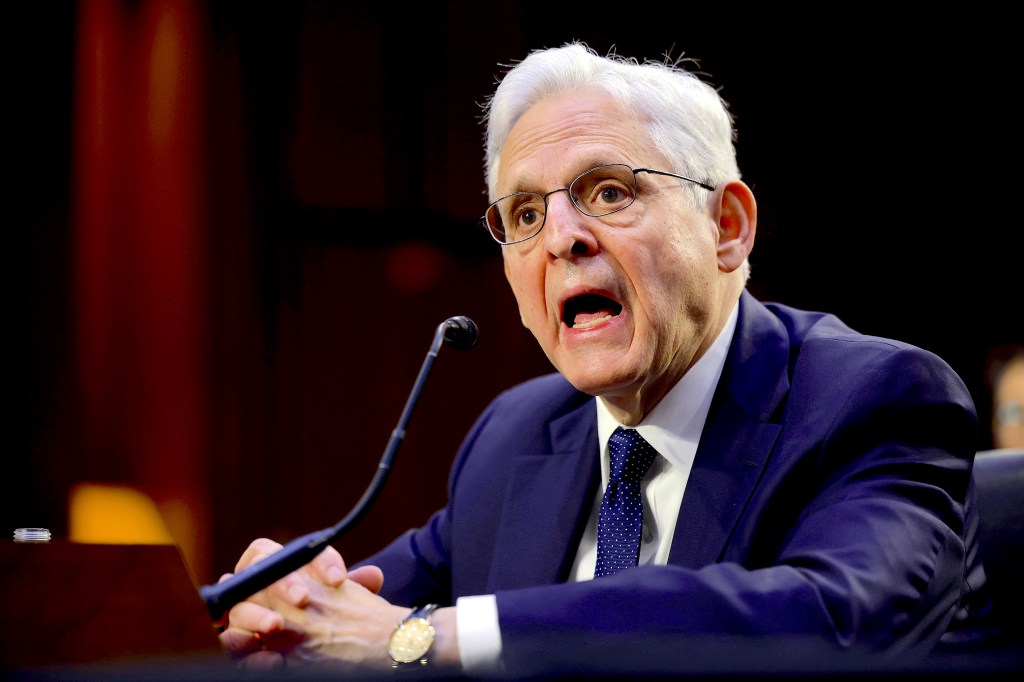
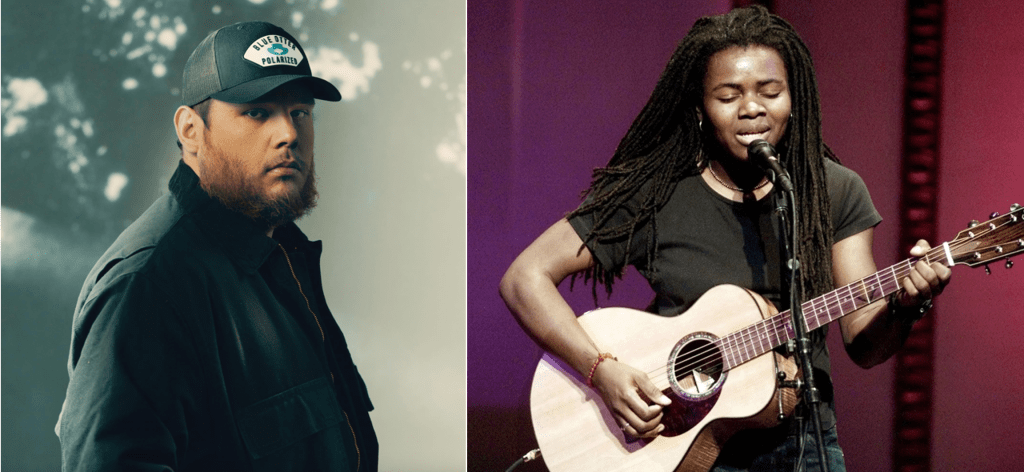

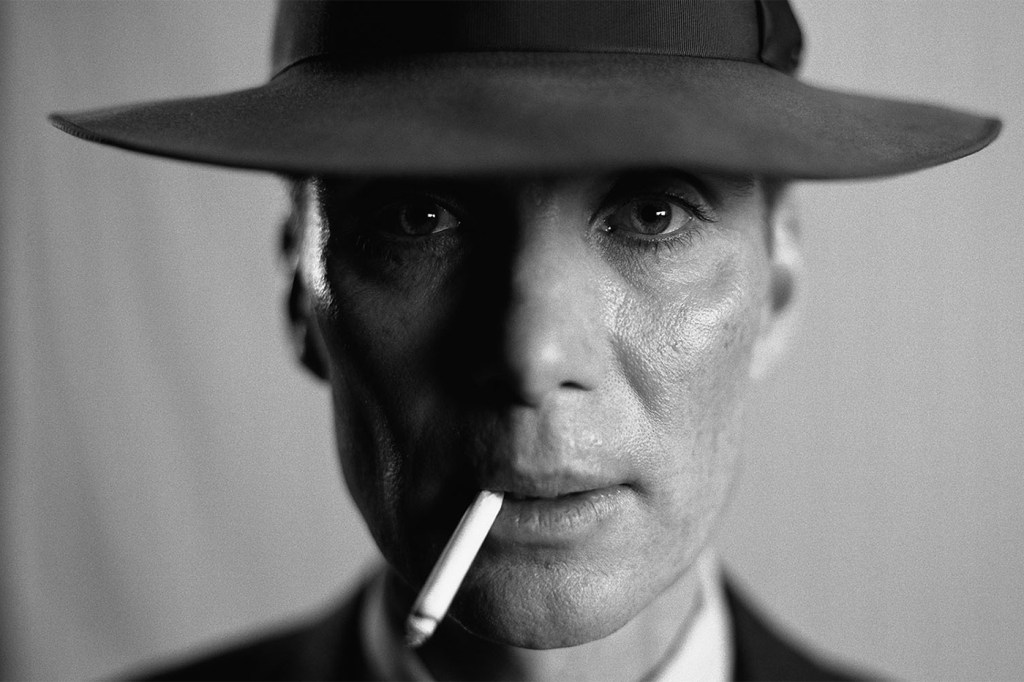


 thekingsnecktie.com
