
Somewhere, PT Barnum Is Laughing

Screen Shot 2017-12-08 at 11.32.25 AM

Crimes usually happen in the wee hours, and what happened around 2 a.m. last Saturday night in the US Senate certainly qualifies. It was arguably the darkest day we have experienced since November 8, 2016 (and given the parade of horrors over the past thirteen months, the competition for that title is fierce). But there is no need for CSI, Colombo, or any other sleuths to determine the culprit, as the perpetrators committed the crime gleefully and proudly.

Both in its content and in the unconscionable way it was rammed through Congress, the Republican tax bill represents one of the worst examples of political corruption in modern American history. It is accurately described as corrupt in that its intent was sinister—to rob the Republic for the benefit of the very few, by means of paying back political donors—and its passage utterly dishonest.

When I first wrote about this issue back in October (“The Return of Voodoo Economics”), I refused to call the bill “tax reform,” as it is anything but, except in the way that dropping an atomic bomb on Hiroshima was “urban renewal.” At the time I argued for the more accurate term “tax cut.” Now I am loath even to call it that, as it fails to capture the scope and awfulness of what just happened. “Tax scam “ or “tax heist” strike me as closer to the mark.

In that previous post, I detailed the shamelessness of this bill, and the ways in which is delivers massive economic benefits to the rich while actively hurting the poor and the middle and working classes. Many others have outlined those facts in much more—and much more—damning detail. The facts are not in doubt, and have been so thoroughly reported that they barely require mention any more. Still, it is stomach-turning to watch Sen. Orrin Hatch (R-UT), as old school and mainstream a Republican as they come, claim with a straight face that “we don’t have the money” to feed hungry children, then turn around and vote for a deficit-busting trillion-dollar giveaway to those who need it least. Suffice it to say that a bill that kills the alternative minimum tax—one of the few means of policing tax dodging by them that has—but no longer lets a public schoolteacher deduct the cost of school supplies she buys out of pocket for her students is a savage indictment of any country that dares to call itself a democracy.

DEFICIT SHMEFICIT

Central to this issue is the aforementioned deficit, which the best non-partisan assessments predict will balloon by an additional $1.4 trillion over the next decade thanks to this bill, passed by a Republican majority that for decades has howled in self-righteous outrage over the lethal dangers of deficits. Of course, that was when Democrats were in power. Now the GOP is back to Dick Cheney’s infamous pre-Iraq War refrain ”Deficits don’t matter.” The hypocrisy is beyond staggering.

The GOP’s sole defense of this arithmetically-challenged bill is the specious claim that tax cuts will pay for themselves through massive economic growth. That is, essentially, supply side economics, which—per my earlier essay—has long ago been discredited as the worst scam on the economic menu, the province of fools and grifters. It is magical thinking that has never worked even once, yet reliably rises from the dead every decade due to its obvious appeal to the rich and powerful. As Jennifer Rubin wrote in the Washington Post:

“(The question is whether these GOP leaders) misunderstand the advice they get, choose to cherry-pick what they are given or simply don’t want to fess up that they’ve abandoned fiscal sanity in search of a political win and to soothe donors. The most generous interpretation is that they are operating with unsupportable optimism that these cuts will do something no other tax cuts have ever done– pay for themselves.

The faux deficit hawks who voted for the bill may have convinced themselves of something that just isn’t so. Now, however, there is no excuse. It’s clear what the economists they rely upon actually believe. Lawmakers should redesign the bill in conference to make it truly tax-neutral — if they still adhere to their anti-debt beliefs. If not, they should have the nerve to admit that they are ladling a ton of new debt on the backs of future generations.”

I am less generous than Jenn. If these Republican leaders—who are professional politicians well educated in all these matters of tax policy, economics, and history—truly do believe this bullshit it is only because they have rationalized it through the worst kind of self-brainwashing. Either way, they are perpetrating an unforgivable scam on the American people for which we will all pay, for generations…..and not merely financially, but in the reduced power, influence, and flexibility on the world stage of a diminished United States, to say nothing of what it reveals about the kind of nation we are, as opposed to the kind we profess to be.

The long term economic impact of the bill is yet unknown, which is a big part of the problem. This legislation, which by its very nature will have a tectonic impact on the entire American (and indeed global) economy, was rushed through Congress without even the pretense of expert analysis or testimony, public hearings, or even cursory staffing. Regardless of ideology that is criminally reckless governance (and I use the term “governance” loosely). What vetting did occur—by groups like the Tax Policy Center and the Joint Committee on Taxation—was scathing, and therefore subjected to an active disinformation campaign by the GOP, the same people who had once championed those very groups. Democrats in the Senate ridiculed a bill handed to them mere hours before the vote with indecipherable handwritten changes scrawled in the margins, and were denied a request for time even to read it. For a Republican Party that screamed bloody murder over how Obamacare was allegedly “jammed down our throats” after ten months of microscopic scrutiny and public debate, it was the height of hypocrisy.

Man, am I getting tired of writing that every week.

I’d say that the GOP should be forced to watch Schoolhouse Rock for a refresher on how bills are supposed to become law, but that clever and entertaining civics lesson is too good for them. It’s true that the House and Senate versions of the bill still need to be reconciled, and that might still prove a showstopper. But as others have noted, the same irresistible forces that improbably pushed this heist through both houses will again be in play in that reconciliation process, which will surely succeed. Needless to say, if the roles had been reversed the GOP would never have stopped yelling and stamping its feet over the other side “abusing” its power, complete with dire warnings of how we are slipping into dictatorship. They are less concerned about that now, I notice.

The enema-like passage of this bill thus stands with the obstruction of Merrick Garland’s nomination to the Supreme Court as the most egregious examples in recent memory of government in bad faith. I guess that is just how the Republican Party rules now.

There were so many other astonishingly evil things larded onto this bill that they cannot be enumerated here, though a short list includes a deathblow to the ACA’s individual mandate, the assertion of fetal personhood, opening the Arctic National Wildlife Refuge to oil drilling, the partisan punishment of the blue states out of sheer spite, and perhaps most disgusting, the fostering of further political involvement and campaign donations by churches and religious groups while allowing them to keep their non-profit tax-exempt status. In that sense, the bill is many ways a grab bag of right wing obsessions.

Of special note, however, is its wholly uncalled for evisceration of the inheritance tax (and no, I won’t call it the “estate tax,” which is already conceding linguistic victory to the right, let alone their preferred histrionic term “death tax”). Notwithstanding the emotional issues surrounding it, it is important to emphasize that this is a tax on inheritance. It’s not a tax you pay on money you leave to your heirs; it’s a tax your heirs pay on money they receive, and no more a matter of double taxation than any other transactional tax. When you take in income—whether through wages, dividends, gifts, casino winnings, or inheritance, it’s taxed. Why should a billionaire’s kid pay no tax on money daddy leaves him and a ditch digger pay through the nose on money he earns by the sweat of his brow?

Only someone with a surname like Trump would take issue with that, or so one would think.

SAUSAGE-MAKING AT ITS UGLIEST

This Robin Hood-in-reverse bill was so jawdroppingly bad in so many ways—brutally unjust, shamelessly un-researched, sloppily written, and rammed through Congress like the NYPD questioning Abner Louima—that I frankly did not expect it to pass. Call me naïve, but I wasn’t convinced something that shameless could survive public scrutiny. (Then again, we made Donald Trump president, so nothing should surprise us any more). More to the point, I thought it contained too many provisions that were ostensibly anathema even to the GOP, per above. There were a handful of Republican senators (fewer congressmen) who I simply could not imagine voting for such an obvious crime against the American people. But as it turns out, the marginal courage some of these senators showed in stopping the equally rancid attempt to rush through a repeal of Obamacare gave me a false sense of confidence, causing me to vastly underestimate the partisanship and venality of those individuals.

Every one of the handful of Republican senators who have shown some backbone is standing up to Trump thus far all rolled over and showed their true colors in voting for this monstrosity: McCain, Flake, Collins, Murkowski, Sasse, Graham. Only Bob Corker showed any courage and stuck to his principles (whether one agrees with them or not). So I don’t want to hear any more about the heroism of any of these weasels. I suppose we were foolish ever to think these men and women would stand up for what is right; they are, after all, Republicans in the first place. But among his many atrocities, Trump has distorted our image of reality such that we began to view these orthodox Republican politicians as heroes of some sort, or at least sane and decent human beings. Last Saturday night ought to disabuse us of that delusion.

So John McCain, please in future spare us your sanctimonious speeches about returning to “regular order,” lest we are forced to conclude that—much as it pains me to say it—Donald Trump was right. You are no hero.

BEST SUPPORTING ACTOR

Naturally, Trump himself claims that he won’t personally benefit from this highway robbery of the American people, and in fact will suffer. (“Believe me.”) Not surprisingly, it’s a blatant lie. Trump stands to profit handsomely from almost every major provision of the bill, from carried interest to private jets, with his main business—commercial real estate—singled out for especially generous treatment even by the plutocrat-friendly standards of the rest of the legislation. His children are estimated to receive $600 million just from the change to the inheritance tax alone. As more than one observer has noted, the bill seems almost curiously tailor-made to benefit one specific family profile in particular. Of course, because he won’t release his tax returns, we don’t fully know how much Trump will profit. (But Bob Mueller does.)

In many ways then, what happened in the dark of night last Saturday was the culmination of what the entire Trump campaign and presidency have been about, but not because Trump led it. What a laugh: Trump doesn’t even know what’s in the bill. A functional illiterate, he knows—at best—that it is an enormous Christmas present to the obscenely rich like him and his despicable clan, and that’s all he needs to know. So for once I am not laying the blame for this latest American tragedy at the feet of Donald John Trump, or focusing my anger and loathing on him, cancer on the American experiment though he is. In this case, he is but a bit player. The rot goes much, much deeper and wider.

The tax bill is the doing of the mainstream GOP and has been in the works long before Trump thought a good sequel to “The Apprentice” would be to become leader of the Free World. Trump is ancillary to it, a means to an end, a mere supporting player. The Republican Party’s entire willingness to put Trump atop its ticket, to excuse and even abet his numerous unconscionable and disqualifying actions on the campaign trail and in office, to give him blindly loyal support to the point of ignoring what might prove to be the worst scandal in American history (and to actively obstruct investigations thereof), can be attributed to one thing and one thing alone: its overwhelming imperative to lower taxes for the rich, come hell or high water. In that sense, the entire Trump campaign and presidency have been nothing but a prelude and prerequisite for what happened in the Senate last weekend.

As former GOP staffer-turned-sentient human being Mike Lofgren says, cutting taxes for the rich is the only thing the Republican Party really cares about. Even though other matters may get the headlines—guns, abortion, gay rights, Andres Serrano, defunding Big Bird, Islamophobia, hating on the NFL, and on and on—everything else the GOP does is just rube bait to advance its one true agenda. Yes, all that reactionary stuff is appealing to the right-wing mindset. But at the end of the day, for the 1% who are the Republicans’ most important demographic, it is mostly just about their fucking wallets.

And on Saturday night those folks achieved their goal.

Behind the partisan façade, McConnell, Ryan and the rest of the GOP mandarins have no love for Donald Trump. Many of them no doubt actively despise him, for a variety of personal and professional reasons. But they are in bed with him for one simple and blindingly obvious reason: because he enables them to advance their loathsome platform. Until he stops serving that purpose, don’t look for the GOP to turn on Donald.

In all fairness, the Republican leadership did not choose Trump as its preferred path in the 2016 campaign, and many of them actively tried to avoid it—not on principle (just kidding!), but purely for reasons of pragmatism and strategy. But once the Trump phenomenon was forced upon them, they made their Faustian bargain, and now are full-blown accomplices who will have to answer for it.

Until now, however, the idea of Trump as cover for the GOP agenda hasn’t really worked out as the party leaders had hoped. On the contrary, Trump’s human suicide vest style of governing has actually damaged and hindered the Republican legislative slate, the attempted repeal of the ACA being the prime example. (But now of course they’ve found a way to undermine Obamacare—if not fully destroy it—without repeal, thanks to the elimination of its linchpin, the individual mandate.)

But with the tax heist, Trump’s con man hold on close to 40% of the electorate and his idiot savant talent for distraction and for waging war on the media have provided the perfect covering fire for the GOP to achieve their decades-long dream of pillaging working- and middle class America in order to further enrich the wealthiest fraction of the uppermost 1% and their corporate cousins. That they were able to do so under the pretense of populism, of “draining the swamp,” and of fighting for the interests of “ordinary” working Americans against the interest of “elites” is an Orwellian achievement for the ages.

Then again, like the man said, you can’t con someone who doesn’t want to be conned. The credulousness of millions of average Americans in failing to subject the GOP plan to real scrutiny, and in falling for this blatant scam, makes them partially culpable in their own fleecing.

As we used to say on the playground: “Suckas…”

BLAMING THE VICTIM, WHEN THE VICTIM DESERVES (SOME) BLAME

The cowardice, dishonesty, and hypocrisy of Republican politicians is one thing. But I remain astounded that such a large segment of Republican voters are fine with this travesty, even enthused about it, and willing to defend the GOP plan in the face of all the empirical evidence about how badly it will hurt so-called “regular folks” like themselves. Once again, we see the shocking power of tribalism and the blindness—or more correctly, mental illness—it induces. Shame on me for not having learned the depths of American gullibility in November 2016. But over the past twelve months that tribalism has reached the point of mass psychosis in the United States.

Recall that Trump came to power on the promise that he was a champion of the “forgotten” men and women of blue collar America. This of course is textbook Fascism 101. Volumes have already been written about the patent absurdity of a Manhattanite mock billionaire born with a silver spoon in mouth—this evil “Richie Rich” cartoon come to life—positioning himself as a working class hero, or of anyone buying into that outlandish charade, but never mind.

Even if one accepts the myth that white working class anxiety and alienation—rather than racism, misogyny, xenophobia, demagoguery, and the impulse for authoritarianism, not to mention collusion with a foreign power—were at the heart of the last election, why on Earth would working people choose Donald J. Trump of all people as their standard-bearer and the alleged solution? See the title of this essay.

No Trump supporter or other Republican can objectively look at the GOP tax scam and conclude that it is anything but a shameless giveaway to the very richest among us at crushing cost to the rest of the country and its future. To contend otherwise is Jonestown-level self-delusion. So why do rank-and-file GOP voters march happily along behind Trump, McConnell, and Ryan to self-inflicted doom while their putative champions gleefully profit? It’s a sort of masochism—or willful ignorance—that is hard to fathom.

Trump of course also famously promised to “drain the swamp” in Washington, and repeatedly railed against Goldman Sachs in particular as the exemplar of Wall Street rapaciousness that was poisoning politics and trampling on the so-called little guy. Then—in case you missed it—he filled his Cabinet and inner circle with a rogues’ gallery of professional political hacks like Mick Mulvaney, Mike Pompeo, and Mitch McConnell’s wife Elaine Chao (Trump is especially cool with nepotism), along with multimillionaires and billionaires including Wilbur Ross, Betsy DeVos and multiple Goldman Sachs vets (among them, Mnuchin, Cohn, Dina Powell, deputy Treasury Secretary James Donovan, and even Bannon, the faux populist bombthrower himself). When hypocrisy of that sort fails even to budge the proverbial needle with Trump supporters, it’s fair to wonder if they are—hmmm, what is the technical term? Ah, yes—fucking stupid. (See also: golf.)

And so, with its willful blindness, tribalism run amok, and insatiable Kool-Aid-guzzling, the “regular folks” of Trump Nation bear a large share of the blame for the fact that the Republican Party was able to get away with this tax bill atrocity, one that promises to crush those very people more than anyone else. It is indeed hard to get one’s head around, but in the words of Sam Harris, “A puppet is free as long as it loves its strings.”

CONSIDER THE PIPER PAID

It is ironic that the Republican Party inexplicably thinks this bill was essential to its survival, as if there was a massive groundswell of public demand to be robbed at gunpoint. (Trump supporters were docile at being taken to the cleaners, but they didn’t initiate the idea or actively demand it.) Why is the GOP so convinced that passing this bill is a winner for them?

The conventional wisdom is that the Republican Party was desperate for a legislative victory—on something, anything—before the end of the year to avoid a massive voter mutiny after promising so much and delivering almost nothing: not even, most embarrassingly, their long-vowed repeal of Obamacare, even with uncontested control of both Congress and the White House.

But this is a circular argument. Even if that is true, why choose as your Hail Mary a tax bill that promises to eviscerate Main Street on behalf of Wall Street……the exact opposite of what you said you’d do during the campaign? I’m not questioning the GOP’s avarice, merely its tactical sense in choosing this hill to die on. Ironically, the exact opposite might ultimately prove true. Given how awful this “achievement” is, it is not at all clear that the GOP won’t in fact pay a hefty price at the polls in 2018—if enough Republican voters wake the fuck up—precisely because it rammed this bill through. (“Foisted it” on us, as Larry David would say.)

Then again, maybe not. Facts no longer matter, evidently, so the GOP might well get away with this crime, especially if the bill’s long-term destructiveness is sufficiently slow to reveal itself, frog-in-boiling-water-style, and the electorate doesn’t really feel the pain for some years to come, even as the damage is undeniably unfolding.

That leaves us with only one logical conclusion about the urgency the GOP felt toward this bill. It’s not about notching a legislative victory at all. Of course not! Do you really think a party and a president who, if it served their purposes, would angrily deny that the Earth is round, would bat an eye at playing off their failure to pass any landmark legislation? Don’t make me laugh.

No. The reason the GOP went all in on the tax bill despite all the attendant risks is because THIS IS WHAT ITS MASTERS DEMANDED.

In the end, it is not the voters the GOP is fears: it is their wealthy donors, corporate interests, and other dark money that is the lifeblood of the Republican Party. With the GOP in control of both houses of Congress and the White House (and increasingly the judiciary and most state governments as well), the powerful interests who are the financial backbone of the Republican Party will stand for nothing less than their pound of flesh. These forces made it very clear that this sort of massive payoff is EXACTLY the reason that they have backed the GOP lo these many years. If McConnell and Ryan had failed to deliver, then they would have truly been in mortal danger—a far more pressing threat than being voted out in the upcoming midterms. The GOP leadership doesn’t fear voters in Indiana or Georgia or Nebraska or anywhere else. They fear the 1%, who are the guys with the checkbooks.

And so here we are.

The fact that the GOP was willing to overlook that danger—to dismiss widespread public opposition, and the possibility that this could backfire terribly on them—speaks to the degree of their venality and the extent to which they are beholden to their loan shark benefactors in the top tax bracket. And now that they’ve managed to jam this scam down the throats of the American people, the Republicans will likely be emboldened to reach for more. Paul Ryan has already indicated that on the strength of this bill’s passage the GOP will try to capitalize on this momentum to gut welfare, Medicare, and Medicaid. Because somewhere in America there is a poor, hungry, ill child they haven’t yet kicked in the stomach.

Trump himself is a different matter, of course: for that infantile psychopath notching a win was indeed all that mattered. So it will be ironic if the lone achievement he (barely) mustered—or more accurately, had delivered to him on a platter—proves in the long run to be a historically reviled and infamously despicable low water mark in American political history.

So the question then becomes, will this bill indeed prove to be a boon to the GOP (apart from placating its plutocratic overlords), or will it be its undoing? Will it inject enough extraneous short term stimulus into the economy and take long enough to manifest its destructiveness that the GOP will escape the 2018 midterms (and maybe even the 2020 presidential election) unharmed? Or will this go down as the worst self-inflicted and possibly lethal wound in 21st century legislative politics?

Stay tuned. Either way, I am confident the GOP will find a way to blame Hillary.

TO THE BARRICADES, IF NECESSARY

One ray of light in all this is that the GOP’s midnight ripoff came less than 24 hours after the week’s other big news, Michael Flynn’s guilty plea for lying to the FBI and the revelation that he is cooperating with the Mueller inquiry. The significance of those events has been well documented elsewhere. Let us hope they mark, if not the beginning of the end, at least the end of the beginning (with apologies to Mr. Churchill). At the very least, if I were Jared, Don Jr, or even Don Sr, I would certainly be shitting my drawers.

That said, two pieces last week offered grim and pessimistic assessments on that front, one by Dahlia Lithwick in Slate (“Is It Too Late for Robert Mueller to Save Us?”) the other by Peter Beinart in the Atlantic ( “The Odds of Impeachment Are Dropping”). Both reminded us that impeachment is a political process, not a legal one (and the same would be true for the circumstances that would force a Trump resignation, or his removal under the 25th Amendment). Both also suggested that Republican fealty to Trump has already shown itself to be so craven, and the Republican electorate now so accustomed to bleating “fake news” at any facts that inconveniently conflict with its worldview, that nothing Bob Mueller ultimately produces—not even a proverbial smoking gun—will cause them to man up, acknowledge the truth, and do the right thing.

I suspect they are right. The refusal of even the best Republican senators (it’s a sliding scale) to vote against the GOP tax scam does not bode well for them to do jackshit about Russiagate, even if Mueller turns up with a video of Trump spit-shining Vladimir Putin’s wingtips.

So in the famous words of Stevie Bannon’s hero V.I. Lenin, and to stick with the Russian theme: Shto delat? What is to be done? (Read the original 1902 pamphlet; the 1983 film adaptation starring Steven Seagal and Kelly LeBrock really botched it.) What can be done when the victims of a crime refuse to recognize what has happened to them….when—on the contrary—they eagerly cheer and support their oppressors and angrily denigrate those who would try to stop (or even just point out) the crime?

Not much. We have already seen that an appeal to reason, facts, and objective reality no longer has any sway with a certain segment of the American electorate.

But as we have also seen—most pointedly in Virginia a month ago—that we can leapfrog over that Know-Nothing demographic. The hardcore Republican base comprises at most some 40% of the electorate. The remaining sane 60% of us can simply overwhelm them numerically—if we get out and organize and register and campaign and vote. McConnell, Ryan, Trump, and the rest are banking on the ignorance, short term memory loss, and tribalism of the voting public to enable them to get way with the Great Train Robbery of December 2, 2017. Let’s prove them wrong, make them lose that gamble, and punish them at the ballot box next year.

If we are unable to harness our outrage, if we merely sputter and spin our wheels and do nothing more than vent to each other on Facebook (and as my weekly hyperventilations suggest, I count myself as very much at risk of that temptation), if in the face of this absolute monstrosity and threat to the Union we can’t get our act together sufficiently to vote these fuckers out of office, then we deserve to be ruled by them.

Needless to say, that possibility is why the Republican Party has, for decades now, engaged in a systematic, blatantly anti-democratic effort to suppress the vote, including gerrymandering, propagation of the canard of voter fraud, distortion of the census, and other horrors for which Trump—again—serves as a bespoke, Hades-sent frontman. That, too, is a flank on which we must fight them.

Likewise, if incontrovertible evidence were presented that implicated Trump in a scandal that makes Watergate look like shoplifting and still McConnell, Ryan & Company do nothing but shrug, I have to believe that we will get out in the streets and DEMAND that justice be done….and by “we” I mean a significant segment of the still sane Americans who believe in non-alternative facts, and in the Constitution, and in the rule of law. I’m talking about millions of Americans marching on Washington as they did on January 21, 2017….except this time it will be not in protest but in outright revolution.

Make no mistake, Trump Nation: if you cheat us in Congress we will come for you at the ballot box, and if you cheat us there, we will come for you in the streets.

Photo: The Federalist


The Read Thru

TRT (sm, bw)

This week on The King’s Necktie, something a little different: a short film about the times in which we live. Starring Jamison Stern and Dave Schoonover, cinematography by Justin Schein, color and titles by Mitchell Johnson, produced by Ferne Pearlstein, Jamison Stern, and me.

Click here to watch.

The Ghost of Merrick Garland

Neil G

I haven’t been sleeping well, which isn’t like me. Still getting used to the new house I suppose. Louise is away so when I woke in the middle of the night I did the thing that always makes me feel better. Not that thing. The other one. I went to the closet and put on my robe. The black one.

I stood and looked at myself in the mirror. OK, full disclosure: I admired myself. I earned that right, didn’t I? The robe itself wasn’t any different than the ones I’d been wearing for eleven years. But it was the idea of it—what it represented, as opposed to all its predecessors—that I loved. I’ll cop to that. I’m only human.

“Your sleeves are a little long,” came the voice out of the darkness.

I nearly jumped out of my skin. Involuntarily I wheeled around and saw him sitting there in the club chair by the armoire. Head of wavy gray hair. Wire-rimmed spectacles. That kindly, owlish look.

“Merrick?” I gasped.

“Correction. I’m the ghost of Merrick Garland.”

My head was swimming. “But…Merrick Garland isn’t dead.”

“Isn’t he?”

“I’m not being figurative. I’m just asking, how can you be Merrick Garland’s ghost if he isn’t dead?”

That’s what you’re having trouble with?” said Merrick, or his ghost, or whatever this apparition was. “The point is, I’m here to haunt you.”

I stammered, at a loss for words. He filled the gap for me.

“How are things down at the SCOTUS?”

“Peachy,” I said.

“I’ll bet,” he replied without bitterness, at least none that I could detect. But then, it’s easy for ghosts to hold the high ground.

He looked me in the eye. “And it isn’t bothering you?”

“What?”

“The talk?”

“Talk?” I said.

“That you ought to have declined the nomination, on principle. Seeing as the seat you were being asked to fill was stolen.”

I snorted. “Do you really need a lesson on constitutional law, Merrick?”

“No, but I think Mitch McConnell might.”

“He didn’t do anything illegal.”

“No, he just wildly disregarded the intent of the law. Willfully shirked the Senate’s constitutional responsibility to give the nominee a fair and timely hearing. Engaged in shameless obstructionism, even by his standards.”

I dismissed him with a wave. “That sort of thing has always gone on and you know it.”

“Not like this, and you know it. If the Democrats had done that to a Republican president’s nominee, your side would have screamed bloody murder.“

“Not to put too fine a point on it, but you sound like a sore loser.”

“Doesn’t make what McConnell did right. He got very very lucky when November rolled around. Then again, it seems your side had some help from some guys in furry hats.“

I suppressed an eyeroll. Well, maybe not, but I tried to. “Clinging to that fantasy, are you?”

Merrick ignored the remark like a good litigator. “But forget Mitch. Let’s talk about you, and what you did—or didn’t do.”

I crossed my arms, but not defensively. “Go on.”

“During your confirmation, we heard all that talk about your ‘integrity.’ That whatever Mitch had done, you were eminently qualified, and a top drawer legal mind, and ‘a stand-up guy.’ A choice that even Democrats couldn’t find any fault with, professionally speaking.”

“Are you questioning that?”

“A little. How much integrity could you have if you were willing to take a seat that had been kept open by indefensible tactics that blatantly violated the spirit of the Constitution you claim to hold so dear?”

“See above.”

“Are you not concerned about the honor of the court? The damage this did to its credibility? The arms race of politicization that it will surely set off?”

“You really like playing the martyr, don’t you, Merrick?”

“One has to embrace the role in which one is cast, I suppose. Do you seriously think the next time we have a Democratic Senate, they’re going to forget what happened? That we’ll ever again have a legitimate confirmation process, unless one party controls both houses and the presidency too? You could have put a stop to all that singlehandedly. But you didn’t.”

“You can’t hold me responsible for all the partisanship in Washington. Or even this example of it.”

“No, but we can hold you responsible for agreeing to take advantage of it.”

I snorted again. “You wouldn’t have done the same?”

“We’ll never know, will we?”

“No. We won’t,” I said firmly. The trump card, as it were.

“So which was it then, Neil? That you wanted that seat so badly you were willing to ignore that sort of despicable behavior, or that you genuinely didn’t find it disturbing?”

“Maybe I simply believe everything that happened was fair and just.”

Merrick raised a brow. “Do you?”

I was silent. Did I really believe that, or had I just talked myself into it….the way the whole conservative movement had talked itself into this place we now found ourselves? The platitudes I repeat to the Federalist Society in a packed ballroom to thunderous applause are one thing. But in my heart of hearts? I didn’t know any more.

The ghost must have sensed my ambivalence. He plunged the dagger. “You’re destined to have an asterisk by your name for all eternity.”

“At least my name will be remembered,” I snapped back. “At least it will be on the rolls of justices of the Supreme Court.”

“Yes—as the justice nominated by Donald Trump. Quite a distinction.”

“I may not be the only one.”

“I think that’s what’s keeping people up nights. One of many things, actually.”

“In fifty years, or a hundred years, no one will remember who nominated me to the Court. They’ll only remember that I sat on it, and what I did there.”

“Not sure you’ll be any better off that way—not if you’re remembered as a champion of regressivism. A consistent protector of corporations and the obscenely rich and the imperial presidency. Enabler of authoritarianism. Defender of crypto-racism and the last gasp of panicked white America, watching its majority slip away.”

“Nice spin. I’d describe those same things as faithfulness to the ideals on which this great country was founded. Pity you can’t see that.”

Garland tut-tutted like a schoolmarm. “I never had much truck with originalism, as you know. We all admire the Constitution, but even the Founders didn’t think it was written in stone and carried down from Mount Sinai—with apologies to Roy Moore. If they hadn’t intended it as a living document they’d never have provided for ways to amend it.”

“And I am all for amendments. What I am not for is reinterpreting it— distorting it—without going through the prescribed process. If your ilk had its way, the Constitution would have all the longevity of a Facebook page.”

“I notice you have no problem extrapolating the Second Amendment to AK-47s, rather than limiting it to muskets. So that fidelity is actually kinda flexible, no?”

“Don’t talk to me like a 1L.”

“Just pointing out the silliness of unquestioning obedience to an ancient scroll written by a bunch of slaveholders in breeches and powdered wigs. It’s a bit like blind faith in the Bible, which is fitting, as those two tend to go hand in hand with conservatives. Don’t get me wrong: the Founders were visionaries. Visionary enough to know that the rule they were laying down needed a mechanism to adapt to the passage of time and the emergence of new challenges they couldn’t possibly foresee. Even if we were to accept their word as absolute law, your originalism requires not only supernatural insight into what the Founders intended 250 years ago, but also paranormal understanding of what they would have wanted a quarter of a millennium hence.”

“Much as I’d like to disassemble your distortion of my philosophy, let’s just say I just don’t believe in legislating from the bench.”

“Come on, Neil. The right wing is all too happy to legislate from the bench when it’s their man sitting on it. It’s only progressive judges they tell to shut up and stay in their place. At least be honest about it.”

I couldn’t even pretend with the eyeroll this time. “Merrick, I know you’re a ghost and all, but do you really think you’re going to come in here and make me stop believing in everything I’ve devoted my whole life to?”

The ghost smiled sadly. “No. I guess not. But it isn’t just your ideology that’s a problem. It’s your style too.”

“Oh?” His sanctimony was beginning to grate on me.

“During your confirmation you were all homespun folksiness, high-minded assurances of your integrity, and humble declarations of your love for the law….”

“You’re familiar with how confirmations work, right?”

“….but since you got on the bench—and we’re only talking seven months—you’ve established a very different reputation, haven’t you? Arrogance. Snottiness. Lecturing and condescending to the other justices, who have a combined 140 years of experience on the Court.”

“I was put on that bench to do a job, not to act like a fraternity pledge. Not to engage in some judicial kabuki drama of deference to seniority.”

“Be that as it may, word is that you’re pissing some of your peers off. I heard Ginsburg shut you up the other day with one line in the middle of you speechifying about gerrymandering. And I hear Kagan is eating your lunch in conference….”

“Poppycock. No offense, Merrick, but outsiders—whether it’s Nina Totenberg or you—really don’t know what goes on in conference.”

He ignored me, and the dig. “And it’s not just the liberals either. You insulted Kennedy—who you used to clerk for!—in the Obergefell case. And I can’t imagine Roberts is very happy with you, even though you ought to be allies. You know very well that how protective he is of the legacy of the Court. Yet there you are, going around giving speeches like the one at the University of Louisville, where McConnell introduced you—the man who even more than Trump is responsible for you sitting where you now sit. Or worse, the one you gave at the Trump Hotel, with all that money going to the Trump organization.”

“Justices give speeches all the time.”

“Not ones that put money in the pockets of the president they owe their nomination to. Not when that president’s profiteering is an issue that might well wind up in front of you. Not when you’re already under a cloud.”

“I’m not under any damn cloud!”

A hint of a smile began to play across his face now. “What happens to you if Trump goes down?” he asked. “I’d say ‘when,’ but I’ve learned not to count any unhatched chickens.” I was silent. He seemed to be enjoying twisting the knife now. “Surely you’ve thought about it. If Trump is removed from office for having conspired with the Russians—if the whole election is determined to be fraudulent—what happens to you? What happens to all the federal judges on the lower courts and all the other nominees Trump has put in place? Not to mention the policies and executive orders. Sadly, we don’t have a time machine that lets us unwind the damage. But there are certain high-profile appointments whose legitimacy people are inevitably going to question. Like an Associate Justice of the Supreme Court.”

“You’re living in a fantasy world, Merrick.”

“Would you voluntarily step down?” Before I could answer he cut me off. “Silly me. I’ll withdraw the question. I think we know the answer very well, or you wouldn’t be sitting on the Court right now in the first place. So I suppose a lot depends on what happens to Trump, doesn’t it? Your destiny is yoked to his.”

“Then I suppose history will judge, won’t it?”

“Indeed it will.” He smiled openly now. “Maybe you’ll get lucky. Maybe Trump will push the button and the whole human species will be wiped out in a nuclear holocaust. Then no one will be left to scorn you. That would be a sad way for it all to end, wouldn’t it? Destroyed by some shoddy D-list reality TV celebrity?”

“Whom we the people made president,” I shot back.

“Precisely the problem.”

We stood face to face, silent for a moment, just staring, until at last he spoke again.

“Face it, Neil. You’re never going to be thought of as ‘just another justice,’ and I don’t mean that in a good way. It’s already very clear what sort of Supreme Court justice you are. One who accepted a seat that had been stolen from another jurist. One who’s committed to a retrograde agenda that history will judge as harshly as Dred Scott or Plessy v. Ferguson…..or Citizens United. One who agreed to be nominated by the most monstrous chief executive in modern American history—and maybe American history full stop—who may well be shown to have assumed his office illegitimately, but has undoubtedly debased it and our entire democracy, maybe permanently. You, Neil, are a man who kissed that monster’s ring and is complicit in his criminal administration and in advancing his horrific policies. And when he’s run out of office in disgrace—if not in chains—you’ll still be there, remembered as a usurper and a regressive and a quisling.”

I could feel my blood boiling as he made his patronizing little speech. I’d had enough of his self-righteousness. Of course I could have let it go—should have let it go. It was so obviously the hysterical venting of a man who felt robbed. An unlucky bastard. One of history’s losers. If what he’d said hadn’t bothered me—if I’d truly been able to hear it for what it was, and how pathetic—I could have laughed it off. But I’ll admit, it had gotten under my skin.

I opened my mouth to reply, and then I blinked….And he was gone.

I blinked again, just to make sure my eyes weren’t playing tricks on me. I was all alone inn the quiet bedroom.

I stood there in silence a moment. What’s scarier: seeing ghosts, or just imagining that you’re seeing them?

I took off my robe and got back in bed. I don’t care what he said. Sour grapes, it goes without saying. The sourest of all. A man who’s destined to a be a footnote to history attacking a man whose place in it is secure. I’m not compromised. I’m not complicit in the theft of any seat. I’m not tarred by my association with Trump. He’s not going down in disgrace and leaving me tainted. I’m sure of it. Pretty much.

I turned and looked toward the window. Outside, there were no stars and no moonlight. Dawn was hours away yet. I had a long night still ahead.


The Last Laugh: Ferne Pearlstein on Humor and the Holocaust

FERNEPEARLSTEIN_THELASTLAUGH_DIRECTORPHOTO w RENEE FIRESTONE_1 copy

Larry David’s monologue on Saturday Night Live two weeks ago ignited a national firestorm over the use of humor that invokes the Holocaust. As it happens, that is a topic that filmmaker Ferne Pearlstein has spent more than twenty years exploring, culminating in her acclaimed feature documentary The Last Laugh, which premiered at the 2016 Tribeca Film Festival, was released theatrically in the spring of 2017, and had its nationwide broadcast premiere on PBS’s Independent Lens series this past April on Holocaust Remembrance Day.

(Full disclosure: Ferne and I dated for a while in the late Nineties. Oh—and we got married sixteen years ago and are raising our daughter together from our home in Brooklyn. I was one of the producers of the film, along with Jan Warner, and Amy Hobby and Anne Hubbell of Tangerine Entertainment.)

Admittedly, this scandal is running a distant third to Donald Trump’s latest outrages and the continuing avalanche of revelations about widespread sexual assault, from Louis CK to Roy Moore. But plenty of people are plenty upset about Larry too. Since this topic is suddenly on the front burner of the American conversation, I’d like to capitalize on Ferne’s years of hard work to make a few points that she and I hope will be illuminating.

TABOO YOU

It’s easy to understand the uproar over humor that touches on the Holocaust; much harder to understand the ways in which a comedic approach might be not only acceptable but even healthy under the right circumstances.

In explaining the genesis of the film, Ferne speaks to this issue:

“In 1991 I was a documentary still photographer for the New York bureau of a Japanese newspaper, the Tokyo/Chunichi Shimbun, and was invited to Miami with a number of foreign journalists to write about the city. One afternoon we were taken on a tour of the Holocaust Memorial there, which was brand new at the time. I brought along my old friend Kent Kirshenbaum, whose mother was an Italian Jew who escaped Mussolini’s Rome when she was a baby. When the tour was over, Kent and I asked our guide—an elderly Holocaust survivor—what she thought of Art Spiegelman’s Maus, which had just finished being serialized and was about to win the Pulitzer Prize. She got very upset at the mere idea and said to us, “You cannot tell this story through the funny pages! There was nothing funny about the Holocaust!” We politely told her that we didn’t think Maus was funny at all except in the darkest sense, that it just used the comic form to tell a very poignant story. But our guide wasn’t moved. She was understandably furious at the whole idea.”

“That moment stuck with us both, and when Kent went back to school to get his PhD, he wrote a paper about that question: can there ever be any legitimate humor at all about this very difficult topic? It was called ‘The Last Laugh: Humor and the Holocaust.’ And a few years later, when I was getting my Masters in Documentary Film from Stanford, he handed me the paper and said, ‘Make this into a film.’ That was 1993. It only took 18 years to find the funding for ‘The Last Laugh,’ and another five to actually make it.”

What Ferne discovered on this journey proved surprising. While on first blush there would appear to be no topic less suited to levity, there is actually quite a lot of humor surrounding the Holocaust, humor that has served many positive functions: to help strip power from oppressors, to expose racism and anti-Semitism, and simply to provide a new avenue by which we might approach such an emotionally charged, much worked-over subject. History shows that even the victims of the Nazi concentration camps themselves used humor as a means of survival, resistance, and counterattack. Few people would object to that, or begrudge survivors any weapon they could grasp to help them endure their ordeal. But from there it gets infinitely trickier.

Needless to say, any use of comedy in connection with this horror is fraught and risks diminishing the suffering of millions. The potential for such humor to turn hostile is also ever-present, especially with the postwar resurgence of attacks on the Jewish people.

But if we make the Holocaust off limits, are we not on the slippery slope to the same suppression of free speech that characterized the very totalitarianism that led to that atrocity? And what then are the implications for other controversial subjects—slavery, 9/11, racism, AIDS—in a society that prizes freedom of expression? More to the point, it is not even a matter of “if” we wish to allow humor about the Holocaust. The fact is, as the Shoah itself becomes ever more part of the distant past, such humor is inevitably becoming less and less charged and more and more common. What are the implications of that development, and how should we deal with it?

The Last Laugh examines these issues through three intertwined threads: the remarkable cinema verité story of 93-year-old Auschwitz survivor Renee Firestone; a Greek chorus consisting of interviews with comedians, writers, and thinkers led by Mel Brooks, and including Sarah Silverman, Carl Reiner, Rob Reiner, Susie Essman, Alan Zweibel, Harry Shearer, Gilbert Gottfried, Judy Gold, Jeffrey Ross, Larry Charles, Etgar Keret, Deb Filler, David Cross, Shalom Auslander, Jake Ehrenreich, Lisa Lampanelli, David Steinberg, Robert Clary, Roz Weinman, Hanala Sagal and Abraham Foxman; and lastly, clips from movies, TV, stand-up comedy, and other archival material ranging from The Producers and Hogan’s Heroes to rare propaganda footage of cabarets inside the concentration camps themselves. The film wrestles with the question of whether there is a socially redeeming role for humor in approaching an atrocity on this epic scale, and if so, under what conditions. It then uses the Holocaust as an entry point into a broader question about of the role of humor in confronting tragedy in general.

TEMPS PERDU

When it comes to gallows humor, the famous, almost hackneyed formulation is “Tragedy plus time equals comedy.” It’s a maxim attributed to many sources from Lenny Bruce to Steve Allen, and memorably repeated by Alan Alda’s fatuous TV producer character in Woody Allen’s Crimes and Misdemeanors. But no work of comedy more perfectly exemplifies that effect than Mel Brooks’ first feature film, The Producers, and its trajectory from scandal in 1967 to Broadway smash 34 years later.

In The Last Laugh, the great Harry Shearer neatly captures the irony:

“The whole essence of the joke of The Producers was, how could you possibly think that a musical about Hitler was acceptable? That was the whole maguffin of the picture. But by the time it gets to Broadway, a movie about a spectacular Broadway failure because it was in such bad taste becomes a Broadway hit because it’s not in bad taste anymore! The passage of time alone has made it almost sweet. People sing along with ‘Springtime for Hitler’—there’s no revulsion. If it had been ‘Springtime for Saddam Hussein’ when it appeared on Broadway, it would have had the original kick.”

“Of course time makes a difference,” actress/comedian Susie Essman tells Ferne in her interview. “Nobody cares if you make Inquisition jokes.” Her claim seems indisputable…but as the documentary cuts to Mel Brooks singing and dancing as Torquemada in a Busby Berkeley-styled auto-da-fé from his 1981 comedy History of the World, Part 1, we begin to wonder. In our screenings at over a hundred film festivals and elsewhere we have indeed had one or two audience members stand up and insist that people today don’t realize the horrors of the Inquisition, and that it remains unconscionable to joke about it, half a millennium of distance notwithstanding.

While the passage of time undeniably reduces sensitivities as we grow further and further from the trauma of a given incident, it doesn’t alter the concrete facts of the horror. That dynamic of de-sensitization is accelerated when the last living victim or witness is no longer with us, a moment that is rapidly approaching with the Holocaust. Someday the Shoah will be as remote as the Inquisition is to us now, and likely treated with the same nonchalance. (Although Ferne contends that the existence of film footage and other visceral, documentary evidence not available in 1492 might alter that. Future generations will have to be the judge). Certainly something valuable will be lost, but is it possible that something new can be gained?

RENEE

Who better to answer these questions than an actual survivor?

The heart of The Last Laugh is Renee Firestone—now 93—who survived Auschwitz, though she lost most of her family, including her parents and her younger sister Klara, who was experimented on by Dr. Josef Mengele’s staff. Early in the documentary, Renee tells a story about being examined by Mengele himself, a story that has the feel and structure of a joke and manages to be both bone-chilling and genuinely funny—hard as that is to believe, until you hear Renee tell it.

After the war Renee emigrated to Los Angeles where she had a remarkable career as a pioneering fashion designer—among other adventures—before turning to anti-genocide activism full-time, in the company of her daughter Klara (named for her murdered aunt whom she never knew). “I always knew that I wanted a cinema verité element in the film,” Ferne explains. “I didn’t just want it to be talking heads and clips. And when I met Renee and Klara, I knew immediately that they were the story I’d been looking for.”

Renee’s mindset toward the topic focuses less on what is offensive than on the value of humor in maintaining humanity. Though not a comedian herself, her vibrant personality and aching wisdom about what she experienced makes her an ideal guide for the story The Last Laugh tells.

Recently a reporter asked Renee what she thought when Ferne first approached her about being in the film:

“I was surprised when she told me it was about humor. But then I thought about it and I figured it’s wonderful. Ferne is the first person that really showed that we were still human beings while we were in the camps. Because if you’re human, you laugh at something if it’s funny, no matter what the circumstances. What was funny was funny. You don’t decide that you’re going to laugh at a joke. Laughter and smiling are things that come to you automatically when you react to something. So I just thought this was the most wonderful thing because most people think of Holocaust survivors as not human. How can you live through such a thing? Well, this inner sense of humor and of wanting to see the good in life, not just the bad, that is what kept me alive. I thought people will think I’m crazy to be in this film, but this is one of the most wonderful Holocaust films I know.”

IN MY TRIBE

Renee’s viewpoint speaks to another of the key issues in this discussion: who has the right to such humor?

The usual guideline is that one can joke about one’s own group—whatever parameters are used to define it—but outsiders cannot. Within one’s own tribe there is the presumption of good intent underlying any humor, however tasteless. But the further one gets from that core the less that presumption holds. Indeed, the exact same joke told by different individuals can resonate with radically different connotations. Holocaust survivors like Renee of course have the widest latitude; their children, like Klaire, a little less; Jews like Ferne with no direct family connection to the Shoah a little less still, goyim who are married to Jew—‑like me—even less but still a little, and on and on down the chain until one gets to Steve Bannon or Richard Spencer telling that same joke, at which point it is, needless to say, a different beast altogether. (Emphasis on “beast.”)

As the legendary comedy writer Alan Zweibel puts it in the film: “I think the initial reaction when a non-Jew makes a Holocaust joke is that they’re making fun of the Holocaust, and who are you to make fun of that? You weren’t there, you weren’t affected. We were, and we’re allowed to joke about it, okay?”

It is hardly surprising that Jewish inmates of the concentration camps would seize on humor as one of the few tools they had to cope with their ordeal. Deb Filler, the New Zealand-born comedian, writer, and performer, who figures in an important scene in The Last Laugh, quotes her late father, who survived four concentration camps including Auschwitz and Buchenwald: “If you were funny before the camps, you were funny in the camps, and you were funny after the camps—if you survived.” In that regard, Holocaust humor is a subset of the important place humor has always held in Jewish culture and among Jews as perennial objects of attack by the outside world. Tribally, humor functions as a means both of bonding and of self-defense, and carries with it all kinds of unspoken protocols. Says the monologist—and child of survivors—Jake Ehrenreich (A Jew Grows in Brooklyn): “Humor healed us. Especially in the Catskills. We would go and my mother would laugh like I had never seen her laugh. There was a release, because it was a kind of community where they felt safe, and they weren’t ‘the Other.’”

But this dynamic turns precisely on membership in the oppressed group. By that standard, only Jews can ever use humor in connection with the Holocaust….and as the reaction to Larry David’s monologue shows, even that is not a blank czech. (You see what I did there?) Another of the interview subjects in The Last Laugh is the eloquent Larry Charles, who wrote for Seinfeld and has directed many episodes of Curb Your Enthusiasm (as well as Bill Maher’s documentary Religulous, and three of Sacha Baron Cohen’s movies—Borat, Bruno, and The Dictator—among many other things). Charles notes that “Jews have their turf, gay people have their turf, black people have their turf, and when people transgress those turfs, you can run into problems.”

Yet there are Gentile comedians who do Holocaust jokes with carrying degrees of acceptance. Ricky Gervais has a scabrous routine about Anne Frank (“She had time to write a novel for Chrissakes! And no sequel—lazy!”) that he somehow seems to get away with. (It looks worse on paper than in performance.) By contrast, Lisa Lampanelli’s joke at a Comedy Central roast about the strange popularity of David Hasselhof as a pop singer in Germany (“David, if they’d played your music at Auschwitz, the Jews would have sprinted for those ovens”) raised hackles.

(It does not escape us that six million non-Jews were also killed in the death camps and other machinery of the Holocaust. The claim of Slavs, Jehovah’s Witnesses, gay people, communists, and others to use humor in connection with the Shoah is complicated as well, although the special place of anti-Semitism in Nazi ideology has been discussed elsewhere in these pages. See The Invention of Whiteness: A Conversation with James Carroll.)

The Israeli writer Etgar Keret stakes a claim for humor as the province of all oppressed peoples. “Humor is the weapon of the weak,” he says. “Think about the things that we make jokes about. We make jokes about our bosses, we make jokes about death….It’s a way of dealing with an unbearable reality.” But what happens when that insular, positively-oriented humor is taken as license for all, when it becomes co-opted by outsiders—or worse, by the oppressors themselves—and turned into a weapon of abuse and further victimization?

Once we allow for any humor about the Holocaust, even if only by Jews, we are on the proverbial slippery slope toward tolerance of all kinds of humor about the Holocaust, which runs the very real risk of fueling anti-Semitism, racism, and hate…..a risk that is very much on the American mind at this moment. On the other hand, should we proscribe all humor related to the Holocaust—or any sensitive subject—simply because some people will misunderstand or abuse it? Does that not subject us all to the limitations of the lowest common denominator?

“You can’t control how your joke will be inferred,” says comedian Sarah Silverman in the film. “I had a friend named Tom Giannis who called it ‘mouth-full-of-blood’ laughs, where the audience is laughing at the wrong thing. And that’s hard, but it’s just no longer yours.”

The issue then becomes: what are the acceptable parameters for such transgressive humor? In a society like the United States, where freedom of speech is sacrosanct and protected (for the moment), and presuming the humor does not cross into hate speech, as defined as actual incitement of violence (I mentioned Richard Spencer, didn’t I?), this is not a question of government censorship but of social norms. What kind of humor as a form of free expression do we consider reasonable and acceptable, even if “tasteless”?

PRETTY PRETTY PRETTY BOLD

The reaction to Larry David’s monologue cuts right to the heart of this debate, which is context. Ferne puts it like this:

“I wonder if this joke would have generated this much outrage if it had been in an episode of Curb Your Enthusiasm. I think Larry’s audience expects this sort of humor from him, and he has successfully gotten away with what people would consider far more off-limits stuff in the context of his own show. But it plays differently to a more general audience—and a much bigger one—on SNL.

“Naturally it’s totally subjective and there’s no clearcut answer. How you feel about Larry’s bit has everything to do with your familiarity with his comic persona and body of work, his Jewishness and your own (or not), your comfort level with gallows humor, the presumption of good intent in his routine (or not), and loads of related stuff.

“To me, the beauty of Larry David’s humor (and the success of Seinfeld and Curb) is the way he calls attention to the awkwardness of the taboo. Remember the line in Seinfeld about homosexuality, ‘Not that there’s anything wrong with it’? We were laughing because even the characters knew that what they were saying was slightly taboo and they felt obliged to qualify it. In some ways, the joke Larry told on SNL was more about his own crassness—or the crassness of the character he plays—and the inappropriateness of hitting on someone in a concentration camp, than about the Shoah itself. Even the fictional woman in the joke is offended by the fact that he’s hitting on her, so Larry is obviously aware of the transgressive nature of the bit he is doing. But that doesn’t mitigate it for some people, which is totally understandable.

“I think another thing that makes the joke even more difficult to digest is that it was told in the context of what seems like endless revelations of rape and sexual assault we’re surrounded by right now. In our film Larry Charles says that a joke is only taboo is if we haven’t sufficiently dealt with the subject being joked about, and we are very much in the middle of dealing with that topic right now.”

In other words, context is everything. In her interview for The Last Laugh, the TV producer, writer, and former sociology professor Roz Weinman—who headed NBC’s Standards and Practices division for many years, including Seinfeld’s run—describes how showunners often complained to her about material that she had nixed for their shows but allowed on others. Roz says: “I had to explain that I assessed material on a case by case and show by show basis, rather than employing some one-size-fits-all standard. The audience for SNL or Seinfeld was different than the audience for another given show, and vice versa, and I had to weigh the expectations and sophistication of each specific audience.” (Roz, as it happens, is herself the child of Holocaust survivors.)

These days, probably no American comedian takes on the Holocaust with as much boldness and frequency as the aforementioned Sarah Silverman. In one brilliant throwaway bit from her stand-up act, she says that her grandmother was a survivor of the Holocaust, then catches and corrects herself—“I’m sorry, alleged Holocaust”—as she carries on with the main part of the joke. It’s not only a rapier slash at Holocaust denial, but also at deconstructionism and relativism. Even for those who find it offensive, Sarah’s Holocaust-related comedy arguably serves a noble purpose as social criticism, and not just an attempt to get a cheap laugh by means of shock value, as other Holocaust humor sometimes is.

Over a decade ago, Ferne and I saw Sarah do a lot of this material live in her one-woman show Jesus Is Magic. The audience loved it and roared. So did I. But it was one thing to watch that act in a tiny black box theater on Bleecker Street with a bunch of other self-selecting people; it was quite another to stand next to Renee Firestone while she watched the same jokes on YouTube. (“I’m not offended,” Renee concluded, “I just don’t find it funny.”) Admittedly, there is a generational element at play; even without being a survivor, not many ninetysomethings are attuned to Sarah Silverman’s deadpan absurdist sensibility. But Ferne deliberately filmed Renee watching Sarah that way, heightening the awkwardness and the discomfort in order to make that point about context. “I didn’t want to let the audience off the hook,” she says. “I didn’t want them to ever forget—for more than a couple of minutes at least—what they were laughing at.”

FUNNY OR DIE

Larry’s bit on SNL was similar to a genius, Sahara-dry joke Judy Gold tells in The Last Laugh—for my money, one of the funniest in the film—where she says that she sometimes privately wonders, “If I was standing on line, naked, for the gas chambers, would I hold my stomach in?” Yet no one in any of our screenings has ever objected to Judy’s joke, even though it is similarly structured and takes place in the same setting as Larry’s.

The fact that Judy’s joke is so funny to many—myself included—forgives all, a point that also figures heavily in these debates. “If you’re going to cross the line you better be funny,” Susie Essman says. Harry Shearer adds: “A great joke really does trump all rules. But it’s got to be a great joke, and the higher the stakes the higher the standard for how good the joke has to be.”

But therein lies the rub. It’s by no means clear that being funny is a credential that should immunize and authorize transgressive humor (though there is no doubt that if a person laughs, they are far more ready to accept a given bit, almost involuntarily, by sheer virtue of its success). But even if that were the crucial metric, “funny” is inherently subjective. Nazis undoubtedly find jokes about gas chambers funny. So it is no easier to define “funny” than it is to define “offensive.”

In many ways, Judy’s line is a perfect embodiment of the very nature of a “joke” in Woody Allen’s formulation: the surprising juxtaposition of incongruent things, typically the profound and the petty. (You’re not supposed to dissect a joke, but Woody’s analysis strikes me as pretty right on.) Judy’s joke also turns on the highly relatable topic of body image, while Larry’s felt uncomfortable at a time when predatory male behavior is on everyone’s minds. (He led into the bit with an equally fraught observation about his discomfort that so many of the perpetrators being named in the post-Harvey era are Jewish men.) At that point it’s fair to ask, are these jokes even about the Holocaust at all, except tangentially, a technique that presents worries of its own?

Comedian Jeffrey Ross goes to the heart of that question:

“To me, you don’t have a Holocaust joke. You have a joke about dating, you have a joke about politics….for me, the joke’s always about something else, and then the punchline is the shocker. That’s when you mention Hitler, or the Holocaust. ‘Auschwitz’ is a funny punchline—not a funny topic, but a funny punchline. You don’t want to walk out on stage and go, ‘How’s your Friday night going everybody? Let’s talk about Auschwitz!’ That’s not gonna fly. No one’s getting laid after that show.”

Amy Schumer—who appears in a stand-up clip in The Last Laugh—offers another instructive lesson in juxtaposition in this sketch, “The Museum of Boyfriend Wardrobe Atrocities” (which was too difficult to include in the doc). Depending on your perspective, it’s either a highly sophisticated take on Holocaust fatigue—and denial—or a crass use of the Shoah to get laughs about a topic that is astronomically petty by comparison. But per Woody’s definition, the very inconsequentiality of the subject—the absence of fashion sense in the male of the species—is the source of the comedy precisely because it is paired with the profundity of the Holocaust. Does that amount to a trivialization of the Shoah for the sake of a laugh, or an enlightening new take on how we have distanced ourselves from the murder of millions by placing the topic under glass? You tell me.

THE LAST ACCEPTABLE VILLAINS

There is also the issue of who is the butt of the joke, which can lead to some complex gymnastics. Ferne:

“I used to begin all my interviews for this film by asking, as a sort of icebreaker, ‘Do you have a Holocaust joke?’ And many of the interview subjects would think for a moment and then say, ‘I don’t have a Holocaust joke, but I do have a Nazi joke.’ So one of the things that we quickly discovered was that people make a distinction between the two. One is humor at the expense of the perpetrators, which is a longstanding tradition in satire and comedy in general, and nobody bats an eye at. The other is humor at the expense of the victims, and that’s where most people draw the line.”

But even that is not a bright line. Even jokes that are indisputably at the expense of the Nazis can set off outrage just by invoking the imagery of the death camps, as when Joan Rivers on her show “Fashion Police” said of a dress worn by German supermodel Heidi Klum, “The last time a German looked this hot was when they were pushing Jews into the ovens.”

Even Mel Brooks winced at that one (though he admitted it was funny). The Anti-Defamation League and others did a lot more than wince. When you parse it, it’s really a joke about the Germans. But just by saying the word ‘ovens’ Joan touched the third rail for many people. It is also true that the furor over the joke may stem from its ephemeral nature, as opposed to one that—however dark—aims to make more substantive social commentary. Although it relies on the same petty/profound dichotomy, the joke’s balance is more extreme than Gold’s or Schumer’s, and accordingly generated much more indignation.

For her part, Rivers fiercely defended that joke and all her Holocaust humor by arguing that it was her way of keeping the memory of the Shoah from disappearing from the public mind. One of her most persistent critics, longtime president of the ADL Abraham Foxman, strongly disagreed, arguing that jokes like that only trivialized the horror.

Not surprisingly the proudly transgressive comedian Gilbert Gottfried rejects and ridicules the distinction between perpetrator-based and victim-based humor altogether, arguing that Nazi jokes are by definition Holocaust jokes. “Like you can separate the two,” he scoffs, “Because the Nazis had nothing to do with the Holocaust.” (Not surprisingly, Gilbert also disregards the “tragedy plus time” rule, saying, “I always thought, ‘Why wait?’”)

THE FUTURE OF THE PAST

Author Shalom Auslander earned both critical praise and widespread outrage with his daring satirical novel Hope: A Tragedy that imagines an aging, bitter Anne Frank still secretly alive and working on her next book. As he says: “We have greed and guilt and wars and genocides and there’s nothing we can do about it. I’ve read God’s answers, I’ve read Spinoza’s answers—there’s no answer. They’re both dead. So the only way I can deal with the reality of existence is to laugh at it.”

That humor can have a role in helping us to come to terms with tragedy—even a tragedy on the scale of the Holocaust—or serve as a weapon to fight against the powerful, or act as a beacon to illuminate even the darkest moments, are all ultimately truths as plain as the existence of humor in the human condition full stop. If humor offers us a way to do those things, albeit with strict vigilance for the many attendant dangers, its value is self-evident. It might even be a solution to so-called “Holocaust fatigue,” which of course is dangerous in its own right.

So where does that leave us going forward?

In the course of researching The Last Laugh. Ferne and I spoke with Art Spiegelman, whose landmark graphic novel Maus had been the impetus for the documentary in the first place. He was exceptionally gracious (even though Hurricane Sandy wiped out his scheduled on-camera interview), and introduced us to Yann Martel, author of the Man Booker Prize-winning Life of Pi. After the triumph of Life of Pi, Martel’s next novel, the allegory Beatrice and Virgil, was met with condemnation for telling the story of the Holocaust through a pair of stuffed animals. Baffled by what he saw as the myopia of his critics, Yann argued to us that it is absurd that there is only one approved artistic approach to the Holocaust—which is to say, sober realism. (Black-and-white footage scored with cello in a minor key, as Woody Allen observes in another of his films.) And why is that, Martel asks. Why is the Holocaust alone among human tragedies limited to just one narrow aesthetic treatment? War is horrific, yet no one objects to the black comedy of M*A*S*H or Catch-22. Everyone understands that the intent of those novels and their film adaptations is serious and noble, not disrespectful or mocking. Perhaps even as the traditional ways of dealing with the Holocaust begin to disappear with the last survivors, humor and satire will open up new ways of helping us understand the Shoah and prevent it from ever happening again. (Too late, some might argue.)

As noted above, these questions are not going away, but in fact will only become more pressing as the Holocaust recedes further and further into history. Alan Zweibel again: “Are there things that go over the line? I’m sure that there are. But I don’t know if my kids will consider it over the line.” Nor are these questions limited to the Shoah, but speak to free expression and the human experience across the board. Ferne:

“I made The Last Laugh not just to talk about the Holocaust, but as a way into a broader discussion about freedom of expression, the power of humor, and how a democracy can reconcile the competing needs to protect discourse but quell hate. We know there may not be definitive answers to these questions, but just asking them at all—just stimulating the audience to think about these issues—is in the interest of democracy, and tolerance, and justice.”

Let’s give the last word to Mel Brooks, since he usually gets it anyway: “Comics are the conscience of the people, and they are allowed a wide berth of activity in every direction. Comics have to tell us who we are, where we are, even if it’s in bad taste.”

*********

Ferne Pearlstein – Biography

 Ferne Pearlstein is a rare triple threat: a prize-winning cinematographer, writer, director, and feature film editor whose work has won numerous awards and been screened and broadcast around the world. Her most recent film, The Last Laugh—which she directed, produced, photographed, and edited—had its world premiere at the 2016 Tribeca Film Festival, beginning a year-long run of almost a hundred festivals in the US and abroad, including Hot Docs, Munich, Jerusalem, San Francisco Jewish, Traverse City, BFI London, and many others.

Pearlstein holds postgraduate degrees in documentary film and photography from Stanford University and the International Center of Photography. An acclaimed documentary director of photography with dozens of films to her credit, she won the Excellence in Cinematography Prize at the 2004 Sundance Film Festival for her work on Ramona Diaz’s Imelda, a feature documentary about Imelda Marcos for which she lived and traveled with the former First Lady of the Philippines during her campaign for the presidency. Pearlstein is one of only a handful of female cinematographers featured in Kodak’s long-running “On Film” ad campaign in the pages of American Cinematographer magazine. Committed to shooting in film, she has shot documentaries in places as diverse as Haiti, Uganda, and Guyana, and snuck her 16mm camera from the Karen refugee camps of Thailand across the border to film in the rebel bases of the Karen Liberation Army in Burma.

Pearlstein‘s previous feature documentary Sumo East and West (2003)—which she also directed, produced, photographed, and edited—premiered at the Tribeca, Los Angeles, and Melbourne International Film Festivals, and was also shown nationwide on Independent Lens and broadcast around the world. Her other directing credits include co-director of Dita and the Family Business (2000, PBS), and three short films including her debut Raising Nicholas (1993), which premiered at the Sundance and San Francisco Gay and Lesbian Film Festivals. Among her other credits are: cinematographer on Academy Award winner Alex Gibney’s segment of Freakonomics (2010); DP on three-time Academy Award nominee Deborah Dickson’s Ruthie and Connie (2002) for HBO; and DP on The Voice of the Prophet (Sundance 2002) where she met her collaborator and husband Robert Edwards, who had hired her to shoot the film. She was associate producer, editor, and 2nd unit director/DP on Edwards’ 2006 feature Land of the Blind, starring Ralph Fiennes and Donald Sutherland, and producer and 2nd unit director/DP on his 2016 feature When I Live My Life Over Again, starring Christopher Walken and Amber Heard.

Links

The Last Laugh website: www.lastlaughfilm.us

The Last Laugh TRAILER

facebook.com/lastlaughfilm

instagram: lastlaughfilm

https://twitter.com/lastlaughfilm

Photo (by Anne Etheridge): Filmmaker Ferne Pearlstein with Auschwitz survivor Renee Firestone.


Sic Semper Tyrannis: The Lessons (and Limits) of Virginia

2000px-Seal_of_Virginia.svg

The Commonwealth of Virginia has figured heavily in our politics of late, from the neo-Nazi marches in Charlottesville (and attendant praise by Trump, because, hey, what’s more American than neo-Nazis?), to its central role as a setting in the Russigate probe (such as the FBI picking the lock on Paul Manafort’s Virginia home in a pre-dawn raid), to John Kelly’s bizarre declaration that Virginia icon Robert E. Lee—a man who presided over the killing of hundreds of thousands of his fellow Americans—is somehow a hero and not a traitor (I guess this administration’s definition of ”treason” is kinda skewed), to the events of last Tuesday at Virginia’s ballot boxes.

Needless to say, the sweeping Democratic rout in Old Dominion—along with other wins in New Jersey, Washington state, and elsewhere—mark the first undeniable manifestation of an anti-Trump backlash, and proof that this administration can hurt the GOP at the polls in 2018 and 2020. In addition to cheering up NPR-listening, brie-eating, chablis-swilling coastal elites from Brooklyn to Silverlake, it’s also a revelation that ought to have Republican politicians, strategists, and johnny-come-lately D-list celebrity buffoons-cum-pretenders to the Presidency shit scared.

But beyond the welcome catharsis and cause for optimism among progressives and other opponents of Trump, there are some more nuanced—yet basic—lessons to be had. I’m not talking about “Should Ed Gillespie have tried to be more Trumpy or less?” I’m talking about a very simple matter of math. Despite the Orwellian nature of the regime currently ruling the United States, 2 + 2 does not yet equal 5. The Resistance finally seemed to figure that out this week and put its numerical advantage to use.

ADD IT UP

Both polling and election results from last week reveal that Trump’s base remains undiminished in its (blind) support for him and its willingness to turn out and vote. Predictions—which were profuse last November—that Trump voters would turn on him once he got in office and was unable to deliver on promises like the border wall, bringing back the dying coal industry, crushing ISIS with a snap of his tiny fingers proved woefully wrong. Proved correct were those psychology professors who wrote op-eds about how hard it is to get people to change their minds even when confronted with incontrovertible evidence. Human nature, apparently, is a motherfucker.

Should we really be surprised, though? After all, many Trump voters irrationally cast their ballots for him despite manifest evidence not only that he was liar, a sexual predator, and a colossal ignoramus (on the contrary: many of them liked him for precisely those reasons), but even in the face of empirical proof that his presidency was likely to hurt rather than help them economically. In that sense it was just a more extreme version of a longstanding, paradoxical Republican/working class alignment. So it should come as no shock that those same people are equally irrational in their continued support for Benito Cheeto, fallacy of sunken costs wise, particularly given how angry and heated tribal loyalties are at the moment. Few of these people are likely to admit that they were suckers and cede victory to the “elitist” liberal community that they have been conditioned to despise.

Why does this matter? It matters because it means we should not spend our time and energy trying to convince these people that they made a mistake, or bank on the idea that we can point to the painfully self-evident failures, malfeasance, corruption, lies, and hypocrisy of the Trump administration to sway any of them into changing sides, or even just staying home. Reason will not work with Trump supporters. Facts will not convince them. Demonstrable reality has no effect on them. They are in the grip of a Jonestown-like mass hysteria that will surely occupy future historians, PhD candidates, and psychiatric experts for generations to come (if the human race survives that long).

The reason the GOP lost so badly in Virginia and elsewhere, despite the fanaticism of the Trump base, is because they were simply outnumbered. An energized progressive (or at least anti-Trump) electorate got out in force and flat-out swamped the right wing. As Bill Clinton memorably said in dismantling Mitt Romney’s tax policy at the 2008 Democratic Convention (the exact same plan Trump and the GOP are trying to shove down our throats again), it all boils down to one little word: “Arithmetic.”

For ten months now we on the left have been wringing our hands and gnashing our teeth over how a mere 30% of the voting public can maintain such a stranglehold on our country. Well, it’s because they went to the polls last November in much greater numbers than their opponents, and because they continue to support their cretinous hero come hell or high water (literally, in places like Houston). Thus far, for all its rage, the left has been unable to mount a similar grass roots activism. Until now.

Tuesday showed us the solution, and it couldn’t be simpler. Reasonable Americans do in fact outnumber Trump’s rabid base, so let’s get out to the polls and use that mathematical superiority to enforce the will of the majority, which by the by, is how democracy is supposed to work. If we can’t get our act together sufficiently to do so then we deserve to be ruled by this pustulent boil of a president and his troglodyte minority. Tuesday marked the first sign that we have the fortitude to do so, and it ought to terrify the right and inspire the rest of us.

DEMOCRACY INACTION

As some progressive pundits have opined, the silver lining in Trump’s ascendance to the White House may be that it at long last galvanizes the left and forces real and substantive change in our political system. At what cost, I’m not sure. (I hope that silver lining will protect us from radioactive fallout and nuclear winter.) But that was certainly what the Sarandonistas claimed in their to-the-bitter-end support of Bernie and their nonchalance about Hillary’s loss and Trump’s control of the nuclear codes. We shall see. Personally, I don’t favor remodeling my kitchen with a hand grenade, but now that we have no choice, all I can say is, “Fire in the hole!”

To continue with this martial metaphor, let’s delve into military theory for a moment. A nation-state generally wages war using the strategy that best plays to its strengths while minimizing those of the enemy. (When it does otherwise, it’s usually because of a miscalculation about what those relative strengths are.) Trump’s supporters have demonstrated the dedication of the Viet Cong, of ISIS, of Imperial Japanese aviators. To call it fanaticism is not far off the mark. That dedication—however mad—is probably Trump’s greatest strategic advantage, though following close behind I would list an indifference to the truth and attendant willingness to lie through their collective teeth without so much as the batting of a collective eyelash.

What we have on our side is what the People’s Liberation Army of China has: the human wave assault. We are never going to win a hearts-and-minds campaign to make Trumpkins see the error of their ways. You can’t win the hearts and minds of an opponent who demonstrates no evidence that he has much of either. But we can damn sure overwhelm them with our superior numbers.

Thus, as gratifying as Robert Mueller’s first indictments were, ultimately it is at the ballot box that the long war against Trump—and Trumpism—is most likely to be won. No matter what Mueller does and how damning the evidence he and his team uncover and the cases they build, it will fall to Congress to act. Naturally, the more evidence Mueller amasses, and the greater the number of Trump associates he indicts, and the more crushing the pressure on the White House becomes, the more readily Congress will be forced to respond…..and its willingness to do so will be in direct proportion to the numbers of Democrats in its ranks.

If the House flips to Democratic control, impeachment—which is by simple majority—is a near-certainty. Conviction and removal from office, however, would still require a two-thirds vote in the Senate, which remains unlikely considering the astronomically long odds of a Democratic supermajority arising in 2018. But with enough pressure from the Mueller probe and enough outcry from the general public, the Democrats might get enough Republicans to join them in a vote to convict. Do you want to try to flip 19 Republicans or just 9? How about five?

Beyond simply removing Trump, it will only be at the polls that we can punish the GOP for its transformation into the party of neo-fascist white nationalism and prevent it from coming to power again. As James Carroll said in these pages two weeks ago, “Trump is not the crime, just the evidence.” He is the logical conclusion of at least three decades of Republican poison seed-sowing and devolution, and even after he is gone we will still have to reckon with that.

The irony is that, seeing its power threatened at the polls as it was last Tuesday, the GOP will be further incentivized to re-double its longstanding and despicable efforts to undermine democracy, suppress the vote, and disenfranchise people likely to vote against it (like young people, people of color, people in urban areas, educated people, and people whose EEGs show sentient brainwave activity). But the corollary is equally ironic: more Democratic control of statehouses—where gerrymandering and other voter suppression largely takes place—will make it harder for the GOP to do so. A win-win for our side, and a nice parallel to the cornered rat situation in which the Republican standard-bearer, Don the Con, finds himself.

FRANZ KAFKA, WHITE COURTESY PHONE

I spent some time last week arguing with a number of Trump supporter online. You may say that that is a waste of time and I deserve whatever angst I suffered as a result, but I do think it’s worthwhile, in moderation. I learn a lot from those conversations, and while I don’t flatter myself to think I ever change any minds (I never have, as far as I can tell), I do think it’s valuable to confront some of these people and make them face opinions different than their own, and facts they don’t get on Fox or Breitbart, to let them know when their “alternative facts” are total bullshit, and force them to defend their positions (which they rarely try to, and never succeed at). Conversely, it helps me get out of my own bubble and understand what the other side is thinking, and defend my own positions. I think of it like being a Jehovah’s Witness, going door to door, despite the high percentage of them that get slammed in my face. (Except that because of this blog, I don’t go knocking on their doors; they coming knocking on mine.)

Most of those encounters last week consisted of little more than namecalling by the Trump side, as I’ve described before. But one woman did engage me at length, even though all she did was spout right wing gibberish, jumping from topic to topic and refusing to answer any questions I posed or defend her stances on any topic in any substantive way. Her comments were laced through with the usual hysterical hatred of Obama and Hillary and angry, snide references to being a “working American”—although she declined to explain why her hero was a comic book caricature of a billionaire Manhattan elitist born into obscene wealth, or why she believed he gave a shit about her. She also told me that there is nothing—nothing—that would ever make her vote for the Democrats (whom she described as “socialists”). She was not moved by my argument that this was exactly the kind of unwavering obedience that defined the totalitarian states she professes to hate.

But the reason I bring her up is this. Toward the end of our debate, if you can call it that, she abruptly shifted into an attack on (yawn) the Hillary email issue, making the claim that a person who is that careless with classified material ought to be in prison and furthermore zzzzzzzz….

That was when my head really began to swim.

I felt obliged to go down the laundry list of ways in which Team Trump’s cavalier—if not outright criminal—treatment of classified material makes Hillary’s alleged sins look like jaywalking….from Trump himself handing over top secret codeword intel to the Russian ambassador and foreign minister face to face in the Oval Office, to whipping out his cellphone to use as a flashlight in a restaurant at Mar-a-Lago to look at classified documents in front of the Japanese prime minister and in view of the general public, to maintaining that Android phone in the first place, to multiple members of his inner circle getting caught using private email accounts AFTER chanting that Hillary should be locked up, to Flynn and Manafort failing to disclose that they were paid agents of foreign powers, to Kushner proposing a backchannel to the Kremlin using their top secret comms network so our own spooks couldn’t listen in…..and on and on. And that’s not even addressing the possibility of active collusion with a foreign power to throw an election.

But the mere fact that Trump supporters STILL—even after observing the jawdropping hypocrisy of their champion and his minions on this same count—think bringing up Hillary’s email is a winning strategy is a measure of just how cavernous the partisan divide is. That they don’t see Trump’s hypocrisy here (any more than they see it when it comes to golf), and even think it’s an argument that is going to sway Democrats and progressives, is mind-boggling.

Folks, we are never going to change the minds of people who think like that.

BEFORE THE FLOOD (AND APRÈS)

The woman with whom I was arguing—who lives in rural Southern California—perfectly fits the profile of the residents of Johnstown, PA in a heartbreaking Politico piece this week by Michael Kruse. I’m going to quote generously from it because rarely in the past two years have I read reportage that so precisely captured what seems to be going on in Trump Nation. This article was profoundly grim in its depiction of a mass psychosis. But it was profoundly valuable in confirming that we ought to spend not one further ounce of energy trying to win over these poor deluded people.

Kruse writes:

Over the course of three rainy, dreary days last week, I revisited and shook hands with the president’s base—that thirtysomething percent of the electorate who resolutely approve of the job he is doing, the segment of voters who share his view that the Russia investigation is a “witch hunt” that “has nothing to do with him,” and who applaud his judicial nominees and his determination to gut the federal regulatory apparatus. But what I wasn’t prepared for was how readily these same people had abandoned the contract he had made with them. Their satisfaction with Trump now seems untethered to the things they once said mattered to them the most.

Per above, none of these people have turned on Trump, as so many expected they would. They don’t care that he failed to keep even one campaign promise; they either blame others or simply shrug and forgive it. In some cases they are convinced he did keep a given promise even when he didn’t, and cite the “fact” that “he does what he says” as one of the chief things they like about him. Which is like admiring Tiger Woods because he’s so faithful to his wife.

A 61-year-old Johnstown man named Joey Del Signore said:

“Trump’s probably the most diligent, hardest-working president we’ve ever had in our lifetimes. It’s not like he sleeps in till noon and goes golfing every weekend, like the last president did.”

I stopped him, informing him that, yes, Barack Obama liked to golf, but Trump in fact does golf a lot, too—more, in fact.

Del Signore was surprised to hear this. “Does he?” he said.

“Yes,” I said.

He did not linger on this topic, smiling and changing the subject with a quip. “If I was married to his wife,” Del Signore said, “I don’t think I’d go anywhere.”

I don’t repeat these points just to marvel at the lemming-like loyalty of those whom Trump attracts. I repeat them to again caution us from thinking we can talk sense to these folks when it comes to chucking Donny out of office on his fat ass.

Polling continues to show that—in spite of unprecedented unpopularity—nearly all people who voted for Trump would do it again. But as I compared this year’s answers to last year’s responses it seemed clear that the basis of people’s support had morphed. Johnstown voters do not intend to hold the president accountable for the nonnegotiable pledges he made to them. It’s not that the people who made Trump president have generously moved the goalposts for him. It’s that they have eliminated the goalposts altogether.

This reality ought to get the attention of anyone who thinks they will win in 2018 or 2020 by running against Trump’s record.

That bears repeating. All those Trump supporters who voted for him in 2016, that unprecedented wave of whiteness that came out of the woodwork and flexed its waning but still formidable demographic muscle: they are going to do it again in 2020. So the only way we’re going to beat them—unless we find a way before then to put Trump in shackles and ship him off to the Supermax Prison in Florence, Colorado on a handtruck, Hannibal Lecter style—is to come out in even bigger numbers, and not just in 2020 but in 2018 too.

These people get all their information from Fox, believe CNN is “fake news,” and dismiss things like the Access Hollywood tape as “boys being boys.” (No word on how forgiving they are toward Harvey Weinstein.) They even whisper in church that Obama is the antichrist. And it all but goes without saying that Mr. Del Signore’s characterization of Obama as lazy and sleeping till noon reflects a belief in a certain—shall we say—stereotype.

Their impulse toward authoritarianism is also a bit chilling.

“I think he’s doing a great job, and I just wish the hell they’d leave him alone and let him do it,” (a woman named Pam) Schilling said. “He shouldn’t have to take any shit from anybody.”

He shouldn’t have to take shit from anybody???? Lady: he’s the president. He works for us. And I didn’t notice that “leave the poor guy alone” attitude much in evidence when Barack was in the Oval Office. (The notion that others are hindering Trump from doing the superhuman things he would otherwise do represents still more excuse-making and rationalizing of his failures.)

But this self-delusion has concrete, self-destructive consequences as well, when, for example, you have coal miners turning down re-training for new jobs in growth industries because they believe Trump’s bullshit that he’s going to bring the coal industry back.

One of the most amazing things to me is that this affection for Trump isn’t just a lesser-of-two-evils thing (although they most definitely hate Hillary, for the usual nonsensical reptile brain reasons). They actually like Trump personally. As we learned on the campaign trail—belatedly in my case, I’m embarrassed to admit—Trump’s supporters actively like the exact things that appall many of the rest of us. Filled with rage and resentment—some of it legitimate, some not—they’re engaged in a kind of nihilism that they have inflicted on us all.

His supporters here, it turns out, are energized by his bombast and his animus more than any actual accomplishments. For them, it’s evidently not what he’s doing so much as it is the people he’s fighting. Trump is simply and unceasingly angry on their behalf, battling the people who vex them the worst—“obstructionist” Democrats, uncooperative establishment Republicans, the media, Black Lives Matter protesters and NFL players (boy oh boy do they hate kneeling NFL players) whom they see as ungrateful, disrespectful millionaires.

So many people in so many other areas of the country watch with dismay and existential alarm Trump’s Twitter hijinks, his petty feuds, his penchant for butting into areas where the president has no explicit, policy-relevant role. All of that only animates his supporters here. For them, Trump is their megaphone. He is the scriptwriter. He is a singularly effective, intuitive creator of a limitless loop of grievance and discontent that keeps them in absolute lockstep.

As I say, this is a depressing portrait.

When you take in the kind of eyepopping loyalty depicted in Johnstown, or that I experienced firsthand in my encounters with Trump supporters, the GOP’s unwillingness to abandon Trump—not just on principle (just kidding!) but for what would appear to be purely pragmatic reasons of self-interest—begins to make sense. Think about it. The Republicans have a solid 30% of the electorate that will come out and support Trump (and them, as long as they remain aligned with him) regardless of whatever terrible things he or they do or promises they fail to keep. They did it in Virginia. That’s a rare and valuable political commodity.

The fervor of Trump’s base has not dimmed. Their loss in Virginia and elsewhere this week was not because of diminished enthusiasm on the right, but of increased enthusiasm on the left. What Tuesday showed was that we can overwhelm that solid pro-Trump 30% by means of a massive turnout from the remaining sane 70%.

THE DEVIL YOU KNOW

There is a danger, as James Carroll also warned in these pages, of demonizing Trump supporters, the specifics of which need no explanation. But it’s equally dangerous to forgive their support, or cut them slack out of condescending classism. So on that topic, a word about a word, which is my use of the term ”troglodyte” earlier.

The woman with whom I was debating on Facebook was no troglodyte. She was wildly misinformed, to be sure, intermittently insulting, and logically incoherent, yes. I won’t speculate about the degree to which racism and bigotry influenced her, as I don’t really know her, except to say that she displayed the mysteriously virulent dislike for Barack Obama characteristic of the right wing, and as usual, without any logical policy-based rationale. (Has there ever been any?) As with Mr. Del Signore of Johnstown, draw your own conclusions.

But I would not call her a troglodyte. Steve Bannon is a troglodyte. Some of the trolls I crossed paths with on Facebook spreading Der Sturmer-worthy JPEGs and other memes are. Richard Spencer and his loathsome ilk are. But this woman struck me as a beaten-down white working class American, culpable for some vile opinions and clinging to some flat-out myths, yes, but very much the sort of “forgotten” Americans that Trump pandered to with his lies and empty promises. She bought the snake oil, drank the Kool-Aid, and went home with the t-shirt. (Whew.) Then again, like the man says, you can’t con a person who doesn’t want to be conned. People in Weimar Germany were angry and resentful and beaten down too. Few people today forgive them what they did as a result.

So let’s not traffic in the soft classism of lowered expectations. To overlook or excuse the racism and neo-fascism prevalent within Trump’s base because its members are poor or live in Bumfuck, Nowheresville—in a way that we would never forgive in our friends or neighbors—is itself kind of snobbery. Beaten down, forgotten, and bypassed by globalism or not, Trump supporters are responsible for whatever race-based authoritarianism is at the dark heart of their admiration for this man, willingness to ignore the Mount Everest of his faults, and eagerness to demonize his foes who had the temerity to be born black and female. (And yes, women can be misogynists too.)

To that point, especially instructive in Kruse’s Politico piece is the aforementioned attitude in Johnstown toward the NFL protests, which Trump has gleefully seized on with his bully / slash / con man’s infallible instinct for the raw nerve. In case you entertained the remotest thought that this battle in the culture war is not all about race (Kaepernick’s gesture, after all, began in protest of the epidemic of murders of young black men by police), the Jonestown article ought to disabuse you of that fantasy with the “joking” translation one local man gives to the acronym “N-F-L.”

Hint: The “N” doesn’t stand for neo-conservative.

OTHER THAN THAT, MRS. LINCOLN….

In case it wasn’t abundantly clear, the Civil War is still very much with us, though its battle lines are no longer drawn strictly geographically but more demographically. The twisted spirit of John Wilkes Booth’s cry, malappropriated from the Virginia state seal and applied to Lincoln—“Thus always to tyrants!”—remains in force with Trump’s slavish followers, in whose world he is an intelligent, hard-working man of principle and religious faith who cares deeply about them and America (while Barack and Hil spend their time drinking blood out of human skulls with the Prince of Darkness). But you don’t have to believe in a divine being or in karma to see that, historically, tyrants do usually—eventually—meet the end they deserve.

I think it’s also worth noting that the figure on the Virginia state seal shown conquering tyranny is female, representing the Roman deity Virtus, goddess of bravery. It is already clear that the eventual defeat of Trump will be one in which women lead the way, which is only fitting given the prominent role misogyny played in his rise and animates his whole being and political movement.

With last Tuesday at the polls and with Mueller’s previous Monday, we just took two Neil Armstrong-style steps in that direction.


A Hard Rain Is Gonna Fall (But on Whom?)

Two and a Half Scenarios for Trump’s Endgame

Hard Rain

There’s a famous story about Henry Kissinger when he was involved in the dramatic opening of diplomacy with China in the early 1970s. Maybe you’ve already heard it. Kissinger had learned that Chinese Prime Minister Zhou Enlai was a great student of French history. Armed with this intelligence, either Nixon or Kissinger himself (there are multiple variations on the story) subsequently tried to make small talk with Zhou by asking what he thought was the legacy of the French Revolution. Zhou reportedly thought for a moment, then answered: “Too soon to tell.”

The story—possibly apocryphal—is usually told to illustrate the patient, longview of the East versus the impatient, short attention span of the West. In that regard it traffics in a bit of racist Orientalism. But I am reminded of it in light of the explosive developments in US politics last week. Very welcome and cathartic developments to say the least, but their long term impact is yet to be revealed.

I am hopeful we will not have to wait 200 years.

MUELLER TIME (THERE, I SAID IT)

For opponents of our fake president, last Monday offered a long-awaited, deeply satisfying teaser of the yeoman’s work Robert Mueller and his team have been doing for the past five months. One could hardly have hoped for a more powerful first demonstration of Mueller’s prowess—and the existential threat he poses to Trump—than the thunderous one-two punch of the Manafort/Gates indictments (which included the unimprovably named “conspiracy against the United States”), timed anything but accidentally with the revelation of the guilty plea of foreign policy advisor George Papadopoulos for lying to the FBI about his connection to the Trump campaign while he conspired with Russian assets to put him in the White House. It was not only the first hint of the complex, meticulously prepared, ruthlessly strategic case Mueller’s team has been building against Trump and his myrmidons, but one that—as many former prosecutors predicted—looks like nothing so much as a RICO operation against a mob boss. How fitting.

These initial moves made clear that Mueller is very much including in his inquiry the dirty business of money laundering, fraud, tax evasion, and other malfeasance that for decades has been at the heart of the Trump empire. And if Mueller is looking into that sort of thing, Trump has every reason to be soiling his XXXL tighty-whiteys. It would be an irony worthy of O. Henry or Roald Dahl if Trump’s quixotic late-life political career—something that likely started as a lark, an exercise in self-promotion, and a crass attempt at brand enhancement—winds up destroying his business empire, his family, and his name for all eternity. Couldn’t happen to a nicer guy.

Many legal experts have also noted, inside baseball-style, the ingenuity of Mueller’s opening gambit. By not explicitly tying these first indictments to Trump himself, or even mentioning collusion with Russia, he has denied Trump his usual go-to claim that this is a partisan witchhunt focused on him. Not that the facts ever stop Trump from saying whatever he wants, but he did seem outflanked and left flailing last week. Of course, the converse is that this approach allowed Trump to claim “Nothing to do with me!” (as did all his reliable mouthpieces, in unison, especially the odious Sarah Huckabee Sanders). But no serious person believes that. Trump may believe it, but he is anything but a serious person. (Dahlia Lithwick and Mark Joseph Stern summarized all this very nicely in Slate.)

But the simultaneity of the revelation that Papadopoulos is a “proactive cooperator” was the truly astonishing coup. It was instantly clear to me that this development was potentially far more damaging to Trump than even the higher profile Manafort/Gates arrests…. to say nothing of what it shows about the efficiency, professionalism, and operational security of the Mueller operation. Papadopoulos was arrested in July and has been cooperating for three months without a peep leaking out, and under the most intense scrutiny and pressure imaginable, which is almost beyond belief.

But in truth the two threads here go hand in hand. We’ve all seen Law & Order. Mueller’s team is plainly climbing the ladder, as the saying goes, pressuring crucial insiders like Manafort by nailing them on other crimes, even if those crimes aren’t directly related to the Trump campaign. (Though in this case they actually are, contrary to what Manafort’s lawyer speciously claimed and Trump has parroted.) And when guys like Manafort and Gates do flip, which they undoubtedly will, it will be to bolster the kind of information Papadopoulos is spilling about, which is the very definition of collusion.

Papadopoulos was cultivating an illegal relationship with the Russian government to interfere in the election on behalf of the Trump campaign and lied to the FBI about it. It was yet another in a seemingly endless series of secret contacts between the Trump campaign and Russian assets, contacts which Trump & Co have repeatedly, furiously, sanctimoniously denied, yet continue to come to light with the tedious regularity of an NPR pledge drive. As the New York Times reported: “It is now clear, from Mr. Papadopoulos’s admission and emails related to a meeting at Trump Tower in June 2016, that the Russian government offered help to Mr. Trump’s candidacy and campaign officials were willing to take it.”

Mic drop.

Next question: what did the President know and when did he know it?

THE UPSHOT

To dig into this a little deeper, consider a few things about the Bank of Cyprus, through which Manafort was laundering money. (Rachel Maddow has reported extensively on this.) Its chairman had previously been chairman of Deutsche Bank, which this past January was fined $630 million by the Obama administration for laundering Russian money, including some connected to Putin himself. He was given the job by two of its biggest shareholders, both Russian billionaires. One was a close friend of Putin and vice chairman of the bank’s board. The other—a man named Dmitry Rybolovlev—had been in an ugly divorce that had prompted him to hide his assets in super-expensive real estate all over the world. One of his purchases, in 2008, was an enormous and garish house in Palm Beach, FL that he bought from (wait for it) Donald Trump. In a depressed housing market where buyers could virtually name their price, Rybolovlev inexplicably bought it for two and half times what Trump had paid just two years before. Rybolovlev never moved in, likely never even set foot in it, and it was eventually torn down.

At the time this sale happened, Trump owed Deutsche Bank $40 million in debt.

So a Russian oligarch with connections to DB, who needed to park assets offshore, essentially gave Trump $60 million dollars so Trump could pay off his debt. (That alone is an outrage that ought to have disqualified any US presidential candidate.) That oligarch was also a major shareholder in a shady Cypriot bank that was effectively a private piggy bank for Putin and his friends, whose single biggest shareholder and other vice chairman was an American named Wilbur Ross, an old friend of (wait for it) Donald Trump, whom Trump subsequently made his Secretary of Commerce.

This ploy was a triple winner for the Russians: it enabled Rybololvlev to hide more of his money, it enabled Russia’s friends at Deutsche Bank to collect on a huge debt, and it enabled the Kremlin to further get its hooks into Donald J. Trump. US intelligence officials believe that for years the Russians have been cultivating Trump as an asset by assisting him and implicating him in financial dealings that leave him vulnerable to manipulation if not outright blackmail—dealings just like this one. Our Insane Clown President may or may not have hired Russian hookers to piss on a bed for his erotic pleasure, and Putin may or may not have that on tape, but even without that lurid detail there are plenty of reasons he is such an obedient manservant to the Kremlin.

Oh, and by the by: the US Attorney in charge of the ongoing investigation into Trump’s involvement with Deutsche Bank was Preet Bharara, whom Trump fired.

Just saying.

THEY CALL HIM FLIPPER

So in light of all that, think about what Manafort can do to Trump if he flips.

1) Trump is tied up in the same dirty money laundering with the Russians and the Bank of Cyprus, for which Manafort can provide highly damaging details.

2) Manafort was present at the June 2016 meeting at Trump Tower with Natalia Veselnitskaya and other Russians (including a former Soviet counterintelligence agent) along with Don Jr and Kushner, both of whom are themselves at risk of indictment. Manafort can confirm that Don Sr was aware of the meeting and either approved it beforehand or condoned and concealed it afterward. The latter is already a matter of record, as we know that Trump personally dictated his son’s false statement trying to explain that meeting away, which both implies endorsement—if not foreknowledge—and constitutes obstruction of justice by way of coverup.

3) Manafort can corroborate and expand upon the complicity of campaign higher-ups—very likely including Trump himself—in Papadopoulos’s actions. Almost every week new revelations about previously undisclosed meetings between Russian assets and Trump officials emerge….does anyone really think this is the end of it? (Indeed, another Trump advisor, Carter Page, came forth late last week with admissions of his own regarding whom he met with in Russia during the campaign, reversing his story after months of denials.) And Manafort was at the center of it all.

Does anyone really think Paul Manafort is willing to go to federal prison for twenty years to protect Donald Trump, a man who humiliated and fired him?

It beggars the imagination that Trump did not know about these multiple contacts with Russia. More likely he knew about all of them, and blessed them.) The lie about the Veselnitskaya meeting that he ghost-wrote for his son—one of multiple ever-shifting explanations, all utterly transparent and false—alone is damning in that regard.

Per Don Jr’s own emails, that meeting had the undeniable objective of obtaining dirt on Hillary Clinton that Russia was offering. Even Junior’s pathetic claim that the Russians wanted only to talk about relaxing restrictions on adoptions of Russian children betrays his stupidity. As I’ve written before, whenever Russian officials assets talk about “adoptions” it’s code for repealing the Magnitsky Act, which sticks in Putin’s craw so badly that just this week he ginned up outrageously spurious charges against Bill Browder, the American-born hedge fund manager who spearheaded its passage. Incredibly, the Kremlin is now alleging that Browder himself conspired to have his own tax attorney, Sergei Magnitsky, murdered in a Russian prison by FSB goons. (Yes, and John Kennedy committed suicide in that convertible in Dallas.) You won’t be surprised to learn that on the basis of that fairy tale allegation, our esteemed Department of Homeland Security initially bowed to the Kremlin’s wishes and cravenly barred Browder—now a UK citizen—from entering the US. (Following massive public outcry the DHS has since reversed itself.)

Also on the topic of that June 2016 meeting at Trump Tower, it was also revealed this week that Veselnitskaya had coordinated her talking points with Yuri Chaika, the Russian prosecutor general, which is to say, Jeff Sessions’ Kremlin equivalent. Just in case anyone ever doubted that Veselnitskaya was a classic cutout for Russian intelligence, as were the folks who made approaches to Papadopoulos. That is Espionage 101, folks.

ANOTHER CONFEDERATE MONUMENT FALLS

Speaking our esteemed Attorney General, Marcy Wheeler of The Intercept was the first reporter I saw last week to make a very savvy observation about Jeff Sessions’ criminal exposure. Sessions of course has multiple times angrily denied any knowledge of contacts with the Russians by anyone in the Trump campaign…including a highly self-righteous and now especially sticky appearance under oath before the Senate Judiciary Committee, where he locked horns with Al Franken, among others. (And somewhere, John Mitchell is laughing.) Jeff has since been forced to cop to multiple contacts with the Russians, which is why he had to recuse himself from the Mueller inquiry in the first place. Now we learn that he attended a fateful meeting on March 31, 2016—documented in a photograph destined to go down in history—in which Papadopoulos openly pitched Russian entreaties to the Trump campaign. Also present at that meeting, at the head of the fucking table: Donald Trump himself.

The discussion over Papadopoulos’s pitch, which reportedly included admonitions to keep quiet about it, clearly indicates that at least some in the group (such as Sessions himself) knew that this was fraught, if not wholly illegal, ground on which they were recklessly treading. Trump probably didn’t understand that, but his mere presence at the meeting gives the lie to his repeated claims that he knows of no contacts—as in zero, zilch, nada—between anyone in his campaign and Russia. Though unlike his AG, he hasn’t yet—to our knowledge—lied about it under oath. (I’m sure that’s coming though.)

As the New York Times reports:

At a March 31, 2016, meeting between Mr. Trump and his foreign policy team, Mr. Papadopoulos introduced himself and said “that he had connections that could help arrange a meeting between then-candidate Trump and President Putin,” according to court records. “He went into the pitch right away,” said J. D. Gordon, a campaign adviser who attended the meeting. “He said he had a friend in London, the Russian ambassador, who could help set up a meeting with Putin.”

Mr. Trump listened with interest. Mr. Sessions vehemently opposed the idea, Mr. Gordon recalled. “And he said that no one should talk about it,” because Mr. Sessions thought it was a bad idea that he did not want associated with the campaign, he said.

…. (These) court documents represent the first concrete evidence that Mr. Trump was personally told about ties between a campaign adviser and Russian officials.

Pointedly, however, no one fired Papadopoulos after he floated that outrageous idea. On the contrary, he was encouraged by his supervisors—particularly Sam Clovis, who had brought him onto the Trump team—to continue to pursue the lead. It was even discussed that, rather than Trump himself, a “low-level” person be sent to Russia to meet with Putin, which further suggests that the Trump team knew this was not kosher. (Why they thought Vlad would ever agree to that I don’t know.)

Faced with having to explain this under oath to Franken, Feinstein, Flake, Blumenthal, et al, Jefferson Beauregard Sessions III now seems to have suddenly recovered his memory, like a soap opera character beset with suspiciously temporary amnesia. However, it may not be enough to save his elfish white ass.

So at the risk of gross understatement, all this looks very bad for Team Trump and is likely to get much much worse, which may be why Donald has reportedly—characteristically—been freaking out behind closed doors. And it seems very clear that Bobby Mueller is just gettin’ started, y’all. Flynn, Kushner, Sessions, Page, and Don Jr all look likely to be indicted, and when that happens, I think it is safe to say that Don Sr will totally lose his shit.

ENDGAME

OK, I apologize for trudging over ground that has been well-trod by others. Let’s now turn to something new: reckless speculation.

Even the very limited information we have seen so far suggests that Bob Mueller is going to deliver devastating evidence implicating Donald Trump’s campaign and administration, and indeed Trump himself, in myriad types of highly illegal behavior that is more than enough to justify removal from office and further criminal prosecution. One might argue that even what we already know would, under any reasonable Congress, already be sufficient grounds to frogmarch Donald Trump out of the White House and off to Gitmo. Of course, we are not dealing with a reasonable Congress.

Therefore, in terms of how this all finally plays out, it seems to boil down to two basic scenarios:

  1. Mueller is allowed to complete his inquiry, which promises to obliterate the Trump administration, or….

2. Trump manages to fire Mueller, or otherwise derail him, either by going down the chain in the DOJ Saturday Night Massacre-style (starting with Rod Rosenstein), or by just ignoring all the rules and norms and trying to fire Mueller himself, or by managing to get Congress to defund the special counsel, or some other skullduggery—and this is the critical part—and the Republican Party lets him get away with it.

There is a third quasi-scenario, in which Mueller delivers his damning judgment but the GOP refuses to act….in other words, the premise of #1 with the response of #2. In many ways this is the most likely outcome, in fact, but I would lump it under Scenario #2 in that it amounts to the same utter cowardice by the Republican Congress and refusal to carry out its Constitutional duty.

Some might argue that there is a fourth possibility, which is that Mueller doesn’t deliver the goods. I am categorically discounting that, as it is clear from what we already know—let alone what the special counsel knows, or is still developing—that the Trump team has committed offenses that would have resulted in mass crucifixions for any previous administration of either party. So again, a situation in which Mueller delivers his report and the GOP and its amen corner in the Bizarro World right wing media and electorate refuse to acknowledge it would be really nothing but another variation on unconscionable Republican refusal to admit the truth and act with any semblance of integrity.

Already we are seeing Trump and the GOP laying track for the firing of Mueller with their absurd allegations that somehow it was the Clinton campaign that colluded with the Kremlin (yes, she colluded with Russia to defeat herself: very clever), and by attempting to generate an already pre-debunked fake non-scandal about uranium that through yogi-like contortions allows them to argue—ridiculously—that Mueller must recuse himself or even resign. Incredibly, the Wall Street Journal made that argument in a recent editorial, a reminder that it is owned by Rupert Murdoch, and maybe the low water mark in the history of that once-reputable newspaper. The Journal now proudly joins Fox, Breitbart, Infowars, WorldNetDaily, the National Enquirer, and the rest of tinfoil hat press.

I won’t dignify those transparent attempts at misdisrection by refuting them in detail— others have already effortlessly done so—except to say that these are howlers that make the Benghazi witchhunt look rational by comparison. It’s also worth noting how much they resemble similar attempts by the Nixon White House to tar the Democratic Party and the special prosecutor’s office during Watergate….efforts that today look pathetic and laughable. Trump’s claims have achieved that status already.

Will the GOP leadership go along with this bullshit, or will it man up up? Despite rampant cowardice on that side of the aisle over the past year, a not insignificant selection of Republican senators—Collins, Shelby, Corker—have said that any interference with Mueller would set off a riot even within their party. One can only imagine that McCain and Flake feel the same, and others as well (even as they continue to vote for things like the appalling GOP budget). I hope that proves to be true. On the other hand, there’s been a lot of bravado and empty rhetoric from the GOP throughout the Trump era, and absolute bupkes when it has mattered.

Some far right elements—notably, Steve Bannon—are reportedly even now trying to goad the easily riled and manipulated president into firing Mueller, presumably because they think he can get away with it. Sadly, they may be right. But they may be wrong, and in so doing might instead push Trump into a constitutional crisis that would hasten the destruction of his vile presidency, much as the terrible decision to fire Jim Comey got him in this special counsel mess in the first place. (Bannon, you’ll recall, was against that move for purely tactical reasons—not moral or legal ones, of course—while Kushner was stupidly for it. It’s not clear why Steve-o has now switched positions.) In any case, it’s possible that we ought to root for the lunatic right to prevail and nudge Donald into that self-destructive decision. The stress test for American democracy would be unnerving, of course, but if we pass it, the sooner we will be rid of the cancer that is Donald John Trump.

THE LOOMING CONSTITUTIONAL CRISIS

I can already hear voices out there saying that even Donald Trump knows better than to try to fire Robert Mueller. I’m not so sure.

Donald and his people are certainly behaving in a panicked manner that suggests that they are—justifiably—terrified that Mueller’s efforts may eventually bring them all down. (Even Ty Cobb, apparently the coolest head in that bunch, couldn’t succeed in keeping Donald off Twitter the morning of the first indictments. It took a departing Twitter employee to do that, if only briefly.) The paranoia within the West Wing—to include fears over who might be wearing a wire—has reportedly been pegged for weeks. The revelation that Papadopoulos has already been secretly working with Mueller for three months, and may well have been wired in conversations during that time, is surely creating full-blown anarchy.

Add to that Trump’s natural and well-documented affinity and admiration for authoritarianism and so-called “strongmen,” from his BFF Vladimir Putin, to monsters like Duterte, Erdogan, Assad, the Saudi royal family, and even Little Rocket Man himself.

Indeed, this past week was one where Trump’s appalling misunderstanding of—and contempt for—the rule of law was on full display on multiple fronts, from his rabid fulminating over the Mueller probe, to his hamhanded calls for the death penalty both for the West Side terrorist Sayfullo Saipov (who hadn’t even been charged yet) and for Sergeant Bowe Bergdahl, to his outrageous pleas for the DOJ to act as his personal Gestapo in persecuting his political rivals (or more accurately, vanquished ones that continue to serve as scapegoats for his theater of demagoguery). As many have pointed out, this behavior is precisely the stuff that got articles of impeachment drawn up against Nixon. Far worse, in fact.

Given those drivers, it’s hard to imagine that as Mueller tightens the vise there will not come a point at which Trump simply can’t stand it any more and lashes out by trying to fire him, or engaging in other efforts to neuter him. In fact it has already begun with the aforementioned propaganda campaign to discredit the special counsel, ludicrous as it is. If and when that happens, we will be squarely in the middle of the kind of constitutional crisis that many observers have been predicting from the very moment of Trump’s ascension to the White House. And if that happens, what will the citizens of the United States do?

Of course, no reasonable person expects Trump’s base—that 30% or so of the country that is in unforgivably blind thrall to him—to care. Hell, they’ll cheer it. David French of National Review is not my favorite Martian but he was totally right in his recent indictment of these dead-enders.

But what about the rest of us, that 70% of relatively sane Americans who know a crook and a con man and a traitor when we see one? Will we take to the streets in outrage, demanding removal of this cretin who presumes to call himself our leader? Will the Democratic Party stand up and fight? And most germane of all, will the Republican leadership at long last discover its testicles (sorry for the sexist metaphor), put country above party, and exercise its constitutional duty? These are men and women who undeniably know what a dangerously unfit troglodyte is in the White House and the extent of the damage he can do, whether it’s by starting a nuclear with the North Korea or by wantonly laying waste to treasured norms of American democracy, or by recklessly undoing the meticulously built accomplishments of seventy years of US diplomacy. They hold the power to stop this madness in its tracks, right now, never mind if it comes to a constitutional crisis. But thus far from the GOP leadership, with a few outlier exceptions, we have heard nothing but crickets. (This ad by billionaire progressive activist Tom Steyer captures the situation very succinctly.) If Trump moves against Mueller they will have their final chance to do so, or be forever damned as quislings and collaborators.

YOO WHO

One worrying sign is the arcane arguments that some otherwise intelligent conservatives have made that could be used as cover by Trump and his apologists. To wit:

This week saw a remarkable and terrifying op-ed by John Yoo, who as Deputy Assistant US Attorney General under George W. Bush was one of the chief architects of the spurious legal opinions that justified the use of torture at Gitmo, Abu Ghraib, CIA black sites, and in the rendition program—some of the worst stains ever inflicted on the integrity of the United States. With characteristic admiration for despotism, Yoo—now a law professor at Boalt Hall, UC Berkeley of all places—argued that Trump has the godlike power to fire Mueller at will and pardon anyone he wishes including himself…..but he shouldn’t, because it would be bad for the country.

No shit, John—ya think?

Relying on Trump’s appreciation for the good of the country, let alone the spirit of the law, does not strike me as a great insurance policy for American democracy.

But what’s more worrying is that Yoo also mentions, almost casually, that among the overreach that he believes might justify shitcanning Mueller would be if Mueller began looking into Trump’s personal finances or those of his businesses instead of sticking strictly to the question of collusion with Russia. This, of course, is Trump’s position too; indeed, he has explicitly—albeit stupidly—called his finances a red line Mueller cannot cross. (“Sure, officer, you can search my car…..but don’t look in the glove box.”) But as the events of last week showed, Mueller has already clearly signaled that he intends to do just that. Moreover, he is absolutely within his purview in doing so, for at least two reasons.

Firstly, Mueller’s mandate as special counsel specifically allows—indeed, demands—that he investigate any other crimes he might uncover in the course of looking into the original issue. For the GOP to complain about that is rich indeed. Hillary’s email scandal—which arguably dealt her candidacy a lethal blow—grew out of the Benghazi inquiry, which originally had nothing to do with email servers, now did it? Likewise, and speaking of the Clintons, her husband’s impeachment (!) developed out of the Lewinsky affair, which was uncovered in the course of the Whitewater real estate investigation. So for the GOP to claim overreach is, uh, a reach to say the least.

Secondly, Trump’s personal finances and those of his various business are absolutely relevant to the Russia investigation, as is revealed by even a cursory look at the byzantine web of financial entanglements between the Trump Organization and various Russian interests, to include both Russian organized crime and the Kremlin itself (which might as well be the same thing).

Yoo of course is an originalist from the same school as Scalia, Thomas, and Gorsuch, a philosophy that features the twin perversions of deifying a bunch of old dead guys (many of them—cough cough—slaveholders) and requiring extrasensory perception of what those aforementioned dead guys “would have wanted” two hundred years after they shuffled off this mortal coil. Even if Yoo were correct about Alexander Hamilton’s intent with the section of the Federalist Papers that he cites, it’s not at all clear why 325 million Americans in the year 2017 should owe blind obeisance to some long dead adulterer in a powdered wig and capri pants, no matter how well he could rhyme.

It would be deeply ironic if a guy like John Yoo, who in the period immediately following 9/11 seemed to personify the coldblooded Republican willingness to abrogate cherished democratic norms, wound up trampled underfoot by a far cruder authoritarianism fifteen years later, left mumbling about the Federalist Papers while Trump’s red trucker-hatted shock troops plow over him as they cheer their hero’s evisceration of the Constitution that people like Yoo profess to hold dear.

STATES’ RIGHTS TO THE RESCUE (MAYBE)

Along with impeachment and the 25th Amendment, there has long been speculation that this nightmare might actually end with Trump resigning, particularly if faced with indictments against his children for which he could not issue pardons (if, for instance, such pardons were themselves deemed obstruction of justice), or withering inquiries into his business dealings that he is desperate to avoid, or allegations of tax evasion and so forth. Yes, Trump’s ego and pathological lust for the spotlight make it hard to imagine that he would willingly give up the Presidency. But if confronted with that kind of pressure, and offered a deal by his opponents, he could readily be imagined raising his arms Nixon-like, and with characteristic self-delusion and Orwellian logic, declaring victory and riding off into early retirement. “I made America great again—you’re welcome! G’bye!” Indeed, that sort of absurdist charade in which abject defeat is portrayed as glorious victory is a hallmark of Trump’s ignominious and bankruptcy-studded business career.

But here’s another, weirder scenario.

It was reported some time ago that Mueller has partnered with New York State Attorney General Eric Schneiderman, which is a stroke of genius that ought to keep Trump’s attorneys up at night in a cold sweat. The limited scope of the crimes with which Manafort and Gates were charged last week—off a menu that offered, and still offers, many many more options—suggests that Mueller and Schneiderman are carefully coordinating their efforts, and leaving open a whole raft of possibilities for prosecuting Trump associates and even Trump himself at the state level should the President decide to go on a pardoning spree and toss around get-out-of-jail-free cards like they are confetti (saving one for himself, of course).

So if a sitting president can’t be charged with ordinary crimes (not a settled legal matter by any means, by the by) we may find ourselves in a situation where Donald Trump knows that the moment he leaves office he will face criminal prosecution by the state of New York for an enormous array of crimes related to the jawdroppingly sleazy way he has run his family business for more than forty years. In that case, he’d better hope he dies in office (always possible, given the crippling stress of the job and his notoriously shitty diet). But it won’t be a pretty picture if Trump is incentivized to stay in office at all costs. Judging from his history, he will surely fight like a rabid, cornered weasel in order to stay in power and delay the inevitable, and I wouldn’t even rule out moves as desperate as declaring a national state of emergency, instituting martial law, mounting a Reichstag fire false flag operation, or any other ploy he can think of to try to suspend the next presidential election and his removal from the White House.

Absurd, you say? Beyond the pale? Really? Do you put anything past Donald Trump?

Short of a Democratic landslide in the 2018 midterms that gives them control of the House (which can impeach the President with a simply majority vote), and a supermajority in the Senate in order to convict him along strict party lines, Republican cooperation will be necessary to bring Trump down, whether it’s by legal procedure or sheer political pressure. That is not a fact that warms the cockles of my heart or makes me very optimistic about how this is going to end.

Trump and Mueller are on a collision course. The day may come when they do collide, and the American people may have no choice but to take to the streets to demand the removal of this illegitimate, criminal president. (Or meekly acquiesce, in which case we would deserve our fate.) Even now we might consider a peaceful but vigorous public show of displeasure to make our elected representatives feel the pressure. But at the moment those representatives still have the power to make this right. As the New York Times wrote in its own editorial (a welcome antidote to the WSJ’s insane right wing pandering):

If Mr. Trump gives in to an impulse to fire Mr. Mueller…three Republican senators (looking at you, Mr. McCain, Mr. Corker and Mr. Flake), joining with 48 Democrats, could bring the Senate to a halt until Mr. Mueller was reinstated — no tax cuts, no more judges confirmed. The scenario in which Mr. Mueller loses his job, or Mr. Trump further abuses his pardon power, is hypothetical — and may it remain so — but if it materializes, it will fall to Congress to defend the foundations of American democracy, the separation of powers and the rule of law.

And if Congress continues its shameful pattern of abdication of duty and collaboration with this slow slide into authoritarianism, that task of saving American democracy will fall to us.


The Disadvantages of Decency: A Conversation with James Carroll (Part 2)

Pt 2 pic of JC

Part two of my conversation with acclaimed author James Carroll, this time discussing how to fight back against Trump and the perils inherent in doing so, the shameful descent of the Republican Party, and the war for the soul of Christianity….

WHEN THEY GO LOW

THE KING’S NECKTIE: Last time we were talking about anti-Semitism as the origin of racism, and the human impulse to categorize and dehumanize “the Other.” Given your long history in the civil rights movement and the antiwar movement during Vietnam, you had a surprising angle on that, in terms of fighting the current occupant of the Oval Office, who seems to have no trouble wading into those waters.

JAMES CARROLL: Well, the worst thing that could happen today is if Trump’s critics began to respond to him and his so-called base in a similar hierarchal way….as if, by definition, folks who believe in or vote for or still support Trump are biologically, intellectually, culturally condemned to a place of inferiority. That’s the conflict between the “elites,” so-called, and Trump’s base, so-called. If we allow that to become defined in absolute terms we would be basically repeating the same old structure of imagination that condemns the whole human species by insisting that it can properly be divided into people who are worthy and people who are not worthy.

It’s a kind of cultural conflict right now. It’s a culture war, kulturkampf, and we have to resist it.

The trick is to oppose with every fiber of our being those folks who embrace Trump and what he represents without demonizing them. We have to oppose them. We have to denounce them. We have to criticize them. We have to say exactly what Trump is doing, but also understand that this doesn’t make them humanly inferior to those of us who disagree with them.

TKN: But just to be the devil’s advocate for a minute—and I’m not advocating for the kind of divisiveness you’re warning against—but isn’t the distinction that when we have a political disagreement with Trump supporters it’s an intellectual or ideological one, not one that’s based on race or geography or anything other than a substantive, intellectual difference of opinion?

JC: Exactly right. That’s exactly what I’m saying. The cultural stereotype of “the redneck” is a version of racism. If you deplore the redneck as a cultural figure without any unpacking of who the “redneck” is, that’s rejecting a human being because of the category they belong to. And that’s what this whole thing is rooted in. It’s a mistake.

We have to be with each other with a kind of grounded commitment to our human equality. A democratic liberal is convinced that even his fiercest opponent has the right to disagree. The difference between democratic liberals and right wing conservatives is that liberals by definition are committed to the idea that conservatives have the right to their wrong-headed opinions. Conservatives don’t believe that about liberals, and that’s what makes them dangerous for a democratic polity, which is why they have to be opposed. But democratic liberalism carries within itself a kind of dangerous weakness which is that commitment to the rights of everybody to their own chosen positions, even if that means they choose Trump.

And our response can’t be expelling them the way Ferdinand and Isabella expelled the Jews from Spain. Our response to them has to be political argument, not necessarily to change their mind—that may be impossible—but certainly to make sure that they don’t control the future of the political argument. We beat them at the polls. That’s why the integrity of the election is the key to democratic liberalism, and why it has to be protected.

Conservatives will take every chance they have to dismantle it because they effectively don’t believe in the rights of their opponents to have a voice in society. And we have to oppose that even while protecting their right to that position. It’s a very complicated thing. Democratic liberalism is always at risk when it’s in contest with the totalitarian structure of mind. And obviously Trump and his supporters are blatantly totalitarian in the way they think and speak and act politically, which is why they have to be opposed. But they can’t opposed on their own terms. If we do that, we lose, and they win.

SOME ANIMALS ARE MORE EQUAL THAN OTHERS

TKN: Well I couldn’t agree with you more. And to your point about the legitimacy of our electoral system, it strikes me that when Republicans or conservatives or right wingers take these clearly anti-democratic steps—whether its gerrymandering, or voter suppression, or whatever—they’re not doing it in a mustache twirling way, they’re doing it with utter conviction and a sense of righteousness because they don’t believe what they’re doing is wrong. This is what you just said. They don’t recognize the rights of the opposition, so denying them a voice makes perfect sense. It fits with their worldview.

JC: Exactly right. The Republican Party over the last generation has become a totalitarian movement geared to the denial of democratic rights to anybody who doesn’t share its platform. I don’t believe it was true before Reagan, maybe it was heading that way, but it wasn’t true in the era of Nelson Rockefeller, or before him, Dwight Eisenhower. But it’s true now.

And the good news in Trump is that that’s become blatantly clear. It’s no longer deniable. And it has to be as powerfully resisted as it can be. But as I said before, the totalitarian imagination has an advantage over the democratic liberal imagination because the democratic liberal imagination is by definition committed to the inclusion in the commonwealth even of those people who do not accept the basic necessary principles of commonwealth.

Everybody who is a citizen in this country has a right to be here and a right to participate alike, even people who belong to the Ku Klux Klan. That’s the essential notion of the Constitution, the absolute right to say what I’m absolutely opposed to. That’s what makes the Constitution so vulnerable, because it protects people who hate it. And it’s very clear—very clear—that the right wing in this country, and even so-called more “moderate” Republicans, hate the basic idea of this Constitution, and if God forbid there were a constitutional convention today you can kiss the Bill of Rights goodbye, except for the Second Amendment.

TKN: Which is ironic of course because the Right makes a fetish of its alleged love for the Constitution. I’m sure you’ve seen these kind of street theater things where provocateurs go out and show people the Bill of Rights as if it’s new legislation and overwhelmingly the man on the street says “Get this commie propaganda out of my face.”

JC: Right, right.

TKN: To me the most terrifying thing is that free speech is essential to that inclusive democracy you just described, and that is specifically under attack by Trump.

JC: The heart of free speech is the free press. The absolute heart of it. If there’s no free press then there’s no free speech. And he’s blatantly attacking the freedom of the press. But again, for me, it’s so much larger than Trump because he’s basically speaking out loud what Republican power structures have been kind of whispering to each other for a generation now. And in an odd and ironic way, if we survive this period, that will have been perhaps a service that Trump will have performed for us.

TKN: Yeah, I would like to believe that that will be the outcome. No credit to him; just inadvertently.

JC: Yeah, it would be nice, as you yourself like to say, “Isn’t it pretty to think so?”

TKN: (laughing) I think Hemingway said that, not me, but I’ll take it.

ACCIDENTAL CARPETBAGGERS AND YANKEE BIGOTS

TKN: To go back to the issue of race for a moment, as you know, I grew up in the South because of being a military brat, like you, but I’m not a Southerner and I was very aware of not being a Southerner when I lived there. But that’s where I spent most of my childhood. So when I came up north to go to college I expected to find no racism whatsoever. This is 1981, when I was 17 years old, almost 18. And I was shocked at the amount of racism in the North. It’s almost….I’m not going to say it’s worse, it certainly isn’t worse, but it’s more insidious because in the South you’re forced to deal with the Other all the time. No matter how bad a racist you are, you have to deal with the Other. But up north there’s incredible segregation that foments a different sort of racism. So that was my experience as a kid, seeing that for the first time. I always think of that Randy Newman song “Rednecks” which is an indictment of Northern racism written from the perspective of an unreconstructed Southerner, and it’s right on the money.

JC: I grew up, as you did, as the son of a military man, but I spent a good bit of my childhood in Virginia, in suburban Washington, but in my youth that was still very much the Old South. I grew up in a radically segregated world—radically. The old world of separate schools and separate water fountains and separate benches in the bus stations. And when I moved to Boston, like you, I was astonished at the blatant character of white racism in Boston, where the School Committee was aggressively protecting segregated schools—white schools and black schools—which led to the court-imposed busing crisis in Boston, which was a nightmare to live through, a nightmare especially for African-Americans.

I was a bus monitor, one of a corps of volunteers who—representing the federal judge— rode the buses to report to the judge how the process was going. I saw up close what these black children were subjected to. It made me deeply ashamed, I have to say. Even having said that, I also learned not to exempt myself from the broad indictment of white culture because I have internalized in my DNA an element of so-called “white supremacy” that I have had to reckon with, confront, and work to purge from myself.

TKN: We all have that in us, but many people are unwilling to recognize it. When I talk to Trump supporters—and even just Trump sympathizers, let’s call them—except for that Bannonite / Charlottesville contingent that openly embraces the swastika and the white hood, the worst thing you could say to one of these people is “You’re a racist”….or more politely, “Don’t you think there’s a racial component to your hostility to Barack Obama?” They get so offended. It’s like you insulted their mother.

JC: But that’s personal racism. The racism that is most insidious is systemic racism: the ways in which the structures of our economy, and our politics, are still ordered to protect white supremacy. One of the most blatant manifestations of that is “elite education,” where people of color are still vastly under represented. There are high achieving people of color in elite education, but they continue to be exceptional and they function as a way in which the powers that be in the culture of elite education can salute themselves for not being racist. But that’s the pinnacle of the racist culture in American life. And so a lot of resentment against the so-called elites is right on.

One of the things that’s interesting of course is the white resentment of the “elites” has become so violent and so self-justifying and so nihilistic, while resentment of the elites on the part of African-Americans and other people of color has never led to the embrace of a nihilist like Trump. So that’s instructive, that where whites with a grievance embrace a figure like Trump, the other story in America is that African-Americans and the other people of color have embraced figures like Martin Luther King, Cesar Chavez, cultural figures like Toni Morrison, James Baldwin, and more recently Ta-Nehisi Coates. Who speaks the grievances of African-Americans? It’s never been a hateful, fearmongering, deceitful character like Trump. That’s a creation of white grievance and should cause all of us who are associated as whites to ask why is this and where is it coming from.

TKN: Well I can’t remember who said it—it might have been Richard Pryor, and he said it in a joking way but it was really true—if you’re a poor white person you’ve really got no excuse. You’ve got no one to blame for your failures because your people haven’t been kept down over centuries. So if you can’t make it in this culture with all of the advantages of being white, no wonder you’re mad. Now that’s flippant for sure, and there’s all kinds of class and economic factors in play, but it might be a part of the resentment you’re talking about.

The other ironic thing is, as you say, despite the systemic discrimination in our society favoring white people, that’s the very thing that the conservative movement denies. They deny it completely and in fact say it’s the opposite. Which is batshit crazy.

JC: Yeah, and that’s a good example of the totalitarian deceitfulness of the conservative movement: the blatant denial of what’s obviously true.

THE NEW OLD NEW OLD ANTI-SEMITISM

TKN: We interviewed Martin Amis for “The Last Laugh” (Ferne Pearlstein’s documentary about what’s off limits for comedy, starting from the premise of the Holocaust as the ultimate taboo topic for humor). One of the things he said to us was that anti-Semitism is unique in that it’s only form of racism where the object of the bigotry is simultaneously treated as subhuman and superhuman. As bad as racism against African-Americans is, nobody ever says African-Americans rule the world at the same time.

JC: Right, and the classic example where that comes down to earth is how Jews can be hated both for being revolutionary communists and for being capitalists, the capitalist international cabal that controls the world economy. So they’re both Karl Marx and the Rothschilds all at once.

TKN: So how is it that there are so many prominent Jews in this administration—Mnuchin, Kushner, Gary Cohn, Stephen Miller—and yet there is this undeniable anti-Semitism in that same organization? How do those guys co-exist alongside the Steve Bannon/Breibart faction—even though Bannon’s gone, but he’s still an influence—and in the case of Miller, not just co-exist with it, but be an active, passionate champion of that mindset? To me, Miller is the most odious of them all, although it’s a pretty tight horse race there. Mnuchin’s in the running for sure.

JC: It’s a mystery. I’d love to ask any one of them. It’s a mystery. But you know, people can be blind to the real meaning of their situations. And I think a Jewish person who’s part of the Trump team is blind to the real meaning, to what it is to be part of that team. That’s all I can say. It’s a mystery.

TKN: There was a New Yorker piece I read recently about norms, and how they change, and it started with an anecdote about seeing a swastika spraypainted in Brooklyn right after the election. And the author’s point was that the swastika was backwards. So it was clear that the person who painted it didn’t even understand the tradition they were trafficking in, but was sort of experimenting with it because they felt emboldened. It was like Trump lifted the lid off the sewer.

JC: It’s true. The way I think of it is that there’s a bug in the software of Western culture. Just as so many of us are totally ignorant of what the software on which we depend consists of, God forbid there should be a bug in it, and how we should deal with it. It’s that deeply impended in the life we live. There’s a bug in the software of Western culture and it just pops up on our screens without our knowing where it came from, what it means, what it’s doing, how to deal with it. And the swastika is a manifestation of it, and so are other things. The N-word is a manifestation of it. The ways in which women can be blatantly treated as sex objects and reduced to their sexuality, that’s a manifestation of it.

Another way to think about it is that there’s a corrupted gene in our DNA and it’s way deep in our makeup as a people. We have a kind of cancer that hasn’t maybe shown symptoms yet, but every once in a while there’s a mole on our skin. Well, the swastika that that person drew is like a mole on our skin. And if you biopsy it you find out that there’s a vast amount of cancer in the body politic.

That’s why these manifestations need to be addressed and taken seriously. Just because the most important manifestation in Charlottesville last August was anti-black white supremacy doesn’t mean we shouldn’t take very serious note of the anti-Semitic tropes that were instinctively embraced by those protestors. What is that telling us? It’s not true that Jews as a group are at risk for genocide in the United States of America, but Jews as a group are always, always in a place of vulnerability as long as the culture that came of Christendom hasn’t reckoned with the sources of anti-Jewish instinct, anti- Jewish beliefs, and anti-Jewish racial assumptions.

And that problem is very deep and still living and it’s alive in every Christian church, every Holy Week when the sacred Gospel texts are read and Jesus is once again portrayed as a victim of the “murdering Jews” quote unquote, instead of the Romans who are actually the people who murdered him. In the Christian imagination it’s the Jews and that’s still true. There’s the kernel of the problem right there.

The most powerful manifestation of the poison in Christianity today are those evangelicals who have explicitly embraced Trump. And there’s something perverse about that, but they’re not the first Christians to be perverse and they won’t be the last. And you know, we Catholics know something about that too.

TKN: It almost feels like if you take the question of why Christianity became the most prevalent religion on the face of the earth, it almost sounds like it was because it provided this perfect vehicle for hatred of Jewish people.

JC: Well, that’s part of the story. The other much more important part of the story is the good news. I mean there is good news. We’re talking about the sin of Christianity here. It’s an original sin and it’s ongoing. But Christianity would never have survived much less thrived if that’s all it was. Much more important is the way in which the Christian message, beginning with Jesus himself, building on his Jewish tradition going back to Exodus, gave suffering people a way of making meaning out of their suffering.

What is the meaning of human suffering? And that problem is at the heart of human experience. Christianity offered an answer. Not that suffering could be made meaningful or good in any way, but that when we suffer we don’t suffer alone. The good news is simple and it’s that when you suffer God suffers with you.

And it’s a beautiful story. And that’s why in ancient Rome the people who embraced the story of Jesus were slaves, the lower classes. The amazing thing is not that Jesus was raised from the dead in three days. The amazing thing is that the message of Jesus spread across the Roman Empire in three decades. Before social media, before mass media, before there were easy and potent methods of communication. In the lifetime of people who knew Jesus personally, the Jesus movement took off in Rome itself, a vast distance from this obscure backwater in Palestine where he lived and died as a nobody. How did this nobody from Galilee who was probably illiterate, impoverished, how did his message change the world? It wasn’t because it was demonic or anti-Jewish. It spread because it was something beautiful and powerful, which is why I’m a Christian, why I’m still a Catholic, why I’m spending as much energy as I do trying to help this tradition change and be worthy of its founder, who was a Jew by the way. And if Christians hadn’t forgotten that, the history of the last 2000 years would be very different.

*********

Website, including bibliography: James Carroll.net

Selected recent New Yorker articles by James Carroll:

Pope Francis Is the Anti-Trump

What Trump Doesn’t Understand About Anti-Semitism

Daniel Berrigan, My Dangerous Friend

The True Nature of John McCain’s Heroism 

Who Am I To Judge?

Transcription: Sherry Alwell / type916@gmail.com

Photo (originally published in the New York Times): Bob Richman, from “Constantine’s Sword”


The Invention of Whiteness: A Conversation with James Carroll

Jim C portrait (edited)

Novelist, author, playwright, poet, and journalist, James Carroll is among the most versatile and accomplished American writers of his generation. He is the author of twelve novels, including the forthcoming The Cloister (Nan Talese/Doubleday), and numerous works of non-fiction including An American Requiem (winner of the National Book Award), House of War, Constantine’s Sword, Christ Actually, and Practicing Catholic, among many others.

Formerly a Roman Catholic priest, chaplain at Boston University, and longtime columnist for the Boston Globe, Carroll is regarded as one of the most important American critics of the Catholic Church—of which he remains a practicing member—as well as one of the most astute commentators on politics, the Cold War, nuclear proliferation, and US defense policy, topics to which he brings the power of his astonishing family history.

Born into an Irish-American family in Chicago in 1943, Jim Carroll was the second of five sons of Mary and Joseph Carroll. His father rose from poverty and the stockyards to law school and the FBI as a gun-toting G-man in the gangster-fighting glory days of J. Edgar Hoover. In 1947 Joe was personally detailed by Hoover to the newly independent US Air Force to set up its security and intelligence arm, the OSI, and directly commissioned as a one-star general despite having never even been in an airplane, let alone flown one. He quickly rose to earn three-stars and became the first head of the Defense Intelligence Agency, and a key figure in planning and prosecuting the relentless air war in Vietnam.

In the early Sixties Jim delighted his parents by becoming a priest, but in a supreme irony, grew into the last kind they wanted: a radical anti-war one. His memoir An American Requiem powerfully documents the battle between father and son—the general and the priest—locked in combat across the family dinner table over the bombing of Vietnam, the civil rights movement, and other flashpoints of that tumultuous era, each convinced of the righteousness of his cause. It was also a battle that eventually led Jim to leave the priesthood for what would become an illustrious life of letters.

Jim and I met ten years ago when I adapted his searing history of the arms race, House of War, as a miniseries for HBO. (Sadly, it never went into production.) He and I are currently at work on a feature film adaptation of An American Requiem. Jim—who apparently does not need to sleep—is also finishing up a new play about James Forrestal, the anguished first US Secretary of Defense, called Midnight Ride.

WAR AND REMEMBRANCE

THE KING’S NECKTIE: I appreciate you taking the time to talk, Jim, I know you’re busy.

JAMES CARROLL: I’m thrilled to be supportive of your column. I know about the priest entrails, I’m not sure about the ex-priest entrails….(laughing)

TKN: (laughing) I’m sorry about that….

JC: (laughing) No, no. I don’t take it personally. 

(NB: The epigram for this website is from the French priest and philosopher Jean Meslier [1664-1729]: “Man will never be free until the last king has been strangled with the entrails of the last priest.”)  

TKN: First of all, I think it’s great that a couple of goyim like us are sitting around discussing anti-Semitism.

JC: (laughs) Yeah, of course. Acknowledging that irony.

TKN: The conversation we had at your house in August began with a discussion of the Holocaust Remembrance Day statement early on in this administration, which left out any mention of the Jewish people. Which struck most people as outrageous, of course. But the counter-argument from some quarters was, “Well, that’s the correct way to describe it, because you always hear about the six million Jews, but what about the other six million? What’s wrong with saying ‘12 million killed including 6 million Jews?’” It’s framed as something positive—as inclusiveness. But of course, they didn’t say that; they just left out any mention of Jews altogether.

JC: Well, World War II killed somewhere between 70 million and 100 million people, depending on how you count and what regions you count. So the scale of death in the middle of the 20th century is beyond our imagining. So it’s a great question: why should we be so obsessing about six million people? Well, there’s a difference between the mortality rate of what was in effect a kind of civilizational act of suicide and a very particular program aimed at eliminating one relatively small community in Europe. A program of elimination that wasn’t just run of the mill imperialist expansion or even run of the mill ethnic cleansing. It was a deliberate act of vast murder that was coming right out of and explicitly justified by the most sacred central tradition of Western civilization: Christianity.

That’s what makes the Holocaust different and why we have to always emphasize the difference. There have been many genocides and there are even genocides underway in our own time. It’s not that the anti-Jewish genocide by Nazis was quote “worse” unquote in terms of human suffering. We don’t want to be in a competition of victimhood here. But the point is that Europe—European culture, Christian culture—has to look much more directly at this violent perversion that came not out of gutter bigotry but out of sacred attitudes. That’s the reason the Holocaust is important.

It’s also the reason why it’s important to have some fuller sense of the history of anti-Semitism and its relationship to white racism, colonialism, and European imperialism, because all of those things are quite related. There’s no surprise to me in the shocking revelation that took place in Charlottesville, Virginia six weeks ago when white supremacists just instinctively began to chant anti-Semitic assaults against Jewish people, because white supremacy and anti-Semitism are in a way what you might call twins. They come from the same place, and that’s the late medieval perversion that took place in Europe—in Spain, but not only Spain—at the very beginning of the modern era. I wrote a column that was in the New Yorker.com that succinctly makes this argument called “What Trump Doesn’t Understand About Anti-Semitism.”

NO ONE EXPECTS THE SPANISH INQUISITION

JC: The key is 1492. Everybody remembers 1492 as the year of Christopher Columbus, and some people even remember that 1492 was the year that Spain expelled the Jews from the Iberian Peninsula. But it’s very important to see those two events as not just simultaneous but as totally related to each other. Christopher Columbus was in effect the beginning of European adventurism in what becomes the colonial worlds of Africa and the Americas and even Asia: Europeans heading out in their—as we used to say— caravels, those sweet little boats that the Portuguese sailed the seas on. Remember Henry the Navigator figuring out how to get Portuguese ships down the coast of Africa and around the horn? Those ships and the conquistadors they carried basically began this cultural tradition not just of colonial imperialism but of white supremacy, because Christian Europeans right at that moment were inventing the notion of whiteness….and they did it not first in relationship to people of color but in relationship to Jews.

What I’m talking about is what preceded 1492 in Spain. Beginning in the 1300s the Christian Church aggressively began to press Jews to convert, to accept baptism. It’s a complicated story, and there are reasons why that took place, but the point is that the Church began to aggressively force Jews to undergo baptism. And so in the late 1300s through the 1400s more and more Jews in Spain began to accept baptism. But guess what: you can’t trust a forced conversion, and the Church began to realize that some Jews, maybe most, were pretending to be good Christians as a way of protecting their property or protecting their lives or protecting their children, and they were practicing Judaism in secret. They were having their quiet Shabbat meals on Friday evening even before going to Mass on Sunday morning. And the Church began in a very paranoid fashion to suspect the conversions of Jews. They were called conversos, and conversos were all of a sudden treated as a people apart.

It used to be that if you accepted baptism you became a full member of the community. But no more. Now if you were a Jew who accepted baptism you were suspected of being a liar. You were suspected of being a secret Jew. You were suspected of being a heretic. It hadn’t been heresy to be a Jew, but once you’re baptized and still practicing Judaism, that’s heresy. And the Church in Spain established an institution to investigate the conversion of Jews, and that was called the Inquisition.

Everybody remembers kind of romantically that Queen Isabella and King Ferdinand were the sponsors of Christopher Columbus. It’s not emphasized so much that Ferdinand and Isabella were the sponsors of the Inquisition. And the great notorious Grand Inquisitor Torquemada was the person who convinced Ferdinand and Isabella to expel Jews from Spain, the reason being the presence of Jews was taken to be a kind of virus that was infecting conversos and inevitably condemning them to this secret life. So the way to get rid of the secret, treasonous Jews who were regarded as a kind of parasite on the kingdom was to expel the Jews who were still in Spain and then to aggressively prosecute the secret Jews who had accepted baptism.

This established a new idea which was blood purity. That is to say, if you were a Jew or if your father was a Jew or if your grandfather was a Jew or if your great grandfather was a Jew, there was something in your blood. You inherited this characteristic that made you suspect. And suddenly the old, religious anti-Judaism— contempt for Jewish religion—was transformed in this period into racial anti-Semitism…. not contempt for Jewish religion but contempt for people who were Jewish or of Jewish descent.

It’s no accident, in fact it’s a powerful synchrony, that this happened just when Europeans looked outside the continent of Europe to the rest of the world and began to arrive with their guns on the coasts of Africa and North and South America, encountering a whole new class of people who were not baptized, who might have just been regarded as quote “pagans” unquote. But the Europeans in this moment of arrival had a new category, a new structure of imagination: blood purity, the notion of biological inferiority. This is the beginning of racism. It’s the invention of whiteness because finally what it all was boiled down to was, “We’re white and they’re not.”

And this anti-Semitism generating racism is what prepared Europeans for their massive acts of genocide against native peoples everywhere they went…..obviously in the Americas, but also in Africa and Asia. And the thing about the Holocaust that is in a way a jolt for the European imagination is that what Europeans had been doing for three centuries elsewhere on the planet they turned around and did in the heart of Europe. So having committed genocide against native peoples in Africa and North America and South America—genocide that included the genocidal activity of slavery—Europeans did the same in the heart of Europe under Hitler. And the point for us is to see the way in which all of this has its roots in something basic to the Christian imagination.

TKN: Obviously, you’ve written at length about this in Constantine’s Sword, which is the definitive history of anti-Semitism in the Catholic Church, and which was made into a great documentary by Oren Jacoby, with you as onscreen guide. In our present moment, I think it speaks to something that’s confusing to many people, which is the alliance between racism and anti-Semitism. When you look at Charlottesville, people will often talk about Klansmen as one distinct group and neo-Nazis as another….but what you’re saying is that the two are inextricably connected. Is that correct?

JC: Yes, white supremacy is a claim to biological distinction. “I’m better than you are based on the makeup of my genes and my body. My DNA is superior to your DNA.” It’s a basic notion of pseudo-Darwinian science. It’s not Darwinian science, it’s pseudo- Darwinian. But this is what in the 19th century was used to justify what by then was a quite blatant tradition of racist colonialism. So the notion of eugenics—which is not accidentally a word that includes the word gene in it—is this 19th century pseudo-science that justified the white race’s claim not just to superiority over other races but the right to exploit them and punish them and ultimately to kill them, just as human beings claimed the right to exploit and kill other species. So this is a modern phenomenon.

Now it’s not true that slavery is modern. There have been slaves since recorded history began, only in the old days the slaves were not defined biologically. You became a slave in the Roman Empire if you were unlucky enough to be one of the defeated peoples when the Roman legions swept through Palestine or through Egypt or through Asia Minor, or up into the northern regions of the European continent, what we now call Germany.

When they defeated those tribal peoples they imprisoned them. They enslaved them. They brought them back to Rome and treated them as slaves. Maybe a third of the Roman Empire around the time of Jesus was enslaved. But it wasn’t a racial definition. You could be freed from slavery and assume a kind of full membership in Roman society. As a Roman citizen you had rights. You had a kind of equality. What I’m talking about is a lack of equality for Jews in the 17th and 18th centuries in Europe.

And obviously the tradition of white racism in the United States in relationship to African-Americans suggests that even the ending of slavery did not end white supremacy. We only have to look at incarceration rates to see that: the New Jim Crow, so-called. You could also say incarceration of African-Americans is the new slavery. It’s because there’s something deeply flawed in the Western and therefore the American imagination that goes to this notion of one group of people being biologically, intellectually, culturally, inevitably superior to another group of people. And we call that being white.

Being white, of course, is a cultural invention. There’s really no such race as “the white race.” Skin pigmentation is an accident of human makeup. But in Europe in the early modern period, skin pigmentation and origins in Europe, especially the north of Europe, became defined as a kind of a claim to innate superiority. And “the white man’s burden” enabled the white man to, on the one hand, savagely exploit and murder native peoples everywhere, and on the other hand, in a condescending kind of benign colonial practice—when they weren’t savagely murdering them—to quote “treat those people well” unquote. But always understanding them as “those people” and never forgetting that we the whites are by God-given blessing superior.

TKN: This issue of whiteness as an artificial and fluid construct is interesting. My understanding is that in the 19th century in the US even Italians and Irish people were not considered white.

JC: Sure. I mean once you buy into this eugenics notion that there’s a hierarchy of being, a hierarchy of human superiority, one group of human beings over another, and that it’s biologically defined, there’s an endless process of breaking down the hierarchy. Somebody is always under somebody else. And the most blatant form of the hierarchy has gone to skin color and those physical characteristics that evolved over eons based on how human beings responded or adapted to the climate in the southern and tropical parts of the planet versus the northern parts. Because it was in those northern reaches of the planet that the Industrial Revolution effectively introduced the gun, which was the instrument by which northern peoples imposed themselves on southern peoples.

TKN: It’s almost a joke with Jewish friends of mine—who are mostly Ashkenazi, though not all—who will say with a straight face, “We’re not white.” And we kind of argue about it, laughingly, because they say it as a sort of badge of honor, even if it‘s only half-serious. Like, “Don’t lump us in with those dorky crackers; we’re exotic and oppressed,” and all the cultural street cred that brings. And they have a point, no doubt. I totally acknowledge that they don’t get all the benefits of whiteness that a WASP like me gets, and they suffer under the anti-Semitism in our culture. But at the same time, to the extent that it’s a serious claim, to me they’re usurping the non-whiteness of truly non-white people and what they endure. When my secular Jewish friends walk down the street they don’t get immediately treated differently because of the way they look. It’s not the same instant categorization you get when you’re black, which you can’t hide.

JC: The first and most blatant break is between white and black, but among white people the break continues. I’m Irish. Poor people. There’s a wonderful movie called The Commitments, based on a Roddy Doyle novel, in which one of the characters says the Irish are the blacks of Europe, Dubliners are the blacks of Ireland, and Dubliners who live in his part of Dublin are the blacks of Dublin. And he said this as a justification for his love of R&B. So it’s endless. Once you start to accept this division of the human species by hierarchy, it’s endless.

The impulse to make sure that we understand who’s above us and who’s below us leads to northern Europeans condescending and having ethnic stereotypes against southern Europeans. So Italian and Slavic people, Arabs—what Edward Said calls Orientalism—white European condescension and oppression aimed at Arab peoples…. there’s an endless way of making sure that we know who’s above and who’s below. And all of this, of course, becomes blatant and revealed for what it is with Hitler, who idolizes the so-called Aryan race, and regards people who are not Aryan as biologically, socially, culturally, politically inferior, able to be exploited and even killed. So he could not just murder six million Jews but he could also murder millions of Polish people. Why? Because they were Slavic, a category that enabled him to believe that they were lesser human beings.

TKN: The flip side of my friends’ claim to “non-whiteness” is a Sephardic friend of mine, a woman who’s an architect who grew up in a well-to-do family in Connecticut, but her parents are first generation immigrants who came here in the Sixties, from Palestine and Lebanon. Anyway, she told us she was in a meeting recently, and apropos of some issue or another, somebody turned to her out of the blue and said, “Well as a woman of color, what do you think?” And she was dumbfounded because she never ever thought of herself as a person of color. She thought of herself as a white Jewish girl from Connecticut. But suddenly she was put in that position, which carried with it a certain power, but kind of tokenized at the same time.

JC: Well, all of that shows that these are very fluid categories and they float around and surface when some kind of issue of power comes up. If someone was to assert their power and they can find a way to do it in racial terms or in terms of color, it seems instinctive. Instinctively we’re ready to do it—we meaning “we human beings.”

And this is so deep in us that it has come back explicitly and with great power even in this great liberal democracy of the United States of America. Donald Trump has made all of this so explicit that it’s undeniable now. We’re stunned as a people by the explicit return of white supremacy, even if implicitly it actually never went away. That’s the revelation. But Donald Trump isn’t the crime, he’s the evidence. The crime is white supremacy and he’s the evidence that it never went away, because people in power have insufficiently reckoned with it. And mostly that means what we now call we “white people.”

********

Next week on The King’s Necktie, part two of this conversation as James discusses how to fight back against Trump and the perils inherent in doing so, the descent of the Republican Party, and the war for the soul of Christianity…..

Website, including bibliography: James Carroll.net

Selected recent New Yorker articles by James Carroll:

Pope Francis Is the Anti-Trump

What Trump Doesn’t Understand About Anti-Semitism

Daniel Berrigan, My Dangerous Friend

The True Nature of John McCain’s Heroism 

Who Am I To Judge?

Transcription: Sherry Alwell / type916@gmail.com

Photo: Patricia Pingree

Notes on the Niger Ambush

Screen Shot 2017-10-19 at 10.25.51 PMI didn’t intend to write about this. Others have already said all the necessary things.
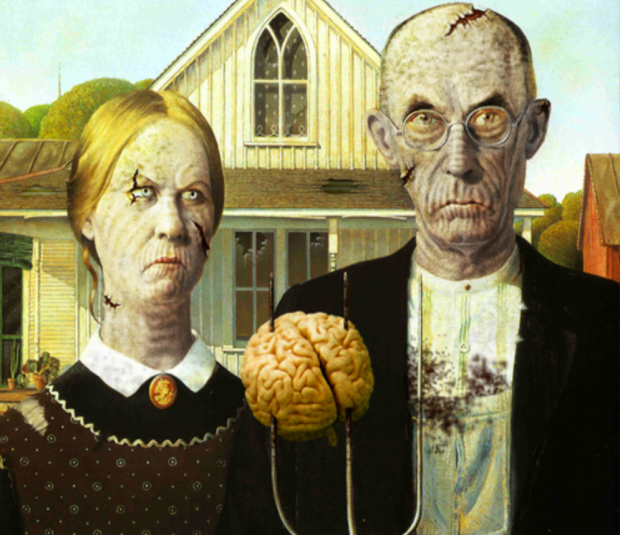
About his shameful silence for twelve days after the deaths in combat of four American soldiers in a warzone where few Americans even knew we had troops deployed (did Trump?), preoccupied as he was tweeting about the NFL, playing golf, and challenging Rex Tillerson to an IQ test….

About his jawdropping lie that he alone among US presidents has called “virtually” all the families of US soldiers who have been killed on his watch, a claim that is outrageously false on both counts….

About his instinct to lash out whenever he feels threatened or denigrated—invariably dishonestly, maliciously, and completely falsely—and usually at his predecessor (though in this case he decided to lump in all previous occupants of the White House). But this was arguably the most shameful, impulsive lie yet, and about the most sacred duty a president has….

About how he characteristically makes everything—everything, even this!—all about himself, such as how hard it is for him to make those calls to grieving families. (It is impossible to ignore the parallel to another sexual predator, Harvey Weinstein, who likewise couched his sins in the New Age-speak of the rehabilitative “work” he has to do on himself)….

About the pathetic absurdity of claiming he’d written letters to the families but just hadn’t mailed them yet, but would—tomorrow, or maybe Tuesday— sounding like a fourth-grader who hadn’t done his homework….

About his chronic issues with the military, a profession he fetishizes with juvenile glee, yet time and again proves profoundly ignorant about and insulting to: from his denigration of John McCain and other POWs, to his callous remarks about servicemembers with PTSD, to his appalling attacks on the Gold Star Khan family, to claiming he knows more about ISIS than the generals, to threatening to fire them all, to asking why the war in Afghanistan can’t be won as fast the kitchen at the 21 Club can be renovated. And now this….

So this ground has been well-trod in the four short days since this scandal exploded.

But here is the one thing that I feel compelled to say.

Like almost every incident these days, this one will be yet another partisan Rorschach test for the American public, with each side seeing only what it wants to see and dismissing the perspective of the other. General (Ret.) Kelly’s comments yesterday will only further entrench that divide, as the Right now has its own narrative of outrage in which Trump is the hero and an African-American congresswoman the villain.

But with the utmost respect to General Kelly, it is his boss who failed to properly respect the fallen and who politicized this tragedy, not the press or Rep. Frederica Wilson. General Kelly’s moving explanation that his own son died doing what he loved best—leading Marines—is a world apart from Trump’s casual, ignorant, beyond-tone-deaf remark to the widow of Sergeant La David Johnson that her husband knew what he was getting into. Even if Kelly’s sentiment is what Trump was clumsily trying to convey, his horrific mangling of it speaks to his lack of empathy and misunderstanding of the most fundamental principles of military service, not to mention his characteristic (and characteristically dishonest) cornered rat attack on anyone who dares cross him.

Even if you are inclined for some incomprehensible reason to give Donald Trump the benefit of every doubt, do ask yourself what the GOP, Fox News, and the rest of conservative America would have said if Barack Obama had said to a newly minted Gold Star widow the things Donald Trump said to Myeshia Johnson.

*********

In my parents’ generation, when I was a boy, the notification of a combat death was not treated with the same delicacy as it is today. The military had not yet developed the “casualty assistance officer” program it now has. When my father was shot up in Vietnam in 1965, no one called my mother. In those days the Army just gave telegrams to anonymous taxi drivers to deliver to unsuspecting Gold Star wives and mothers. On Army posts like Ft. Benning, Georgia, the sight of a taxicab turning down your street and creeping along while its driver checked curbside address numbers was enough to make hearts drops into stomachs, as families peered out anxiously from behind drawn curtains, waiting to see at whose quarters that yellow angel of death would stop.

As chance would have it, on those particular days in the fall of 1965, my mother had been painting the interior of my grandparents’ home where we were staying and had taken a respite from her usual grim ritual of watching the evening news. So she didn’t even know about the battle that my father’s unit had been in, or the terrible death toll on both sides, or that all the officers in his rifle company were reported casualties and the company effectively wiped out. Not until mourners and well-wishers turned up at our front door to offer their condolences.

For days my mother thought my father was dead until she got a call from the Red Cross telling her, “We have your husband here at McGuire Air Force Base.” She thought they meant the body. When my mother, numb, didn’t reply, the Red Cross woman said, “Well, do you want to talk to him?”

My father survived his wounds and went back to Vietnam a second time. Plenty of others weren’t so lucky.

Donald Trump of course didn’t serve in Vietnam—arggg, those pesky bones spurs!—or in uniform at all, or really serve his country or anything other than himself in any way his entire life, so perhaps it is unfair to expect him to have any empathy or understanding or even simple human compassion for people like the Johnsons. No, that would require what is usually called a “soul.” (He is on record, however, as suggesting that the posh military boarding school he attended was tougher than most actual military training, and musing that avoiding VD was his “personal Vietnam.”) But none of that has stopped Trump from proclaiming his genius as a field marshal or the supremacy of his own patriotism.

Little evidence of either was on display this week.

*******

Immediately after the Niger ambush was reported, some began calling this “Trump’s Benghazi”…..and that was just on the basis of the casualties, even before the calls to the families became an issue.

It’s a logical analogy, but somehow I am not holding my breath for Congress to spend years and years and millions of taxpayer dollars digging into it, or for Fox News and the rest of the right wing media to relentlessly beat the drums over it, only to have Rep. Kevin McCarthy (R-CA) finally admit it was just a partisan witchhunt all along.

During the long and grueling Benghazi circus, a particular point of outrage for right wingers (they no longer deserve the term “conservatives”) was Mrs. Clinton’s exasperated comment, “What difference does it make?” during her lengthy grilling before Congress. This sentence—uttered in frustration after Republican Senator Ron Johnson of Wisconsin prattled on at length, questioning her nonsensically about an arcane issue of chronology in a blatant but empty attempt on his part to look tough. Not surprisingly, the Right took it out of context and turned it into a battle cry, ostensibly proving that Hillary Clinton did not care about the deaths of four Americans. Nothing could be further from the truth, but when did that ever matter when it comes to the right wing and Hillary Clinton? (Read the full transcript and see.)

Those same right wingers are unlikely to feel the same outrage at Donald Trump’s inarguably far more callous comment—to the widow no less—that Sergeant Johnson knew what he was signing up for, or that Trump reportedly didn’t even know his name (or at least didn’t use it) when speaking to the family. Likewise, little (that I have seen anyway) has been written about the racial aspect of the incident with the Johnsons, but I am confident that in various dark corners of the Internet and in barrooms in Trump country there is abhorrent talk about the skin tone of the grieving family.

By way of damage control, I expected Trump to trot out the family of one of the other slain soldiers who were supportive of him. (One family already weighed in to say they were not offended that the president had yet to reach out to them.) But as is often the case, I underestimated Trump’s flamethrower-to-a-knifefight mentality: instead, he brought in John Kelly. Prior to that Trump had—unilaterally I assumed—dragged Kelly into this by mentioning his son, a Marine second lieutenant who was killed in action in Afghanistan in 2010. Kelly is famously tight-lipped and private about that highly personal tragedy—admirably so—which led me to believe that he might take the President aside, close the doors to the Oval Office, and tell him to fucking stop it.

I was quite wrong.

Among the Left there is an enduring fantasy that the generals who surround Trump are crypto-liberals who privately loathe the POTUS and stay on only to prevent World War III. Maybe that’s true. But Kelly is undeniably quite loyal to Trump, and his actions during his brief tenure as Secretary of Homeland Security would not warm the hearts of any progressives. Oddly—perhaps tellingly—none of Kelly’s ire when he went on TV to address this issue was directed at his boss for his shameful slander of previous presidents. Recall also that Kelly reportedly received an ass-chewing from Trump not long ago that he subsequently called the most abusive treatment he’s ever received in his long career. This from a Marine with 43 years’ service. Why does a man like Kelly subject himself to such humiliation from a punk like Trump who is not fit to shine his shoes? Only true loyalty—to the right wing, if not the president himself—or the aforementioned obligation to keep Trump from blowing up the planet could explain it.

Sadly for Mr. Trump, John Kelly cannot provide cover for him forever. No matter how much personal credibility any of his deputies might have, no one who serves this administration can plausibly complain about the breaching of norms, or politicizing the ostensibly sacred. Speaking even before the Johnson phone call threw jet fuel on this inferno, San Antonio Spurs coach and former US Air Force officer Gregg Popovich eviscerated Trump as a “soulless coward,” adding: “We have a pathological liar in the White House: unfit intellectually, emotionally, and psychologically to hold this office and the whole world knows it, especially those around him every day. The people who work with this President should be ashamed because they know it better than anyone just how unfit he is, and yet they choose to do nothing about it. This is their shame most of all.”

*********

Of course it is ironic that Trump should fail in the duties of his office in this particular task after spending weeks engaging in textbook demagoguery over the issue of NFL players making a silent protest during the national anthem, in the process whipping up racially-tinged hatred with a transparently phony appeal to so-called “patriotism.” But Trump knows nothing of duty, any more than he knows what’s happening when a bugler plays “Retreat.”

The Niger affair has been rightly described as a self-inflicted wound on Trump’s part, causing reporters to dig into related things that might otherwise have gone unnoticed. Chiefly, Trump’s outlandish claims about his predecessors naturally prompted swift and angry rebuttals from former staffers in previous administrations, both Democratic and Republican, which only served to make Trump look even worse, both for the lie and by comparison. (This too is a pattern with Trump: a spurious claim that blows up in his face and brings on the very punishment he was seeking to avoid. See also: firing Jim Comey.)

A story emerged about then-President George W. Bush, during a visit to Walter Reed Army Hospital, calmly allowing himself to be screamed at by the anguished mother of a badly wounded soldier (who later died), then taking her in his arms and comforting her. I am no fan of Bush, and he must answer for much regarding the wrongheaded and duplicitous war he led us into in Iraq. But that is how leaders are supposed to act, and even a man like Bush, who was often derided as a lightweight and a dilettante, had the empathy, decency, and simply humanity to know how to behave in that situation. By comparison with Trump he is Albert Schweitzer and Winston Churchill rolled into one. Barack Obama, by all accounts, took the burden of his office with exceptional gravity, and frequently honored the dead and their families—out of the spotlight—to the point where Republicans claimed he worried too much about fallen soldiers. (Like the old joke about walking on water goes, “Barry can’t swim.”)

In dealing with this incident and this grieving family, Trump demonstrated the same categorical unfitness to serve as commander-in-chief as he did with previous contretemps with the military, but also—more chillingly— with his policy actions, statements, and threats regarding Iran, North Korea, NATO, ISIS, mythical aircraft carrier task forces, nuclear proliferation, and on and on. He is unfit to lead in every conceivable way. And this is a man who might well order US troops into combat….who indeed seems to relish the opportunity to do that?

And so the hyper-partisan tribalism of American politics continues, and the Niger ambush will be just one more signpost along the road, soon to be overwhelmed by the next great polarizing outrage. Trump’s defenders will latch onto their champion’s version of events, forgive him all, and demonize someone else: Democrats, the press, even a grieving Gold Star family. They have done it before. The Right will no more turn on Trump over this affair than they did over the Access Hollywood tape, his tax returns, or Russiagate.

But they should.


The Return of Voodoo Economics

Zombie Gothic

Last week saw lots of insane news, from Trump’s ignorant and destructive decision to decertify the Iran nuclear deal, to the appalling threat to halt relief aid to Puerto Rico, to his openly fascist attack on NBC News and a free press, to revelations that the Pentagon had to patiently explain to him—as one would to a slow-witted child—that we can’t (and shouldn’t) make our nuclear arsenal ten times bigger, to his juvenile taunts about his alleged IQ, to the latest flood of leaks about what looks like his accelerating slide into unbridled madness, to the worst salvo yet in his ongoing effort to sabotage Obamacare (though along with the millions of poor Americans it hurts, it may prove more damaging to Republicans than Democrats), and finally to his unconscionable reaction to the deaths of four US soldiers in Niger, which just seemed to get worse by the day.

That’s a year’s worth of op-ed fodder right there.

But what I’d like to talk about this week is something more prosaic, but even more central to the Republican sickness that afflicts our country, which is the proposed GOP tax cut.

DECLARE THE PENNIES ON YOUR EYES

“Tax reform” was supposed to be the centerpiece of the GOP’s legislative agenda, the Holy Grail that they had sought during the eight long years of—dare I speak his name?—Barack Obama! But nine years of demonizing Obamacare seemed to demand that it be dispensed with before anything else, “repealed on day one” as the battle cry had it. Against the advice of strategists who favored tackling taxes right out of the gate in January, the party seemed to think it could shitcan the ACA first and notch an early, easy, crowd-pleasing legislative victory that would delight the base, build momentum, and pave the way for the main event.

We all know how that played out.

Now, ironically, the triple Trumpcare fiasco figures to make changes to the tax code–never an easy job under any circumstances—even more daunting. Serves the bastards right.

It is by no means clear that tax reform would have avoided that same fate had it gone first, as the GOP’s intramural dysfunction proved even worse than progressives had dared dream, laying bare both the utter bankruptcy of its philosophy of governance (cough cough) and the unsustainability of its ideological coalition. It was one thing to get Romneyite one-percenters, Breitbart white supremacists, and gun-worshipping canned tuna-hoarding TEOTWAWKI preppers all ginned up to vote against Hillary; quite another to get them to agree on complex policy issues. In other words, when your entire party consists only of lies and snake oil and hatred and greed, it should be no surprise that you have trouble getting anything done except dismantling some of the essential armature of civilization.

In any case, with repeal of Obamacare now off the legislative table as a three-time loser, and Trump reduced to using executive orders (what?????) to sabotage it, apparently out of sheer spite, tax reform is now up to bat, and the same forces that doomed Trumpcare are very much in play.

First of all, let’s dispense with the canard that this is “reform” in any way, shape, or form, except in the same way that amputating a leg is physical therapy. It is nothing but a blunt-edged tax cut that doesn’t even try to address the broader and deeper systemic problems of the byzantine and grossly unfair US tax code. Ironically, Trump (and to a lesser extent the mainstream GOP) are happy to call it just that, as “tax cut” has a nice, voter-pleasing ring.

Every reasonable analysis of this half-assed plan is that it gives a massive tax break to the very rich (the Family Trump very much included) while exploding the deficit that the GOP once claimed to care so passionately about when Democrats were in power. It figures to help middle-class people very little if at all, and may actively hurt many of them. It does absolutely nothing for the poor and most unfortunate among us, whose tax burden is mostly in payroll and not income taxes, and by reducing federal revenue, actually shifts more of the overall tax burden onto them as well.

EJ Dionne reports in the Washington Post that the non-partisan Tax Policy Center analyzed the GOP plan using the available details and “concluded that nearly a third of taxpayers with incomes between $50,000 and $150,000 would see their taxes go up, as would a majority of those making between $150,000 and $300,000….the tax rate for the poorest (those earning less than $9,325 a year) actually would go up, from 10 percent to 12 percent.”

Also writing in the WaPo, Katrina vanden Heuvel offered a nice summary of the astonishing chutzpah in play here:

The top 1 percent will pocket more than half of the tax cuts next year and an obscene 80 percent by year 10. This bill will also reward multinationals for booking profits as earned abroad to avoid taxes. The legislation offers a retroactive tax cut for the $2.6 trillion that has evaded taxation and would expand that tax dodge by eliminating taxes altogether on profits that they report as earned abroad. At a time when hedge-fund operators pay a lower tax rate than schoolteachers, this bill would increase the outrage, with a massive tax break for real estate barons, hedge-fund managers and lawyers by taxing “pass-through” income at a reduced rate. Instead of closing loopholes, the bill adds to them.

So the Republican plan is clearly a brazen betrayal of the patently fake populism and alleged concern for working people that were a chief part of Trump’s demagogic presidential campaign. No surprise there.

It should likewise shock no one that Trump has presented this tax cut with (spoiler alert) a blizzard of lies impressive even by his standards. In that regard, given that all of Republican tax policy is founded on deceit in the first place, McConnell and Ryan are fortunate to have on their team the greatest pathological liar of all time. Trump is lying about the cut helping anyone but the rich, lying about what its impact will be on the economy and the deficit, and he is damn sure lying—above all—when he says that he and his family wouldn’t benefit. The New York Times estimates the Trump clan stands to save about a billion dollars over the next ten years thanks to this cut. Of course we can’t be entirely sure because—oh yeah—he won’t release his tax returns.

But as I wrote last week, what I have learned in my encounters with Trump fans is that they are fanatically resistant to facts like these. They are so in thrall to tribalism, and so convinced of the bias of the legitimate media, that none of these undeniable facts will penetrate their bubble. Therefore do not look for a large uprising of popular opposition to this almost unfathomably venal Republican plan. Much of our nation is comprised of marionettes who love their strings, and the plutocrat puppeteers who engineered it that way are about to reap the fruits of that long campaign.

THE DEVIL IN THE DETAILS

I won’t attempt a detailed critique of the tax cut here. There’s no need. I am not an economist, and smarter people than me have already eviscerated this plan far better than I ever could. Prominent among them is Nobel Prize winner Paul Krugman, who does a thorough job in a recent column, which I invite you to read:

Lies Lies Lies Lies Lies Lies Lies Lies Lies Lies – New York Times, October 16, 2017

(Full disclosure: I will be heavily reliant on Krugman in this essay, as my own Nobel Prize in Economics has been unaccountably held up by Fedex.)

I will note, however, that the Right has a special hatred for Krugman that even goes beyond its hatred for most progressives, which is a sure sign that he is absolutely correct almost all the time. Whenever I cite him to conservatives, and note that they don’t give out them Nobels fer nuthin’, I usually get a sneering attack on how the Nobel Prizes are totally political—by which conservatives mean compromised by liberal bias. To be fair, the Nobel Peace Prize—which is administered and awarded by an entirely different arm of the Nobel organization than all the others—is by definition unavoidably political. But the Nobel Prize in Economics most certainly is not. This then is the same feet-stamping, breath-holding form of denial in which the Right engages regarding anything it doesn’t like: if a credible source contradicts your position, deny its credibility. The New York Times, the Nobel Prize, the Congressional Budget Office—no organization is above being slandered and dismissed as a bunch of lying commies.

Mike Lofgren, a long time GOP congressional staffer who turned apostate, has written bluntly that tax cuts for the rich are the only thing that the Republican Party cares about, and that all the rest of its platform is—in his words “rube bait.” Ouch. But history bears his claim out. Everything the GOP does serves this ultimate goal of further enriching the wealthiest Americans through whatever dishonest theorizing, policymaking, and Ponzi scheme marketing campaigns necessary. That fact alone explains the party’s willingness to make its Faustian bargain with Trump, although it’s not at all clear that it’s paying off. On the contrary, in fact. The tax cut will be the ultimate test, as it will have to weather both Trump’s human hand grenade style of governance, and the opposition of the insurrectionist Freedom Caucus (nee Tea Party), which for all its other myriad faults is not as beholden to the 1% as the party’s Big Money wing. Still, early indications are that they may actually come together and get this one through, which is also a testament to how important it is to the GOP: cutting rich people’s taxes is the one thing that is actually stronger than the dysfunction of Team Trump.

Per Lofgren, the Right has long been adept at using wedge issues—guns, abortion, gay rights, religion—to divide America and woo voters to its side. Above all it has exploited racism to pull of the miraculous trick of making white Americans in the working and middle classes identify with rich whites more than with people of color who share their economic circumstances. In America, race is far stronger than class, identity-wise. Hence the GOP’s Javert-like focus on repealing Obamacare over the past seven years, which had more to do with the “Obama” part than the “care” part.

The tax cut is part of a larger—albeit sketchy—GOP budget proposal that also includes $5.8 trillion in spending cuts over that same ten years. Vanden Heuvel continues:

At a time when baby boomers are retiring, it calls for cuts of $473 billion in Medicare, $1 trillion in Medicaid and another $300 billion in Obamacare subsidies to medium- and low-income workers. It cuts more than $650 billion in income security programs for low-income workers—primarily food stamps, the earned-income tax credit and child tax credit, and Supplemental Security Income (SSI) for disabled seniors and others in need. Another $200 billion is cut from Pell grants and student loans that help working families afford college. These decreases will leave millions without affordable health care and make millions of disabled and low-income Americans even more vulnerable. The budget also projects stunning reductions in what is called non-defense discretionary spending, essentially everything the government does outside of the military, entitlements and interest payments on the national debt. These include programs that contribute to our safety—such as law enforcement, the Coast Guard, the FBI and the Drug Enforcement Administration—as well as services vital to our health—such as environmental protection, water and sewage systems. It also includes public investment vital to our economy and our future—in science and technology, medical research, modern infrastructure, education, advanced training and research, modern infrastructure, education, advanced training and more.

These programs are already projected for deep cuts under the 2011 Budget Control Act, but the Senate bill decimates them. By 2019, it cuts this spending by 10 percent from 2017 levels, and by nearly 20 percent by 2027. As a share of the economy, spending on domestic services will be cut to levels not seen since Herbert Hoover.

In other words, the Republicans don’t just want to give more money to the rich; they want to rob from the poor as well—Robin Hood in reverse. And for some reason, millions of Americans buy the GOP line that this will be good for everyone.

TRICKLE ME DOWN

As part of this shameless snake oil sale, the stinking corpse of supply side economics—as discredited a theory as there could possibly be—has been exhumed and propped up, Weekend at Bernie’s-style, for another go-round.

For those born after Reagan, supply side economics—also known as “trickle down economics,” and based in part on research by the aptly named Arthur Laffer—is the theory that keeping more money in the hands of the wealthy will benefit everyone by stimulating the economy. If that sounds like a shameless scam, it is. Supply side has an obvious appeal to the rich, who for the past thirty-seven years have relentlessly tried to convince us that it’s true. I’d love to believe it is so. I can even imagine ways that it could be: it has some merit on first blush, and just because it’s counterintuitive doesn’t automatically mean it’s wrong. In fact, it might even suggest that it’s right, because a lot of life seems puzzlingly ass-backwards like that. If it were true I’d be delighted and would wholeheartedly support it. But it ain’t.

Every attempt at instituting supply side principles has bombed miserably, failing to stimulate the economy, and resulting only in the rich getting richer, the rest of society suffering, and the tax base shrinking. At best it’s wishful thinking by the wealthy; at worst, a deliberate, unconscionable deception. As Paul Waldman writes:

Most Republicans still publicly hold to the ludicrous fantasy that cutting taxes will create such a supernova of economic growth that it will pay for itself, not only not increasing but actually cutting the deficit. This isn’t true, has never been true and never will be true — as I’ve said before, it’s like arguing that eating more ice cream will help you lose weight. Harvard University economist Greg Mankiw, who was chairman of the Council of Economic Advisers for President George W. Bush, famously called the belief that cutting taxes raises revenue the hallmark of “charlatans and cranks.”

Supply siders often cite the aphorism, “A rising tide lifts all boats.” The yachting metaphor ought to be a dead giveaway to its patrician bias. When he was Reagan’s rival in the 1980 GOP presidential primaries, George H.W. Bush memorably derided it as “voodoo economics.” When Reagan won the nomination and picked him as his running mate, Bush was never heard from again on the topic. But when his son was in the Oval Office two decades later he sided with Reagan and twice cut taxes for the rich, with the disastrous results that his dad could have predicted.

While the appeal of supply side thinking to the rich is self-evident, what is far less clear is why anyone else would ever believe it, given its repeated track record of failure, exposing it for the brazen sham that it is. Again, Krugman says it well: “Insistence in the magical power of tax cuts is the ultimate zombie lie of US policy discussion; nothing can kill it. And we know why: there’s a lot of money behind the proposition that great things will happen if you cut the donors’ taxes.”

The faithful traveling companion to the avarice at the heart of the GOP tax cut is its utter hypocrisy.

As noted above, when Republicans were out of power for eight years, they were fanatics on the topic of the deficit. The usual term is “deficit hawks.” Vultures would be a better description. We don’t need to debate whether or not deficits are a concern. (Paul Krugman certainly doesn’t think so, and did I mention that he has a Nobel Prize in Economics?) Even if we were to concede that Republicans are right and deficits are a dire threat to the republic, the GOP has done an absolute, height-of-hypocrisy 180 on the topic now that they are in charge.

Those aforementioned deficit birdbrains used to demand that any tax cuts be “revenue neutral,” meaning offset by reductions in spending. (Never mind the idea of actually reducing the deficit.) While some still cling to the fantasy (or lie) that tax cuts for the rich will somehow accomplish one or both of those goals, others have abandoned any concern about the deficit completely—or at least abandoned talking about it. Now that the possibility of a huge giftwrapped giveaway to the 1% is on the table, that obsession has been summarily dispensed with. Look for it on a milk carton near you, because it has vanished like Scott Baio’s acting career.

The Trump administration and McConnell/Ryan Congress are not unique in this regard. Dick Cheney infamously said “Deficits don’t matter” when he pushed for a huge tax cut during the Bush 43 years. I guess that’s why that administration was also cool with turning the Clinton-era budget surplus into a six trillion dollar deficit by starting a pointless and criminally wrongheaded war in Iraq.

THE AMERICAN DREAM CON

In keeping with our fake president’s rumored predilection for golden showers, “trickle down” economics is an apt name for a theory that embodies the old Yiddish saying, “You can’t piss on my back and tell me it’s raining.” Except that, for loads of Republican true believers and Kool-Aid drinkers, apparently you can.

It is not news that for decades the American right has succeeded brilliantly in getting middle and working class Americans (and even some desperately poor ones) to vote against their own economic interest. The underlying psychology of that phenomenon, and the complexity, sophistication, and dishonesty of that propaganda campaign, are both far too vast to delve into here, but its crux is simply this:

Most Americans are sympathetic toward the rich because they imagine that someday they could join them. Needless to say, the rich have a vested interest in fostering that mindset.

If not uniquely American, this mentality is at the very least deeply entwined with the bootstraps ethos of the United States, the myth of Horatio Alger, the ideal of the classless society, and above all the celebrated “American Dream”: the idea that in America anyone can rise from even the humblest of origins to the loftiest of heights—to included untold riches—through hard work and hard work alone.

If this was ever true it undeniably no longer is. Contrary to popular American belief, the US lags behind numerous other Western democracies in social mobility, including some of the most famously hidebound, class-conscious countries Europe has to offer (like Britain). The gap between rich and poor has been growing at an alarming rate since Reagan took office in 1981. Of the wealth created in the United States since ’81, the vast majority has flowed to the richest 1%, which saw its average real income grow by 175% while the income of the bottom 90% of Americans remained flat.

Yet the myth of the American Dream persists, despite having turned into this cruel hoax. And the Republican stranglehold on its base depends on it.

Witness the estate tax, the subject of an upcoming documentary called Death and Taxes (working title) by acclaimed filmmaker Justin Schein (Left on Purpose). The GOP has spent untold reserves of advertising, energy, and time convincing the American people that this tax on inherited wealth—which they have successfully rechristened the “death tax” in the public vernacular—is an abomination before God. But why should Joe Sixpack care? The estate tax affects only about 0.002% of all Americans—which is to say, the very very richest. But to that tiny fraction it matters very very much, as it is worth billions to some of them. Yet if you ask the average middle or working class Republican voter, he or she is apt to repeat the same outraged GOP talking points in opposition to this tax, which affects them not in the slightest. But surely a significant part of the solidarity ordinary Republicans feel over the so-called “death tax” is a feeling that, “Hey, I could be rich someday myself and then I wouldn’t want to pay that either.”

In yet another irony, the best economics suggest that it’s not cutting taxes for the rich that will stimulate the economy, but putting cash in the hands of what are sometimes called “regular folks”—which is to say tens of millions of consumers—by giving middle and working class people decent wages that they can pump into the marketplace and drive up demand for goods. The remarkable emergence of the American middle class in the postwar period was the core of an age of prosperity that lasted all the way up to 1981 when it came to a screeching halt with the advent of Reagan and the dawn of a new Gilded Age of inequality that has yet to be arrested. Now those same working and middle class people—including most of us reading this, and me writing it for sure—are strapped with rent, mortgages, student loans, and other prohibitive costs of living. Per above, wages and other income remain flat; few of us make our money through investments (which are taxed at a lower rate, naturally). Most Americans don’t save because most Americans live hand to mouth.

Yet still the GOP is able to get ordinary, hardworking middle and working class Americans to lend their passionate support to programs and policies that benefit only the rich, sometimes at their own economic expense.

Why does the bulk of the American population not rise up in outrage? Why do so many of them cast their lot with the very people who exploit them?

I dunno. But that, my friends, is the dictionary definition of a “sucker.”

DEATH AND TAXES AND MORE DEATH

It is a bitter irony that—if only subconsciously—Trump’s ascent was driven in part by resentment over this very issue of the rising inequality in the US. Tired of being lied to and taken advantage of, many ordinary Americans were (and remain) eager for a radical change, even one that would burn the whole goddam system to the ground. (Sometimes preferably so.) In that sense, strange as it seems, Trump’s appeal and that of Bernie Sanders were twinned, while Hillary Clinton had the misfortune of being the eat-your-vegetables candidate of sober, diligent dedication to the slow improvement of the status quo.

The mystifying part is that those same people who were and are fed up with being exploited by the rich and powerful for some reason decided that the Republican Party was the ideal vehicle to fix the problem. It was even more improbable that a Richie Rich cartoon come to life / slash / billionaire Manhattan plutocrat shitbag born with a silver spoon in his ass could successfully cast himself as a populist hero to those people.

Part of Trump’s appeal was that he portrayed himself as a revolutionary alternative to the old school Rockefeller Republican leadership. That of course was another laughable con which should have been clear as soon as he got elected and filled his Cabinet (if not the moment Candidate Trump first opened his mouth). The man who fulminated against Goldman Sachs and promised to “drain the swamp” blithely assembled a team full of veterans from that very vampire squid, representing the richest Cabinet in terms of personal wealth in American history. (Even the self-styled insurrectionist Bannon had been a trader at Goldman Sachs.) Yet Trump’s fans somehow either overlooked or forgave that, one of many yogi-like contortions they engage in every day in order to continue supporting him.

Trump may be a loose cannon on the deck of the SS Ronald Reagan on many fronts, but when it comes to serving the GOP’s economic agenda he has been a reliable howitzer firmly set in a battlement. This appalling Christmas gift to the 1% disguised as a “tax plan” is proof positive. (There, Fox News: I said “Christmas.” Now get off my back.) Once again, is that any surprise, seeing as two of its chief architects are Trump’s Treasury Secretary (and man in desperate need of a vowel) Steve Mnuchin and his economic advisor Gary Cohn, both formerly top partners at Goldman Sachs?

The corollary to Trump’s loyalty here is the Republican Party’s culpability for this particular atrocity. Trump is unilaterally responsible for plenty of nightmares since he became—gak—president, but like the thrice failed repeal of Obamacare, the tax plan is one that the GOP at large not just abetted with its silence but for which it actively shares the blame. There’s been a lot of talk about the Republicans’ desperation to pass any kind of major legislation after a disastrous first nine months of unified control of the federal government. But a tax cut for the rich is not just any old legislation for the GOP. It’s their entire soul, to the extent that they have one. Even critics of Trump such as McCain have indicated that they will vote for the appalling GOP budget that is a prerequisite to this cut.

In his unprecedented public break with the President two weeks ago, Sen. Bob Corker of TN made it clear the entire US Senate knows Trump is unhinged and unfit and even an existential threat to the species….but its Republican members are so determined to deliver the monetary goods for their plutocratic masters that they are willing to risk nuclear war to get it.

WHAT, ME WORRY?

Echoing Lofgren, EJ Dionne calls cutting taxes for the rich “the only thing the (modern) Republican Party knows how to do.” But the fact that they try to tell us it’s for our own good is the ultimate insult:

And they have the nerve to pretend that they aren’t really trying to further enrich the moneyed classes. They claim that comforting the comfortable will someday, really and truly, help working people by creating jobs and economic growth.

And imagine this: Republicans want to use this deficit-bloating, inequality-enhancing, inflation-courting, social-justice-insulting monstrosity to prove they can actually govern.

For the last word, let’s go to Krugman again, one more time:

How can an administration that pretends to be populist, to stand up for ordinary (white) working people, sell such elitist policies? The answer is a strategy based entirely on lies. And I mean entirely: The Trump administration and its allies are lying about every aspect of their tax plan. I’m not talking about dubious interpretations of evidence or misleading presentation of the facts—the kind of thing the Bush administration used to specialize in. I’m talking about flat-out, easily refuted lies, like the claim that America has the world’s highest taxes (among rich countries, we have close to the lowest), or the claim that estate taxes are a huge burden on small business (almost no small businesses pay any estate tax)….

So, politically, can they really get away with this? A lot depends on how the news media handles it. If an administration spokesperson declares that up is down, will news reports simply say “so-and-so says up is down, but Democrats disagree,” or will they also report that up is not, in fact, down? I wish I were confident about the answer to that question. One thing we know for sure, however, is that a great majority of Republican politicians know perfectly well that their party is lying about its tax plan—and every even halfway competent economist aligned with the party definitely understands what’s going on. What this means is that everyone who goes along with this plan, or even remains silent in the face of the campaign of mass dissimulation, is complicit—is in effect an accomplice to the most dishonest political selling job in American history.

Did I mention Paul has a Nobel Prize in Economics?

***********

Artwork: A. Saleem

http://www.destinationcreation.com