Live and Let Die

Screen Shot 2020-05-06 at 6.24.09 PM

Over a period of about 48 hours this week, it became very clear what Donald Trump’s latest plan is for dealing with the coronavirus…..which is to, say his plan for getting re-elected, given that he clearly only cares about the former in terms of the latter.

Several sharp-eyed observers wrote about it: Bob Cesca, Jay Rosen, Amanda Marcotte, Heather Digby Parton. I am here only to climb up on their shoulders when I point out what it is:

He has decided just to declare victory.

What could be more Trumpian? Realizing that this deadly virus isn’t going to magically disappear, and seeing that his dogshit-awful response is not stopping it or even seriously slowing it down, he has fallen back on his usual lifelong strategy—lying his ass off—and hoping no one notices.

He may believe it, in his usual pathological way, or he may merely be talking himself into it, magical thinking wise, or he may know it’s asinine and be deploying it only cynically. Does it really matter? (That question applies to his entire life, frankly.) But any way you slice it, it’s a batshit thing to claim, if you’ll pardon the expression, and even more batshit to expect people to believe.

That of course has never been a barrier for Donald, because some people surely will.

TORA TORA TORA

As Bob Cesca writes in Raw Story: “Every ridiculous action taken by Donald Trump…..(e)very terrible decision, every whiny outburst, every childish tweet is issued with the goal of helping Trump get re-elected.”

Rather than safely and sanely handling the crisis, Trump continues to desperately rush things along like a Mountain Dew-guzzling little boy in the back seat of his parents’ car chanting, “Are we there yet?” Trump doesn’t know much, but he at least understands that the deeper the economy collapses into a historically massive recession, the worse his chances for re-election get, even with Russia’s help, even with disgruntled Bernie supporters refusing to vote for Joe Biden, even with voter ID and the possibility of limited mail-in ballots, and even with his $1 billion disinformation “Death Star” across the Potomac from Georgetown.

As long as his brainwashed fanboys are fed a constant diet of Trump’s ceaseless brags and knee-jerk indulging of his disciples’ self-destructive nincompoopery, he figures he can secure at least 45 percent of the popular vote, while the rest of the votes he needs to win are Moneyballed in key swing districts using targeted disinformation on Facebook.

It might work. We know that his cult of personality dead-enders will follow him all the way to Jonestown Phase II (condos still available!), even if this particular debacle is testing the limits of their zombiehood like nothing before.

But then again, it might not work, and sanity might yet carry the day (just kidding!). A POTUS who presided over the senseless deaths of a hundred thousand Americans (or whatever it ends up being), and simultaneously the worst economic crisis since the Great Depression— crises that we will still be in the midst of come Election Day—AND undeniably botched the response to both, making them far worse than they had to be, by all rights should be chucked out of office like yesterday’s fish. Lest we forget, Trump lost the popular vote in 2016 by three million votes, and only squeaked into office by the narrowest of margins in the Electoral College, thanks in part to Republican ratfucking and foreign interference, along with the inherent weirdness of the system. He only has to lose a tiny sliver of malleable voters in the right states and he’s toast in 2020.

The fact that Team Trump is resorting to this misdirection strategy is therefore at once a measure of its desperation, and an admission of its absolute inability to respond to this crisis in an effective way, not to mention sheer chutzpah.

Cesca again:

It’s a huge gamble for Trump:  What he’s framing as tremendously strong action is, in reality, a bungled and botched response made worse by his foolish insistence on premature reopening. As though trapped in quicksand of his own making, the more he struggles to prop himself up with a facade of strength, the more brutally inept he looks to any non-cultist who’s paying attention….

(W)e’re still near the peak of the pandemic on a national scale with no end in sight, yet these badly deluded idiocrats are acting as if the war is over, even while the proverbial bombers are still buzzing through the air above Pearl Harbor.

THE GOLDEN BOOT

Two weeks ago I wrote that Trump was engaged in a Super Bowl of gaslighting in trying to convince us that he was handling this crisis ably. But as usual, he has undercut even my Death Valley-low expectations by brazenly claiming that there is no longer even a crisis to handle in the first place.

Trump once pulled the number 60,000 out of thin air as a body count prediction. We blew past that almost before the words were out of his cakehole. This week he casually dropped the number 100,000. His own experts put it even higher. It is now clear that he will declare as a victory anything under the worst case estimate of 2.2 million posited in March by researchers at Imperial College London.

Strike that: he will still declare victory even in the unlikely even that we hit 3 million or more.

Let’s call it the World Cup of gaslighting.

To that end, the journalist Jay Rosen writes that Trump and his team are engaged in “one of the biggest propaganda and freedom of information fights in US history.”

The plan is to have no plan, to let daily deaths between one and three thousand become a normal thing, and then to create massive confusion about who is responsible—by telling the governors they’re in charge without doing what only the federal government can do, by fighting with the press when it shows up to be briefed, by fixing blame for the virus on China or some other foreign element, and by “flooding the zone with shit,” Steve Bannon’s phrase for overwhelming the system with disinformation, distraction, and denial….

This follows the standard Russian pattern as described by Garry Kasparov: “The point of modern propaganda isn’t only to misinform or push an agenda. It is to exhaust your critical thinking, to annihilate truth.” (See also Adam Curtis’s HyperNormalisation). It’s a strategy that perfectly dovetails with the Roy Cohn ethos that Trump has followed his whole life.

It almost goes without saying, but let’s say it anyway just for the record: with this craven, almost unbelievably self-aggrandizing strategy Trump is sacrificing human lives—the lives of the very citizens he is sworn to protect—for his own personal gain. More than one public health expert has suggested that he richly deserves to be impeached—again—for that alone. It may be the most despicable thing he has done while in office, which is saying a lot for a man who has also turned the presidency into his personal ATM, served as footman to Vladimir Putin, and kidnapped and caged children.

But Rosen also cautions against ascribing to Trump any sort of “evil genius,” which even his harshest critics are sometimes tempted to do.

To wing it without a plan is merely the best this government can do, given who heads the table. The manufacture of confusion is just the ruins of Trump’s personality meeting the powers of the presidency. There is no genius there, only a damaged human being playing havoc with our lives.

WE HOPE YOU WILL ENJOY THE SHOW

So what does this disinformation effort look like? A lot like the nothing-to-see-here-folks mantra that the right wing media was pushing back in February, before it was forced to reckon with the bodies piling up, at least temporarily.

It features Jared proclaiming 75,000 deaths a great victory, Trump’s surrogates shrieking about a Democratic hoax, pretend doctors (“but I play one on TV”) saying this is just the flu, and a massive effort to mobilize the national strategic reserve of racism and blame it all on China.

It also features Trump encouraging governors to violate the very guidelines for re-opening their economies that his own administration put out—a surreal sight—no doubt hoping that Republican ones will do so, in keeping with his fantasy that the economy is just sitting there waiting to go back into high gear, and Democratic ones won’t, and can be blamed for the resulting pain in those states.

No surprise, and key to this whole campaign, the White House has also begun openly questioning the accuracy of the death count…..which is indeed in doubt, but not because it’s overcounted. As the toll hits six figures—within a month, at this rate—expect to hear “Fake news!” bleating out from televisions all over MAGALand. The overwhelmed hospital workers we see on the news will be dismissed as “crisis actors,” and the public health experts who want to keep social distancing and other measures in place as deranged Trump-haters who just want him to fail.

Don’t believe me? It’s already begun on Fox.

Naturally Trump himself doesn’t seem embarrassed in the least by any of this, displaying the chicanery behind his tricks like Penn and Teller, and as usual, saying the quiet part loud. As Peter Baker writes in the Times:

He openly admitted in March that he did not want to let infected patients from a cruise ship disembark because it would increase the number of cases counted in the United States. He essentially made the same calculation on Wednesday by saying that more testing only reveals more infections and therefore increases the numbers. “In a way, by doing all this testing we make ourselves look bad,” he said.

Incredibly, he is even reviving the wishful thinking line from mid-March, even now, amid a national nightmare that looks something from like a Bunuel film, saying “This virus is going to disappear. It’s a question of when.”

Actually, it won’t just disappear, at least not on its own. It will be neutralized only through determined medical and political action that this administration is woefully unequipped—and unwilling—to take. Instead, they are homicidally prolonging and worsening it in a frantic attempt to avoid blame come November.

HEY STUPID: IT’S THE STUPID ECONOMY, STUPID

But even the electoral side of this bet is irrational, as the American public opposes reopening the economy too quickly by a factor of two to one. And if you think they feel that way now, wait till a hasty reopening makes the death toll spike.

Therein lies the rub: Trump’s whole hurry-up-and-reopen-the country mentality is predicated on the idea that as soon as we end the lockdown things will “go back to normal,” and the economy will boom again, and he can ride that wave to re-election (dishonestly, of course, given the extent to which our strong economy is actually Obama’s doing).

Pull the other one, as our English friends say.

This is utter delusion. The damage that the economy has suffered due to the pandemic is not going to reverse itself overnight, or even in a few months. It’s madness to think it will, no matter how much you want to remain president and avoid being indicted for a dozen different crimes and go to prison.

“Will some people be affected? Yes,” Trump said this week. “Will some people be affected badly? Yes. But we have to get our country open and we have to get it open soon.”

But the notion that we have to choose between public health and economic health is a false dichotomy. As many have written, myself included, the truth is that the two are inextricably connected. Rushing to prematurely re-start the pre-COVID economy will not allow us to right the economic ship; it will only cause it to sink faster, notwithstanding a brief bob to the surface before it goes under again.

And by the by, that damage to the economy, like the death count, is already worse than it had to be, owing to the hubris, greed, and incompetence of this administration. With this new Big Lie strategy, Trump is likely to make it worse still.

In Salon, Amanda Marcotte writes:

Trump has not hidden that he believes that American voters won’t care about widespread sickness and death, so long as the economy is doing well….It appears far more likely, however, that Trump’s strategy will result in the worst of both worlds: One where the economy is in the tank and the virus itself is devastating the country.

Trump’s path on this couldn’t have been worse, even if he was actively trying to destroy America. (Which is certainly one way to interpret his actions.) First, he delayed the shutdown recommendations and ignored the coronavirus for months, allowing infections to spread unchecked. Then, once the horse was already out of the barn, he reluctantly allowed shutdown orders to go forward. But being shortsighted and impatient, he and many Republican governors are now shutting down the shutdown well before the pandemic has been contained. The result is obvious: There will be a ton of serious economic pain, and most of that sacrifice will be for naught as the virus starts to spread again.

THIS EVER-CHANGING WORLD IN WHICH WE LIVE (IN)

Never one to be outdone by his lickspittle Mike Pence, this past week Trump visited a mask factory in Arizona without wearing a mask (only racquetball goggles). While he was there, some wit had the bowling ball-sized cojones to blast “Live and Let Die” over the factory’s PA system.

How perfect.

(But the reductive Guns & Roses version? Come on, man! We can leave the controversy of McCartney’s grammatical redundancy aside for now. But was a surprisingly big week for G&R news, as Axl Rose and Steve Mnuchin also got in a Twitter fight, which I hope leads to a “get in the ring motherfucker” actual fistfight, a la Axl’s feud with Bob Guccione, Jr. I’d love to see him beat Mnuchin like a drum. Afterward, he can give Trump a lesson on Chinese democracy. But I digress.)

Let’s be clear. To “let die,” in this case, is not some kind of benign euthanasia, or even a sin of omission, or even manslaughter for that matter, but negligent homicide. The US did not have to suffer 78,000 dead (as of this writing). We could have been South Korea, with less than 300. But we have an absolute maroon at the helm, and at the worst possible time.

“Live and let die” is especially apropos as it plays on the libertarian ethos that many of his right wing supporters claim as their bedrock principle, except when they need something from the government, like roads, fire departments, Social Security, the Pentagon, or tax breaks. In that regard, the pandemic has been a master class in hypocrisy, as the “pro-life” party that once spread campfire ghost stories of Obama’s mythical “death panels” now goes around openly proposing that senior citizens volunteer for ritual human sacrifice so we can all get haircuts and tattoos and go bowling again.

Last week we were also treated to the sight of Trump desecrating the Lincoln Memorial and telling Fox News that the likes of Jim Acosta and Kristin Welker and Paula Reid are meaner than John Wilkes Booth. But I’ll allow Donald his analogy, and take it one further. His declaration of victory over the coronavirus is as if Lincoln gave up after Bull Run, let the South secede, and then declared that he’d saved the Union.

But of course Trump would never have been on the Union side in that war, as evidenced by the Confederate battle flags that mark the appalling “liberate” rallies, ginned up by pro-Trump super PACs and other moneyed interests, rallies that he continues to openly encourage. Cesca again:

During this harrowing episode in our national history, we’re faced with two unprecedented calamities: an economic crisis and a health care crisis. Each one is being aggravated by a garishly costumed villain in the White House who lacks any interest in a rational, sustainable resolution. Sadly, this villain also possesses a base of loyalists who simultaneously recognize him as a serial liar while also insisting he’s the only government official who’s telling the truth….

Trump obviously wants these increasingly berserker protests to continue in hopes of forcing governors to, like Trump, ignore experts and reopen businesses and schools prematurely. Again, why? It’s partly so he can blame the governors, especially the blue-state ones, for any subsequent spikes in the numbers. It’s also because the protests amplify the grievances of his base, which is good for turnout…

The photos of these gun-totin’, Star & Bars-flyin’, death cult-subscribin’ angry white people demanding their “rights” are the photos that history books will print in the chapter about how the United States was brought down by the lethal, childish ignorance of its own citizens.

And while we’re talking about it, please don’t call these people “protestors.” Men with body armor and tricked out AR-15s forcing their way into the office of Michigan Governor Gretchen Whitmer, shouting “Lock her up!” and comparing her to Hitler are not “protestors.”

They’re domestic terrorists.

If these folks were black, you’d better believe Fox Nation would be screaming for them to be arrested and shipped off to Gitmo, if not out in the street with ropes taking matters into their own hands.

And Trump is saying Governor Whitmer should negotiate with them? Isn’t that rule No. 1 about what you don’t do with terrorists? Yes, unless you’re on the terrorists’ side.

MISSION ACCOMPLISHED

So in the end, will this gaslighting succeed in defiance of objective reality, even as the months go by and the bodies pile up and the pain multiplies and the economy continues to suffer?

I don’t know. But it is precisely what Orwell wrote about in 1984: “The party told you to reject the evidence of your eyes and ears. It was their final, most essential command.”

The con can be exposed, if we are smart and resolute. Rick Wilson, George Conway, and the other Never Trumpers of the Lincoln Project clearly got under his skin this week with their Reagan-referencing “Mourning in America” spot, which prompted what even by Trump standards was a temper tantrum for the ages. Hey Don, I know Roy Cohn taught you to attack, attack, attack, but didn’t anybody ever teach you the value of playing it cool?

But if Donald Trump manages to win re-election in spite of all this, we will not be able to say it was a fluke—like 2016—or an act of temporary insanity, or the result of Kremlin sabotage, or anything else other than an indictment of our own self-destructive stupidity.

If he wins with a minority of the popular vote, or under shady circumstances—that is to say, if he wins because we could not control that angry minority of right wing cretins who have gotten a chokehold on our democracy—that will be almost as shameful, because it will mean that our system is thoroughly broken and we can’t get out act together sufficiently to fix it.

Our collective willingness to go along with this bullshit—or to buck it—will be an acid test of America’s character. Right now it doesn’t look like we’re heading for a passing grade.

*******

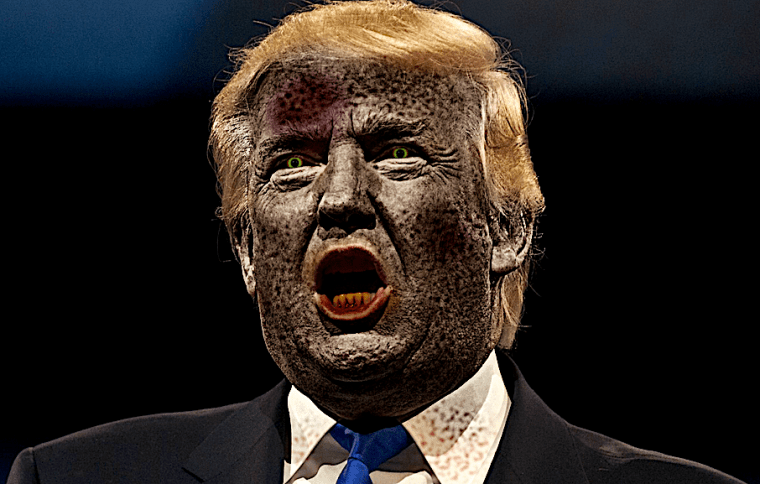
Photo: I dunno, somewhere from the depths of hell, I guess.


The Price of Cynicism

190929082519-01-trump-zelensky-unga-0925-exlarge-169 copy

Impeachment seems like a lifetime ago, doesn’t it?

Quid pro quo, “a perfect call,” Gordon Sondland: for something that so recently loomed so large on the national stage, these sound like vague echoes from a distant past, their meanings lost in antiquity. The coronavirus pandemic has so thoroughly consumed the news cycle, and our lives, and every waking moment, that everything that came before feels like ancient history.

For that matter, even the start of the lockdown feels like a lifetime ago. It’s almost hard to imagine resuming some semblance of normalcy when the time finally comes.

But the impeachment has been much on my mind lately, because it so starkly demonstrates the stakes of what can sometimes seem like mere partisan politics, and the terrible consequences of having an immoral, unprincipled party in power.

That has never been more clear than now, amid the ceaseless soundtrack of sirens in the streets of New York, and traumatized ER doctors committing suicide, and rotting bodies abandoned in trucks, and more dead than the US suffered in the Vietnam War, with no Paris peace talks in sight.

DEADPAN AND JUST PLAIN DEAD

A month ago, when the pandemic was still fairly new and the White House was still trying out defenses for its failure to respond, Mitch McConnell auditioned the risible claim Trump was unable to effectively prepare for the threat of COVID-19 because he was distracted by the baseless impeachment “hoax” perpetrated by the Democrats.

This was a lie so laughable that even McConnell—a man so straightfaced he makes Buster Keaton look like Robin Williams—could not maintain it. I’m sure it continues to circulate in MAGA World, but here in the reality-based community, where the elusive and possibly mythical swing voters graze, even the Republicans know it’s a non-starter.

Hilariously (we can laugh during tragedy, right?), Trump himself came along to undercut his own turtle-chinned defender, even as he recognized that going along could have helped him. CNN reports his response when subsequently asked about the issue at a press briefing:

“I think I handled it very well, but I guess it probably did (distract me),” Trump said…. “Did it divert my attention? I think I’m getting A+’s for the way I handled myself during a phony impeachment, OK? I don’t think I would have done any better had I not been impeached, OK?”

In other words, thrown a potential lifeline by McConnell, Trump’s sheer ego prevented him from grabbing it, so unwilling is he to concede any weakness or shortcoming at all.

Except it wasn’t really a lifeline at all, because it was so insultingly untrue.

Trump was impeached by the House on December 18; he was acquitted in the Senate on February 5th. During that period, he played golf (or was at one of his golf properties) four times. He held multiple campaign rallies (as documented by Leni Riefenstahl), and even hosted a Super Bowl party at Mar-a-Lago.

This was not a man desperately trying to eke out time to fight a pandemic.

And it was not because nobody told him there was a crisis. On February 5th, the very day he was acquitted, Democratic Senators including Chris Murphy of Connecticut were urging him to take stronger measures to prepare for the pandemic.

Instead, Mike Pompeo announced that the US was sending medical supplies to China.

We now know that the US Intelligence Community had warned of the pandemic in the President’s Daily Brief at least a dozen times in January and February, much as it had warned a certain previous Republican president about a certain Saudi’s intention to crash an airliner into a certain skyscraper. Of course, Trump alone among modern presidents famously disdains reading the PDB, preferring instead a bimonthly fifteen second recap on Snapchat, compiled by the folks who used to make Ren & Stimpy.

In the six weeks that followed his acquittal, Trump still didn’t respond, even as the flashing red warning lights grew brighter and brighter and the freaked-out experts shouting in his ear grew louder and louder. Very much the contrary. As we all know, he dismissed the severity of the pandemic with magical thinking, saying we would soon have “close to zero” cases, that it would go away with the warm weather, that we had it “very well under control,” that it would magically disappear.” Between February 10th and March 2nd, he also held another five campaign rallies across the US, drawing thousands of people into close quarters.

It was not until mid-March that he changed course and declared a national emergency, and even then only grudgingly, because it had been forced upon him.

Those six weeks, epidemiologists tell us, represent precious lost time that could not be made up and that led to the explosion of the virus in the United States.

To restate the oft-cited comparison, South Korea and the US both suffered their first known coronavirus deaths on the same day, January 20th (although we now know there had been some unidentified ones in the US earlier). South Korea took decisive action and has had only 250 deaths as of this writing. The US did not, and now leads the world by far both in known cases—over 1.1 million, about a third of all infections worldwide—and deaths, at more than 68,000 and still rising. And those numbers are surely undercounted, possibly by a lot.

In short, the notion that the six weeks of impeachment proceedings prevented Trump from taking action to address this looming disaster is the worst kind of bald-faced lie.

In the words of Captain Renault, I’m shocked, shocked.

TALE OF THE TAPE

Of course, Trump also had ample time to prepare for the COVID-19 outbreak before impeachment, as he was warned of what was coming—and its severity—multiple times and in multiple ways and by multiple sources prior to mid-December. The national security and law website Just Security recently published a comprehensive timeline of the myriad times and ways since 2017 that Trump and his minions have hindered our capability to respond to a pandemic in general and this one specifically. The Washington Post recently ran a similar piece. I recommend a deep dive into both to get the full scope of Trump’s criminal malpractice.

We all know that Trump’s only concern—apart from the ever-present prime directive of how he can financially profit—is how all this affects his prospects for re-election. To that end, in another dynamite, in-depth piece in the WaPo surveying the palace chaos inside the White House, the authors explain how his abdication of responsibility is partially deliberate, as a way to dodge accountability. Take, for example, the scattershot guidance to states for how to ease out of shelter-in-place:

(T)hough administration health officials produced detailed guidelines for reopening, those released by Trump were intentionally vague and devoid of clear metrics, making it easier for the president to avoid responsibility and harder for local leaders to interpret.

Wow, nothing like letting people die so you can avoid blame—you know, the way we expect a leader to behave. Whether it will work remains an open question. Trump has of course proved to be reliably bulletproof in every previous scandal, but at the risk of sounding naïve, I’m not sure the American people will fail to notice the extent to which he has fucked this one up.

In any case, the net effect of this appalling dereliction of duty has been to abandon the states to a mad, Darwinian, every-man-for-himself scramble, creating wildly destructive competition among the states and even between the states and the federal government.

For a particularly jawdropping example, consider Maryland Governor Larry Hogan—a Republican, I hasten to note—and the measures to which he had to resort to get COVID tests for his state:

(Hogan) quietly entered into negotiations with South Korea, with the help of his wife, Yumi, a Korean American. Exasperated with the lack of tests in his state, Hogan spent about 22 days arranging to procure 500,000 tests, negotiating with eight different Maryland agencies, the Korean embassy and officials at the State Department.

Once the FDA and US Customs and Border Protection signed off on the deal, a Korean Air jet touched down at Baltimore-Washington International Marshall Airport on April 18 to deliver the supplies. Hogan said he was worried federal officials would try to commandeer the tests, so he had Maryland Army National Guard members and Maryland State Police officers escort and protect the cargo.

“It was like Fort Knox to us, because it was going to save the lives of thousands of our citizens,” Hogan said. “That was so important to us that we wanted to make sure that that plane took off from Korea safely, landed here in America safely, and that we guarded that cargo from whoever might interfere with us getting that to our folks that needed it.”

The move infuriated Trump, who has long chafed at Hogan’s criticisms and, according to advisers, saw Maryland’s deal with South Korea as a bid to embarrass the president.

Holy shit. Please take a moment to stop and think about that. An American governor felt he had to call out armed soldiers to guard precious medical supplies so that the nation’s ruling family wouldn’t steal them. That is the kind of thing that goes on in a Third World banana republic led by a kleptocratic Mugabe-style dictator. Which the USA now arguably is.

GHOSTS OF UKRAINE

Both before and after the impeachment, I wrote at length (and I do mean length) that bringing charges against Trump for high crimes and misdemeanors was not only the right thing to do on principle, but would also benefit the Democrats tactically and pragmatically. It was always a false choice that we could either hold Trump accountable under the law, or concentrate on defeating him in November, but not both. Tellingly, it was usually Republicans making that argument, Brer Rabbit style.

But the two efforts were always intertwined. Standing up for what is right, defending the Constitution, demonstrating that the Democratic Party has backbone and integrity, and setting a precedent to deter future would-be despots were all strong reasons for bringing this pretender to trial, no matter the inevitability of his acquittal by means of Republican ranks-closing. The alleged electoral fallout was also illusory. You don’t get people to vote for your side by being too timid to stand up to a bully, and it undercuts your claim that the man is a menace if you don’t use every recourse you have to stop him. Even if the process caused his brain-dead supporters to cling more tightly to him, and even drew in a few right-leaning fence-sitters, we were not going to win those people over anyway.

Now, of course, the pandemic has completely scrambled the electoral landscape and rendered all those calculations obsolete……but not to Donald’s advantage. In the wake of an unprecedented public health crisis that has left 68,000 Americans dead, impeachment looks more than ever like the right thing to have done.

Just five years ago the Republican Party recoiled at the mere thought of Donald Trump as its nominee. Since then it has made its peace with him, to say the least. As far as the peacemaking metaphor goes, it was less like a truce than an unconditional surrender of what remained of the GOP’s principles (cough cough) as it cravenly became a shameless cult of personality, presumably as a way to maintain power when demographics and democracy have made that objective otherwise untenable. And nowhere was that self-abasement more clear than in his impeachment.

For those who’ve forgotten: Trump’s extortion of a vulnerable foreign ally—one in the throes of a war with Russia, I hasten to note— by withholding Congressionally mandated military aid unless that ally would manufacture dirt on a domestic political rival is the very definition of abuse of power. Yet a party that wanted Obama tarred and feathered for putting mustard on his hamburger and for wearing a brown suit somehow found Trump’s actions completely excusable. (Trump, of course, demanded even more than mere tolerance: he insisted that his minions applaud him.)

Even sanctimonious frauds like Ben Sasse, and self-deluding weaklings like Susan Collins, and sclerotic retirees-to-be with nothing to lose like Lamar Alexander could not find the gumption to squeak out their displeasure. It was stomach-churning to watch the GOP debase itself at Trump’s feet, and for precious little gain I might add. In light of what has followed, it is even more horrific to think of it now.

These cowards must live with their consciences, and the knowledge that, for the sake of partisanship, or tax breaks for the rich, or conservative Supreme Court justices, or whatever Faustian bargain is their rationalization of choice, they willingly surrendered the stewardship of hundreds of millions of American lives to a lying, moneygrubbing, shockingly incompetent sociopath who fiddled “The Devil Went Down to Georgia” while Rome burned.

I hope every American voter sees that too.

By contrast, going into November, the Democratic Party can stand up and say that it did everything humanly possible to hold this monster to account. It can also say that it was thwarted only by the unconscionable hyperpartisanship of an opposition party that was willing to excuse and condone and cover for some of the most egregious abuses of power in American presidential history. And now we are all paying the price, in human lives. Imagine how history would have looked upon the Democratic Party had it not stood up and impeached him!

By cynically protecting Donald Trump and the malevolent incompetence of his reign (or is incompetent malevolence?), the Republican Party ensured that the very worst possible people in America would remain in charge during the most crucial phase of the most deadly crisis we have faced since World War II.

Call me naïve, but I would hope this might prompt a dark night of the soul for Collins, Alexander, Murkowski, Graham, Sasse, and the rest. I mention only these few Republicans who, for one reason or another we had cause to think might show an iota of integrity, or at least had histories that made their support of Trump even more hypocritical than most. The vast majority of their colleagues are so bereft of moral fiber as to be beyond even that level of desperate consideration. When you’re pinning your hopes on the integrity of Lindsay Graham, you know you’re far gone.

Beyond Governor Hogan, the few Republicans who have defied or broken with Trump can be counted on two fingers (preferably raised, palm inward, in the British manner): Mitt Romney, the lone GOP vote to convict in the Senate, and Ohio Governor Mike DeWine, whose popularity has soared in the Buckeye State for defying Trump’s “re-open the economy” madness.

Efforts are underway now to see if we can get these two extremely rare wild unicorns (Republicanus responsibilium) to mate and reproduce to rebuild the species, in captivity if necessary.

THE LAWS OF PHYSICS

Here in the moment, we are riven by tribalism and competing versions of reality: the one that empiricism supports, in which Trump botched this thing twelve ways to Sunday, and the fairy tale one where he deserves his self-awarded 10 out of 10. (Just ask Jared.)

It is certainly frustrating that more than a third of the country clings to that second narrative in stubborn defiance of the facts, with Trump’s floor of about 40% support holding irrationally steady, mindboggling as that is. But history is always much more clear-eyed.

Posterity will remember Donald Trump with withering contempt as the worst president in American history, a bigot and an ignoramus and a self-pitying fool whose criminal incompetence and towering ego led to tens of thousands of American deaths (if not more) and a historic economic collapse, all of which could have been avoided or at least minimized by even half-assed, mediocre leadership.

History’s verdict will be an enormous irony for a narcissist who launched his presidential campaign as a publicity stunt, never thinking he would actually win, only to have that victory ultimately destroy him, and his business, and his family, and his reputation forever. (Couldn’t happen to a nicer guy.)

Sure, there will always be revanchists who cling to tiny minority views: that Nixon was a great man, that segregation was terrific, that the Sudetenland really did belong to Germany. Donald’s defenders will be similarly consigned to dusty corners of the dark web. But when our grandchildren’s grandchildren hear the name “Trump” (should the human species survive that long), it will be a synonym for the very worst that the USA has ever wrought.

And they will also remember the people who were his enablers and accomplices.

What do they teach us in elementary school? Actions have consequences. And the consequences of the Roman phalanx that the Republican Party formed around Donald Trump—over Russiagate, over Ukraine, over his hush money payments to porn stars, over his tax returns, over his foreign business entanglements, over all his manifold sins—are now tragically apparent as it tries to defend him over the greatest and most inexcusable failure of all.

Dear readers, I hope you and your families and your loved ones are well and safe and healthy.

Sadly, we did not have to be in a position where that is an issue.

**********

Photo: Saul Loeb/Getty Images


Vectors of Pestilence

Vectors

I went to medical school for exactly—hmmm, let me think—zero days, but even I know you shouldn’t drink bleach.

In fact, I barely scraped through ninth grade biology, but I did pretty well in history, and I do recall the last guy who told his followers to line up and drink poison. So Donald Trump should be excited that posterity is likely to remember him just as vividly.

This particular episode of the new TV miniseries version of Being There as scripted by Michael Haneke is merely the latest Trumpian absurdity that would be comic were it not so tragic. With 55,000 dead (a number that is surely undercounted) the US has now lost almost exactly as many lives to COVID-19 in the last three months as we lost in the whole of American involvement in the Vietnam war, which lasted roughly eleven years (and in which we finished a strong runner-up).

And this crisis is far from over, and that body count far from topped out.

Meanwhile, Trump is breaking records for self-praise and unearned credit-grabbing, as detailed in an astonishingly good piece of reportage by the Times, what it calls: “a display of presidential hubris and self-pity unlike anything historians say they have seen before.”

If there were ever a time tailor made for the 25th Amendment, this would seem to be it.

Of course we know that is never going to happen. History will also note the bitter irony that the Republican Party had just completed its Masada-like defense of Donald Trump in his impeachment trial, for crimes that were the very definition of abuse of power, just in time for him to preside over the worst negligent homicide of American citizens in modern times.

CHAOS THEORY

With armed troglodytes waving Confederate flags and demanding that we put tens or even hundreds of thousands of additional lives at risk because they want a haircut, and various Southern governors eager to accommodate them, we are likely to see an uptick in cases of the novel coronavirus in the coming months, if not a full-blown second or third wave. The rush to get back to “normalcy” is premature at best, notwithstanding the delusion that it is going to be possible at all.

Those Astroturf rallies, like the original 2009-vintage Tea Party, pretend to be organic and spontaneous phenomena, but in truth are organized and funded by plutocratic special interests who find it useful to hide behind fake populism. Likewise, the enthusiasm of governors like Georgia’s odious Foghorn Leghorn impersonator and election robbery specialist Brian Kemp might have more to do with cynical attempts to keep unemployment numbers down and avoid treasury-busting deficits that will doom their re-election. (But at least it’s good to know that he and Trump are having a mutual hissy fit at each other.)

That the President of the United States should openly foment this unrest, to the point of implicitly inciting violence, is of course unimaginable in any previous White House, to say nothing of mindboggling and irrational given that it is his own administration’s guidelines that Trump is encouraging rebellion against. It is of a piece with his Stalinist insistence that his own scientific advisors tailor the facts to the fantasy that best serves his ego, and recant and apologize when they contradict him, even as they are trying valiantly to save human lives.

But we should expect nothing less from this faux head of state.

Trump is a natural shit-stirrer. He functions most comfortably as an outsider unencumbered by responsibilities, the better to loft criticism and complaint, which suits his infantile narcissism. (“No, I don’t take any responsibility.”) So it is very hard for him to be in charge of anything other than his own organized family crime syndicate. In fact, he relishes chaos and lives to create it by way of pitting others against each other, whether underlings, foes, or just plain strangers. In the Irish Times, Fintan O’Toole reminds us that “In his inaugural address in 2017, (Trump) evoked ‘American carnage’ and promised to make it stop. But now that the real carnage has arrived, he is reveling in it. He is in his element.”

Trump clearly views stoking anger over social distancing as his best re-election strategy, a more extreme version of the only one he has ever pursued, in fact: to gyrate his most devoted followers and turn this too into a partisan issue. He is like a baller who has only one move. And now, in the midst of a crisis where his future is in danger and his malevolence, ignorance, and incompetence have never been on more stark display—almost to the point where some people are beginning to notice—he’s found a way to do so again, with these insane rallies, public health be damned.

Peter Wehner in The Atlantic:

Trump is doing everything in his power to divide us, to keep people on edge, mistrustful and at one another’s throats. To that end, he will even cheer on people who are violating his own administration’s social-distancing guidelines.

But there is also method to Trump’s madness. From the moment he took office, the president has pursued a base-only strategy. Rather than trying to win over converts, Trump has decided his path to victory in November lies with inflaming his base, keeping his supporters in a state of constant agitation, even if that requires framing “a complex science/policy debate as evil oppressors vs. heroic victims,” in the words of the social psychologist Jonathan Haidt.

But it is more worrisome than even that.

The Washington Post’s Greg Sargent writes that it is part of the longstanding GOP plan to destroy the very idea that the Democratic Party is a legitimate political entity:

At bottom, President Trump’s ongoing support for right-wing agitators who want to own the libs by throwing off the oppression of policies limiting their own exposure to a deadly pathogen should sound unsettlingly familiar. It’s another expression of the idea that Democratic governance is fundamentally illegitimate—an idea Trump has pushed in many different ways for years…

(W)hat we’re now hearing carries echoes of the “Second Amendment remedies” phrase that went national in 2010, when a far-right tea-party candidate used it to suggest people might violently rise up against the Democratic Congress.

What’s different now is that the President of the United States has spoken directly to this particular aspect of the nascent movement. In calling on people to “LIBERATE” the states of Michigan, Minnesota and Virginia, even claiming the latter is “under siege,” he’s endorsing the idea that they are under illegitimate occupation by Democratic governors and lawmakers, and is arguably fomenting insurrection against them.

Adam Serwer makes a similar point, also in The Atlantic, noting the GOP’s recent embrace of a trillion-plus dollar stimulus package of the very kind it not long ago excoriated Barack Obama for pursuing:

(M)ost Republicans—including McConnell, Graham, Grassley, and Alexander—had voted for the 2008 bank bailout prior to voting against (Obama’s 2009) stimulus. In other words, they voted to help those most responsible for the Great Recession, then voted to stiff those Americans whose lives and livelihoods had been destroyed by the bankers’ greed and regulators’ ineptitude, and who would suffer through a sluggish recovery as a result.

As Serwer writes, in 2009 Mitch McConnell and his merry band of mustache-twirling silent movie villains “saw prolonging the Great Recession as a political opportunity to be exploited.” Now, of course, with the economic downturn sitting in their inbox and not the Democrats’, they have learned to stop worrying and love government spending, in keeping with their new motto “Deficits, shmeficits.”

But this is not mere inside-the-Beltway gamesmanship, economically devastating though it is:

The complete Republican reversal on the need for the federal government to address an economic crisis is not merely hypocrisy, although it is also that….

Washington gridlock does not stem from ideological differences about the size or role of government, although those conflicts inevitably shape legislation. It stems from the ideological conviction, held by much of the Republican Party, that the Democratic Party is inherently illegitimate and has no right to govern.

From Merrick Garland to voter suppression to the stimulus to “LIBERATE MICHIGAN,” what we are seeing is a concerted, multi-pronged effort by the GOP to convince much of Fox News-watching America that the “Democrat Party” (as they pettily insist on calling it) is treasonous and evil and has no legitimate claim to hold office.

Trump personally doesn’t care about the GOP or its effort to install a one-party rule, even though it’s a symbiotic relationship for these entities. Ideology is meaningless to him; in fact, he used to be a Democrat himself, as we know (not unlike that other great showbiz figure turned Republican hero, Ronald Reagan). He only cares about staying in the spotlight, and out of prison. That is itself a manifestation of his infantilism and malignant narcissism—but file under “dog bites man.”

The Times Literary Supplement‘s Lawrence Douglas writes, in a piece that originally bore the unimprovable title, “Godzilla of the White House”:

(Trump) cares little about political power conventionally conceived. Many political leaders have craved power while keeping a low profile—Dick Cheney comes to mind. Others have cultivated the adoration of crowds, but principally as a means of consolidating political power—think Hitler.

Trump, by contrast, seeks power simply to keep himself in the public eye; or, to put it differently, the only power he really craves is the power to command attention. He seeks purely to govern his brand, with chaos being the source and expression of his power. His power to spread chaos keeps him at the centre of attention, and remaining there, more than any policy commitment, is his principal political aim.

BRET, YOU GOT IT GOIN’ ON

Another aspect of the moneyed class’s pro-GOP/pro-Trump campaign is the deployment of shock troop pundits like conservative New York Times columnist Bret Stephens, formerly of the Wall Street Journal, who had a piece this week promoting this same nonsense about “re-opening the country.” It was an essay that, like much of Stephens’ work, does little more than repackage the standard mouthbreathing Fox News party line with a seemingly respectable veneer for consumption by the thinking audience. But that does not make it any more valid.

We all agree that the economic devastation being caused by the lockdown is very very bad; many of us feel it firsthand. Likewise it is true that a one-size-fits-all approach to easing out of shelter-in-place doesn’t make sense. But the urge to declare the crisis over (or limited to New York City, or a hoax from the start) just because we want it to be so doesn’t change the medical facts or the danger we are still facing.

Bret’s whole argument is that New York’s numbers are astronomical because of its population density. But California is by far the most populous state, including two very large cities, even if they are not at New York City’s level…..but it has had an amazingly low fatality rate. San Francisco is about 62% as dense as New York, so by Bret’s metrics its fatality rate should be proportionate. Yet as of this writing NYC has suffered 11,817 dead; San Francisco County has suffered only 22. (If Stephens was right, it should be about 7300.)

The reason for the difference? San Francisco’s intrepid mayor London Breed led the way in taking this pandemic seriously and implemented a lockdown much faster than the rest of the country. Los Angeles is about a quarter as dense as New York, and under the leadership of Eric Garcetti locked down later than SF but still relatively early, and has only suffered 84 deaths.

In other words, the argument that these “re-open the economy” types, whether they are Confederate flag waving, AR-15 toting Tea Partiers or Pulitzer Prize-winning, seemingly reasonable New York Times columnists, are really making is that because social distancing has worked we ought to stop it.

Which is like saying “The parachute succeeded in slowing our descent; we can take it off now.”

Stephens himself concedes that returning to some semblance of normal economic activity depends on widespread, effective, reliable testing—and we have nothing like that, and nothing like that on the near horizon, So the whole argument is a bit academic. Of course, that won’t stop various states from opening up without proper testing (or Trump from encouraging it), so I guess we’re gonna find out see what that looks like regardless.

I will tell you, however, as someone who had a skydiving accident that landed me in the hospital and then in a back brace for six months, a parachute is a pretty handy thing to have when you’re otherwise falling to your death.

PLATE OF SHRIMP FOR ONE

To paraphrase a dying Dick Rude bleeding out on the floor of a convenience store during a robbery gone wrong in Alex Cox’s Repo Man (1984), “In the end, I blame society.”

Libertarians like the Boston Globe’s Jeff Jacoby have focused on how regulation and bureaucracy hindered American government’s response to the coronavirus, in the criminally inept rollout of testing kits, for example. Which is a valid point. But they willfully ignore the other half of the picture, which is the way this same crisis has laid bare the bankruptcy of the libertarian canard that “government is bad.”

We are currently enduring a catastrophe of epic proportions in large part because the federal government has severely botched its response. That is not proof that “government is bad”—it’s proof of how badly we need a competent, functioning federal government.

As much as we would like to govern at the most local level possible, in a crisis of this scope, only the feds have the resources and centralized capability to respond in a cohesive, strategic manner. The current incarnation cannot, however, because of Trump’s evisceration of the federal bureaucracy and his contempt for expertise, science, and objective truth full stop, not to mention his own personal pathology. If some state governors are behaving in an exemplary manner (while others are not), it’s because they have been given no choice. But even their best efforts may not be enough, and should never have had to be the first line of defense.

Last week the New York Times published a gutting piece noting that thanks to Trump and the GOP, the world doesn’t look to the US for leadership anymore. On the contrary: much of the world is watching the United States’ pathetic, self-harming response to the coronavirus with mouth-agape astonishment and sorrow for this once-great power. ““America has not done badly, it has done exceptionally badly,” said Dominique Moïsi, a political scientist and senior adviser at the Paris-based Institut Montaigne.”

But as bad as Trump is, he cannot be saddled with all the blame. The shamefulness of the American response to the pandemic, as compared with most other developed countries, is the result of the deliberate, ideologically driven choices the Republican Party and the conservative movement have promoted stretching all the way back to Reagan, and, truly, long before that.

So with all due respect, let’s not come away from this crisis having learned only that “regulation is bad.” We inflicted the worst of the pandemic upon ourselves not only with red tape, but even more so with the false belief that governance itself is a force for ill. The devastation through which we are living ought to be sobering evidence to the contrary.

EXCEPTION AND RULE

For this is the sad truth about the coronavirus: it has killed once and for all the pathetic, self-flattering fraud of “American exceptionalism.” (Add another death to the toll.) But then again, that’s unfair, for that myth has long been dead; the pandemic didn’t kill it, it only exposed the rotting corpse. (Somebody fetch the Clorox.)

The irony, as my friend Ruth Hereford writes, is that it is this “blind belief in American greatness and our susceptibility to propaganda and spin that itself has made us even more vulnerable to this virus.”

In a piece for The Atlantic aptly titled “We Are Living in a Failed State,” the intrepid George Packer compares the US response to the pandemic to that of a third rate kleptocracy “like Pakistan or Belarus–like a country with shoddy infrastructure and a dysfunctional government whose leaders were too corrupt or stupid to head off mass suffering.”

Every morning in the endless month of March, Americans woke up to find themselves citizens of a failed state. With no national plan—no coherent instructions at all—families, schools, and offices were left to decide on their own whether to shut down and take shelter. When test kits, masks, gowns, and ventilators were found to be in desperately short supply, governors pleaded for them from the White House, which stalled, then called on private enterprise, which couldn’t deliver. States and cities were forced into bidding wars that left them prey to price gouging and corporate profiteering. Civilians took out their sewing machines to try to keep ill-equipped hospital workers healthy and their patients alive. Russia, Taiwan, and the United Nations sent humanitarian aid to the world’s richest power—a beggar nation in utter chaos.

Hot on Packer’s heels, last weekend the Irish Times’ aforementioned Fintan O’Toole delivered one of the most scathing and accurate summaries of the current moment I have yet read, which is high praise in an age when stellar journalism is undergoing a renaissance even as it is under attack:

The country Trump promised to make great again has never in its history seemed so pitiful. Will American prestige ever recover from this shameful episode? The US went into the coronavirus crisis with immense advantages: precious weeks of warning about what was coming, the world’s best concentration of medical and scientific expertise, effectively limitless financial resources, a military complex with stunning logistical capacity and most of the world’s leading technology corporations. Yet it managed to make itself the global epicentre of the pandemic.

It is one thing to be powerless in the face of a natural disaster, quite another to watch vast power being squandered in real time—willfully, malevolently, vindictively. It is one thing for governments to fail (as, in one degree or another, most governments did), quite another to watch a ruler and his supporters actively spread a deadly virus. Trump, his party and Rupert Murdoch’s Fox News became vectors of the pestilence.

Let me quote Mr. O’Toole at further length, because why should I try describe the current horror show when he has already done so with such eloquence? (Where is my bottle of bourbon and the remote?)

The grotesque spectacle of the president openly inciting people (some of them armed) to take to the streets to oppose the restrictions that save lives is the manifestation of a political death wish. What are supposed to be daily briefings on the crisis, demonstrative of national unity in the face of a shared challenge, have been used by Trump merely to sow confusion and division. They provide a recurring horror show in which all the neuroses that haunt the American subconscious dance naked on live TV.

If the plague is a test, its ruling political nexus ensured that the US would fail it at a terrible cost in human lives. In the process, the idea of the US as the world’s leading nation—an idea that has shaped the past century—has all but evaporated….

(W)ho is now looking to the US as the exemplar of anything other than what not to do?

He goes on to write of how the pandemic has savagely exposed the once widely held delusion that the GOP would rein Trump in, instead “surrender(ing) abjectly to him,” and “(sacrificing) on the altar of wanton stupidity the most basic ideas of responsibility, care and even safety.” Of the GOP’s eagerness to re-open the country, he notes the anti-science, conspiracy-mongering, religion-based wellspring of such thinking, saying, “This is not mere ignorance—it is deliberate and homicidal stupidity,” and notes the bitter irony of Fox feeding it, bringing Republican politicians millions of dollars in donations from the very people most vulnerable in the pandemic.

The US response to the coronavirus crisis has been paralysed by a contradiction that the Republicans have inserted into the heart of US democracy. On the one hand, they want to control all the levers of governmental power. On the other they have created a popular base by playing on the notion that government is innately evil and must not be trusted….

The crisis has shown definitively that Trump’s presidency is not an aberration. It has grown on soil long prepared to receive it. The monstrous blossoming of misrule has structure and purpose and strategy behind it. There are very powerful interests who demand “freedom” in order to do as they like with the environment, society and the economy. They have infused a very large part of American culture with the belief that “freedom” is literally more important than life. My freedom to own assault weapons trumps your right not to get shot at school….

There has been no moment of truth, no shock of realisation that the antics have to end. No one of any substance on the US right has stepped in to say: get a grip, people are dying here.

That is the mark of how deep the trouble is for the US—it is not just that Trump has treated the crisis merely as a way to feed tribal hatreds but that this behaviour has become normalised. When the freak show is live on TV every evening, and the star is boasting about his ratings, it is not really a freak show any more. For a very large and solid bloc of Americans, it is reality.

Let us close with O’Toole’s surely accurate prediction of what we have to look forward to in the coming months:

As things get worse, (Trump) will pump more hatred and falsehood, more death-wish defiance of reason and decency, into the groundwater. If a new administration succeeds him in 2021, it will have to clean up the toxic dump he leaves behind. If he is re-elected, toxicity will have become the lifeblood of American politics.

Either way, it will be a long time before the rest of the world can imagine America being great again.

**********

Illustration: https://ethicsandspirituality.wordpress.com/tag/mr-clean/

Thank you Thomas Anthony Farmer for bringing O’Toole’s article to my attention, and Sylvia Sichel. for doing the same with Bret Stephens’.

The Super Bowl of Gaslighting

Super Bowl of Gaslighting (final)

If you live in the reality-based community, you may be unaware that in MAGA World there are millions of people who firmly believe that Donald Trump is a great humanitarian, a world-beating philanthropist, and a selfless benefactor of mankind.

I don’t mean amoral opportunists and cynics like Mitch McConnell who know Trump is a cretin but who have made a Faustian bargain. (Can you still call it that when both sides are the Devil?) I mean true believers who really think Trump is a wonderful man.

My handful of friends and acquaintances who are on that liquid diet of fluorescent purple Kool-Aid routinely regale me with tales of his generosity, his charitable donations, his acts of kindness, blah blah blah. Don’t bother sending these folks Snopes links debunking those fairy tales. As one woman told me when she refused to read what the non-partisan factcheckers had to say, “I like to make up my own mind.”

Not for these people the Donald Trump who had his charitable foundation shuttered by the state of New York for stealing money from children suffering from cancer. Fake news! No, their Trump is a latter day Albert Schweitzer who also knows more about ISIS than the generals and more about epidemiology than Anthony “Dr. Doom” Fauci with his fancy book learnin’.

Why these Americans are so willing to believe these salutary things about Donald in defiance of a Mt. Everest of evidence of his lifelong shittiness I don’t know. I do know that many of those same people think Barack Obama is the anti-Christ, so you do the math.

But if you’ll believe that Donald Trump has a heart of gold, you’ll believe anything…..including the howling lie that Trump has handled the COVID-19 pandemic like a champ. (Just ask him.) Because that is very much the narrative Trump and his amen corner in the right wing media are attempting to spin.

RASHOMON VS. REALITY

With the novel coronavirus pandemic we are witnessing what the Washington Post’s Greg Sargent called “one of the most monumental and destructive leadership failures in modern times—and the extraordinary lengths to which Trump’s propagandists are going to rewrite it as a spectacular triumph.”

Here’s the Post’s Max Boot with the truth:

(T)he coronavirus is the most foreseeable catastrophe in US history. The warnings about the Pearl Harbor and 9/11 attacks were obvious only in retrospect. This time, it didn’t require any top-secret intelligence to see what was coming.

The alarm was sounded in January by experts in the media and by leading Democrats including presumptive presidential nominee Joe Biden. Government officials were delivering similar warnings directly to Trump. A team of Post reporters wrote on Saturday: “The Trump administration received its first formal notification of the outbreak of the coronavirus in China on Jan. 3. Within days, US spy agencies were signaling the seriousness of the threat to Trump by including a warning about the coronavirus—the first of many—in the President’s Daily Brief.” But Trump wasn’t listening…..

Trump was first briefed on the coronavirus by Health and Human Services Secretary Alex Azar on Jan. 18. But, The Post writes, “Azar told several associates that the president believed he was ‘alarmist’ and Azar struggled to get Trump’s attention to focus on the issue.” When Trump was first asked publicly about the virus, on Jan. 22, he said, “We have it totally under control. It’s one person coming in from China.”

In the days and weeks after Azar alerted him about the virus, Trump spoke at eight rallies and golfed six times as if he didn’t have a care in the world.

Yet Trump would now have us believe, in his trademark Orwellian way, that he was on the forefront of the fight against this pandemic, and demands lavish praise for his “10 on a scale of 10” handling of it.

(Quickly checking my birth certificate. Nope, not dated yesterday.)

In an exhaustive account of the administration’s dysfunctional response, the New York Times recounts how Trump continued to ignore the warnings from all quarters while the federal government—that he had widely stripped of expertise and experience—did almost nothing to prepare.

Those 70 precious days that Trump squandered with his arrogance and his ignorance are the difference between the US and South Korea, which recorded its first COVID fatality the same day, but had a leadership willing and able to take decisive action. The contrast is etched in blood: Today the ROK is past the peak and on the mend, with just 232 deaths to show for it (a rate of five per million citizens). The US, by contrast, is still in the throes of the pandemic, harder hit than any other country on Earth, with over 40,000 deaths (123 per million) and still rising.

But Trump will have none of this. To flog his revisionist version of events, he recently took time out from what was supposed to be a public health briefing in order to play a campaign video allegedly showing how well he’s handled the crisis, a video made with taxpayer dollars (amateurishly so, it must be said), by administration staffers who might otherwise have spent that time fighting the pandemic.

The saddest part—available in the reportage from the Guardian—was Trump standing there watching it with the reporters, with a pouty little boy face, pointing at the screen as if to call their attention to it and say, “See? I am a hero!” (With a thought bubble over this head reading, “You fake news-reporting bastards.”)

FORGET IT, JAKE

One of the chief ways Trump is trying to deflect responsibility is by blaming China, with his nationalistic followers (including his lickspittle Lindsay Graham, who somehow manages to grow more odious by the day) quickly seconding the motion.

As with the best disinformation, there is just enough truth in here to sell the scam, and Bill Maher ain’t helping. But as Brian Stewart says, with the title of his recent Bulwark piece, “China Being Wrong Doesn’t Make Trump Right.”

China certainly does bear unforgivable blame for hiding the nascent crisis, lying about the extent of the problem, and stonewalling the rest of the world at a time when foreknowledge and preparation could have saved tens of thousands of lives all over the globe. All those sins were exacerbated by the authoritarian Xi regime….and ironically, are largely the same sins, and same authoritarian impulse, that Trump displays and admires.

But the administration’s fingerpointing at China makes a convenient distraction from its own grievous culpability, not to mention fueling racism and xenophobia (Trump’s go-to move), which hardly need any more gas here in the land of the free. Trump’s attempts to blame China ring especially hollow given that for weeks he was meekly reluctant to press Xi on what was going on for fear of offending him, in fact praising the Chinese….until it suited his purposes not to.

Of course, none of this should surprise us. This is who Trump is, precisely as Adam Schiff said in his powerful “Midnight in Washington” speech in the impeachment trial, and he will never change: “You can’t trust this president to do the right thing, not for one minute, not for one election, not for the sake of our country. You just can’t.”

KYLE SHANAHAN’S SOCIAL RESPONSIBLE PLAY-CALLING

I’ll concede that in the title of this piece my metaphor is slightly off. “Super Bowl” implies a contest between two evenly matched forces. (Unless it’s the Seahawks and Broncos in Super Bowl XLVIII.) But what we are witnessing is not Trump and an opponent trading competing visions of an artificial reality; what we are witnessing is Trump frantically spinning his own false narrative in defiance of the facts, science, and empirical reality. If it’s a head-to-head NFL-style matchup, it’s Trump vs. The Truth.

But you get the idea.

Speaking of Super Bowls, as a 49ers fan I was heartened to read that epidemiologists now think that last year’s devastating 4th quarter collapse, in which the Niners blew a ten point lead in the final seven minutes, wound up saving thousands of lives by obviating a victory parade through densely packed downtown San Francisco. (“You’re welcome”—Kyle Shanahan.) It’s no joke: experts believe that the town of Bergamo, Italy became the hardest hit in all of that devastated country because of a Champions League match there on February 19th, in a stadium packed with 40,000 fans, many of whom had traveled from visiting Valencia and took the virus back with them to Spain.

In any case, California’s elected officials, including Governor Gavin Newsom, SF Mayor London Breed, and LA Mayor Eric Garcetti, deserve great praise for their quick and responsive handling of the pandemic, as evidenced by that enormously populous state’s relatively low death rate—around 1100 as of this writing, or just 29 per million—one of the lowest in the country. (Shanahan helped by failing to call a timeout at the end of the first half and barely running the ball in the second.)

But while we’re in the world of sports, temporarily paused though it is, let us stop for a moment to note another measure of the Awfulness of Donald Trump.

Trump has long coveted ownership of an NFL franchise, but has been blocked by the other team owners, which may be the only time I’ve ever rooted for that abhorrent group of gaseous plutocrats. (You can’t really blame them: he almost singlehandedly bankrupted and destroyed the USFL as owner of the New Jersey Generals, inspiring one of the most famous epistolary takedowns in sports history.) That grudge is part of why, as president, Trump waged war on Colin Kaepernick in order to hurt the NFL, along with his own virulent racism and fake patriotism, and the political advantage he gained in pandering to his neo-Confederate base.

It also gives you some idea of just what a hideous human being Trump is that even an elite club of racist, asshole billionaires are repulsed by him.

THE GREATEST SHOWMAN

Even now, while American are dying by the thousands, Trump remains concerned almost exclusively with how he looks, his approval ratings, and his own re-election prospects, all on display at his daily televised campaign rallies, er, I mean press briefings.

And the outrages keep on coming. A sample:

It was revealed that in the early days of the crisis, even as the White House was telling Americans not to wear masks, it was secretly ordering 3600 masks for its own use.

Trump threatened to exercise an arcane, never-before used provision of presidential power to adjourn both houses of Congress in order to push through recess appointments without the bother of confirmation by the Senate.

In an act of towering egotism and transparent pandering, Trump insisted that his own serial killer-like signature appear on the relief checks that are going out to almost every American. As the Washington Post’s Paul Waldman writes, this means that “the Internal Revenue Service—an agency that is already understaffed and overworked after years of budget cuts—is now devoting resources to implementing a public relations task meant to make Trump look good.”

Most Americans will get their money via direct deposit and be spared the sight of that scrawl, but still, some low-information citizens will uncritically assume that the money is Trump’s largesse—which is how he sees it too—or possibly even that it came out of his own pocket, rather than bipartisan Congressionally appropriated funds that he had little to do with. (See the top of this essay.) The sheer shamelessness of this ploy may cause it to backfire, however, as the mechanics of putting his name on the checks has delayed their issue. (I guess it took him longer to sign all those checks than he thought.)

On that same front, numerous outlets, including Vanity Fair and the investigative journalist David Cay Johnston, reported that the $2 trillion economic rescue package passed by Congress included provisions specifically tailored to go into the pockets of real estate developers like Trump and his son-in-law Jared “The Uncanny Valley” Kushner. Truly the Trump/Kushner kakistocracy knows no bounds, even in the midst of the worst public health crisis in 100 years. (Meanwhile, the WaPo’s Hugh Hewitt risibly defended Kushner. That Hewitt and the despicable Marc Thiessen are the best that the Post can manage for “credible” conservative commentators says it all about Team Trump.)

At the same time, the much vaunted Paycheck Protection Program ostensibly for small businesses proved so incompetently organized and managed (if not outright corrupt) that it ran out of money, though not before doling out most of its funds to companies that are not small by any reasonable measure, like Ruth’s Chris Steak House, which got $20 million dollars.

With the masks, the checks, the CARES bill, and the PPP, we see that Trump’s putative concern for so-called regular folks is a cruel joke. We keep hearing, “The virus doesn’t care if you’re rich or poor,” which is true medically speaking, and a rare leveler in this second Gilded Age. But viewed another way, it could not be more false: the statistics grimly show that the pandemic is hitting the poor, the economically disadvantaged and vulnerable, and people of color harder than anyone else. (Not a big shock.) And the government isn’t doing anything to counterbalance that.

In other words, the virus may not care if you’re rich or poor, but how well you are able to weather it does depend very much on your tax bracket.

Finally, in the latest not-from-the-Onion-but-could-be-from-the-Onion news, hundreds of angry, semiautomatic-weapon-toting, overwhelmingly white pro-Trump protestors—some waving Confederate flags—gathered in virus-welcoming throngs on the steps of state capitol buildings in Michigan, Minnesota, and Virginia to demand an end to shelter-in-place measures. In Lansing, they chanted “Lock her up!,” for no apparent reason other than those outlined in The Handmaid’s Tale, in reference to Democratic Governor Gretchen Whitmer, whom Trump had previously dismissed as “a woman governor.” As icing on the rancid cake, that Michigan astroturf protest turned out to have been organized by a group with links to the family of Betsy DeVos and her brother, Blackwater founder Eric Prince. Connections were also revealed to pro-gun groups, and it wouldn’t surprise me to see the Kremlin’s hand in it as well, much as it was in fomenting divisive rallies in 2016. In any event, the mentality of people who think they can fight a virus with AR-15s requires no comment. Every single thing about this reeks of the criminal stupidity of Trumpism, but above all the juvenile temper tantrum at being asked to make sacrifices, that a virus won’t bow to their will, and the impulse to blame it all on government and Democrats and a woman of course.

So naturally, the Trump administration jumped in to disavow this madness and call for the protestors to stand down.

Just kidding! One of Trump’s advisors, the submoronic Stephen Moore, called for “civil disobedience” (against his own administration?), telling Trump supporters to “protest against these government injustices” and be like Rosa Parks.

Who is rolling over in her grave.

Trump himself responded by tweeting LIBERATE MINNESOTA, LIBERATE MICHIGAN, and LIBERATE VIRGINIA in support of these batshit rallies. The man simply can’t help pandering to the very worst that this country can produce. As if to out Onion the Onion, he also remarked of these protestors carrying battlefield weapons and demanding reckless public health risks, “They seem to be very responsible people to me.”

Is he aware that he’s President, and his own staff created the guidelines that these troglodytes are screeching about? More to the point, are those troglodytes aware of it?

WILL TRUMP GET AWAY WITH THIS ONE TOO?

So apart from simple appreciation of the theater of the absurd, what’s the point of dwelling on Trump’s campaign to rewrite history and cast himself as our savior, rather than Typhoid Mary with a spray-on tan?

Only that it bears on the election. Which, for all his headspinning criminality, incompetence, negligence, rapaciousness, and general malpractice, Trump could still conceivably win.

Yes, by all reasonable metrics, Trump ought to lose in a McGovernesque landslide. He is bungling the response to the worst pandemic in a hundred years, one that has already killed 40,000 Americans, and also the worst economic disaster since the Great Depression as a direct consequence thereof, with commerce ground to a halt, the markets in freefall, and 22 million Americans out of work. (As if, even before all this, being the vassal of a foreign power wasn’t enough to doom him. Because, oh yeah, he also got impeached a couple months ago.)

And broken record time: while no one blames Trump for the coronavirus, we can rightly blame him for an epically horrific failure to respond in any kind of even marginally competent way, which has made matters infinitely worse than they had to be.

But while there is good reason to think he’s in big electoral trouble, Trump’s defeat is November is far from assured. After a brief “crisis bump” at the start of the pandemic—tellingly, far smaller than other world leaders got, or an American president normally would—Trump’s approval rating has dipped again….but only back to its regular level. We know that thus far it’s had a floor of about 40%, which is the point at which Kool-Aid hardens into concrete. (Scientific fact. Look it up.)

We keep hearing that this scandal is different than Pussygate, Russiagate, Group-of-SevenGate, Ukrainegate, and all the rest. We keep hearing that you can’t gaslight a virus, in the words of the very wise Charles Blow, and that is true. But it’s not the virus that needs to be gaslighted: it’s the American people. And we tend to suck up gas like mother’s milk.

Trump’s supporters long ago proved that they are impervious to reason, facts, and even their own self-interest, so don’t look for them to turn on him even when they lose their jobs, their savings, and their very lives. In the same way that they persist in believing he is a great philanthropist, I can readily imagine his myrmidons sticking with him all the way down into the mass grave, and dragging the rest of us along with them. And that, my friends, is the dictionary definition of a death cult.

As I still have my get-out-Internet-jail-free card when it comes to breaking Godwin’s Law, let me offer a simple comparison.

Plenty of Germans stood by a certain someone to the truly bitter end, even as their country was bombed to cinders, with Russian troops approaching from the east and Americans from the west, while their erstwhile leader cowered in a bunker poisoning his dogs and putting a pistol in his mouth and unwittingly providing fodder for an endless supply of Internet memes.

And these Germans did so not because Schicklgruber was a totalitarian and they were forced to, though some were. Millions of them did so willingly.

American exceptionalism notwithstanding, do we really imagine that the American people will be wiser, saner, or more humane, in circumstances that are not nearly so dire? The events of the past four years suggest we will not. I invite your attention once again to the aforementioned festival of Darwinian stupidity on the steps of the Michigan, Minnesota, and Virginia state capitols.

We have no idea how the election will play out and only a fool would try to predict it. This is a fluid, fast-moving environment with a crazy high optempo. Who, six weeks ago, imagined the state of the world today? Trump’s fortunes may fall if 100,000 to 240,000 Americans die, as he arbitrarily warned some weeks ago, or half a million or more, as some projections had it. Some pundits have suggested he was lowering expectations with that highball estimate, so that if it’s only 50,000 (only!) he can claim victory. The ultimate irony would be if we avoid the worst and his ass is saved thanks to the efforts of governors like Newsom, Cuomo, Murphy (of New Jersey) and Walz (of Minnesota).

But as of today we already have over 40,000 dead and are on track for something like 60,000, according to the latest dart-throw. To this layman’s eyes, watching the curve, it’s hard to think it won’t be far more….and that’s not even considering that the count is surely underreported due to sheer lack of testing. Living in New York, I know my share of people who have (or have had) the virus and not one of them had a test that would put them in the official count.

So, yes, in normal times, these circumstances would amount to electoral doom. But these are not normal times. And if there is one thing we ought to have learned in the past four years, it’s that Trump followers are unmoved by scandal that would have sunk any previous politician, by common sense, and even by objective reality itself.

Ask Hillary Clinton.

Perhaps the only true thing Donald Trump ever said had to do with gunplay on Fifth Avenue. So as the author Mort Rosenblum writes, “We are faced with two existential questions: Do sentient Americans outnumber the ignorant and the apathetic? And are Republicans so committed to their own interests that they are prepared to let this unhinged madman destroy their children’s world?”

This calculus does not even take into account the extreme lengths to which the GOP is going to exploit the pandemic as cover for further advancement of one-party rule in this nation, which we discussed last week. It was glorious to see their outrageous efforts to suppress the vote in Wisconsin fail, as voters of the Badger State chucked a Republican state Supreme Court justice out on his ear, the first time in 12 years that an incumbent had been removed from the Court, and another bad omen for Donald. For that very reason you can bet the GOP will try even harder next time.

But we showed in Wisconsin that we can beat them even when they cheat, and we can continue to do so if we stay focused, sound the alarm every time they try to pull this shit, and not let up the fight until Trump is frogmarched out of the Oval Office by US Marshals in January 2021.

THE CREEPY CRAWLIES

Finally we must note Trump’s claim last week, apropos of “re-opening the economy” (whatever that means), that “When somebody is president of the United States, your authority is total.”

We learned long ago that Trump hasn’t read the Constitution, if in fact he can read at all, so this typically arrogant overreach shouldn’t come as a surprise. But on the heels of his appalling March 13th Rose Garden denial of any responsibility at all for the current crisis, it says something about how lame he is even at his favorite thing, which is being the boss.

A slew of sharp-eyed observers immediately weighed in to lacerate him.

Charlie Sykes of the Bulwark writes: “There is something quintessentially Trumpian about the claim of total authority and zero responsibility. He alone can save us, he insists, but don’t blame him if he doesn’t.” Benjamin Wittes and Quinta Jurecic of Lawfare echo that in a piece for The Atlantic called “The Lazy Authoritarian,” saying, “Trump needs the optics of authoritarian assertiveness without any actual responsibility.” Comparing America’s would-be strongman to Hungary’s Viktor Orban, who may have gone further than any other despot in exploiting the pandemic, the LA Times’s Windsor Mann writes that, “As much as (Trump) would love to have dictatorial powers, he doesn’t want to put forth the effort necessary to seize them. Just as he inherited a fortune, he wants to inherit an autocracy.”

True to form, it didn’t take long for Trump to punt that “total authority” he had just grabbed and pass the responsibility for those decisions to the states—not because someone gave him an audiobook of the Constitution (read by Dennis Haysbert, presumably), but out of craven ass-covering. As the Washington Post reports:

Trump’s the-buck-stops-with-the-states posture is largely designed to shield himself from blame should there be new outbreaks after states reopen or for other problems, according to several current and former senior administration officials involved in the response who spoke on the condition of anonymity to discuss internal deliberations.

OK, so as usual Trump has feet of clay. But just the mere speculation about “total authority” is fraught. Also in the Bulwark, Bill Kristol writes of the dangers of even purely “performative authoritarianism”……and worse, the dangers of those who don’t think it’s dangerous:

(O)ne thing that alarms me is how chic it is to be conspicuously not alarmed. If you want to be viewed as a sophisticated Trump critic—not one of those vulgar Never Trumpers—you’re allowed to be somewhat dismissive of, regretful about, or even at times contemptuous of Trump. But not alarmed. Alarmism is de trop.

I mean, after all: Why are your heads exploding just because the commander-in-chief—a man who seems not to understand anything about American government, or the Constitution, or the law—is claiming to have total authority at a moment when 23,000 Americans have died in the course of seven weeks from a pandemic this man did almost nothing to prepare for?

Such little children, with your exploding heads.

(Note that his figure of 23,000 deaths was just five days ago. It has nearly doubled since then.)

Kristol’s point is that this sort of too-cool-for-school dismissiveness is usually what precedes an authoritarian takeover. (They laughed at Hitler too, etc etc.) In the New Yorker, Masha Gessen makes the same point when she writes of “autocratic creep”:

At the end of the day, like at the end of so many days, all of Trump’s threats and claims can be normalized or chalked up to so much authoritarian hot air. This is exactly how autocracy works: it creeps in, staking one claim after another, but it does not firmly and finally announce its own arrival….

From the inside of a country, things generally don’t look as dire as they do from the outside, because conditions are quickly normalized, because people know that things can always get worse, and because modern-day autocrats don’t generally announce when they are usurping power….

(The pandemic has) created all the conditions for Trump to continue his autocratic attempt. The stories of dramatic power grabs elsewhere may also have dangled the hope that at least we will know when the worst has arrived. That is a false promise. The autocratic creep continues.

Our autocratic creep is in the White House, and he favors really long neckties.

*******

Illustration: The Ringer

Shanahan jokes courtesy of Eric LaFranchi, Anthony Weintraub, and Michael DeNola

A Special Circle of Hell Awaits

Screen Shot 2020-04-10 at 5.03.50 PM copy

This past week in the New York Times, the columnist Frank Bruni wrote:

When the direness of this global health crisis began to be apparent, I was braced for the falsehoods and misinformation that are Trump’s trademarks. I was girded for the incompetence that defines an administration with such contempt for proper procedure and for true expertise. But what has taken me by surprise and torn me up inside are the aloofness, arrogance, pettiness, meanness, narcissism and solipsism that persist in Trump—that flourish in him—even during a once-in-a-lifetime emergency that demands something nobler.

Under normal circumstances, these traits are galling. Under the current ones, they’re gutting.

He’s quite right of course. Except for the part about being surprised.

Did anyone really think Trump would rise to the occasion of this crisis? Far from drawing forth some latent leadership ability that lay dormant for 73 years (or even an iota of previously undetected humanity), the sheer extremity of the crisis has brought out the worst in him, which is really saying something.

For even with our Marianas Trench-low expectations, Trump’s behavior has been jawdroppingly appalling.

We all know the litany of absolutely unconscionable things our Dear Leader has done to make this pandemic worse than it had to be—what the Washington Post’s Greg Sargent called “one of the most monumental and destructive leadership failures in modern times”:

His ignorant refusal to heed all the many, dire warnings of the coming catastrophe.

His lies about how we had the virus “controlled,”about how one day it would just miraculously disappear, about the availability of testing.

His dallying not only in invoking the Defense Production Act, but his complicity in the profitable export of crucial medical supplies, including PPE and ventilators, at a time when the best medical experts were beseeching him to stockpile them.

His pitting of state against state in a Darwinian economic battle for those desperately needed supplies, part of his general, abject failure to provide even the charade of national leadership.

His refusal to take responsibility, and eagerness to blame anyone and everyone else, no matter how absurd.

His laughable call for non-partisanship while daily attacking various Democrats and the press with his trademark adolescent invective, his questioning of whether various states really need help, and his suggestion that they didn’t plan properly.

His empowering of his arrogant, entitled, idiot son-in-law, whose world-beating embodiment of the Dunning-Kruger effect is a whole blog post of its own.

His repeated contradiction and even stifling the medical experts within his own administration, not to mention his personal modeling of the worst possible social distancing behavior.

His reckless speculation about re-opening the country prematurely.

His consistent hawking of an unproven cure, manufactured by a company in which he has a financial stake, amplified by his handmaidens in the right wing media like Hannity and Ingraham and Limbaugh. (Alex Jones was so bad the FCC had to tell him to stop promoting his own fake cure. Which raises the question: have they seen Jim Baaker’s show?) It goes without saying, or should, that this behavior is not just a conflict of interest at a level no previous president of either party would dream, not even Nixon, but absolutely immoral, criminal behavior of the lowest order. From the President of the United States.

I could go on, but I know that I long ago disappeared into a tedious form of journalism that my friend Matt Bardin describes as nothing more than “Donald Trump Bad Man.” But if the wingtip fits.

(On Saturday the New York Times published an exhaustive account of the administration’s negligence and failure to act, and Trump’s own personal culpability. A few days earlier the Washington Post had run a similar piece.)

As a result of these and other actions and inactions, tens of thousands of Americans thus far have needlessly died due to his criminal negligence, and still counting, to say nothing of the punishing economic pain that has come along with the public health crisis.

It can’t be said enough, for those right wingers who insist upon making the false accusation: No one blames Trump for the coronavirus. But we correctly blame him for his pathetic, murderous failure to adequately respond to it, which has made it much more devastating than it had to be.

One need only look at a graph of the virus’s spread to see the grisly consequences of his botched response. The US now has almost a third of all confirmed coronavirus cases in the world, and that number is surely underreported, given the unforgivable lack of testing. This weekend passed Spain to lead the world, as it were, in total deaths, topping 20,000. (In my blog post of two weeks ago it was just 2000.)

Trump has, to my knowledge, still not offered a word of sympathy for the virus’s victims or their families, perhaps because he is too busy bragging about his own (mythical) efforts in combatting it, complaining about an insufficiently worshipful press, spreading harmful disinformation, and demanding praise and tribute from governors before he will release federal assistance to them. With characteristic rapciousness, Trump treats taxpayer-funded federal resources as his personal stash that he has the right to dispense or withhold at his regal whim, and for which Republican officials are all too eager to bow down and grovel. (Looking at you, Martha McSally). It’s no coincidence that he has doled those precious resources to states like Florida, with Republican governors and electoral votes he craves, while sadistically withholding it from blue states like New York and California.

So I’m with Frank Bruni on this: It is hard to envision any grown adult less equipped to lead the country during a crisis like this, or one who would have behaved in a more damnable manner than Donald J. Trump. A navy blue suit filled with steaming horse feces would do no worse, and probably better, since at least it would not actively do harm and try to line its pockets in the process.

Truly, a special circle of Hell awaits this monster. For my money he cannot take up residence soon enough.

RAHM COM

Trump’s horrific handling of the pandemic, and the extent to which he and his administration bear the blame for how lethally it has played out, is all bad enough. But with Trump, whenever you think he’s hit rock bottom, he somehow finds a way to dig.

Let’s start with the Purge of the Inspectors General.

In trying to contain the economic damage the of the virus, the GOP first tried to ram through a “stimulus package” that little more than a slush fund for its own use. When Congressional Democrats partially succeeding in inserting some mechanisms for oversight, Trump immediately announced that he had no intention of complying with the mandated measures.

True to his, uh, word, he has since fired the Inspector General responsible for overseeing the package.

But the firing of that IG, Glenn Fine, of the Defense Department, is just part of a broader slow motion Saturday Night Massacre in progress. He also vindictively fired the Intelligence Community IG Michael Atkinson who forwarded the Ukrainegate whistleblower complaint last winter, part of the White House’s ongoing post-impeachment purge, and attacked the DHS IG for honestly reporting the government’s egregious and manifold failures in the coronavirus crisis—i.e., for doing his job. (Bill Barr went on Fox to applaud, and to praise Trump’s “statesmanlike handling” of the crisis.)

Trump has also signaled that he wants to fire several more IGs. In a way, it makes perfect sense, as an Inspector General is the very definition of everything Trump abhors: an independent watchdog charged with rooting out corruption, fraud, waste, and malfeasance.

In a piece for USA Today, Kurt Bardella, formerly a senior advisor to the House Oversight and Government Reform Committee, writes:

Trump feels empowered to obliterate the guardrails of checks and balances. Bit by bit, he has stripped away the levers of oversight until there’s nothing left. It started by ignoring congressional subpoenas for his financial records. It continued as Trump refused to cooperate with the House impeachment investigation, stonewalling Congress’ attempts to hear witness testimony and conduct depositions with administration officials close to the president. And now he is leading a purge of the final remaining frontier of oversight—the inspectors general.

And that’s not from some bleeding heart liberal: Bardella was a Republican until 2017, and worked for the House Oversight Committee’s then-chairman Darrell Issa, the longtime congressman from California (now retired) who in the pre-Trump era represented one of the most hardline conservative factions in the GOP.

The purge of the IGs is just the latest and most visible of Trump’s attempts to use the pandemic as cover to advance his autocratic agenda while our attention is focused elsewhere, like on the corpses piling up in New York City. The Washington Post notes that the Trump administration has also “moved to weaken federal gas mileage standards, nominated a young conservative for a powerful appeals court and sent scores of migrants back across the southern border without a customary hearing.” (Stephen Miller, call your physician about that permanent hard-on.)

It’s a whirlwind of activity taking place away from the spotlight that highlights how the twin crises of a viral outbreak and an economic slowdown have not slowed Trump’s aggressive push to advance his broader agenda in the months before he faces voters.

In some cases, Trump is continuing to do what he had been doing, pushing policies that have won him plaudits among his conservative supporters. In others, he is using the broad powers granted to the executive branch amid a national crisis to pursue policy goals he has long sought and in some cases struggled to achieve.

That piece was titled, “Trump Forges Ahead With Broader Agenda Even As Coronavirus Upends The Country. It should have been titled, “Trump Makes Shameless Power Grab During Public Health Crisis He Fomented.”

But as Rahm Emanuel used to say, “Never let a good crisis go to waste.”

This, of course, is par for the course for authoritarian rulers, whose ranks Trump has openly pined to join. Here’s Richard North Patterson in the Never Trump conservative website The Bulwark:

COVID-19 has metastasized his authoritarian pathologies. Trump’s nightly press briefings pervert a president’s obligation to inform and unify Americans in crisis —commingling grandiosity, lying, blame-shifting, and disinformation with attacks on our principal defense against untruth: an independent media. “The LameStream Media,” Trump recently tweeted, “is the dominant force in trying to get me to keep our Country closed as long as possible in the hope it will be detrimental to my election success.”

This likely augurs a chilling politicization of pandemic relief: the misdirection of federal assistance to buttress red states, propitiate swing states, reward obeisant supplicants and punish governors who displease him. Already it is widely reported that Florida’s Republican Governor Ron DeSantis, whose incompetent response mimicked Trump’s own, is getting everything he wants from the national stockpile. As to the future, Trump has floated this disturbing criteria: “If they don’t treat you right, I don’t call.”

ON WISCONSIN

But the centerpiece of this crime spree is the all-hands-on-deck effort by Trump and the GOP to undermine the legitimacy of the upcoming election—something keen observers on both the left and the right have noted.

Here’s Elie Mystal of The Nation:

Three weeks ago, I wrote that the real threat to the 2020 election is not that Donald Trump will use the coronavirus to try to cancel it but that Republicans will try to steal it, state by state, county by county. In an election in which a record number of people may attempt to vote by absentee ballot, Republican state officials can choose simply to mail ballots to people in counties that traditionally vote for Republicans—and not mail enough ballots to the far more populous counties that traditionally vote for Democrats. In so doing, they can slant the general election toward Donald Trump and other Republicans running for election without Trump having to go through all the bother of declaring himself “dictator for life,” which might spook Mitt Romney.

At the other end of the ideological spectrum, the Bulwark’s Patterson agrees:

COVID-19 debilitates democracy: confining candidates, shutting legislatures, stifling peaceful assembly, curbing voter registration, and limiting personal engagement. As the pandemic proliferates, anxiety permeates an involuntarily passive populace. Donald Trump seems resolved to exploit this paralysis by squelching dissent, politicizing relief efforts, and corrupting the November election….

Trump’s most obvious subversion of democracy is his blatant resolve to suppress turnout in November—thereby increasing the electoral impact of his fervent supporters. To limit the public health dangers of voting during a pandemic, the House is proposing to give citizens the option of casting mail-in ballots in November 2020. To secure his own reelection, Trump means to quash this.

As Jelani Cobb writes, “the novel coronavirus pandemic dovetails exceptionally well with part of Trump’s agenda and that of the Republican party in some states: voter suppression.” For decades, Republicans have fought to suppress voting by minorities and the young. Trump’s campaign is spending millions to prevent Democrats in critical states from passing voting-by-mail. As Georgia House Speaker David Ralston explained, it “will be extremely devastating to Republicans and conservatives in Georgia (because) it will certainly drive up turnout.”

Blood-boiling as it is, this too should come as no shock.

Many observers, myself included, have long been warning that the GOP has no intention of conducting a fair election in November, and has as much as openly said so: through the myth of voter fraud, gerrymandering, voter suppression, disinformation, dark money, and even solicitation of foreign interference through bribery and blackmail. But the pandemic has accelerated that process, given it myriad new angles, and lent fresh urgency to our need to stop it.

And of course, in that there is spectacular irony:

The GOP is using this crisis—which it arguably fomented with its inaction, incompetence, and venality—as cover to steal an election that it otherwise stands to lose because of that very crisis.

Nowhere has that brazen Republican scheme been more on prominent display than in Wisconsin last week.

A quick recap:

Because of the pandemic, Wisconsin’s Democratic governor very reasonably asked its Republican-controlled legislature to postpone the primary, as many states have done. The Republicans refused. Because of course.

He then asked them to send absentee ballots to every registered voter in the state. Again they refused.

At the national level, Democratic National Committee sued the Republican National Committee to extend by a week the deadline for the voters to receive absentee ballots. A district court granted the request, the GOP fought it (because of course), and the US Court of Appeals for the Seventh Circuit affirmed the lower court ruling. But the five Republican-nominated justices on the Supreme Court, in an unsigned opinion, reversed it, siding with the GOP. (Surprise!)

In a scathing dissent, Justice Ruth Bader Ginsburg wrote: “The majority of this court declares that this case presents a ‘narrow, technical question.’ That is wrong. The question here is whether tens of thousands of Wisconsin citizens can vote safely in the midst of a pandemic.”

Kurt Bardella notes that the SCOTUS’s decision is part of a nauseating pattern:

For anyone hoping the Supreme Court will assert its role as the third branch of government, it has delayed hearing cases, including three lawsuits involving Trump’s tax returns and financial dealings. And yet, somehow, the Supreme Court managed to reverse a federal judge’s order to extend absentee voting by a week in Wisconsin’s primary on Tuesday. The result was that voters had to choose between their health and their civic duty.

The court’s refusal to move forward with cases that impact the president, coupled with its willingness to interfere with the Wisconsin election, foreshadows a very dangerous path as we look ahead to the November elections. In essence, the court’s conservative majority is just another political instrument for Trump to wield.

It may be hard to see the forest through the trees in this time of social distancing, but make no mistake about it, our democracy is in the midst of a three-alarm fire. The highest court in the land has effectively been hijacked—serving only the interests of Donald Trump. Congress is no longer a co-equal branch of government, a result of Trump’s toxic brand of obstruction.

As a result of this brazen and indefensible attack on democracy by the GOP and its judicial vassals, we all saw the outrageous images of Wisconsinites forced to stand in line for hours in order to vote, in masks, six feet apart, when they could easily have been given the opportunity to do so safely from home. We also saw the ridiculous, Onion-worthy image of the Republican Speaker of the Wisconsin Assembly Robin Vos in mask, rubber gloves, and a protective gown, insisting all was fine and it was “incredibly safe” to go vote.

This is an omen of the fiasco November promises to be nationwide—and nothing would please Trump and the Republican Party more. As Mystal writes:

The entire Democratic theory of overthrowing Trump has been to inspire massive voter turnout. Turnout led from the urban centers and their close suburbs. The “blue wave.” But it is in these densely packed communities that Covid-19 is hitting the hardest. And there is already evidence that the African American community, the base of the Democratic party, is being disproportionately killed by the virus.

Republicans can use all of this to their advantage. If people have to choose between risking their lives by going to vote, or staying home, most people will stay home—and who can really blame them? If Republicans can make it hard for people to vote absentee, particularly in high-population centers where there is going to be the most demand for absentee voting, Republicans can win.

Wisconsin shows them how.

Some, such as Sarah Kendizor, author of Hiding in Plain Sight: The Invention of Donald Trump and the Erosion of America, have suggested that it was no accident that the administration let this virus run rampant. I’m not sure I’m willing to go that far; I don’t give them credit for that much foresight. But I do firmly believe that, per Rahm, Trump and the Republican Party know how to exploit an opportunity. And they need to, because the virus has damaged their chances to win fairly, not that they ever intended to fight that way.

Kendizor:

Trump covers up crime with scandal and covers up malice with incompetence. His administration would like you to think that they’re inept, that they’re just stumbling into these situations. That’s not the case. And the key thing to remember is that it’s not Trump as some geopolitical mastermind; it’s an inner circle of Republican backers and ideological extremists, many of whom have massive financial interests and certainly their own agenda.

Is there any boundary beyond which Trump not go, any dirty trick that would be off limits?

Just kidding! Of course not.

Noting that “democracy is not self-executing,” elections expert Richard Hasen wonders:

What if Trump is ahead in Michigan and Pennsylvania on election night and he declares victory, but after millions of absentee ballots are processed ….Biden is declared the winner in those states and wins the election? Will Republicans believe Trump if he claimed the later count was the result of fraud, despite all the evidence to the contrary?

Of course they would.

Unconstrained by basic respect for democracy, Trump will attempt whatever he can. Who intervenes then? Our politicized Supreme Court?

This past week the comedian Kumail Nanjiani quipped: “Super cool to realize right now that our whole government has just been on the honor system for centuries.”

Lest we forget, it was just 20 years ago that a disputed presidential election had to be decided by nine judges in black robes, and even that was a partisan shitshow. Since then matters have only gotten worse. As Bardella reminds us, by turning the Supreme Court into just another partisan arm of the GOP, like Fox News or the US Senate, Trump has removed even what little was left of that institutional fail-safe:

By taking a wrecking ball to independent oversight, Trump has made the presidency into a dictatorship. At this point, the only recourse we will have left to save our democracy, repair the institutions of government, and restore accountability to the American people, is to vote in November to save “the soul of this nation.”

That is, assuming Trump, the Republicans and the Supreme Court let us.

ONE WAY TICKET ACROSS THE STYX

Let’s be clear: We are watching the criminal destruction of our republic by a sociopathic game show host-cum-con man, under the cover of a crisis helped bring about. Donald Trump and the Republican Party are exploiting the pandemic as an excuse for a further neo-fascist power grab and a permanent end to fair elections in favor of one-party rule.

As recently as a month ago the conservative pundit and historian Max Boot wrote “that Trump is the worst president in modern times—not of all time.” But he has now revised his estimate:

That left open the possibility that James Buchanan, Andrew Johnson, Franklin Pierce, Warren Harding or some other nonentity would be judged more harshly. But in the past month, we have seen enough to take away the qualifier “in modern times.” With his catastrophic mishandling of the coronavirus, Trump has established himself as the worst president in US history.

His one major competitor for that dubious distinction remains Buchanan, whose dithering helped lead us into the Civil War—the deadliest conflict in US history. Buchanan may still be the biggest loser. But there is good reason to think that the Civil War would have broken out no matter what. By contrast, there is nothing inevitable about the scale of the disaster we now confront.

Whatever happens in November, Trump cannot escape the pitiless judgment of history.

Somewhere, a relieved James Buchanan must be smiling.

And so is Satan, as he and his chambermaids get Donald’s room ready for him.

********

Illustration adapted from photo by Joe Raedle / Getty Images

Solitary Confinement Tips from Simon Mann

Simon Mann

COVID lockdown giving you the blues? Don’t tell it to a former British SAS officer turned mercenary who spent almost six years in African prisons.

When it comes to how to deal with solitary confinement, not many people have a leg up on Captain Simon Mann. A household name in the UK, Mann was born into a long, proud line of British Army officers. Educated at Eton and Sandhurst, he served in the prestigious Scots Guards and then in the elite SAS before famously becoming a soldier of fortune in southern Africa.

In late 2003, long retired from the gun-for-hire game, Simon was approached by a group of shadowy Anglo-European players (including Margaret Thatcher’s ne’er-do-well son Mark) to organize a coup to overthrow Teodoro Obiang, the brutal dictator of the tiny but oil-rich West African nation of Equatorial Guinea. The operation proved to be a setup. Even as Simon and his men were in the air, his backers doublecrossed him and used the threat of a coup to extract oil contracts from a suddenly compliant Obiang. Mann was arrested on the tarmac of the airport in Harare, Zimbabwe, where he and his men had stopped to refuel, and thrown in prison under the heel of Obiang’s rival, the equally godawful Robert Mugabe.

Mann spent the next five years and eight months in African prisons—four in Zimbabwe and then another twenty months in EG itself after Mugabe “sold” him—much of it in solitary confinement, until he was finally freed through his own face-to-face negotiations with Obiang, and the heroic efforts of his intrepid wife Amanda back in England. The British government never did acknowledge its own clandestine role in the coup, nor its attempts to cover it up while it let Simon rot. (For the full story in all its gory glory, see his 2011 memoir Cry Havoc.)

Having known Simon for a little more than a decade, I can hardly think of a more centered, Zen-like individual…..let alone one better equipped to give advice on how to handle this surreal global moment. (In fact, he has recently begun a consulting practice aimed at teaching those very skills.)

Now in peaceful retirement in the south of England, he spoke with me by Skype.

SOLITUDE FOR BEGINNERS

THE KING’S NECKTIE: So Simon, here in New York we’ve been locked down a little over three weeks, and the other day my nine-year-old daughter was starting to get a little stir crazy. I suggested that we needed some structure, and told her that when you were in solitary confinement you had a strict routine that included a “daytime layout” for your cell, and then a “nighttime layout” that you rearranged it into at the end of every day.

SIMON MANN: Yes. You know the Navy SEAL Admiral McRaven—he’s got a book titled Make Your Bed. “Get up every morning and first thing, make your bed.” And that is so right. What a banal thing, but that is just the absolute tip of the idea. Because it’s that routine. It’s the discipline.

TKN: When you were in that position—which was much more extreme than what anybody is going through now—was it your training that enabled you to cope? Did it go back to Eton, or Sandhurst, or the SAS, or what?

SIMON: I’ve had many discussions—as I know you have as well, Bob—about what goes into making somebody ready to do very extreme things. Obviously you very quickly get into the nature/nurture argument: how much of this was born in you and how much of it was brought to you, so to speak. I think that the people who go into things like elite military units tend to be of a certain type anyway. That’s why they’re there.

In my case, you’ve got a child who probably has that anyway, but then he ends up the captain of rugby at school. And then he goes to Sandhurst and he gets all that culture built into him on top of what he had anyway. And then he goes into the Scots Guards and then he goes here and there and then he ends up in the SAS. Well, if he ends up in prison after all of that, you bet he’s got a whole load of stuff that other people haven’t got. But also he was probably born with something a little bit that way anyway.

TKN: Well, what is your advice to someone who doesn’t have both the nature and nurture, and then hasn’t gone through all the training that you went through? What about an ordinary Joe who’s not in the kind of extreme circumstances you were in, but is still dealing with something that’s new to them, like this lockdown, or this crisis full stop?

SIMON: Hopefully, I think the system I devised for myself totally applies to the ordinary Joe, and that’s what I’m trying to teach with this new website and webinar I’m creating.

In prison, I had four legs of the table and they were 1) routine, 2) exercise, 3) something artistic, and 4) keeping a log of the first three—a journal or a record. So I had like an audit trail, which in my case in Zimbabwe had to be hidden because it was illegal to keep any kind of record, but it was very important to me. I could look at my piece of paper and say, “Look, you’ve managed to do all three things every day without missing anything for the last three weeks: I am sticking to my routine, I am doing my exercises, I am doing something artistic. Good man.” (laughs) That gave me a good feeling; it gave me a very strong feeling that I was achieving something. And I’ve read elsewhere that lots of therapists get their patients to keep a diary. It’s very beneficial.

TKN: And was that a technique you developed yourself or had it been taught to you?

SIMON: Routine and exercise came really naturally through my background, birth, upbringing, education, and training. (laughs) Like you, I had a soldier for a father and grandfather as well. In fact, both my grandfathers. And then, you know, all the jokes about the English prep school system and then Sandhurst, and now you’re really talking turkey.

I mean, at Sandhurst they say to you, “Why do we make men clean their boots the morning that they’re going over the top in World War I? Why do we do that?” The reason is because you’ve got young guys and they need those touches of routine. Today is just another day. You’re gonna get up, you’re going to have breakfast, you’re going to clean your rifle, you’re going to clean your boots, and then you’re going to go and attack the fucking German army and you’re probably going to get blown to pieces. But those points of routine help people deal with the extremity of the situation.

And we were taught that at Sandhurst. And in my case, I’d already grown up in that sort of way. So it’s, “Yeah, yeah, it makes sense. That’s what we’ll do.” (laughs)

And then, in my case, you end up in the Brigade of Guards where only the best is good enough. Whatever we’re going to do, we’re going to do it to the absolute best of our ability, no questions asked, and we’re going to do with enthusiasm. That was the mindset which I encountered in the Scots Guards. When the firemen of London went on strike and we were told to go and be firemen, we said, “Right, we’re going to be the best firemen that London has ever seen. We’re gonna do this to the absolute maximum of our ability. We don’t care that our soldiers are paid less than the firemen and they’re all on strike. We don’t care that we’ve got the wrong equipment, we don’t care about this, that, or the other thing. We’re just going to do this to the nth degree.” And that’s the Brigade of Guards.

And, yeah, that is very extreme, but you are in an institution where basically you are being told to do that. That is the tradition, that is the culture, and the drill sergeants and the officers and the adjutants and everybody else are going to make sure that that is what happens. There is no wavering. If you waver for a moment you’ll be placed under close arrest.

But then you say, “Right. Now we want that level of discipline and mentality, but we want you to enforce that on yourself.” Now we’re into Delta or the SEALs or the SAS: that is that guy who can keep that level of dedication, discipline, and everything else going on his own.

And then in my mind, I said, “Right. Now the ultimate test is to do all of that, but actually do it in solitary confinement.” (laughs)

TKN: It’s remarkable.

SIMON: Well, I don’t think it’s that remarkable, I think there are loads of people who can do that kind stuff. They just haven’t been as…..(laughs) I was going to say lucky. But yeah, in many respects, a lot of that actually comes from a very privileged background in my case.

So the routine part of it to me came very easy. Next, exercise. You got to be fit, you’ve got to be strong. And that was also a way of giving two fingers to all the guards. In my mind that was a factor. I’m going to do press-ups and sit-ups in my cell even though they know that I’m sick and they are going to think, “Fuck, I couldn’t do that.” I’m putting one over on them. They will respect me more, and in the end I may be able to use that for escape. This is my mentality.

And then the artistic thing was something I read. Amanda sent me an introduction to psychology book, and in it was a study where, instead of trying to work out what made people happy, they went and talked to people who are happy and looked for common characteristics. I’m sure you’ve heard of that in psychology. And one of the things that happy people do is they do something creative. They are creative. And I thought, “Wow, that’s a good idea. I’m going to do that.” So I built that into the system.

Now I’m setting up this website to do strategic coaching with senior management—not necessarily with this pandemic crisis, but going forward from here. Because I think there’s a great demand for people to try and be imaginative and creative, and with senior management that can be very difficult, because you’re so close to the woods, you cannot see the trees. And to have someone to talk to who is outside your box I think is very valuable. I’m going offer a free webinar where people can come in on Zoom, and I’ll talk my talk for 20 minutes, and then maybe we can have 40 minutes of Q&A. And if people want to book an hour with me privately, they can.

PUSHING TIME

TKN: So that was your psychological regimen for survival.

SIMON: Yes. It’s like a tightrope. On the left hand side, you have despair and on the right, you have over-optimism. Because the thing that’s most likely to drive you straight into despair is disappointment. Disappointment is the worst thing. So you’ve got to stay on that line. And that’s a hard thing to do.

When I was in prison, a letter from home might knock me off the line for two weeks. It would take me two weeks to recover my balance. And I quite understand why long term prisoners sometimes simply cut themselves off from their families. They don’t want visitors because they’ve got to that place in their head, where I got to, walking along that tightrope day by day. That’s all it is. It’s today. Here you are, your fellow prisoners, and the guards—they are family. The cell is your home and today is today and that’s it.

And that is the way you learn to push time. That’s how you are able to do the time. Which is a terrifying thing to do because you’re basically training yourself to waste your life. As they say in the business, you’re “pushing time” and it’s very, very difficult and very destructive because all the time you’re thinking, “Fuck, this isn’t really what I wanted to do! But if I don’t maintain this equilibrium, I’m not gonna make it. So this is what I’ve got to do.”

I was stunned by that when I was first told it by another prisoner in Zimbabwe. He explained it to me, but it took me another 18 months to understand what he was talking about.

That was the tightrope. Because on the one hand, I did hope. But on the other hand, If I thought about it really hard, I thought, “What are these guys most likely to do?” Meaning my captors. There was the fear of death—they always could’ve put me against the wall and shot me. And I always knew that that was possible, even if it would have been for their own political reasons. As we all know, everything boils down to domestic politics. You know, when Donald Trump says something about Iran, it’s all about domestic politics. And I didn’t know what domestic politics were going on in Equatorial Guinea, so there was always the possibility that that might happen.

So the fear of execution never left me. Then there was the fear of simply dying from malaria or whatever. Being murdered was another possibility.

But when I thought about it, I thought, well, they probably won’t kill me, ‘cause that would be a big hoo-ha. (laughs) But what they might easily do is just keep me for another five years. Nothing to them. And that would have killed me. I think that would have killed me actually.

Thank God they didn’t do that.

NEW FISH, DIFFERENT POND

TKN: So when you were in prison in Zimbabwe you must’ve had one mentality, and then when you were extradited to EG and put in prison there—kidnapped, really—that must’ve changed your outlook somewhat.

SIMON: You know, in Zimbabwe it was a rollercoaster. I was in prison there for four years, and the last year I was pending extradition to Equatorial Guinea. So that was very frightening because everybody had told me—friends and foes alike—that if I did end up in Equatorial Guinea, I would be shot.

So throughout that year I knew that at any moment I might go. And the regime was up to all sorts of mischief. They tried to kidnap me once, you remember, and they failed. So it was ups and downs. One minute I thought I was about to get smuggled out of the prison, another minute I thought I was about to go to Equatorial Guinea. And I didn’t know.

When I did finally get extradited, I thought I was going to be shot on arrival, right on the tarmac. And then discovering that I wasn’t, obviously that was good news. (laughter) Then it became another rollercoaster. But the mindset in terms fear and dealing with the fact of where I was and what was happening was pretty much the same.

It was extremely irritating to be a new prisoner again, because in a prison there’s a kind of a seniority, not only in terms of your crime, but also in terms of how long you’ve been there. If you’ve been in a prison for four years, you have respect from other prisoners, from the guards, even from the people in charge of the prison, and you get treated in a certain way. Then suddenly when I was kidnapped by the CIO (ed.: Mugabe’s secret police), it was like back to day one. That was really annoying. (laughs) I just thought, “You bastards. Fuck you. I’m a senior prisoner. I’m Simon Mann, you don’t treat me like that!” (laughs) Of course they thought that was very funny.

TKN: Did you actually say that to them?

SIMON: I think I did. Yeah. I said, “Why are you treating me like this, you know that I’m a good prisoner. I’ve been here for four years, I know you guys, I’ve never given you any trouble. So what’s the problem? What’s the beef?” When you start putting handcuffs behind somebody’s back, what’s the point? That’s just torture. It’s fucking painful. I had a hernia. They knew I had a hernia. The hernia kept on coming out, and with my hands behind my back I couldn’t get my hernia back in. I couldn’t lie down. I couldn’t sit down because I couldn’t get up again because the hernia would come out. And I said, “What is the point of this? You know I can’t escape. How the fuck am I going to escape? I’m in a cell, in leg irons, and handcuffs. What is the point? It’s just torture.” And I’ve been here with you guys for four years, you know me—why are you doing this?

TKN: And what was their answer?

SIMON: They were pretty nasty at that point. It was the CIO and their job was to take me to EG. Remember, it was extremely secret so that the people guarding me didn’t even know who I was. They were soldiers and they were frightened because everyone in Zimbabwe is frightened of the CIO. So they were scared and so they weren’t taking any shit from me.

FUCK YOU, CHANTIX

TKN: It’s true, though, odd as it may sound, when you talk about being “lucky enough” to have had that experience. I often think about the late John McCain. If you had asked him in 1967, before he was shot down, “Hey John, how would you like to be a prisoner of war for five and a half years?,” I’m confident he would’ve said no. But the experience he went through was this crucible that made him into the man he was.

SIMON: I did some work with a psychologist from the Leadership Trust who had been hired by the SAS to look into the whole divorce rate and the suicide rate issue. This was way back in the Eighties, so before Iraq and Afghanistan and any of that. The SAS was very worried, and basically saying, “Look, the suicide rate in the SAS is higher than the Army and the Army’s is higher than civvy street. And this is dangerous, because there isn’t an existential war going on, and if we’re training people to commit suicide, somebody’s going to come along and shut us down.”

So this psychologist did a big study on it and she came to the conclusion that it wasn’t the case at all. We weren’t training people to do that; we were the people who’d be doing that anyway. Her point was: Who invented SAS selection? Who runs SAS selection? Who came up with the whole bloody amazing thing in the first place? You guys, who are in it now. So you basically self-selected. You are that section of the population which probably would be more liable to have those misfortunes anyway, even if you didn’t join the SAS, or the Army, or anything else. That’s who you are.

TKN: Did you ever get to that low point any time in your ordeal where you considered it?

SIMON: Suicide?

TKN: Yes.

SIMON: Yeah. I did play that game with myself. I had a suicide pill—which was of course a virtual pill because I didn’t really have one—and the idea was that it was instantaneous and painless. And in my mind, I would put this virtual pill on this little sort of ledge in my cell, and I told myself, “If you wanted to take it, and it was really there, you would take it.” That’s what you want to do, and that’s what you better do, because all we’re talking about here is methodology. If you “take that pill,” by whatever messy means you come up with (laughs), it’s morally the same thing. It’s just about physical courage, and you should do it.

I did play that game with myself. But I never got to that point where I said, “Yeah all right, I’ll take that now.”

I started the audit thing in Zim in order to try and stop smoking, Because I had masses and masses of cigarettes, loads of cigarettes, and I was smoking like 20 a day and I thought, “Oh my God, this is ridiculous.” I thought I was going to get out, and I cannot go home to Amanda smoking 20 cigarettes a day. (laughter)

TKN (incredulous): So not only are you 6000 miles from home, in a Zimbabwean prison at the mercy of Robert Mugabe, and in solitary confinement, but you decided to quit smoking at the same time?

SIMON (laughs): I did, yes. Which was really hard. Not least because, of course, the cigarettes were the currency in the prison. So I had literally hundreds of cigarettes in the corner of my cell. So as I gave up, I would look at all these cigarettes and think, “Oh man.”

But I kept a little audit and I tried to cut down the number of cigarettes by at least one a week. And I got down to four a day and I thought, “Oh, you’re pathetic. If you are only smoking four cigarettes a day, you can smoke no cigarettes a day.” And that was it. I gave up smoking.

And then—wait for it (laughs)—because I thought I was going to get out for Christmas. I think it was around about beginning of December, I wasn’t smoking anything. A week later I discovered I wasn’t getting out.

TKN: That’s what you were talking about: disappointment. Right there!

SIMON: Yeah. Massive, huge disappointment. Plus, the reason for giving up had gone as well. (laughs) But somehow, I managed. That wasn’t so easy to give up. Just stick with it. Stick with the program. 

COOL BRITTANIA

TKN: Have you been in England through this whole lockdown?

SIMON: Yes. I was supposed to be in Johannesburg but at the last minute we called it off because I might have gotten stuck there indefinitely.

TKN: That would have been ironic.

SIMON: Yeah. Well, there are worse places to get stuck. (laughter)

TKN: And what’s the mood in Britain right now? Stiff upper lip and all that?

SIMON (laughs): I think we’ve got the full gamut. We’ve got stiff upper lips and we’ve got some nonsense going on. For example, the police, bless them, turned up at a cornershop somewhere and said they shouldn’t be selling Cadbury Creme Eggs because your shopping is meant to be essential things only and the crème eggs are not essential. Oh for Christ’s sake! Come on guys!

TKN: Ah, but they are! That cream egg was never more essential than right now….

SIMON: Exactly!

TKN: Over here, when the Governor of New York shut down all “non-essential businesses,“ he exempted liquor stores. So there’s a liquor store across the street from me here in Gowanus and it’s open for business and doing quite well.

SIMON: I’m sure it is. Though I haven’t touched alcohol for three months.

TKN (surprised): Really?

SIMON: Nothing to do with the virus; I was just having a lot of trouble with gout, and I just thought, “Ah, bollocks, I’m going to just give up alcohol.” So that’s gone the way of cigarettes.

TKN (laughs): Soon you’ll have no vices left.

SIMON: Ah, you’d be surprised, Bob…..

***********

For group and private consulting services with Simon Mann click here.

Photo: The Daily Telegraph


The Sound of Sirens

Ambulance Speeding in New York, Blurred Motion

Last week I was talking online with one of my oldest friends, who lives in California. Inquiring about how things are in New York, he asked, “Have you heard a lot more sirens lately?”

“Funny you should ask,” I said. “I have. At least I think I have. But I wasn’t sure if it’s just my imagination, or paranoia, or maybe that they just stand out more because the streets are so quiet.”

“It’s not your imagination,” he said, and I listened, because he is on the faculty of the Homeland Security program at the Naval Postgraduate School in Monterey. “The FDNY’S EMS department got more 911 calls yesterday than any day in its history.”

PRETTY VACANT

We are told that New York City is now the global epicenter of the COVID-19 pandemic, with more than half of the United States’ confirmed cases in New York state as the US passes China for the most worldwide. (“We’re number 1! We’re number 1!”) After taking about a month to hit 1000, the national death toll doubled to more than 2000 in two days and only promises to get worse in the next month, or so we are told by reliable authorities. The countervailing misinformation from unreliable authorities only adds to the anxiety and confusion.

Here in Brooklyn, the streets are eerily silent and empty.

People in surgical masks scurry away from you.

Supermarkets have guards posted outside to regulate the number of customers who can go in at any one time.

Most businesses are shuttered, and the ones that aren’t—like the car wash on my corner here in Gowanus—astonish me even more.

Runners still traverse the streets, more than ever, it seems, with all the gyms closed. Being able to go outside for a brief daily walk is a godsend. But now we are hearing word that even that is unsafe. What limited human interaction remains is fraught with anxiety that has accelerated even from last week. Even in the stairwells and laundry rooms of apartment buildings, neighbors keep their distance (as they should, of course).

Friends in the service industry—waiters, bartenders, cooks, musicians, actors, barbers, shop employees, and many others—are all out of work and face dire and immediate financial repercussions. The ripple effect will eventually hit us all, while the impact on the homeless and most vulnerable is beyond imagination.

But as surreal and sinister as life is hunkered down in our apartments, it would be easy to miss just how bad things really are……unless you need medical care.

The stories coming out of New York’s already overwhelmed emergency rooms and ICUs are chilling: of patients “hotcotting” ventilators like submarine crewmen, of doctors and nurses using trashbags as makeshift surgical gowns and plastic takeout lids as facemasks, of reefer vans called in to accommodate the bodies. The Javits Center is being turned into a giant hospital ward, the USHS Comfort is pulling into the harbor, and Army field hospitals are going up in Central Park.

Even while living in the middle of it, like most New Yorkers, I see these nightmarish images primarily on the news (and I pray it stays that way). Worrying numbers of FDNY and NYPD personnel are already out sick, further debilitating the capacity of the system. The infection rate among medical staff is even more alarming, with the peak of the pandemic still two to three weeks away, by the best estimates. And as Italy foreshadowed the US, New York is foreshadowing the rest of the country, with New Orleans close behind. (Worse, in fact, in terms of the impact per capita.)

To quote Fannie Lou Hamer, from another context, is this America? These are the problems of an impoverished Third World country, not one of the richest and most developed, one that flatters itself to be “exceptional,” and the leader of what we used to call the Free World. The pandemic is a natural disaster, but our unpreparedness to handle it is the bitter fruit of the deliberate choices we as a nation have made: to allow our healthcare system to atrophy and rot, to embrace Gilded Age levels of inequality, to value profits over humanity.

Because the most galling part of all is that it didn’t have to be so.

THE ROAD NOT TAKEN

In an epic piece for The Guardian, Ed Pilkington and Tom McCarthy report on the diametrically different responses of South Korea and the US, which both saw their first case of the coronavirus manifest on January 20:

One country acted swiftly and aggressively to detect and isolate the virus, and by doing so has largely contained the crisis. The other country dithered and procrastinated, became mired in chaos and confusion, was distracted by the individual whims of its leader, and is now confronted by a health emergency of daunting proportions.

Within a week of its first confirmed case, South Korea’s disease control agency had summoned 20 private companies to the medical equivalent of a war-planning summit and told them to develop a test for the virus at lightning speed. A week after that, the first diagnostic test was approved and went into battle, identifying infected individuals who could then be quarantined to halt the advance of the disease.

Some 357,896 tests later, the country has more or less won the coronavirus war. On Friday only 91 new cases were reported in a country of more than 50 million.

The US response tells a different story. Two days after the first diagnosis in Washington state, Donald Trump went on air on CNBC and bragged: “We have it totally under control. It’s one person coming from China. It’s going to be just fine.”

In terms of total deaths, the US will soon surpass China, where the virus first appeared, despite being just a quarter of its size. And China’s toll has essentially flattened out at around 3300 thus far, while the American curve continues to rise on the way to what Dr. Anthony Fauci now projects to be 100,000 to 200,000 nationwide before this is all over. (The worst case scenario posited by Dr. Neil Ferguson of Imperial College in London that finally caught the Trump administration’s attention projected 2.2 million dead in the US if there were to be no government intervention at all.)

Despite the dishonest claims of Trump’s followers that he is being unfairly blamed for an unforeseeable natural disaster, the numbers above bespeak precisely what he can be held blamed for: how criminally poorly he handled a crisis that was in fact very much foreseen and could have been prepared for, and was by other nations.

In a piece for Foreign Affairs titled “The Coronavirus Is the Worst Intelligence Failure in U.S. History,” Micah Zenko writes:

(T)he Trump administration forced a catastrophic strategic surprise onto the American people. But unlike past strategic surprises—Pearl Harbor, the Iranian revolution of 1979, or especially 9/11—the current one was brought about by unprecedented indifference, even willful negligence….

The White House detachment and nonchalance during the early stages of the coronavirus outbreak will be among the most costly decisions of any modern presidency. These officials were presented with a clear progression of warnings and crucial decision points far enough in advance that the country could have been far better prepared. But the way that they squandered the gifts of foresight and time should never be forgotten, nor should the reason they were squandered: Trump was initially wrong, so his inner circle promoted that wrongness rhetorically and with inadequate policies for far too long, and even today. Americans will now pay the price for decades.

Pilkington and McCarthy’s piece is called “The Missing Six Weeks: How Trump Failed the Biggest Test of his Life,” and it is aptly titled:

Those missing four to six weeks are likely to go down in the definitive history as a cautionary tale of the potentially devastating consequences of failed political leadership…..

Most worryingly, the curve of cases continues to rise precipitously, with no sign of the plateau that has spared South Korea.

“The US response will be studied for generations as a textbook example of a disastrous, failed effort,” Ron Klain, who spearheaded the fight against Ebola in 2014, told a Georgetown university panel recently. “What’s happened in Washington has been a fiasco of incredible proportions.”

Jeremy Konyndyk, who led the US government’s response to international disasters at USAid from 2013 to 2017, frames the past six weeks in strikingly similar terms. He told the Guardian: “We are witnessing in the United States one of the greatest failures of basic governance and basic leadership in modern times.”

Trump is dancing as fast as he can to convince America that he is our savior and not the man who led us into a historic but avoidable catastrophe. And some believe him, and always will, even as the corpses pile up. But the majority of Americans, being sentient creatures, see the awful truth. And history damn sure will.

LOVE THE ONE(S) YOU’RE WITH

Twenty years ago I edited a documentary for Showtime called Yesterday’s Tomorrows, about how people in the past imagined the future. (It was the brainchild of Barry Levinson, who directed it, produced by Richard Berge, with associate producer Kenn Rabin.) Most of it was lighthearted—the 1939 World’s Fair, Bucky Fuller’s Dymaxion car and the Monsanto home of the future, jet packs and video phones and colonies on Mars. But the climax of the film dealt with dystopias, and featured a new interview Richard conducted with Charlton Heston, commenting on the trio of dark-hued sci-fi movies he made between 1968 and 1973: Planet of the Apes, Omega Man, and Soylent Green. Notwithstanding Heston’s odious politics, particularly his shilling for the NRA, he was a gracious interviewee, and even gamely repeated for us Soylent Green’s famous climactic line. (Spoiler alert: don’t watch at dinnertime.)

I keep thinking back to those not especially good films, especially Omega Man, when I look out at the desolate streets of New York. It’s a case of life imitating art, at least in how we process it. Since no one is left alive who remembers the Spanish flu, we have no first person experience of a pandemic on this scale. In terms of verisimilitude, science fiction offers our only points of comparison. (And there’s no lack of them. See also 28 Days Later, The Leftovers, The Walking Dead, The Road, et al.) It’s the same dynamic at play with war movies, where “realism” is an accolade that usually means “measured up to Saving Private Ryan,” not “reminded me of Khe Sanh.”

The empty streets are more surreal in their way than the rubblized remains of German or Japanese cities after the Allied firebombing of World War II, which represent a more conventional kind of destruction. I think also of the “neutron bomb” and the headscratching that greeted the concept when it was first explained to the American people in the 1970s and ‘80s. A bomb that kills people but leaves buildings standing?

The images it conjured are very much like the lifeless streets of the five boroughs right now.

I am sure that my experience of lockdown and shelter-in-place is not remarkably different from most New Yorkers’. Ironically, it is proving a boon to Amazon, Facebook, and Netflix, three giant corporations that were already in the process of taking over the world.

Perhaps the only solace is this rare and unexpected time of forced togetherness with loved ones. Presuming we survive it, we may look back on this time as a strangely sweet one, in terms of closeness with our families. (Of course, that presents its challenges too, which in turn has generated plenty of comedy on the web.) A friend with college-age children remarked to me that he and his wife would probably never have had three—or more—months of this kind of uninterrupted communion with their two sons ever again, were it not for this lockdown. (Not for nothing, his wife is a doctor treating patients with COVID-19.) For those of us with young children, it’s equally poignant.

Like any life-threatening event, the coronavirus has tended to strip away the quotidian bullshit and forced our attention onto the things that really matter in the human condition.

Of course, we could just as easily have done that with a weekend meditation retreat.

As NYC has emerged as the pandemic’s global epicenter, the term “Ground Zero” is being tossed about, which is a bitter irony for all of us who lived through 9/11. There are similarities of course, but also vast differences. Both nightmares spurred camaraderie and a sense of collective resilience and community among New Yorkers….but in this case it’s all done from a distance. 9/11 of course also set in motion a chain of events that would reshape the modern world, most dramatically with the Iraq war and a new evolution of the national security state and permanent state of endless war. The long term effects of COVID promise to be similarly extensive, though in what form we can only speculate.

But unlike 9/11, which was very much a communal experience, it is the particular cruelty of this contagion that the sick must suffer in solitude without loved ones to comfort them, and go to their graves in funerals without mourners. Hey, I read Sartre and Kierkegaard and Camus and that lot in school, like everyone; I know we all die alone. But this puts a particularly fine point on it.

A QUICK CHECK-IN WITH NERO

As this blog is usually a go-to, one-stop-shop for vitriol against our tangerine-tinted tyrant, I would be remiss if I did not include a quick recap of all the latest things to make your blood boil. And there were plenty of them this week, like last week, and I’ll wager next week too. (Vegas is giving long odds on Don suddenly becoming an empathetic, competent, Rooseveltian leader.)

Charlie Sykes made the analogy that “Trump is an arsonist who wants to be given credit for being a fireman,” but the metaphor falls apart at the “fireman” part. He’s more like an arsonist who continues to flick matches onto the blaze.

There was his demand for praise from governors before he would release desperately needed emergency supplies to them. (In addition to the everpresent demands of his insatiable ego, Trump also wants bites he can use in campaign ads, from Democratic governors in particular.)

There was his press conference of March 23rd that put me in mind of Churchill—you remember, his famous “blood, sweat, toil, and tears” speech of 1940, when he told the British people: “This is all gonna be over very soon, I promise you, believe me.”

There was his petty, petty signing ceremony for the bipartisan stimulus bill, which passed the Senate 100-0, but to which he invited zero Democrats. (Bonus: Trump, Mnuchin, Kudlow, Pence, McConnell, Chao, McCarthy, et al stood shoulder to shoulder and Don handed out pens without a Purell bottle in sight.)

Immediately after that signing, there was his shameless push to gut the oversight provisions to keep this from being a slush fund/slash/personal ATM for the GOP and the Trump family that Democrats fought so hard to stop. (“I’ll be the oversight,” said Dracula, volunteering to watch the bloodbank.)

There was his reported insistence that the relief checks that are to go out to almost every individual American taxpayer bear his serial killer-like signature, not that of a Treasury Department functionary as would be routine.

There was his insane suggestion that he might disregard the advice of every public health expert and try to “re-open America” for business as usual as early as Easter. (This notion was driven, we learned, by Jared Kushner, the poster boy for arrogant entitlement and unearned self-confidence, who apparently has been whispering in his father-in-law’s ear that the Dr. Faucis of the world are a bunch of Chicken Littles. Kush-Kush should stick to his areas of expertise, like bringing peace to the Middle East.) Fortunately, reckless as Trump’s suggestion was, he does not have the kind of unilateral power to do that that he imagines. We are lucky to have the likes of Andrew Cuomo, Gavin Newsom, Gretchen Whitmer, Jay Inslee, Phil Murphy, and the like looking out for us.

There was his unconscionable scoffing at New York’s need for upwards of 40,000 ventilators, and his delay in invoking the full force of the Defense Production Act to mobilize industry to make them and other urgently needed personal protective equipment.

There was his implication that hospital workers are stealing masks and selling them on the black market, a vile lie doubly dishonest because it’s delivered with his trademark qualifying shrug. (“A lot of people are saying….I dunno, someone should look into it.”) Here he betrayed his usual grifter’s instincts, for as Scott Sinkler writes, “There are two things you can absolutely rely on Trump for: 1) To always say the thing that’s the exact opposite of the truth, and 2) To always accuse people of doing the exact thing he’s doing, or would do if given the chance.”

There were his sociopathic tweets about the great ratings his daily press briefings are getting, even as thousands of Americans are dying, which may be a new low even for him. Truly, fiction bends the knee at the sheer monstrousness of this real life ogre. (And yet Trump supporters I know continue to praise and support him, and what’s more, insist that he is a great altruist and humanitarian. Jim Jones never had a flock so suicidally devoted.)

There were his continuing, jawdroppingly irresponsible musings about possible cures and snake oil remedies—misinformation that is not merely inaccurate, but represents a genuine threat to people who unaccountably rely on Donald Trump as their main source of medical information, which a majority of Republicans do. (Nate Silver of FiveThirtyEight reports that, “Nine of the ten states that have seen the most rapid increase in coronavirus from Monday to Thursday are states that voted for Trump in 2016.”)

There was his macabre, goalpost-moving self-congratulation at Dr. Fauci’s estimate of hundreds of thousands of dead. As Heather Digby Parton wrote in Salon, “Last month Trump was assuring us that the U.S. only had 15 cases and they would be down to zero in no time—and now pretty much any number below 2.2 million is proof that his genius leadership saved hundreds of thousands of lives.”

In short, Trump remains possibly the worst imaginable person to have in charge during a crisis of this sort and scope, one focused almost exclusively on how he looks, on how he can dodge responsibility, how he can downplay it with gaslighting and magical thinking and even use it for his own financial and electoral gain.

As Peter Wehner writes in The Atlantic:

The qualities we most need in a president during this crisis are calmness, wisdom, and reassurance; a command of the facts and the ability to communicate them well; and the capacity to think about the medium and long term while carefully weighing competing options and conflicting needs. We need a leader who can persuade the public to act in ways that are difficult but necessary, who can focus like a laser beam on a problem for a sustained period of time, and who will listen to—and, when necessary, defer to—experts who know far more than he does. We need a president who can draw the nation together rather than drive it apart, who excels at the intricate work of governing, and who works well with elected officials at every level. We need a chief executive whose judgment is not just sound, but exceptional.

There are some 325 million people in America, and it’s hard to think of more than a handful who are more lacking in these qualities than Donald Trump.

THE TIMES THAT TRY

We are living through a surreal moment that beggars everything that has come before in the previous four years, and that—ICYMI—was already pretty surreal. Even the battle over Trump, who himself represents an unprecedented threat to the republic, has been dwarfed by the coronavirus and the unforeseeable ways it promises to reshape almost every aspect of American life. It remains to be seen just how epochal this crisis will be, but it is not inconceivable that it will mark a sea change on the order of the Great Depression or the Second World War. The coming weeks will begin to tell the tale.

We are up against a force of nature and can’t yet know the outcome. But already we have seen acts of tremendous courage and selflessness from many of our countrymen, with healthcare providers and first responders leading the way. Despite our worse-than-leaderlessness at the top, no matter how bad this pandemic gets, I retain my faith in my fellow Americans and in humanity full stop to rise to the occasion and help one another to endure and prevail. We can’t control anything else—only how we acquit ourselves in this crucible.

Outside I can still hear the sirens.

*********

Photo: Getty Images


The Lethal Cost of Leaderlessness

Leaderlessness

“Leaderlessness” is kinda generous, isn’t it?

The word implies a rudderless ship drifting without any positive control. What we are faced with is actually much, much worse. We do have someone at the helm…..but that someone is a malicious ignoramus who is actively doing us harm, and what’s more, trying to profit of it in the process.

I am writing this from lockdown in Brooklyn, where the streets are as eerily quiet and empty as in a bad science fiction movie, where—if you dare venture outside at all—the occasional pedestrian you meet will scurry out of the way as your paths cross, where half the supermarket shelves are stripped from panic buying, and where the hospitals are already straining at the seams, running out of resources, and pleading for masks and protective equipment for their harried staffs. Everyone we know is hunkered in their crummy apartments, washing their hands raw and disinfecting every doorknob they touch, drinking booze and wondering how long we should expect this to last, and what damage will ensue while it does. How much worse it will get we don’t yet know, but I don’t know anyone in either the medical or homeland security communities who is bullish.

We turn on the TV and are comforted by the calm leadership of Andrew Cuomo (and across the country, Gavin Newsom, among others leading by example). But he is not the president and does not have the full power of the federal government at his disposal. It is telling that these authorities are forced to improvise and work without the assistance of Washington. I guess this is what Steve Bannon was after with his adolescent, self-flattering Leninist bullshit about “destroying the administrative state.” Donald Trump of course doesn’t know V.I. Lenin from a Liverpudlian guitar player, nor gives a toss about any ideology beyond that of lining his pockets and collecting handjobs from his staff. Yet he has accidentally fulfilled Steve-O’s dream through what Ben Wittes and Quinta Jurecic have memorably called “incompetence exacerbated by malevolence.”

THE PREDICTABILITY OF HIS AWFULNESS

Many have written how Trump’s usual version of “statecraft”—lying, bullying, juvenile namecalling—is all but useless against a pandemic. That, of course, has not stopped him from trying. (Principally, with characteristically xenophobic attempts to portray the virus as a “foreign” invasion, attacks on state and local officials who have stepped in the leadership vacuum he created even as he risibly called for “non-partisanship,” and the usual projection over who’s politicizing the crisis.)

Should we be surprised?

In the Eighties, Howard Cosell privately called the young Donald Trump “the luckiest, dumbest SOB I ever met.” Every thinking person has known from the start that this inveterate con man, tax cheat, sexual predator, draft dodger, malignant narcissist, sociopath, racist, and deeply deeply insecure man-baby—a spoiled brat born into obscene wealth who has enjoyed every advantage his whole life, who is possessed of the worst imaginable values (if they can be called that), who never served anyone or anything other then himself a day in his life, and who has no qualifications whatsoever for political office—would be a disaster as lunchroom monitor, let alone as President of the United States.

But truly, nothing yet has so nakedly exposed his sheer unfitness to lead the country like this crisis. That unfitness contains multitudes, from his utter lack of human empathy; to his unconscionable refusal to take any responsibility whatsoever the way even a Boy Scout knows a leader should; to his gleeful scorn for science, expertise, and truth itself; to his juvenile insistence that he knows more about (fill in the blank) than anyone; to his aforementioned nihilistic dismemberment of the bureaucracy; to his pathological antipathy to anything Barack Obama did. (See his recent attack on PBS’s Yamiche Alcindor over that very issue, complete with trademark misogynistic adjective, “nasty.”)

And in the current crisis these traits have all come together in a perfect storm that now threatens to decimate us all.

Last week in the Never Trump conservative website The Bulwark, Barry Rubin wrote:

Confronted with a looming pandemic, the Trump administration wasted its most valuable asset—time. From the moment the outbreak took hold in China, Trump should have made the ramp up of a testing regime his top priority, because the single most effective—and cost effective—weapon against pandemics is aggressive testing.

Instead, Trump spent the interregnum between the outbreak in China and COVID-19’s arrival in America lying to the public about what was happening.

And now that he can no longer deny the existence of the pandemic, he’s lying to us about the availability of the tests he didn’t procure in order to keep America safe.

I’m heavy on The Bulwark this week because it has been among the most incisive in its skewering of Trump’s criminally negligent behavior in the coronavirus crisis. (Malpractice would be an appropriate word, don’t you think?) A full accounting is available elsewhere, but to cite merely the latest outrage, it emerged this week that the US intelligence community has since January been warning of a coming pandemic, only to be ignored and shut down both by craven Trump toadies within the administration (is there any other kind?), and by Trump himself. As if to further prove the point, hand in glove, we also saw an unprecedented letter from nine (nine!) high-ranking former officials in the US Intelligence Community lambasting Trump as a threat to national security.

Another Never Trump conservative, the Washington Post’s Max Boot, is the first pundit I’ve read to say what many of us are thinking:

I weep in anger and frustration imagining what might have been if Hillary Clinton—a sane, sensible adult—had won. We couldn’t have avoided the coronavirus, but we could have ameliorated its effects. We could be South Korea (102 deaths) rather than Italy (4,825 deaths and counting).

Brace yourself, Max, for the hypocrites who will now accuse you of “politicizing” the pandemic and reveling in human suffering, when of course it is their boy who has amplified that suffering, and exponentially so. It is not politicizing the crisis to point out that the President made it far worse than it needed to be, and continues to fail us and be derelict in his duty in the most egregious ways imaginable.

“What if” is a game far too painful to play right now. But November 8, 2016 looms ever larger in my memory as a tragic error for which we continue to pay dearly.

AMBULANCE CHASING FOR AMATEURS

This past week there was rightful outrage over US Senators like Richard Burr (R-N.C.) who was publicly toeing the Trump party line that “all is well!” while privately telling his wealthiest constituents just how bad this was going to be, and to top it off, engaging in insider trading to dump stock ahead of the coming stock market plummet.

But as Jennifer Rubin (yet another conservative) of the WaPo writes, did these Senators have that information and Trump didn’t? Or as she fittingly puts it, “What did the president know and when did he know it?”

Are we to believe that senators were receiving hair-raising briefings on the magnitude of the impending pandemic but that Trump was not? That’s not a rhetorical question. Trump is so averse to negative information he might have been kept in the dark by his own advisers. As frightening and irresponsible as it might be, he might be getting all his information from Fox News, which is nothing more than state TV reflecting his own biases and conspiracy theories.

If Trump got no briefings telling him otherwise and believed the gibberish spouted by Fox News, he is the most negligent and incompetent president in history. However, if he knew otherwise — if he knew that the pandemic was coming and would have devastating consequences — then he betrayed his country in some futile attempt to keep the stock market pumped up for as long as possible. (Yes, this would be illogical because eventually the market would crash, but remember that Trump’s thinking is extremely short-term, focusing on whatever gets him through today’s news cycle.)

And the world record for venality continues to be lowered.

As I write this, Trump, Mnuchin, and McConnell are trying to ram through a $500 million slush fund masquerading as a “stimulus package” ostensibly to stanch the economic damage caused by the pandemic. They are as shameless as price gougers selling hundred-dollar bags of ice to hurricane victims. Their plan provides for no oversight, and amounts to a Brinks truck full of unmarked bills that Trump and the GOP can dole out to their friends and cronies and corporate patrons without any accountability or sense of responsibility for millions of economically vulnerable ordinary Americans. (This on the back of a deficit-busting trillion dollar giveaway to the richest Americans and corporations in 2017.)

Similarly, Trump and his mob consigliere Bill Barr are trying to use the crisis to usurp even more unchecked power, calling for chilling permission to suspend civil liberties and other constitutional rights.

Leave it to this criminal administration to find a way to further entrench the autocracy (and fill its wallets) on the back of a crisis that it fomented with its Keystone Kop ineptitude.

Meanwhile, at his increasingly frequent press conferences, which have taken the place of campaign rallies as a way for Trump to indulge his ego and obtain free column inches, our idiot-king demands the ritual of lavish bootlicking praise from his minions, with Mike Pence taking the lead. The pathetic neediness of this monstrous infant has always been appalling, but in the middle of a global public health emergency is it especially blood-boiling.

On that front, Shay Khatiri, also of The Bulwark, described Trump’s vicious and asinine attack on NBC’s Peter Alexander, who had the temerity to politely ask, “What do you say to Americans who are watching you right now who are scared?”

“I say that you’re a terrible reporter. That’s what I say….I think it’s a very nasty question, and I think it’s a very bad signal that you’re putting out to the American people. The American people are looking for answers and they’re looking for hope. And you’re doing sensationalism, and the same with NBC and “Con-cast.” I don’t call it—I don’t call it “Comcast,” I call it “Con-cast”…..Let me just tell you something: that’s really bad reporting, and you ought to get back to reporting instead of sensationalism. Let’s see if it works. It might and it might not. I happen to feel good about it, but who knows. I’ve been right a lot. Let’s see what happens…..You ought to be ashamed of yourself.”

Khatiri continued:

This is the very definition of a softball question, and any ordinary, competent politician could have handled it with ease. In fact, not much later, the same reporter asked a similar question to Vice President Mike Pence, who gave a fine answer, saying that his message to the American people is “Don’t be afraid. Be vigilant.” Clear, concise, with some reassurance but no false promises—a good response….

The fact that Trump responded the way he did suggests either that he was lashing out angrily because he felt attacked by the question, or that he continues to calculate some benefit with his base in bashing the press.

I’m encouraged to see several articles recently arguing that the press has a responsibility to stop playing Leni Riefenstahl at these partisan campaign events disguised as governmental functions, which serve only to spread disinformation that will actively kill people. But I am not hopeful that the entire Fourth Estate will resist the urge for sensationalism.

JOE STRUMMER WAS RIGHT

We may look back on this period, grimly, as the moment when Trump’s lifelong run of incredibly undeserved good luck finally ran out—and we all paid the price. In time, his profile may recede in the face of this truly epoch-changing event, as the ravages of the coronavirus dwarf him and he takes his ignominious place in presidential history as a footnote, not even a Herbert Hoover.

Or Trump may yet survive it, as he has survived all the previous crises and scandals and crimes that rightly ought to have brought him crashing down. His approval rating for how he has handled the pandemic (not general approval, but specific to this crisis) stands at 55%, which is astonishing. How anyone can think—let alone five and a half out of ten Americans—that he’s done a good job is jawdropping, and can be explained only by hyperpartisanship, self-delusion, failure to pay attention, or simple stupidity. But it’s also hard to imagine that those numbers will hold as the death toll rises and life continues to be profoundly disrupted and the attendant economic catastrophe worsens.

Is it petty or small to focus on culpability and politics and poll numbers when the impact of this crisis is so much larger? Maybe. Trump sure doesn’t think so, though I hate to descend to his level. But I can’t yet get my head around the broader consequences of this epic emergency, and the focus of this blog has from the start been on the unfitness of this president to lead, an unfitness that is at the very heart of this crisis, and never on starker and more dangerous display.

Trump wants to cast himself as a wartime president, but the analogy doesn’t hold. The coronavirus isn’t an enemy he can demonize; it’s an unstoppable force of nature that is impervious to his bullshit. Moreover, he’s imagining a wartime president who wins the war, not one who ignored all the warnings from his generals that an enemy army was massing on the border, then pretended they hadn’t invaded for the first four weeks before he mobilized any soldiers to fight back.

Let us also remember that of our four most recent wartime presidents, LBJ, Nixon, and Bush 41 all failed to serve second terms, as did Carter, who was done in by a war-like foreign policy crisis. And the one wartime POTUS who did serve two full terms—Bush 43—went out with historic disapproval as a result.

If we’re going to have a wartime leader, can it be someone other than Captain Queeg?

The truth is, despite the many predictions careening around the Internet, both optimistic and pessimistic, of course no one can say with certainty how this pandemic will play out, not in terms of casualties, nor Trump’s fate, nor the long-range reshaping of American (and global) life. The one thing we can know for sure is that it is likely to unfold over a longer period and with greater repercussions than many of us currently assume.

Two weeks ago in these pages I quoted at length from Juliette Kayyem, a former assistant secretary for homeland security and currently chair of the homeland security program at Harvard’s Kennedy School of Government. This week, again in The Atlantic, she writes:

From a public-health standard, the pandemic will not end for another 18 months. The only complete resolution—a vaccine—could be at least that far away. The development of a successful vaccine is both difficult and not sufficient. It must also be manufactured, distributed, and administered to a nation’s citizens. Until that happens, as recent reports from the U.S. government and from scientists at London’s Imperial College point out, we will be vulnerable to subsequent waves of the new coronavirus even if the current wave happens to ebb.

None of which means that people now hunkered down at home will keep doing so through late 2021. The economic consequences of an indefinite lockdown are unsustainable. And at a certain point, the emotional tensions that staying home imposes upon families, as spouses grate upon each other and children get bored and fall behind on their schoolwork, become a danger to domestic harmony, and maybe even to everyone’s sanity.

It is too late to prevent tragedy entirely; our goal is to manage it within the limits of scientific progress and public tolerance.

THE GOVERNMENT THAT DROWNED IN THE BATHTUB

In the words of Charlie Sykes, also of The Bulwark, “The temptation is to say we are all in this dystopic nightmare together, but the reality is that we are all in our separate world of worry.”

In closing, as the pandemic begins to roll across the United States like a tsunami, I would be remiss if I didn’t note at least one irony, that of Sen. Rand Paul (R-Ky.) who just yesterday tested positive. I wish the Senator the same thing I wish for all of our unfortunate countrymen and citizens of the whole world who have been afflicted with this virus, and that is to get well and have a speedy and full recovery.

But I also feel compelled to note that mere days ago Sen. Paul was petulantly blocking a Senate bill to provide coronavirus aid, and scoffing that the pandemic was overblown. His father, the libertarian hero and former Senator Ron Paul (R-Tex.), posted a piece on his blog called “The Coronavirus Hoax.” I also hasten to note that both these men who are irresponsibly spreading disinformation that will cost untold lives are fucking medical doctors. Do no harm indeed.

So guess what’s not closed due to the pandemic? Karma.

Fortunately, Rand has free government-provided medical care, which his libertarianism evidently does not require him to refuse.

Don’t look for the Trumps and Pauls and of the world to come to our rescue any time soon. The federal government has failed us, in keeping with the anti-governmental fetish of men like these. We are on our own at the state level at best. If there was ever a time for the slogan, “think globally, act locally,” it’s now.

Shay Khatiri gets the last word:

This is a moment of great national uncertainty—a public health crisis, an economic crisis, a financial crisis. There is hardly any precedent for this moment: Stores and schools and churches have slammed shut their doors. Streets that once would be bustling are empty. Millions of Americans, after having emptied grocery-store shelves, have bunkered down at home. As Peter Alexander pointed out on Friday, many Americans are scared—and with good reason. They want information and guidance, comfort and hope. In a word, they want leadership.

But Donald Trump cannot provide it. He is on his regular Twitter schedule, tweeting his typical nonsense. He lacks the capacity to empathize, that necessary prerequisite for leadership. Consider the rhetorical record of his entire presidency: his “American carnage” inaugural address, his rallies bashing the press and immigrants, his juvenile tweets, his crowing about every minor victory and bitching about every last grievance. It is a sorry litany of gracelessness and pique, and it has left him utterly unprepared to bear a message of resilience, hope, unity, or sacrifice in the face of hardship.

**********

Illustration: Adapted from an ad by Republicans for the Rule of Law

Pandemic and the Case for Community

ount

In a piece for The New Yorker last week Susan Glasser wrote that “Crises clarify.”

No doubt about that.

She notes that “the incompetence, dishonesty, and sheer callousness of the Trump Presidency have been clearer in recent days than ever before.” Quinta Jurecic and Benjamin Wittes of the Lawfare blog go even further, noting Trump’s “incompetence exacerbated by malevolence” in dealing with the coronavirus, a reversal of the previous dynamic on matters like the Muslim ban, where malevolence was tempered by incompetence.

When your administration has only two gears, and one is being clueless assholes and the other is being evil morons, you’re not in great shape.

PANIC IN DETROIT (ALSO: EVERYWHERE)

Where to begin? Let’s start with Trump’s Oval Office speech, which has been widely, and rightly, panned as a disaster.

Sweating, stilted, stumbling over the words on the TelePrompTer, and of course unconscionably spewing lies and misinformation, it was no shock that Trump had the exact opposite of his intended effect in terms of assuring us that there was a steady hand at the helm. Even some of the right wing was appalled. The day before, America seemed relatively calm. The day after, Brooklyn (where I live) was visibly panicked, with the by-now ubiquitous runs on toilet paper. I saw and heard the same thing from towns across the country.

I haven’t yet seen a meme of a sickly and gaunt Tom Hanks from Philadelphia, but I know it’s coming.

Our fearless leader characteristically patted himself on the back and tried to frame this epidemiological crisis as a “foreign invasion.” (No shock, the speech was reportedly penned in large part by Stephen Miller.) He uttered not a word about the most important thing we as a nation can do—social distancing—and instead focused on his go-to move, a travel ban…..which is fine as far as it goes (notwithstanding the folly of at first exempting the UK and Ireland), but also like spending your time ordering new locks instead of stopping the ax murderer who is already in the house. As Chris Hayes noted on MSNBC, when you only have a hammer, everything looks like a nail. But even that travel ban seemed to cause as much damage as it stanched, as evidenced by images that soon emerged of US air travelers crushed together for hours at Customs , in veritable petri dishes that could not be better designed to spread disease if we tried.

Meanwhile Devin Nunes, continuing his strong bid for the title of worst human whose surname doesn’t rhyme with “chump,” incredibly suggested that Americans go out for dinner in restaurants, since they’re likely to be able to get a table these days.

In the fallout from the speech we also see the high price of being a congenital liar. Most of the time that trait has served Trump very very well, affirming the maxim about a lie going around the world while the truth is still putting its boots on. But now, in this crisis, when he really needs credibility, Trump has none. Even the White House announcement that he tested negative for the virus—after finally agreeing to be tested at all—is greeted with justifiable skepticism.

Here’s Peter Wehner writing in The Atlantic:

(T)his is a massive failure in leadership that stems from a massive defect in character. Trump is such a habitual liar that he is incapable of being honest, even when being honest would serve his interests. He is so impulsive, shortsighted, and undisciplined that he is unable to plan or even think beyond the moment. He is such a divisive and polarizing figure that he long ago lost the ability to unite the nation under any circumstances and for any cause. And he is so narcissistic and unreflective that he is completely incapable of learning from his mistakes. The president’s disordered personality makes him as ill-equipped to deal with a crisis as any president has ever been.

But her emails….

HE DIDN’T START THE FIRE (JUST ASK HIM)

Following the Oval office speech debacle, Trump then held a Rose Garden press conference that was essentially an infomercial for Wal-Mart, Target, Walgreen’s, Quest Diagnostics, and the like—a horrific example of a mindset that thinks capitalism and the private sector are the solution to any problem. (Bonus: All the CEOs were old white men.)

Asked if he accepted some responsibility for the lack of available testing, Trump blithely replied, “No, I don’t take responsibility at all.”

Twitter quickly pounced, noting that that is Trump’s motto in life. (Harry Truman, call your service.)

Ever the world-beating sycophant, Mike Pence then took the mic to praise Trump’s wisdom and decisiveness. (“Throughout this process you put the health of America first.”) For a homophobe, he sure excels at fellatio.

The Rose Garden fiasco baldly demonstrated the misplaced priorities of Donald Trump and the Republican Party, priorities which seem limited to the conjoined concerns of protecting the well-being of the 1% and of Donald Trump’s prospects for re-election. As Alex Pareene writes in The New Republic:

It has become apparent that Trump and his staff view a pandemic as a messaging problem that threatens to become a liquidity crisis. The idea that they should have stepped in to contain the virus is as foreign to them as the idea that they now bear the primary responsibility for mitigating it….

These are all the predictable consequences of giving power to people whose only understanding of the role of government is to protect investment portfolios.”

There is no little irony in the fact that Trump, the GOP, Fox News, and its ilk have with great success convinced much of the conservative sector of the American population to disregard the necessary safety precautions. As a result, that population, which skews elderly, is likely to be hit harder than anyone. (Not unlike the way those same forces have for years successfully convinced those same folks to vote against their own economic self-interest.)

In diametrical opposition to Trump’s despicably self-serving behavior, we also saw the noble actions of the truly Honorable Rep. Katie Porter (D-Calif.), who browbeat the mealy-mouthed head of the CDC, Dr. Robert Redfield, into committing to making COVID-19 testing available for free to all Americans.

No surprise, Trump also continued to fail to lead by example in his personal behavior.

He was revealed to have been exposed to the virus in meetings with the likes of Bolsonaro, among others, yet balked at being tested, continued shaking hands with everyone he met (ironic, given his lifelong germaphobic antipathy to it), and continued to insist that his administration was doing a heckuva job, Brownie, and that everything would be fine if we all just pretend nothing is wrong and wish upon a star.

But history will not fail to notice his sins both of commission and omission.

We already know that in May 2018 Trump capriciously and vindictively disbanded the pandemic working group that Barack Obama had established within the National Security Council. Now we learn that as recently as two weeks ago he threw a fit and tried to stifle attempts even to warn the American people about what was coming. Politico reports:

After senior CDC official Nancy Messonnier correctly warned on Feb. 25 that a U.S. coronavirus outbreak was inevitable, a statement that spooked the stock market and broke from the president’s own message that the situation was under control, Trump himself grew angry and administration officials discussed muzzling Messonnier for the duration of the coronavirus crisis, said two individuals close to the administration.

Let’s all stop and consider that for a moment.

How many American lives will be lost because of the precious prep time we as a nation squandered due to that unconscionable behavior?

For any lawyers out there: can someone email me an explanation of the difference between manslaughter and criminal negligence, and which one beats four-of-a-kind?

In the Bulwark, Never Trump conservative Jonathan V. Last wrote:

I don’t often get angry about politics—like truly, viscerally, angry. But watching Donald Trump and his supporters talk-down the danger of COVID-19 pretty much pushed me to 11. And the reason is this: I have a number of people in my life who are dear to me and who are super-duper Trump supporters. All of them are over the age of 60. Several of them have compromised immune systems. These are the people most at-risk for the worst of what COVID-19 can do and Trump has been gambling with their lives.

It is the single most irresponsible action I have ever seen from a politician, full stop.

BOOMER REMOVER

This kind of behavior—a politician covering up information and putting public health at risk—is the kind of thing that a mustache-twirling villain does in a bad disaster movie. (“You switched the samples! And the pathology reports! So RDU-90 could be approved and Devlin McGregor could give you Provasic!”)

But the state in which we find ourselves is no accident. It is the result of the choices we as a nation have deliberately made.

We’ve spent a decade arguing about Obamacare, and decades longer arguing about healthcare full stop, only to find that our failure on that front is the precise problem threatening us. Robert Reich sagely notes:

The dirty little secret, which will soon become apparent to all, is that there is no real public health system in the United States….

Instead of a public health system, we have a private for-profit system for individuals lucky enough to afford it and a rickety social insurance system for people fortunate enough to have a full-time job.

At their best, both systems respond to the needs of individuals rather than the needs of the public as a whole. In America, the word “public”–as in public health, public education or public welfare–means a sum total of individual needs, not the common good.

We are about to have that bitter lesson hammered home.

To cite just one example: since we have no mandated paid sick leave, many Americans who should stay home because they are in danger of infecting others will instead choose to go to work—which is to say, be forced to go to work—because they can’t afford not to, thus spreading illness and putting more people at risk. So we all suffer because of a system that operates on the venal premise of “I got mine, fuck you.”

Why we alone among the world’s industrialized nations are unable to provide decent, affordable healthcare for our citizens is an enduring mystery, much like the way we alone let our citizens shoot each other up with firearms like they’re in a Sam Peckinpah western. Something in the water, I guess.

Might this crisis at last prompt some long overdue changes to those systemic healthcare issues? Hope springs eternal.

Meanwhile, in the short term, the pandemic may yet prove to be Trump’s undoing, or, if we manage to control the damage, he may—yet again—be the lucky but undeserving beneficiary of the actions of others, and take credit for it of course. We shall see. At the very least, his selfishness has never been on more stark display. If that does indeed contribute to his downfall, it will be at a horrific price in human suffering. There is no question in any case that it will go down as some of the blackest and most shameful behavior in American presidential “leadership,” if it can be called that. The only question that remains is just how black.

SHALL WE THIS DAY GENTLE OUR CONDITION?

But let’s talk about another way in which this crisis has been clarifying.

Public health experts have told us that the best way to fight the coronavirus pandemic is by “flattening the curve”—that is, slowing its spread so that the number of cases does not explode and overwhelm the ability of the healthcare system to respond to it. We have seen—in China, in Iran, in Italy—the dire consequences of not doing so:

That is the most welcome news I’ve heard all week. It means that much of the ability of mitigate the impact of this pandemic is within our control.

So how do we flatten the curve? Primarily by “social distancing,” per above: by radically reducing our face-to-face interactions with others. Closing schools. Postponing or cancelling large public events to include concerts, sporting events, festivals, conferences, and other gatherings. Shuttering restaurants, bars, museums, theaters, and other non-essential businesses. Staying home except when absolutely necessary. We all know the drill by now.

The economic impact of these measures is sure to be devastating, but this is a case of paying attention to the crocodile closest to your canoe (or if you wanna be fancy, Maslow’s hierarchy of needs). As bad as a recession would be, it’s preferable to a real-life remake of The Omega Man.

The call for social distancing also provides a pointed case study in something that many Americans, especially those with money and power and means, would very much like us to forget: the fact that we are, all of us, unavoidably part of a community where our interests are intertwined.

As a writer, I like nothing more than to be left alone to do my own thing. I say this not because the regimen of self-quarantine is relatively undisruptive to my lifestyle, but because I understand the impulse against communitarianism.

I have always been sympathetic to the appeal of libertarianism, at least in principle (or shall we say, in the abstract). Live and let live and all that. But modern libertarianism of the Ayn Rand variety as manifested in right wing American politics is less a cogent ideology than just a shady veneer for Darwinian oligarchy where might makes right, and Them That Has run roughshod over Them That Has Not, while preaching a fake gospel of freedom and liberty that is really just a con.

Conservatives often try to portray the political divide in this country as a choice between bootstraps-style Horatio Alger-brand rugged individualism on the one hand, and nanny state Big Government socialism (gasp!) on the other. It’s total horseshit, of course, and the last forty years of post-Reagan Revolution golden shower trickle-down economics have shown it. But we need not go into a book-length dissertation here about plutocracy, corporate welfare, capitalist propaganda, and backlash to “you didn’t build that” to understand what a fraud this has been.

For that, all we have to do is look COVID-I9.

The coronavirus has cast a spotlight on an irrefutable fact that libertarianism blithely ignores: that we are all in this together.

Social distancing will work only if we all do it. The young and healthy who are less at risk (but not as less as they think) and the wealthy and well-resourced who have access to top-flight private healthcare and can flee to country homes still have a responsibility to help contain the spread of this pandemic. One could hardly ask for a more perfect and elegant demonstration of the interconnectivity of society.

To that end, social distancing is at once a matter of altruism and of pure, pragmatic self-aggrandizement. I don’t want others to die, and I also don’t want a Malthusian plague to spread that will threaten my loved ones and me. Social distancing, conveniently, helps stop both outcomes simultaneously. Win-win, no?

There is a rich irony in play here. Despite the malevolent incompetence of the executive branch that Jurecic and Wittes tagged above, we the American people have it within our power to manage this unprecedented public health crisis. The extent to which succeed will depend on the extent to which we rise to the occasion, prove that we are a nation of caring, socially engaged citizens, that we really do live by the principles that we espouse, and that we take care of our own.

If we do so, we will have dramatically demonstrated what should be obvious to all, that society by definition is an interconnected proposition, and will have obliterated the lie that “greed is good” and that venality and selfishness is a workable operating principle for a civilized nation.

Now is the time for us to show our mettle, or have our centuries of self-flattery proved a shameful fraud.

*********

Illustration: “The Sermon on the Mount,” Carl Bloch, 1877.

Painting depicts an obscure left-wing revolutionary called Jesus of Nazareth (with arm raised, in umber-colored robe), suggesting that we all treat each other the way we would like to be treated. He was later arrested and executed by the state.


Trump’s Katrina, and Class War

Screen Shot 2020-03-11 at 9.05.17 AM

Every day in the Trump administration is a demonstration of what happens when unbridled arrogance meets jawdropping incompetence (meets wanton corruption). But every so often an event comes along that REALLY brings into stark relief what a bad idea it is to turn your government over to a defiantly ignorant, pathologically narcissistic, D-list celebrity wannabe, serial sexual predator, and lifelong con artist.

A pandemic is one of them. Whoda thunk it?

THE CON MAN AND THE CRISIS

Let’s be clear about what’s going on.

The President of the United States, in an effort to guard his massive but fragile ego and protect his chances for re-election, is going around deliberately misrepresenting the extent and status of a major health threat the likes of which this country has not seen in a hundred years. He is spreading disinformation—lies, as they are sometimes known—that will make the pandemic worse, pouring figurative fuel on the fire, and in so doing possibly costing people their lives.

This is criminal malpractice by an (alleged) head of state.

At a time when the nation needs calm, serious, thoughtful leadership, this malignant buffoon is concerned only with his own personal gain, no matter who gets hurt. He is denying the facts, contradicting his own public health experts, and engaging in magical thinking about the prospects for a benign outcome.

Of course, no one should be surprised. Donald Trump is not going to change 73 years of consistently terrible and self-centered behavior overnight (or ever). But the sheer extent of his lies and self-aggrandizement, set against the life-and-death stakes of the situation, is especially stark, even for a country used to three years of this beclowning.

But just for a moment, let’s set aside the appalling immorality of this. Just on a purely practical, self-serving level, this strategy is short-sighted in the extreme, and—hmmm, what’s the clinical term?—insane.

Surely Trump knows that all his lies will be exposed. The virus will spread, the numbers of those infected will rise—exponentially—as will hospitalizations and deaths, our woeful unpreparedness will be laid bare, as will the inadequacy of the American health care system. Trump will look like the fool he is and be blamed for it all, and rightly so.

But this is Trump to a tee. He is in juvenile denial of reality, believing he can bluff and bullshit and bluster his way out of this.

But this is a foe that doesn’t respond to bullying or nicknames or allegations that it is “fake news.” As Quinta Jurecic and Benjamin Wittes write in a piece for The Atlantic, “The new pandemic is a challenge for which his playbook seems uniquely unsuited.”

Or as Charles Blow puts it, “You can’t gaslight a virus.”

(N)one of the tricks that Trump has learned and deployed will work against this virus. Only science, honesty, prudence and genuine concern for public safety will work now. And precisely for those reasons, this virus exposes Trump’s enormous weaknesses as the chief executive officer of this country.

The fact that he wants to spin media coverage of the virus as politically motivated, the fact that he keeps lowballing the number of people infected, and the fact that he has said that the virus may miraculously disappear, all show that Trump is as much a public health threat as the virus itself.

A deadly virus could emerge on the watch of any president. I don’t blame Trump for that. (Who says I’m hard on the guy?) But this president has engaged in a specific campaign of Know Nothing anti-intellectualism that has purged the federal government of the very professionals and subject matter experts it needs to manage a crisis like this. He has gutted the institutions that are built to handle an emergency of this magnitude. On a broader scale, he has disparaged and attacked scientific fact and even truth itself in favor of an Orwellian fantasy world that better suits his desire for an autocracy. Once the crisis appeared, he reportedly shut down attempts to take prophylactic action in its early stages, when it would have been most useful. Aides fearful of angering him were unable or unwilling to press the matter.

The consequences of these actions and Trump’s entire nihilistic style of governance (if it can be called that) are now becoming painfully apparent.

Here’s Juliette Kayyem, a former assistant secretary for homeland security and faculty chair of the homeland security program at Harvard’s Kennedy School of Government, in The Atlantic:

China’s aggressive containment of the new virus in the early weeks of this year gave other nations time to ready themselves for what was inevitably going to come: a shortage of test kits and personal protective equipment for a virus that spreads as quickly and causes as many deaths and hospitalizations as COVID-19 does.

The United States wasted that opportunity. Trump’s initial impulse to downplay the risk, at least until the stock market took note, wasn’t just fanciful; it was dangerous. He has consistently minimized the number of sick, blamed Barack Obama’s administration for a shortage of test kits, and publicly mused about the potential of a vaccine being found quickly. The American response to the new disease should be based on something more than hunches and magical thinking.

PAGING DR. TRUMP, DR. FINE, DR. TRUMP

There is even more, of course.

Trump fired Director of National Intelligence Dan Coates, who tried to warn him of the national security implications of a pandemic. (That’s not the specific reason he fired him, but it’s emblematic.)

He disbanded the global health security unit of the National Security Council.

Perhaps most galling of all, he tapped Vice President Mike Pence to lead the federal response to the crisis, a man who takes the Bible literally, who as recently as 2001 rejected the idea that smoking is bad for you, and who infamously botched Indiana’s HIV prevention program when he was governor. To his credit—or at least in contrast to Trump—Pence has at least looked serious about his job and the severity of the crisis, even as he has left press conferences while ignoring pertinent questions from reporters like, “Will people without health insurance be able to get tested?”

Juliette Kayyem again:

President Donald Trump and his administration have vacillated between ignoring the threat and making wildly unrealistic promises about it. On Wednesday, Vice President Mike Pence promised 1.5 million coronavirus tests, but The Atlantic reported Friday that, according to all available evidence, fewer than 2000 had been conducted in the United States. Trump himself is simply lying about basic facts about the COVID-19 response; despite the testing kit shortfall, he has publicly stated that everyone who wants to get tested can get tested.

The video where Trump makes that last claim about universal testing is especially likely to haunt him in the election. There he is on a visit to the CDC, looking morbidly obese, by the by, in a weird jacket and a red KAG cap that’s a shameless merging of his official duties with his re-election campaign (not to mention merchandising and data mining), bragging like a seventh grader about how much he knows about virology. (“Every one of these doctors said, ‘How do you know so much about this?’ Maybe I have a natural ability.”) It was a moment that inevitably recalled similar boasts about knowing more about ISIS than the generals, more about drones than anyone, more about campaign finance, consulting, construction, the press, windmills, the environment, polls, Scranton, banks, trade, nuclear weapons, and on and on.

He then made his case by giving out horrifically wrong advice, like saying that people infected with COVID-19 should still go to work.

Insert Edvard Munch emoji here.

It was bad enough when he used a Sharpie to loop Alabama into the path of a hurricane. This is infinitely worse.

He also, for no apparent reason except his own pathology, issued some word-vomit comparing the “perfect” tests to his “perfect” phone call with Zelinskyy. But above all, he also gave the game away—again, with characteristic Trumpiness, saying the quiet part out loud—by explaining that he doesn’t want the infected passengers aboard the Diamond Princess to debark because it will make the numbers of coronavirus cases in the US look bad. Which he thinks—l’etat c’est him—makes him look bad.

Guy: you are LITERALLY BROADCASTING YOUR HORRIBLENESS OUT LOUD TO THE WHOLE WORLD. And I know that quiet flows the Kool-Aid, but I have to believe that even some semi-sentient Trump supporters had to hear that and be given pause.

Similarly, details of a White House meeting with a group of Big Pharma CEOs as reported in the Washington Post are downright terrifying, as Trump was unable to grasp basic facts, repeatedly pressing the execs for rosy scenarios that they repeatedly told him were impossible. Forget Russia and Ukraine: he ought to have been impeached just for that performance alone. Or perhaps we could save time and just have Animal Control fire a tranquilizer dart into his neck via crossbow through an Oval Office window.

And then, in the middle of this whole crisis, last week he spent two days playing golf.

Nero’s fiddle never got a workout like this.

We are in a major crisis and we need a real president. Instead we have this malicious sociopathic troglodyte.

(But her emails, amirite?)

WE’RE GONNA NEED A BIGGER BOAT

To my knowledge, Jonathan Chait was the first to compare Trump to the mayor in Jaws who doesn’t want anyone to know about that bigass shark because it will hurt the town in tourist season. (And as many have pointed out, that mayor was still the mayor in Jaws 2. So elections do matter.)

So what is the truth that Trump is trying desperately not to tell us? Right now, the best estimates from doctors and other public health experts are grim. 

Here’s Dr. Martin Makary MD, MPH, professor at the Johns Hopkins Bloomberg School of Public Health and the Johns Hopkins School of Medicine:

If the virus stays on its current trajectory, what happened in Wuhan will happen in the US. There is no strong scientific argument to suggest otherwise…..

Further hindering public health efforts, the concept of American exceptionalism has morphed into a societal arrogance that somehow the immune systems of Americans are stronger than those of the Chinese. And even though other countries have enacted very strict quarantine practices, including martial law and a shutdown of schools, there is a misleading perception that the US would have less community transmission because of a better health care system and better hygiene…..

Italy has now quarantined approximately 60 million people, and closed all nightclubs, gyms, and sporting events…..Based on the current trajectory of the pandemic, all U.S. schools are at risk and may need to be closed, public gatherings like NCAA tournament games may need to be postponed, businesses should have their employees work from home whenever possible, and hospitals should staff up.

Juliette Kayyem:

If Americans conclude that life will continue mostly as normal, they may be wrong. The United States is far less prepared than other democratic nations experiencing outbreaks of the novel coronavirus. Low case counts so far may reflect not an absence of the pathogen but a woeful lack of testing….

As Dr. Margaret Bordeaux, my colleague at the Security and Global Health Project at Harvard’s Kennedy School, told me, “None of us want to be Chicken Little, but there is too much consistent data to not begin to rattle the cage pretty loudly.”

A HECKUVA JOB, BROWNIE

The coronavirus is already shaking up the American political landscape. If—or should I say, when—it develops into a full-blown national emergency on the scale just described, it might do what no other politician or scandal has been able to do: topple Trump from his perch.

Indeed, Trump’s political epitaph is already being prematurely written. Jonathan Chait even went so far as to say that we are “watching the probable demise of Trump’s re-election in real time.”

But haven’t we learned our lesson with all the other crimes, scandals, and would-be presidency-enders that were supposed to bring him back down to his rightful place hawking clip-on ties on QVC? Chait insists this one is different:

The obvious factor distinguishing the coronavirus and the probable recession from the Access Hollywood tape, firing James Comey, and all the rest is that they have a tangible impact on the lives of Americans. (Or, to put it more precisely, Americans who have voting representation, unlike Puerto Ricans.) Trump’s continuous din of scandals and gaffes is unintelligible to many Americans who either do not follow the news closely, or follow Trump-controlled news organs, and who have instead judged his presidency by the direct experience of peace and prosperity….

But….Trump has finally made his unfitness for office so blatant that even his own supporters will notice. The American economy, its health infrastructure, and perhaps more are plunging into foreseeable crisis. And every step Trump has taken along the way seems almost calculated to expose him to maximal blame. Trump is now quite likely to lose his reelection, and we will look back at the last few weeks as the time when he sealed his own fate.

From your lips to God’s ears, Jon.

The specter of Katrina has already been raised, and it’s an apt comparison: a criminally inept response to a natural disaster that dealt a deadly blow to a president’s political viability. But this is even worse. The photo of a dull-eyed George W. Bush staring down at the devastated city of New Orleans through the window of Air Force One will live in infamy, but at least he didn’t go on Fox News and say, “Flooding? What flooding? There’s no flood!”

Others, like University College London professor Brian Klaas, have gone further and suggested that this could be Trump’s Chernobyl.

How ugly is it looking for Don the Con? I can’t believe I am agreeing with Ross Douhat, who I can’t believe is agreeing with Jonathan Chait:

Combine this scenario’s inevitable economic consequences with the optics of the president’s blundering and solipsistic response, and the coronavirus seems very likely to doom Trump’s re-election effort, no matter where he casts the blame.

And how ironic that would be. In 2016 we elected a China hawk who promised a “complete shutdown” in response to foreign threats, a germaphobic critic of globalization who promised to privilege the national interest above all. Now he is in danger of losing his presidency because when the great test came, in the form of a virus carried by global trade routes from Communist China, he didn’t take the danger seriously enough.

There is a tweet for everything, so Trump’s old Twitter attacks on Obama over his handling of ebola and his ostensible responsibility for the fluctuating stock market are especially rich. I certainly don’t want the economy to crater, but it sure would be ironic if a bear market brought down Donald.

Trump of course is also a famous germaphobe, so it’s equally fitting that an epidemiological crisis may be his undoing. It’s apparent as we watch him on television, covered in flopsweat, dancing as fast as he can, spewing lie after lie. For all his ego and braggadocio, to me he always has an Imposter Syndrome thought bubble over his head reading, “I’m a fraud! Everyone can see it!” The coronavirus crisis has brought that to a new level.

Fox News and its ilk have followed Trump’s lead in portraying this crisis as a Deep State/DNC conspiracy, “fake news,” or at best an overreaction. (Remember Presidential Medal of Freedom winner Rush Limbaugh saying coronavirus is just a common cold? Yeah, and lung cancer is just a bad cough.) Just a few days ago shitbag Florida Congressman and SCIF-crasher Matt Gaetz was wearing a gas mask on the floor of the House to “own the libs.” Soon after, he had a constituent die (hilarious!) and was then informed he himself had been exposed to the virus at CPAC, as had Sen. Ted Cruz (R-Tex.), Reps. Doug Collins (R-Ga.), Rep. Paul Gosar (R-Ariz.), and Louie Gohmert (R-La.), who unconscionably has refused to self-quarantine.

In another irony, even Trump’s new pick for Punching Bag, er, I mean, Chief of Staff, the sycophantic Rep. Mark Meadows of North Carolina, has had to be quarantined. (Meadows is replacing Mick Mulvaney, who will resume his role as Golum in the stage adaptation of Lord of the Rings at the Burt Reynolds Dinner Theater in Jupiter, FL.)

It’s not been widely discussed in the press, but is there any reason to think Trump himself has not been exposed? Dr. Makary, again:

At the current rate of spread, we can expect members of Congress, and even presidential candidates, to be infected with the virus within 6-8 weeks. In fact, President Xi Jinping of China has not been seen in public for weeks, and many of Iran’s leaders have the infection……Many more (US congressmembers) are likely infected but we have been using a false pretense that confirmed cases are the only cases out there, despite that fact that testing has been extremely limited at best. It’s time we dispel the notion that this virus is somehow contained. It is at large.

YOU’RE A RICH GIRL, BUT YOU’VE GONE TOO FAR

But all of the above is readily apparent and has been commented upon at length. What I’d like to address in closing is what this crisis tells us about our country, and another kind of lie: the one we tell ourselves about how wonderful we are.

Last week there was a widely circulated piece in the New York Times about how, F. Scott Fitzgerald-like, the very rich are preparing for the plague differently than you and I. Featured in it was a description of everyone’s favorite whipping girl—rightly or wrongly—for tone deaf entitlement, Gwyneth Paltrow, posing for Instagram in a Swedish-made Airinum mask, in stylish black, with five layers of filtration and an “ultrasmooth and skin-friendly finish.”

File under Fruit, Low-Hanging. Because it is not just the ultra rich who are affected differently.

It’s true that a virus doesn’t care if you’re rich or poor, but people with means—that is to say, middle class people and above—are able to prepare for and respond to this emergency with a vastly different toolkit than our less fortunate and more vulnerable fellow Americans.

In short, COVID-19 is a Klieg light shining on our own privilege.

Forget concierge medical services, stockpiling oxygen, and hiding out on your yacht until the crisis passes. The most vulnerable among us cannot do even some of the basic things many of us are doing, like stockpiling groceries, or avoiding public transit, or making plans to work from home.

It’s a bit like the fantasy within the Resistance—in which I confess I have dabbled—of fleeing the country if Trump wins a second term. I couldn’t be more sympathetic, but the average American does not have the flexibility or freedom to do that.

Many private schools have already preemptively closed. But for public schools to close is a much bigger deal, and with much bigger implications—for childcare, for nutrition, for public safety. Juliette Kayyem again:

(I)magine that a school district closed for even three weeks. Take just one child, raised by a single parent who is a police officer. The child is home, so the parent must stay home. Other officers in the same patrol will be affected even if they don’t have kids in school. Shifts will change, nonessential functions will be put off, and the department will have less flexibility to respond to problems unrelated to the epidemic—even as, with more teens unsupervised, rates of car accidents and certain crimes could well increase.

I can feel the eyerolling from Fox Nation. “Come on, King’s Necktie—stop being a starry-eyed naïf. There will ALWAYS be differences between rich and poor!” (That’s not really how they talk, of course, but you get the idea.)

Yes, but where is the line? Do we want to throw our hands up and surrender to this Darwinian way of life? I know Elon Musk will always have a nicer car than me, and I’m happy for him. But do we really want to have a society where some of our fellow citizens die because there aren’t enough hospital beds, where they don’t have access to the most basic level of health care, clean air or water, sanitation, or edible food?

Kayyem one last time, channeling Donald Rumsfeld’s “you go to war with the army you have”:

A threat as dire as the new coronavirus exposes the weaknesses in our society and our politics. If Americans could seek testing and care without worrying about co-pays or surprise bills, and if everyone who showed symptoms had paid sick leave, the United States could more easily slow the spread of COVID-19. But a crisis finds a nation as it is, not as its citizens wish it to be.

Suddenly “affordable care for all” isn’t just a slogan, or a political wedge issue; it’s a matter of life and death. And to our great shame, we virtually alone among the major industrialized nations of the world have been unable to get our shit together to provide it. And we may be about to pay a hefty price.

LORD, I GOT THE FEVER

So as we get ready to face a crisis like none of us has ever seen on US soil, I am reminded of Springsteen’s song “We Take Care of Our Own,” from 2012.

This is a great song, but not one of Bruce’s classics. It’s never gonna keep “Thunder Road” or “Kitty’s Back” or even “Sherry Darling” up at night worrying about their place in the pantheon. But it keeps bubbling up in my mind as I consider America in the early 21st century.

The song’s eponymous chorus recalls “Born in the USA” as a critique that is easily mistaken for an anthem. With just a nudge, its seeming triumphalism might even be pushed into a threat to those who would harm us: “We take care of our own, so watch out.” But of course, this is the precise opposite of what Bruce is up to. In fact, he announces it in the very first verse of the song:

I been stumbling on good hearts turned to stone
The road of good intentions has gone dry as a bone

In explicitly calling out Katrina (“From the shotgun shack to the Superdome”), he makes the point that we in America clearly do NOT take care of our own. We talk a good game, but at the end of the day, more often than not, we look out for number one.

And this song pre-dates the cruelty and divisiveness of the Trump era by four years. It’s more apropos now than ever. (Notwithstanding that fact, or precisely because of it, the song was regularly played at Obama rallies in 2012.) Maybe its title is aspirational.

Reliably, Bruce brings it home in the final verse:

Where are the eyes, the eyes with the will to see
Where are the hearts that run over with mercy
Where’s the love that has not forsaken me
Where’s the work that’ll set my hands, my soul free
Where’s the spirit that’ll reign over me
Where’s the promise from sea to shining sea?

I believe in a promised land indeed.

********

Photo by unknown photographer; pointed out to me by Justin Schein