As of August 17, 2025, this blog is being published exclusively on Substack.
If you were a free subscriber here on WordPress, your subscription should be automatically moved to Substack. (Any problems, contact me at the email at the bottom of this post.)
The archive of previous essays — all 366 of them — will still be available on this website, at this link.
Since Election Day 2024, I have roughly doubled the output of this blog in response to the ongoing democratic emergency in the United States. With that increased output, I also introduced a paid Substack option for those additional posts, in addition to the essays that have always been free since the founding of The King’s Necktie way back in May 2017.
If you would like to receive those additional essays, you can become a paid Substack subscriber here. If you like what you read in this blog, I encourage you to consider it.
Free or paid, thank you for your support over the eight years of The King’s Necktie’s existence, and for being politically engaged during this fraught time for American democracy. I hope you will continue to follow and read the blog and spread the word.
If you encounter any issues, or don’t receive my posts on Substack, please reach out to me directly at thekingsnecktie@gmail.com.
Last week it was reported that, ahead of the 2026 midterms, the Republican Party is attempting to expand gerrymandering in Texas’s already heavily gerrymandered Congressional districts in an effort to secure an additional five seats in the US House of Representatives. With the Republican majority in that chamber as tight as it is, those five seats would make an enormous difference.
Gerrymandering is nothing new, of course, and I am legally bound by the Inviolable Rules of Democratic Party Self-Flagellation to acknowledge that both sides engage in it. What’s truly astonishing (though at this point, should it be?) is that Republicans are not even attempting to hide what they’re doing. On the contrary, they are baldly and boldly announcing the partisan motivations behind their actions, even in defiance of the will of the electorate, and offering utter nonsense by way of justification.
“We have an opportunity in Texas to pick up five seats,” Trump told CNBC.“We have a really good governor, and we have good people in Texas. And I won Texas. I got the highest vote in the history of Texas, as you probably know, and we are entitled to five more seats.”
Who’s gonna tell him that’s not the way it works, that we actually have separate elections for members of Congress? Donald’s grasp of civics, such as it is, would embarrass a 7th grader. But we knew that.
But this is the world we live in now. Trump and his Republican myrmidons are so emboldened that they don’t just say the quiet part out loud: they shout it from the rooftops. (They may yet overreach and be brought down by their own hubris. We’ll see.)
“No party is entitled to any district,” Trump said, as he argued that the Republican Party was entitled to five more. The administration is now lobbying other red states like Indiana, Ohio, South Carolina, Missouri, and Florida to follow Texas’s lead. Trump has even gone so far as to call for an early, emergency census, one that would violate Constitutional rules for the conduct thereof, a plan that is both politically and practically impossible, which is no guarantee that Republicans won’t try it anyway.
But it gets much, much worse.
FIREFIGHT
In order to stymie this anti-democratic GOP maneuver, Democratic members of the Texas state legislature have exploited the parliamentary rules of order and temporarily fled the state to deny their Republican colleagues a quorum. (The Texas House of Representatives has 150 members; the presence of two-thirds is necessary to do business.) That’s the kind of toughness Dems are not known for, and is therefore very welcome in a battle like this one.
“Do you really think we would be willing to sit there and stay quiet while you stole the voice of our voters?” said Democratic state Rep. Ann Johnson. “This is not the Democratic Party of your grandfather, which would bring a pencil to a knife fight,” said National DNC Chair Ken Martin. “This is a new Democratic Party….We are going to fight fire with fire.”
Good on them.
So what was the Republican response? Just what you might imagine: good-natured, collegial admiration and compliments for the loyal opposition’s determination and cleverness.
No, I kid. Their reaction was spittle-flying, garment-rending, teeth-gnashing, hair-on-fire-setting apoplexy, of course.
Gov. Greg Abbott, one of the worst Republicans around, and that’s a high bar, filed a suit asking the Texas state Supreme Court to remove the House Democratic Caucus Chair from office and to authorize a special election to replace him. Texas Attorney General Ken Paxton, another ultra-MAGA shitbag, threatened to go to court to have the seats of what he called “any rogue lawmakers” declared vacant if they do not return to work forthwith. “The people of Texas elected lawmakers, not jet-setting runaways looking for headlines,” Kenny said in a statement. “If you don’t show up to work, you get fired.”
I’ll leave it to you to judge for yourself the irony that Cancun Ted Cruz’s compatriots have the gall to accuse anyone of dereliction of duty on the grounds of being out of state. (See also Ted’s recent AWOL status in Greece when Texas was hit with deadly floods. Not surprisingly, Cruz has been laying low in this particular brouhaha, leaving his comrade Sen. John Cornyn to be the public face of the effort, Senatorially speaking.)
The furor of Texas Republicans—and Republicans across the country for that matter—is rich. The same people who routinely exploit every possible diabolical mechanism to get what they want (ask Supreme Court Justice Merrick Garland) are shocked—shocked!—that Democrats might resort to a maneuver not even half as outrageous as anything in the GOP playbook.
Just how outraged are they? So much so that they called for the FBI to arrest those Texas lawmakers and drag them back home.
Republican lawmakers in Texas voted to issue civil arrest warrants for their Democratic colleagues, warrants which authorize state law enforcement officials to find and forcibly return them to Austin. Abbott ordered the Texas Rangers to “immediately investigate fleeing Texas House Democrats for potential bribery and any other potential legal violations connected to their refusal to appear for a quorum.” (Not sure how that will affect the Rangers’ chances in the AL pennant race.) But those warrants are unenforceable outside the state. Therefore, the aforementioned Sen. Cornyn sent a letter to FBI Director Kash Patel—I just threw up in my mouth a little, writing that—asking the Bureau to arrest those Democratic lawmakers, claiming that “federal resources are necessary to locate the out-of-state Texas legislators who are potentially acting in violation of the law.” (Cornyn claims that Patel has agreed, though the FBI has not publicly commented.) Trump himself has also said that the FBI “may have to” get involved.
And what, you ask, are the laws of which Cornyn speaks that these Democrats are violating?
Cornyn claims that “legislators who solicited or accepted funds to aid in their efforts to avoid their legislative duties may be guilty of bribery or other public corruption offenses.” Emphasis on that word “may,” which is doing a lot of work here. Hang on to your hats: there is no evidence that any corruption is going on, and the good Senator certainly didn’t offer any. On the contrary, the maneuver is costing these renegade Democrats money, not earning it for them, as they face fines of $500 a day apiece while absent. The request also flies in the face of a Supreme Court ruling from just last year, and Cornyn—himself a former judge—knows that.
Not to go out on a limb here, but trying to enlist the FBI to advance their partisan gerrymandering crusade is a highly alarming escalation of the authoritarian project by the GOP.
In The Atlantic, Paul Rosenzweig, a deputy assistant secretary for policy of the Department of Homeland Security under George W. Bush, states the patently obvious (albeit with great eloquence): that if the FBI “actively assists Texas police in locating and detaining the missing legislators, then it will be acting in an utterly lawless manner—and that will be of even graver concern than the underlying redistricting effort.”
Nothing about the Texas redistricting dispute would plausibly justify the FBI’s active engagement. For one thing, the Texas lawmakers’ flight from the state isn’t even criminal under Texas law. The warrants issued are merely common-law civil instruments to compel presence, much like a civil subpoena to testify.
Second, the Texas state matter is—well, a state matter. Even if it did involve some criminal allegations, those would relate to Texas’s criminal law—and thus be outside the bounds of the FBI’s federal jurisdiction. No one can credibly argue that the Democrats’ effort to defeat a quorum has anything in common with the mass killings or serial murders that may trigger FBI involvement in state crimes.
Rosenzweig writes: “Enlisting the FBI as the enforcement arm of a political party is a step toward a literal police state.”
Americans now face transgressions of settled legal norms every day, it seems. But the particular norm under threat in Texas—the need to prevent the party in power from using federal law-enforcement officers to implement its own political ends—is especially important because of the coercive authority that police carry with them.
We are about to find out, in real time, whether the Federal Bureau of Investigation remains a neutral law-enforcement agency or whether it has been transformed into an instrument of Republican power. Will the FBI help the Republican Party force through a partisan redistricting plan in Texas, or not? The answer to that question is of vital importance to sustaining American democracy.
THE POLICE STATE IMPULSE
Of course, the whole notion that these Texas Democrats are engaged in criminal activity at all is a farce. The Guardian’s Sam Levine quotes Texas state Rep. John Bucy, one of the lawmakers who made tracks: “Using federal law enforcement to track down political opposition is the tactic of a collapsing regime. It’s the kind of authoritarian overreach we condemn in other countries. Now it’s happening here.” (Or as Texas state Senator Boris Miles, another Democrat, memorably quipped, “They’re being ‘chased like runaway slaves.’”)
The fact that these calls for arrest have gone nowhere (for now), while welcome, is not the point. That they have been made at all is alarming.
This Republican impulse to criminalize, arrest, and incarcerate their foes goes back to the “lock her up” chants aimed at Hillary in 2016—gobsmacking at the time, though even then we didn’t take it literally or seriously as a genuine threat. (I can never remember which we’re supposed to do, when it comes to Trump threatening to burn America to the ground.) We see the same pattern in the mass deportation campaign. What was deceitfully pitched to voters as an effort focused on “criminals” and “terrorists” has revealed itself to be a willful blitzkrieg of indiscriminate arrests targeting all kinds of people who don’t remotely fit those designations.
(In the Texas case, as in many other public matters these days, the impulse for violence and brutality isn’t limited to the state-sponsored kind either, but extends to right wing vigilantism: a bomb threat was called in to the Illinois hotel where many of the Democratic legislators are staying.)
In short, what we’re witnessing is the dark id at the center of the MAGA movement and mindset—a completely amoral “might makes right” philosophy rooted in sadism and the urge for domination. In this worldview, those who disagree with the ruling powers are simply branded as criminals, arrested, and punished. It goes without saying (or ought to) that this approach is fundamentally anti-democratic…..and increasingly, as in Texas, the Republican Party doesn’t even try to hide that fact, but rather, trumpets it as a feature not a bug for those gleefully onboard with right wing authoritarianism, which apparently is a significant portion of the Republican electorate.
Just as hypocrisy no longer obtains with the right wing and shame has ceased to be operative within its ranks, Republicans—from the rank-and-file voter all the way to the very top of their leadership—simply believe they are entitled to whatever they want because they are the only “real Americans” while the rest of us are just criminals, terrorists, and traitors. I’ve even had longtime Republican friends sling that “treason” accusation at me, and I’m sure I’m not alone.
Folks, this is the very definition of a police state, and Republicans can no longer control themselves or even put up the pretense that they don’t viscerally long for it.
GAMING COMMISSION
Even apart from the chilling lust for violence and oppression, there is a deeply worrying practical subtext to what’s going on in Texas on a more pedestrian and conventionally political—but no less dangerous—level.
Trump’s assertion that Republicans are “entitled” to five more seats is part of a broader, shameless, undisguised push by the GOP to seize control of every House seat they can—not through winning the votes that reflect the will of the people, but by gaming the system in defiance of that will. Shoring up their razor thin margin in the House is essential not only for Republicans to enact their legislative agenda—which is to say, Donald’s—but also to lay the groundwork for any necessary electoral shenanigans in the 2028 presidential race.
The Texas-based journalist Ana Marie Cox writes in The New Republic that “Texas Republicans’ lickspittle acquiescence to President Donald Trump’s demand that they come up with five more congressional seats is the most important story in the country.”
Such blatant tinkering with the electoral map is the final act in the GOP’s decades-long play for permanent national minority rule—or better yet, the ascendance of an unelected ruling class. Their dedication to this project explains their otherwise nonsensical embrace of objectively unpopular policies. They do not care about being reelected. They are planning for a future when they don’t have to worry about what voters may or may not think or want.
They’re not worried about losing power. They’re building a system where they’ll never have to ask for it again.
Cox is echoing my thoughts in these pages last May, in a piece called “They’re Not Worried About Anything,” which were that “the GOP has no need of pragmatism, nor the pragmatic concerns of a legitimate political party, because it’s not—not a legitimate political party, and not worried about the voters—and that is because it does not intend to contend with a free and fair election ever again.”
But the actions of Texas Democrats are a hopeful sign that our side is not just going to take this campaign lying down.
Of course, gerrymandering is a plague that we should eliminate entirely. But not when one only party is engaging in this kind of political warfare with this level of aggression. (In Texas, the new GOP plan creates districts so tortured that the capital city of Austin, home to the University of Texas and a famously blue island in a sea of Lone Star red, would become part of a district shared with rural Texans 300 miles away.) Fortunately, the governors of Democratic-controlled states including Gavin Newsom of California, J.B. Pritzker of Illinois, Tony Evers of Wisconsin, Laura Kelly of Kansas, and even the infuriatingly moderate Kathy Hochul of my own state of New York have indicated that they’re willing to re-draw their congressional districts in retaliation.
California Democrats, for example, are considering a plan that would net them five more seats, including one currently held by longtime Republican asshole Darrell Issa, negating Texas’s potential Republican gain. (Democrats currently hold all but nine of California’s 52 House seats.) But some have suggested that an eye for an eye is insufficiently ambitious by way of deterrent effect, and that the Dems should shoot for flipping even more seats. As Salon’s Peter Birkenhead writes: “If you’re playing chess with someone who puts a grenade on the table, you don’t try to capture the grenade with your bishop. You recognize that you are no longer playing chess, that something else is occurring where there once was chess, and react accordingly.”
It’s a shame it’s come to this, but at least this time our side recognizes the fight we’re in and isn’t surrendering preemptively—what Kansas’s Gov. Kelly called “unilateral disarmament.” Of course, Matt Mackowiak, a Republican strategist on John Cornyn’s reelection campaign, used the same term to indict Democrats to The Atlantic’s Elaine Godfrey, citing Illinois, which is heavily gerrymandered in their favor. But as Godfrey notes, “in Texas, they’re redrawing the maps five years early, rather than waiting for the census,” a much more blatant and non-traditional escalation of the practice.
If there’s an area where Democrats are more hard-nosed and willing to bend and even break the rules than Republicans, please email me at pulltheotherone@YGBSM.com.
FILE UNDER: SHAMELESSNESS, LACK THEREOF
The impulse to criminalize and arrest political foes and the effort to ratfuck the electoral system go hand-in-hand as part of the right wing war on American democracy.
What’s the end game for the standoff in Texas? I don’t know. The Democratic lawmakers have indicated their willingness to staying out of state for two weeks, until the current 30-day special session ends, and Illinois Gov. J.B. Pritzker—a Democrat, and himself a billionaire, as he memorably noted in his appearance at the 2024 Democratic National Convention, by way of tweaking Trump’s nose—has stated that he would be willing to help bankroll the cost of the Democratic resistance. That will make John Cornyn’s head explode.
But that tactic won’t work forever, as Abbott can call special sessions ad infinitum. Even if Democratic lawmakers stay away for months, Texas courts can simply move the date of the midterm primary. (State Dems have tried this move twice before on other matters, in 2003 and 2021 and failed both times.) The Atlantic’s Godfrey suggests that the Democrats’ real objective is to cast a public spotlight onto the Republicans’ anti-democratic scheme and force them to abandon it. But as Ana Marie Cox writes: “These fuckers can’t be shamed.” The threat of retaliation by blue states—a kind of gerrymandering arms race—might be a factor, but the smart money, grimly, is on the GOP eventually getting exactly what it wants. Then it will be up to Newsom, Pritzker, et al to make good on their threat of tit-for-tat, and maybe some extra tit for good measure. I hope they do, as thwarting neo-fascist control of the House of Representatives is paramount, even though an unfortunate side effect will be an America even more sharply divided, geographically and in every other way, along red and blue lines.
What the FBI ultimately does is also fraught. As Rosenzweig writes, “One hopes that the FBI will step back from the brink of legal chaos. But if the FBI jumps off the cliff and does the Republican Party’s bidding on a manifestly political question, it will be a dark day for American democracy.”
There is no more debating when fascism will arrive in the United States, as we’ve been doing since 2017; it is inarguably upon us. But I’ve long maintained that the upcoming midterms will represent an enormous decision point. If there is some semblance of a free and fair election in November 2026 and we’re able to take back the House, the entire landscape of this struggle will change. But if we face a rigged election characterized by massive voter suppression and electoral subversion by the GOP, that will be an entirely different matter. (In between: a reasonably fair election in which we fuck up and fail win the House.) I honestly have no idea which scenario is most likely, though I am preparing for the worst….and the brazen attempt to turbocharge Republican gerrymandering in Texas—to include threats of arresting Democratic lawmakers—is not a good sign on that count. If Republicans are willing to do something like that so openly, imagine what else they’re prepared to do.
And if you get in their way, they’ll label you a criminal and come for you with cuffs.
*********
Photo: Trump with Texas Gov. Greg Abbott on July 11, 2025. Credit: Chip Somodevilla/Getty.
When Donald Trump won the White House for a second time last November, we all knew that he was going to launch a full-scale assault on American journalism. It wasn’t exactly a secret: he gleefully promised it, and his fans thrilled to the idea. “Trump Signals Plans to Use All Levers of Power Against The Media,” read a headline in The Washington Post in late December, before that paper became a victim of that very campaign, and its owner a quisling collaborator in it.
Six months into that second administration, we are seeing that attack fully underway.
This insidious campaign consists both of straightforward frontal assaults employing the power of the presidency, and more oblique ones, which is to say, legal action and the threat thereof, relying on that same power. “The playbook is to demean, demonize, marginalize, and economically debilitate” independent reporting, says Marty Baron, former editor of The Washington Post, who compared Trump’s approach to Viktor Orbán’s. Worse, Trump’s efforts have been aided by a jawdropping degree of what the historian and author Tim Snyder calls “anticipatory obedience” by some of the biggest newspapers, broadcast TV networks, and media companies in the country—apropos of the WaPo—a craven preemptive surrender to Donald before he even attacks, often because those entities are owned by billionaires or giant corporations wishing to curry favor with our Dear Leader. It’s disgusting—and dangerous.
In the eight plus years of this blog’s existence, I’ve written a lot about media. That stands to reason, as it’s what I’m trained in, and the professional sea in which I swim. In particular, I have written at length about the flaws of the Fourth Estate in the contemporary United States and what I (and others) think it could do better. All that remains top of mind, as re-taking control of the narrative is a paramount task for any kind of pro-democracy movement. (My friend Tom Hall, the polymath culture critic who writes The Back Row Manifesto, has been beating the drum on this very point since at least November 2020.)
But that’s not what we’re talking about right now. What we’re talking about is the de facto destruction of a functioning free press full stop.
KILL ONE, FRIGHTEN ONE THOUSAND
Dan Rather, once one of the shining stars of CBS News, including a stint as anchorman of its flagship Evening News, writes in his Substack newsletter Steady: “Trump has declared war on the mainstream media, using systematic intimidation, meritless yet potentially ruinous lawsuits, plus a spineless Congress and sycophantic Supreme Court—all looking to give the president anything he wants.”
Let’s start with the blunt part of the assault. (Imagine I have a big map and a laser pointer.)
“Trump has repeatedly talked about pulling the federal licenses from television stations that broadcast news about him he doesn’t like, and said last year that he plans to bring the FCC under presidential authority,” reported The Washington Post’s Sarah Ellison and Jeremy Barr before the inauguration. Promise kept: he put a toady (and co-author of Project 2025), Brendan Carr, in charge of the FCC, whom The Atlantic reports “has reinstated complaints against NBC, ABC, and CBS that his predecessor had dismissed on First Amendment grounds (though he let stand the dismissal of a petition against Fox News’s parent company).” Carr has also launched investigations of NPR and PBS.
Trump shut down the Voice of America, which for decades had been a priceless beacon of soft power, broadcasting to every corner of the world. Most recently his GOP allies in Congress gutted public broadcasting by yanking $1.1 billion in federal funding. PBS and NPR will survive, but will be diminished, most of all in the red parts of the country that can use them the most.
Trump has even gone after individual journalists. He tried to get CNN to fire Natahsa Bertrand, the reporter who questioned the success of his attack on Iran, and pressured ABC to fire Terry Moran for tweeting that Trump is a “world-class hater.” (ABC complied, CNN did not.) And he has ended Biden-era policies that protected journalists in federal investigations of classified leaks, I suppose because Pete Hegseth doesn’t like any competition as this administration’s Master Leaker.
But most of the assault has been via the courts, in keeping with Trump’s lifelong litigious nature. His whole adult life Donald has sought to extract tribute, concessions, and outright submission with his trademark frivolous lawsuits….but until now, those suits have not had the threat of the full force of the US presidency behind them. Observe the difference. Trump has subjected the big legacy media companies to what Rather calls a “presidential shakedown, in the form of toothless lawsuits with comically large pricetags, none of which ever saw the inside of a courtroom.” In these, Trump has “triumphed not because the suits had merit but because he applied political pressure to force his opponents to settle.” Ellison and Barr:
The week before Election Day, Trump threatened to sue the New York Times, his campaign lodged a Federal Election Commission complaint against The Washington Post, and he sued CBS News for editing a “60 Minutes” interview with Vice President Kamala Harris in a way he said was deceptive.
(In late December 2024), he filed a consumer fraud suit against pollster J. Ann Selzer and the Des Moines Register over an outlier poll it ran showing Trump trailing Harris in the presidential race in Iowa, a conservative state that he went on to win by 13 percentage points. The complaint does not hinge on a defamation claim—public figures must cross a high legal threshold to prove that they’ve been libeled—but rather a perceived violation of the state’s consumer protection statute.
Trump said he planned to continue suing the press. “It costs a lot of money to do it, but we have to straighten out the press,” he said at a news conference at his Mar-a-Lago Club in West Palm Beach, Florida.
And it’s working. Rather notes that in the past few months, “ABC, Meta, and X have all settled suits with Trump to the tune of more than $50 million collectively.”
Reacting to this climate, numerous major media outlets have decided to surrender before any shots are even fired. (Or in other cases, saw their owners emboldened to foist their own right-leaning policies on the entities they own.) The Washington Post, the newspaper that brought down the Nixon administration, is now openly devoted to “writing every day in support and defense of two pillars: personal liberties and free markets,” in the words of its own billionaire owner, spaceship penis captain and Venetian wedding enthusiast Jeff Bezos. TheLos Angeles Times is now owned by billionaire Patrick Soon-Shiong, who flexed his muscles in the presidential campaign by vetoing his paper’s plan to endorse Kamala Harris. (The whole editorial board resigned.) Last fall, even reliably progressive MSNBC—which is frequently (and unfairly) accused of being the left wing Fox—shelved Errol Morris’s high profile feature documentary Separated, about the family separation policy during the first Trump administration, based on the book of the same name by Jacob Soboroff. It also fired a whole slew of on-air personalities, most of them women or people of color, including stars like Joy Reid, Katie Phang, and Jose Diaz-Balart, and foisted pay cuts on others along with a general shakeup of its programming.
Ever since he launched his presidential campaign in 2015, Trump has fulminated against “the fake news.” But only in his second term has Trump gone beyond such rhetoric to wage a multifront war on media freedom with all of the tools at his disposal: executive actions, lawsuits, a loyal regulatory bureaucracy, a compliant Republican majority in Congress and a sympathetic Supreme Court. Each of his actions has been extraordinary in its own right; collectively, they represent a slow-motion demolition of the Fourth Estate.
The principal question isn’t just whether anyone can stop Trump, but whether anyone in power really wants to.
Or as Sun Tzu told us 2500 years ago, the best victory is when your foe is persuaded is not to even fight.
SUING ME, SUING YOU (AH-HA)
Seeing how well the strategy is working, Trump’s weaponization of lawsuits has ramped up of late.
He sued CBS’s parent company, Paramount Global, for $10 billion over a 60 Minutes interview of Kamala Harris that he didn’t like. Paramount settled for $16 million, but by capitulating at all instead of standing on principle behind its reporting, the company has bent the knee, which of course is Donald’s real objective. Paramount’s hope was to appease Trump in order to gain approval for its purchase by Skydance, a glorified vanity company owned by the callow son of billionaire Oracle founder Larry Ellison. The kid, David Ellison, has promised to turn CBS’s once-storied news division into a clone of Fox, including—I shit you not—rumors that right wing provocateur and bad-for-the-Jews poster girl Bari Weiss will be put in charge, or at least be given a high-ranking and powerful position. Trump has also claimed that Skydance will give him $20 million in “advertising, PSAs or similar programming” in exchange for letting the merger go through.
So CBS News will now be just another right wing propaganda outlet controlled by an oligarch. Murrow and Cronkite and Sevareid are rolling over in their graves.
“This kind of complicated financial settlement with a sitting government official has a technical name in legal circles,” quipped Stephen Colbert. “It’s a ‘big fat bribe.’” Soon after, Colbert was fired and his show—whose legacy goes back thirty years, to David Letterman—was cancelled, with no plans for a replacement. As Rather writes: “Donald Trump is making an all-out effort to silence dissent and truth-telling by quashing the American press. That directive now extends to late-night comedians who dare to make fun of him.” Foolishly, Paramount is keeping Colbert on the air until next May, when his contract is up. He immediately responded with a parody of the Coldplay concert brouhaha, which featured all his fellow late night hosts, plus Weird Al and Lin-Manuel Miranda.
Dear CBS: When you fire somebody, you gotta escort them out of the building immediately, carrying all their possessions in a cardboard box. Otherwise, they’ll spend 10 months doing stuff like that to you. (Indeed, I predict Dave Ellison will pay off Colbert’s deal and remove him from the air before Christmas.)
And then there’s Trey Parker and Matt Stone, creators of “South Park,” who just signed a $1.5 billion dollar streaming deal with Paramount Plus, which also commissioned them to make fifty more episodes of their long-running, satirical animated series. Almost immediately the two let loose a scabrous takedown of that very company, and of Trump, giving him the same Satan-cuddling treatment they once gave Saddam Hussein, and for good measure adding a hyper-realistic AI fake PSA showing a grossly fat Trump with a tiny, talking penis. Even though I’m a lifelong comedy nerd, I have long been skeptical of the political power of satire (see: Peter Cook). But in this case it likely has more impact, simply because Donald is so thin-skinned, impulsive, and unable to resist clapping back, which just makes him look even more foolish.
Will Paramount shut “South Park” down, which Parker and Stone are all but daring them to do? Or do the two make too much money for the company? It will be interesting to see how Ellison negotiates that rock and a hard place.
But CBS is far from alone in its supplication.
ABC—facing no such extenuating pressures surrounding a potential merger—nonetheless caved to a similar lawsuit last winter over George Stephanopoulos saying that Trump had been found “liable for rape,” per his civil conviction in the E. Jean Carroll case. (Trump was found “liable for sexual abuse,” which a US district judge made clear was tantamount to rape as the term is generally understood, in response to a filing by Trump’s lawyers.) Yet like CBS, ABC settled anyway, agreeing to pay Donald $15 million, of which the network forced George to pony up a million personally, and even agreed to attachan online note saying that “ABC News and George Stephanopoulos regret statements regarding President Donald J. Trump.” Because to Trump and his allies, inflicting humiliation is just as important—or more so—than money. The objective, per above, is to terrorize others and foment obedience.
Ellison and Barr again:
According to three people familiar with the company’s internal deliberations who spoke on the condition of anonymity because they were not authorized to discuss legal strategy, ABC and Disney executives decided to settle not only because of the legal risks in the case but also because of Trump’s promises to take retribution against his enemies.
The settlement delighted Trump allies and supporters, who saw it as a momentum-building victory and validation of Trump’s pugilistic approach to his second term.
You can’t spell cowardice without AB and C (or at least not without A and C).
APRÈS MOI LE DÉLUGE (DE MERDE)
Ellison and Barr (and Farhi as well) make the obligatory notation that all presidents clash with the press, but dutifully report that “legal experts say Trump has taken attacks on the press to an entirely new level, softening the ground for an erosion of robust press freedom.”
We are seeing it in action now. Indeed, what we are approaching is in the United States is much like how media works in Russia.
One of the distinguishing features of modern autocracies is the illusion of a free press. Instead of kicking down doors, arresting reporters, and shuttering news outlets, the modern autocracy simply marginalizes the lüugenpresse to the point of uselessness, the better to appear “democratic” and fend off accusations of censorship. Putinist Russia is the textbook example (though the Kremlin is not above simply murdering journalists as well), and the aforementioned Mr. Obran is pretty good at it too. In such a system, a few independent media outlets are allowed to operate, albeit under tremendous pressure, to give the impression of liberalism, while in fact the state severely restricts and controls the news. The mainstream American media is currently undergoing a transformation into precisely that kind of system.
It is no surprise that an autocracy seeks to control the narrative that defines public intercourse: that is why pro-democracy forces must not let that happen. To that end, the autocrat prefers to suppress (if not totally destroy) legitimate journalism and replace it with a steady stream of its own BS. As Garry Kasparov wrote way back in 2016, “The point of modern propaganda isn’t only to misinform or push an agenda. It is to exhaust your critical thinking, to annihilate truth.” The Kremlin has proven to be expert at sowing doubt and confusion that exhausts one’s capacity for rational thought, at clouding reality with a fog of disinformation, and at generating cynicism that causes the average citizen to simply give up. Or, in the earthier terms of Steve Bannon, at “flooding the zone with shit.”
And it’s working. An AP/NORC-University of Chicago poll recently showed that a large majority of American feel the need to limit their news consumption due to fatigue and information overload.
I get it. I feel it too. For eight years, I had my television tuned to MSNBC nearly every waking minute. But after November 8, I couldn’t face it, and have hardly watched a frame since. I know many many people who have done the same thing. That’s probably good for our mental health, and I feel no less informed in just getting my news from the print media. But that stat also reflects the success of the Bannonist strategy. A citizenry that feels so overwhelmed that it just tunes out is a citizenry ripe for abuse by its despotic rulers.
Naturally, a political movement that insists that reality is whatever its maximum leader says it is will be hostile to a free press that stands irritatingly in the way of the autocratic endeavor. If the facts cannot be readily dismissed, the best and easiest solution is to attack the credibility of the messenger who announces them. Not for nothing do despots, Trump very much included, demonize journalists as “the enemy of the people.”
Ellison and Carr report that in the two months before the 2024 presidential election, “Trump attacked the media more than 100 times in public speeches or other remarks.” The Washington Post media columnist Margaret Sullivan (formerly the public editor of The New York Times) writes of her shock at being at the 2016 Republican National Convention in Cleveland and seeing tT-shirts for sale emblazoned with the image of a noose and the words: Rope. Tree. Journalist. Some assembly required. But such frothing hatred, both for individual reporters and journalism at large, became the right-wing norm in the Trump era.
Trump has taken that demonization to a neo-Stalinist extreme, but it is not a new tool in the Republican kit. During the previous administration, the American right waged a relentless war on the facts in its campaign to destroy Barack Obama at any cost, and by extension to undermine criticism of conservatism’s own agenda: on tax policy, on the climate emergency, on foreign adventurism, and more. It succeeded all too well. By 2016, a large chunk of the American electorate was accustomed to dismissing any inconvenient truths that did not jibe with its pre–existing worldview. Confirmation bias became the guiding principle of news consumption.
While that instinct cut across ideology, it found especially fertile ground on the right, where contempt for the media, resentment toward “elites,” and susceptibility to conspiracy theory are traditionally highest. And the more august the journalistic source—The New York Times, The Washington Post, NPR, CNN—the more urgent the need to discredit it. (The same impulse also applies to individuals, from Robert Mueller to Anthony Fauci to Jack Smith.) The fragmentation of journalism driven by the Internet and other new technology, and the concomitant capacity to spread stories virally regardless of whether they are true or not, has contributed mightily to this phenomenon.
That phenomenon is often characterized as “siloing,” but Masha Gessen notes that the analogy is unfair and misleading, implying the existence of competing media ecosystems equally circumscribed by partisan ideology. But consumers of The New York Times and Washington Post (at least in its pre-Bezos era) are regularly exposed to opinions from columnists and op-ed contributors representing a wide range of ideological belief, many at odds with their own. Consumers of Breitbart and Fox News are not, and instead daily bathe in comforting propaganda that reinforces their existing biases.
INFORMATION WANTS TO BE FREE
One of the strongest journalistic weapons in the pro-democracy fight is the local press. But working against it is the growing consolidation of major media outlets by a handful of giant conglomerates and hedge funds, for whom maximization of readers and viewers (which is to say, dollars) is the prime directive. That militates against reportage that alienates anyone, or speaks truth to power, as the much-abused saying goes. There is also the minor matter of those interests sharing the ethos of the right wing in many cases, and benefiting from its policies. Yes, Murdoch’s own Wall Street Journal, of all news organizations, has taken the lead in exposing Trump’s complicity in Jeffrey Epstein’s crimes (Trump is suing them for $10 billion), but his broadcast network continues to function as the White House’s propaganda arm. The archconservative Sinclair Media Group is the largest owner of TV stations in the US, with 173 to its name, most famous for forcing its stations to air “must-run” verbatim 10ten-minute political commentary segments promoting the messages Trump wanted heard.
“Local news is the oxygen of democracy, the most trusted source for the most essential information,” says Nancy Gibbs, director of the Shorenstein Center on Media, Politics and Public Policy at Harvard, “and we’ve long known why dying newsrooms damage communities.” And yet the disturbing pattern of local newspapers shuttering has become routine. Since 2005 roughly 2,500 dailies and weeklies have closed, leaving fewer than 6,500 nationwide, a drop of almost 40 percent. Two more disappear every week, and most communities that suffer that fate will not get a digital replacement, let alone a print one. Penelope Muse Abernathy, a visiting professor at Northwestern University and a leading expert on this worrying phenomenon, has mapped“dead zones”—some 200 American counties with no local paper, and another 1,600 with only one outlet. She also found a third of US newspapers that existed roughly two decades ago will be out of business by 2025.
The challenge is even greater in the non-urban parts of the country that are right-wing strongholds, with the remotest, poorest, least-wired areas hit the hardest. “Invariably,” Abernathy states in a report for Northwestern University’s Medill School for of Jjournalism, “the economically struggling, traditionally underserved communities that need local journalism the most are the very places where it is most difficult to sustain either print or digital news organizations.” Among the consequences: a decline in voting, a rise in graft and corruption, and fertile ground for misinformation and disinformation. According to Margaret Sullivan, the report asserts that “Seventy million Americans now live in areas without enough local news to sustain grass-roots democracy.” Facebook groups, rife with rumors and lies, are a shitty replacement.
But it’s even worse than that, since as Gibbs writes, “(t)he very places where local news is disappearing are often the same places that wield disproportionate political power.” Gibbs notes that “(a)bout half of South Dakota’s 66 counties have only a single weekly newspaper. Seven counties have no newspaper at all.” In other words, “The citizens whose votes count the most might have the hardest time learning about the issues and candidates running in their communities—because there’s no longer anyone reporting on them.” That suits the right wing just fine.
STOP THE PRESSES
At the very dawn of the first Trump administration, Masha Gessen predicted the fate of the press under the new regime, suggesting that journalists would have to decide whether to “fall in line or forfeit access.” Her predictions largely proved correct, and in fact have begun to look overly optimistic in the second administration. The AP was thrown out of the White House press pool for refusing to use the idiotic term “Gulf of America.” The Huffington Post and Reuters and even the WSJ have suffered similar banishment for various sins. Meanwhile, “reporters” from fringe right wing outfits like Gateway Pundit, Bannon’s “War Room” podcast, and even Lindell TV (owned by My Pillow’s Mike Lindell) have been welcomed in. The attacks on CBS, ABC, and others—and their willingness to concede—is just another aspect of that same dynamic.
Anyone still looking to the MSM for stalwart journalism in the face of an authoritarian takeover is beyond naïve. (Every time I listen to NPR and hear its relentless normalization of Trump, and then think of how he still demonizes and wants to destroy it, my mind reels.) But the authoritarian eagerness to destroy the MSM is deeply destructive nonetheless. As Putin and Orban have shown, it’s no problem to keep the likes of The Atlantic and The New Yorker and The New Republic, with their relatively minuscule readerships among the chattering classes, while the vast majority of American get their news from Fox and CNN and the once-Big Three networks, which are fully under the government thumb.
Likewise, let’s not pretend there was a time when all American media companies were bastions of truth, justice, and progressivism. No such generalization or rosy-hued nostalgia is remotely correct. But there was a time when the free press operated without such wanton, neo-fascist pressure from the White House.
We are only six months into the second Trump regime. At this pace, will there be anything left of “mainstream” American journalism three and a half years from now?
*********
Photo: Control room at RT—Russia Today—Moscow’s English language television network broadcasting state-sponsored propaganda to the outside world.
Last week in these pages, we began looking at Death & Taxes, a new feature documentary being released in theaters this week. The film tells the story of director Justin Schein and his father Harvey, a record company executive obsessed with passing his wealth on to his children, and in particular, with the estate tax as a barrier to that. The documentary is both a poignant personal film about a charismatic—if combative—father and his relationship with his younger son, and a piercing look at wealth inequality in the United States today.
Death & Taxes tells this nuanced story through a brisk mélange of cinema verité, interview, archival footage, and stills and home movies going back fifty years, along with animation by the amazing Italian artist Robert Biadi, all set to the fantastic Mingus-influenced score of composer Bobby Johnston. Among the interviewees are Nobel Prize-winning economist Paul Krugman; former Secretary of Labor Robert Reich; conservative anti-tax guru Grover Norquist; progressive activist Chuck Collins; executive director of the Institute on Taxation on Economic Policy Amy Hanauer; Republican pollster and strategist Frank Luntz; Princeton sociologist and MacArthur “Genius” Fellow Matt Desmond; ProPublica journalist James Bandler; former CEO of the Roosevelt Institute Felicia Wong; Maven Collaborative economist Anne Price; former Reagan Budget Director David Stockman; Trump economic advisor Stephen Moore; and authors Alissa Quart and Anand Giridharadas.
I was honored to be invited into this project and spent eight years working on it as a producer and co-director. I signed on because it sounded fascinating, and above all, because it struck me as an important topic for the whole country and a clever way to dig into it. How else do you get people to watch a documentary about tax policy?
After having its world premiere at the DOCNYC film festival last fall, Death & Taxes is now about to roll out theatrically across the country. In New York, it will open at the IFC Center on Thursday July 17—featuring a Q&A with Justin—and run through the 24th. I’ll be doing the Q&As on the evenings of July 21 and 22, with other special guests appearing throughout the week. (See end of blog for other cities and dates.)
We are up against the Smurfs movie, which opens that same day, so let’s show those blue bastards who’s number one at the box office.
DECLARE THE PENNIES ON YOUR EYES
The estate tax is a levy placed on the money and assets you leave when you die. For that reason, its foes (led by the Republican Party) have branded it “the death tax,” and over the past several decades, mounted an aggressive campaign to demonize it. That campaign has worked, as those foes have succeeded in convincing the bulk of ordinary Americans to oppose the tax, even though it affects only a tiny percentage of our richest countrymen—about 0.1%, those with fortunes more than $30 million dollars. And those uber-wealthy Americans almost always have accountants and lawyers overseeing complex financial plans to help them avoid the estate tax altogether.
Broadly speaking, the ET is a form of inheritance tax. But what distinguishes it is that it’s paid by the estate of the deceased before any money is disbursed, not by the heirs—hence its vulnerability to being mischaracterized as a “tax on dying,” another popular conservative talking point. A straight tax on inheritance, which the heir would pay as if it were any other form of income, no different than wages or stock dividends or gambling winnings, would be an easy-to-understand system that would feel implicitly fair and not carry the stigma of that very effective slur. Even some of the conservative economists we interviewed for the film, like the Heritage Foundation’s Stephen Moore, conceded that they would be fine with that. (Or so they say now, in the abstract.)
But however it is configured, the estate tax serves a crucial purpose, both in taxing as-yet-unrealized capital gains that have thus far gone untouched by the IRS, and in acting as a brake on dynastic wealth and its toxic effect on our democracy. (For details on both, see part one of this essay.) There are some wealthy people who strongly support the estate tax, like the progressive activist group known as the Patriotic Millionaires, and tycoons like the late Bill Gates Sr. and Warren Buffett, who famously spoke about how unfair it was that he paid a lower effective income tax rate than his secretary. Ironically, because its foes have been so successful in attacking the estate tax, and the uber-rich so successful in avoiding paying it, the tax itself is almost moot. However, what the debate around it reveals remains profound.
It’s not news that the relentless, decades-long shifting of wealth upward to the top 1% has created an alarming, Gilded Era-degree of wealth inequality in the United States, and an attendant number of social, political, and economic ills. Chief among these is the vast power of the wealthy to influence our political system, allowing them to institute still more tax and economic policies shifting wealth even further into their coffers, creating a vicious circle that threatens American democracy itself.
That’s why Harvey Schein’s story is so pertinent to our present moment.
A FILM WITH A MIND OF ITS OWN
Justin’s father rose from poverty in Depression-era Brooklyn to become an enormously successful record company CEO beginning in the ‘50s and continuing into the ‘80s. Driven by the privation of his youth, he was also diligent in investing his money and building his wealth. To that end, he felt the estate tax was inherently un-American, interfering with his rightful ability to pass that accumulated wealth along to his children and grandchildren. As Harvey often told Justin and his older brother Mark, he wanted them to have the financial freedom to do whatever they wanted with their lives….and thanks to his hard work and diligence in saving and investing, he succeeded. Ironically, what Justin wanted to do with his life was to be a documentary filmmaker and question the broader implications of what his father had done.
“The film started in a different place with a different idea, as often documentaries do,” Justin told me for this blog.
“In the ‘’90s I was interested in making a film about my parents. I came home from grad school in California and saw that their relationship had really shifted as my dad had retired. They had always had their separate spheres of influence, but now he was home all the time. So I started documenting them, partly because I document things obsessively anyway. And part of their conflict ended up being around taxes, in that my dad had insisted that they move to Florida for more than half the year so that they could take advantage of the lower taxes there. My mom, being as generous as she is, put up with it for a long time, even though she was a dancer and wanted to be in New York. That was a real conflict, because for them to come to a compromise would threaten their lower tax status. And that brought out a lot of anger in my dad and resentment of her dancing.”
“Things came to a head in 2001 when my mom decided that she wasn’t going to go down to Florida for the winter. Dad refused to compromise: he thought she was just bluffing. But she wasn’t, and they separated. So I filmed him driving down to Florida alone, and her starting a new life in New York, and it was fascinating to see how they were dealing with that. But after about a year of filming it became clear that, while a good film needs conflict, this was too much conflict; my family was kind of in chaos, and my brother and I really wanted to help our parents reconcile. So I put the film aside for more than a decade.”
“My dad and I often fought about politics and about taxes. Then in 2017, about a year after he died, when the Republicans had control of the House and the Senate and the White House, there was a real possibility that the estate tax might be repealed altogether, and I wanted to explore that. So I went out asking people I knew—people who had wealth—what they thought about it. But nobody wanted to talk on camera, or even off camera. And I realized that this footage that I had with my parents about their marriage and my dad’s life also really intersected with the tax story, so I decided to try to use that as a foundation for this film. Which was very scary. But that’s why I found a partner in you, because I don’t think I would have had the courage to do it by myself. “
In the process of making the film, I had tremendous respect for Justin’s willingness to open up about this very personal and almost taboo topic. (Most Americans will tell you about their sex lives more readily than they’ll talk about money.) Those readers of this blog who know Justin personally know that he is as self-effacing, as modest, and as private as humanly possible: the last person you would ever expect to make a personal film, though somehow many of his films (Down on Polk Street, No Impact Man, Left on Purpose, and this one) somehow wind up there. As filmgoers, we are the better for it.
“I spent many sleepless nights staring at the ceiling wondering what I had gotten myself into,” Justin told me. “But I’ve spent so much time making films about other people, many of them in precarious situations, people who didn’t have resources and kind of relied on the filmmakers to get their story out. I felt like this was an opportunity to talk about this off-limits subject of privilege and wealth that often doesn’t get spoken about.”
“Even before 2017, it was clear that the ability for people to work hard and succeed in America was becoming harder and harder, and the question was, what was causing that? This huge wealth disparity is growing, and we’re cutting social programs, while this tiny group of people, including me, are becoming wealthier and wealthier. So how do we fix that? I think taxes are a big part of it, and the estate tax in particular, just because it’s symbolic, and because it is specifically about the passing on of wealth. The modern estate tax in America was created to deal with a very similar situation to what we have now: it was created to address the robber barons at the turn of the last century. And we’re back right in that same place.”
GREEKS BEARING GIFTS
Death & Taxes was a complicated film to make in so many ways: as an intimate family story, as a first person essay film, as a film about the Sahara-dry topic of taxes, and as a film that sought to weave that social justice narrative (what in the editing room we called “the term paper”) with the personal one. That’s why it took eight years to make, following the decades of filming—and thinking about it—that Justin had done.
In some ways, it was two films, each stylistically at odds with the other. Some people even advised us to break it in half, though we felt strongly that the interweaving was what made each half stronger, the whole-is-greater-than-the sum-of-its-parts wise. Even then we struggled with it for a long time, trying to strike the right balance, and to manage the pace and the crosscutting. Was it an issue-oriented Frontline-style documentary with a family story rolled in, or a family portrait that happened to discuss tax policy along the way? As I like to say (and Justin is surely tired of hearing), we knew that the film was a Trojan horse….but we were never sure which part was the horse and which part was the soldiers.
“It was really challenging,” Justin says. “Just thinking about how to make a film about taxes was daunting, and trying to make it entertaining and watchable was another challenge. That’s why I tried to think a little bit out of the box, to come up with unusual ways of telling the story. That’s where Roberto’s animation came in, and where we decided that we should think about unorthodox ways of using archival footage. Bobby’s music was another important aspect that adds another layer of complexity.”
Besides Justin, Roberto, Bobby, and myself, the Death & Taxes team included our brilliant editors Purcell Carson and Brian Redondo, and our intrepid producer Yael Melamede, with additional editing by David Mester and additional cinematography by Scott Sinkler and Richard Chisholm. We were also fortunate to have as a consultant Alan Berliner, one of the most accomplished and lauded documentarians in the history of the form, and a master of the personal film.
Justin again: “Interweaving the story of my dad’s life and the history of the estate tax in a way that was interesting and made sense was hard, and I think that’s where having great editors like Purcell and Brian and other collaborators that aren’t so personally attached to the material comes in, and trusted people who can look at cuts. We also leaned on the style of Alan Berliner, who was a great influence on me, because he tells intimate stories in really entertaining ways. So it was a collage of people and of talents. But I do think that my dad’s life really did parallel things happening in America at large, and we had a clear throughline between his life and his choices—starting with the Depression and the New Deal and the GI Bill and moving into trickle down and Reagan—that mirrored a lot of what went on with wealth and taxes in America. So in some ways, that made it a little easier, I think.”
For me as Justin’s collaborator, the process of making this film was so organic and pleasurable, particularly compared to some other films I’ve worked on over the past thirty years, which were more corporate or rigid, sometimes understandably so, because of time or budgetary constraints or commercial dictates. But Death & Taxes was made exactly the way Justin and I had been taught to make films in the Graduate Program in Documentary at Stanford, by mentors like Kris Samuelson, Jan Krawitz, Jon Else, the late Henry Breitrose, and others. It was a pure creative experience to have the time and the freedom to think and to try things and then to throw them out if they didn’t work and then try something else until the film found its final form. That is rare, in my experience, and I think it shows in the quality of the finished film.
“Well, it was so personal,” Justin told me, “so the idea of compromise or putting out into the world something that I felt unsure about, or that we didn’t give its due, was not feasible for me. We really did try to be patient, and a huge aspect of that is the fact that we had the money to do it. So Harvey had his hand in that as well.”
All of us who worked on the film appreciated that irony. But at the same time, people should understand that this wasn’t a film with an enormous budget, and certainly not an unlimited one. When Justin says that we had the money to do it, so much of that was in-kind on his part: as a director and producer and cinematographer, he worked pro-bono, which was the only thing that made it do-able. So yes, we had resources, but it was still a lean, efficient, economical production.
I think Harvey would have appreciated that.
BOUQUETS AND ONE BRICKBAT
Thus far, reaction to Death & Taxes has been vigorous and positive. Film Threat’s Kent Hill called it a “probing, intimate, and politically charged documentary” in which the two forces in the title “collide with tragicomic precision.”
Death & Taxes doesn’t just examine America’s estate tax; it begins an uncomfortable dialogue about wealth, legacy, ideology, and the price of chasing immortality through money. At the core of this film is the complicated relationship between Justin Schein and his father, Harvey Schein, a self-made millionaire whose obsession with the so-called “death tax” drives the narrative forward like a family thriller. What begins as a son’s attempt to understand his father’s worldview becomes a multi-generational reckoning with the American Dream itself.
Calling Justin “our reluctant guide through a minefield of inherited trauma, both emotional and financial,” Hill opines that the film shows “that this isn’t just about billionaires and spreadsheets, it’s about how society defines fairness, merit, and responsibility.” He also praises the film’s “willingness to show contradictions.”
As the story reaches its revelations, we, the viewer, are presented with the most haunting of questions. What are we really leaving behind? Death & Taxes is about more than inheritance. It’s about the cost of building walls around wealth, even when it means keeping out your own family. If anything can crush humanity to dust, it will be our frantic pursuit of the all-mighty dollar.
(You can see more rave reviews here, here, and here.)
But it hasn’t all been plaudits. The right wing, pro-Trump American Spectator recently ran a savage piece that barely mentioned the filmmaking, only its outrage at the economic arguments that Death & Taxes makes…..and without even bothering to try to refute them. Hmmm, very telling.
Per above, in the film Justin explicitly notes the irony that it was Harvey’s generosity that allowed him to have this career as a filmmaker, and even to make this very film. But that has not stopped right wing critics from attacking him over it, as if they were the ones to spot the irony. You just can’t please some people. Republicans especially.
To the issue of Justin’s willful vulnerability in making this film, thus far our fears that people will reject a film by a rich white guy who thinks his taxes are too low—a fear that is also openly articulated in the film—have proven unfounded, at least from the left. I am biased, of course, but my surmise is that viewers pick up on Justin’s good faith and his positive intentions. It’s only the right—the same people who are perfectly fine with wealthy people using their resources to advance conservative political causes—that wants to attack him on that front. Hmmm, very telling. Oh, wait—I said that before, didn’t I?
“I think that the film is not a polemic,” Justin says. “My first and most important criterion for getting it into the world is that I feel like I’m being fair and not trying to push an agenda even while expressing my own opinions. My intent is to raise questions and show the complexity. That’s why my dad was so perfect as the voice of the position that the estate tax and other taxes like it are excessive or ‘un-American,’ because you really see where he’s coming from in a way that gets behind the stereotypes. His own life experience brought him to that view, but it also came from a real place of love and desire to pass on the fruits of his hard work. He was thinking about his children and grandchildren. Now that I have kids myself, I’m beginning to think about inheritance in a different way. But it’s important to me that my kids get more than just financial security, that that they grow up in an environment where their friends and their neighbors and everyone in the country has genuine opportunity to succeed, and where there is economic justice.”
Again, I’m biased, but I think that the film does precisely what we set out to do with it, which is to be informative and thought-provoking and to stimulate debate, in hopes that the audience will come to its own conclusions. The movie has a point of view, and doesn’t purport to offer some sort of faux objectivity, but still presents all sides in a fair way. After all, we have Frank Luntz and Grover Norquist and Stephen Moore and David Stockman in it, and we let them make their arguments without using them as straw men, striving to let viewers make up their own minds. Isn’t that how democracy is supposed be?
The conversation around Death & Taxes would have been very different if November had gone the other way. (“I would have taken it,” as Justin says.) But the film will still be around if and when we can arrest our country’s current decline and the ongoing democratic emergency and get back on a rational path. In fact, in that happy event, the arguments that the documentary makes will be more valuable than ever.
Please go see it if you can.
********
Photo: Justin and his father Harvey at the former’s graduation from Johns Hopkins, 1990. Courtesy of the Schein family.
Death & Taxes opens theatrically at the IFC Center in Lower Manhattan on Thursday July 17—featuring a Q&A with director Justin Schein—and will run through the 24th. Other special guests will appear throughout the week. Other cities and dates (with more to come) include:
Eight years ago, I joined my longtime friend and grad school classmate Justin Schein on a project that had been his passion for decades: a feature documentary about his late father Harvey and his obsession with the estate tax. What attracted me was the idea that this was at once an intimate portrait of an American family and a rigorous examination of wealth inequality and its impact on our democracy, and a clever way to use the former to illuminate the latter.
Justin and I worked through the pandemic and beyond to bring this film to the screen; it was my honor to be part of that effort as a producer and his co-director. After having its world premiere at the DOCNYC film festival last fall, Death & Taxes is now about to roll out theatrically across the country beginning this coming week. In New York, it will open at the IFC Center on Thursday July 17—featuring a Q&A with Justin—and run through the 24th. I’ll be doing the Q&As on July 21 and 22, with other special guests appearing throughout the week. (See end of blog for other cities and dates.)
In interweaving the personal story of the Schein family and the complex issue of tax policy (exciting, right?), Death & Taxes uses a brisk mélange of cinema verité, interview, archival, stills and home movies going back fifty years, and animation by the amazing Italian artist Robert Biadi, all set to the fantastic Mingus-influenced score of composer Bobby Johnston. Among the interviewees in the film are Nobel Prize-winning economist Paul Krugman; former Secretary of Labor Robert Reich; conservative anti-tax guru Grover Norquist; progressive activist Chuck Collins; executive director of the Institute on Taxation on Economic Policy Amy Hanauer; Republican pollster and strategist Frank Luntz; Princeton sociologist and MacArthur “Genius” Fellow Matt Desmond; journalist James Bandler of ProPublica; former CEO of the Roosevelt Institute Felicia Wong; economist Anne Price of the Maven Collaborative; former Reagan Budget Director David Stockman; Trump economic advisor Stephen Moore; and authors Alissa Quart and Anand Giridharadas. Besides Justin, Johnston, Biadi, and me, the Death & Taxes team included our editors Purcell Carson and Brian Redondo, and producer Yael Melamede, with additional editing by David Mester and additional cinematography by Scott Sinkler. We were also fortunate to have as a consultant the brilliant Alan Berliner, one of the most accomplished and lauded documentarians in the history of the form, and a master of the personal film.
Come see the film if you can—you won’t be disappointed.
“ACQUAINT YOURSELF WITH THE FACTS”
Harvey Schein was born in the Bronx in 1927, the fourth child of immigrant garment workers, and raised in the dire economic circumstances of Depression-era Brooklyn. But Harvey was an inherently brilliant and charismatic young man (also: movie star handsome). After serving in the Navy at the end of World War II, he went to NYU Uptown in the Bronx—now Bronx Community College—and then Harvard Law School, both on the GI Bill, becoming first a lawyer at the famous Rosenman firm and then an executive at CBS/Columbia Records in the late 1950s. How long ago was that? So long ago that it was Harvey who recruited his friend and Rosenman colleague Clive Davis—who to that point had never had anything to do with show business—to come join him at CBS. (Clive, for you youngsters, would go on to become one of the most famous music industry executives ever.)
Harvey had a meteoric rise in the record business in his own right, but his abrasive style inevitably wore thin everywhere he went. After CBS he was a top executive at Warner Brothers, Polygram, and Sony, where he was the first American to head a division of that Japanese company, recruited by its founder Akio Morita himself. Though he was a brilliant businessman, and could be eminently charming, in each case he eventually wore out his welcome despite making the companies millions through his trademark cost-cutting. Recognizing the pattern, Harvey was one of the first CEOs to build a severance clause into his contract. As Frederic Dannen writes in Hit Men, his history of the record business, “At one point Harvey Schein was collecting six figure paychecks from three different record companies not to come into work.”
“Was I aware that your dad was a tough negotiator?” Clive Davis tells us in Death & Taxes. “Sure. He had one Achilles heel in his tendency to be argumentative.”
That was an understatement.
Harvey’s infamous combativeness wasn’t limited to the job. As Justin says in the film, “My dad never let anyone take advantage of him: Not a CEO, not a police officer, not a supermarket cashier. And definitely not the IRS.”
“My dad was proud to be a lawyer, and he did not lose arguments. It didn’t matter if you were four years old or if you were a top lawyer at another firm. One of his favorite lines was, ‘Acquaint yourself with the facts.’ So winning an argument with my dad was not a very realistic possibility. But as I got older, I tried. I began to be interested in politics, and when Reagan came along there was plenty to argue about. It was good training for my brain. Even when I was in film school, he would be like, ‘You should take some law classes; maybe you could go to law school while you’re at film school.’ And my thought was, ’I already went to law school, growing up as your child.’”
Nothing triggered Harvey like financial matters. “My dad had a lot of emotional baggage attached to money,” Justin recalls. “No matter how much money he made, somewhere deep inside, he was still that little boy afraid of not having enough money for lunch. He used that to his benefit in the business world, he also wielded that pain at home.”
“As a kid, I would be sitting at my desk doing my homework and he would burst in with a phone bill with calls circled that had been made before 7pm—when they were five cents a minute instead of three cents. And he’d be like, ‘You know how much we have to pay for this? All you had to do was wait!’ Later, when I was older, I would bring a roll of quarters with me when I went up to Connecticut so that I could call my girlfriend from the payphone a mile away.”
“Many of those things he was fixated on made sense, but it was a combination of his style and just the onslaught that made you scared at times. He could get very angry, but then ten minutes later he’d be loving. So it also had to do with his emotional regulation.”
Despite his combativeness, Harvey was astonishingly reflective and self-aware—particularly for a man born in the 1920s. He understood his own foibles, and if they were hard on his family, no one suffered from them more than he did. As Joy says, “He was tormented by his own personality,” making him an enormously sympathetic figure, even when he’s a bastard.
With his innate frugality (as he liked to call it), Harvey naturally began saving and investing as he climbed the corporate ladder—usually buying very safe, slow-growth stocks in blue chip companies, and holding onto them for very long periods of time, his whole life in many cases. In that regard, he was what today’s crypto investors call a “hodler,” which is their highest praise, one with “diamond hands,” which is to say, someone with the guts to ride out market fluctuations and not panic and sell. (“Hodl” is sometimes said to be an acronym for “hold on for dear life,” but more likely it began as a typo.) Aside from the obvious benefits of accruing wealth, Harvey was specifically aiming to make his children and grandchildren as financially secure as possible so that they would never suffer the privation he had, and could have the financial freedom to do whatever they wanted with their lives. Isn’t that something almost all parents want for their kids?
With that mindset, Harvey was also diligent in avoiding taxes to the full extent that the law allowed, as most people also do. And that’s where the estate tax comes in, and his white-hot loathing of it.
DEATH BE NOT PROUD
The estate tax is a levy placed on the money and assets you leave when you die. For that reason, its foes—mostly in right wing, free market circles—have branded it “the death tax.”
But here’s the thing. A massive portion of every estate is tax-exempt. In fact, the current ET exemption is so high—currently about $30 million for a married couple, or half that for an individual—that only the tiniest fraction of Americans are subject to any estate tax at all: about one tenth of one percent (0.1%.), or 4000 families in a country of 340 million people.
(The exemption was doubled in the 2017 Trump tax bill; before that it was about $14 million for a married couple, already a lot of money. The rise was set to sunset this year, but the most recent GOP budget, the so-called “One Big Beautiful Bill,” made that change permanent, and even raised the exemption a little, with annual increases indexed for inflation.)
Even then, the estate tax applies only to the wealth above the exemption threshold. So if you die with $30 million and one dollar, you pay estate tax only on that one dollar—for a tax of about 40 cents. Moreover, the wealthy families in that bracket almost always have armies of accountants and lawyers to help them take advantage of the many arcane legal loopholes and avoid the estate tax altogether. That’s why Trump economic advisorGary Cohn infamously quipped back in 2017, “Only morons pay the estate tax.”
So why talk about the estate tax at all, especially when even its opponents have pretty much stopped trying to kill it, because they’ve already succeeded in rendering it moot?
Well, the ET is still worth talking about because it represents a pointed case study in our ongoing national debate about who we are as a country and who we want to be. It goes to our most basic core values, including the possibility of social mobility, the vaunted American Dream, and the viability of the United States as a democracy and not a plutocracy or an oligarchy.
Ironically, conservatives also have reasons to continue attacking the estate tax. For some, the number of people affected or the dollar amount is not the issue; it’s the principle. Frank Luntz, the Republican pollster who is often credited with (or blamed for) coining the term “death tax,” told us: “If it’s immoral to tax someone simply for dying, then that should apply whether the estate is a hundred thousand or a hundred million.” Except, as we will see, that is a mischaracterization of what is happening.
The other reason is that for the ultra, ultra-rich, even with all their dodges and loopholes, the ET still poses a threat. That’s why some of those most angrily opposing it, and quietly funding the aggressive PR campaign against it, are the richest families in America, like the Mars family of candy-making fame; the Waltons of Walmart; the Gallo wine family; and the Mellon Scaife family, led by the late Richard Mellon Scaife, a Nixon crony. (For that matter, the Trump family itself could be the poster child for tax avoidance and the corrosive influence of dynastic wealth.) Those people not only want to keep their money, they also want to maintain the obscenely outsized voice it gives them in shaping American politics.
Even though the ET affects only the most infinitesimal slice of the American population, the right wing has managed to get a huge chunk of ordinary Americans to fiercely oppose it and support its abolition. Mostly that support is on the premise that, hey, someday I might be rich too, even though that has never been less true than it is today. But as we know, right wing gaslighting is very effective. The success of the conservative movement in pulling off this scam is a perfect example of how it develops wedge issues—guns, abortion, LGBTQ matters—to generate passion among its base. But unlike those issues, the estate tax (and tax policy and economics in general) is even worse, as it’s an area where the right actually gets people to agitate—and vote—directly against their own self-interest, and boost the power of the rich at their own expense.
STEP RIGHT UP
The chief criticism of the estate tax by its opponents is that it is, allegedly, double taxation. “If I’ve worked and earned money and paid taxes on it, why do I have to pay taxes on it again when I die?” Harvey asks Justin in one of the film’s most pointed exchanges between father and son. “Can you answer that?”
Well, we can, in fact. The truth is, much inherited wealth has never been taxed before it’s passed on to heirs, because frequently it is derived from long term capital gains, such as appreciation on stocks and real estate. Those capital gains are not taxed until they are “realized,” in economic parlance—cashed in, in other words. But thanks to a provision called the stepped up basis, very often those gains are never taxed at all when they are passed on to heirs.
Didn’t know that? Neither did I before I worked on this movie.
Here’s how it works:
If I buy a stock for a dollar and it goes up to a $101 in value, I would owe tax on the hundred dollar gain if I cashed it in. But if I hold it, and never cash it in, when I bequeath that stock to my heirs, that hundred dollar gain is erased in the eyes of the IRS. My children or other heirs get the stock at its new $101 dollar per share value with no tax owed. And since the fortunes of most wealthy people in America are largely comprised of capital gains, we’re talking about the bulk of the accumulated wealth in America. As ProPublica’s James Bandler says in the film, it’s an outrageous rule that allows dynastic wealth to be built and passed along for generations without any taxation at all.
So yes, Harvey paid tax on his income as a record company executive—a lot of tax, as he also points out to Justin. But when he spent a portion of that income buying stocks and bonds, the profits from those investments were not taxed until they were sold, if they were ever sold at all. In other words, they had not been taxed even once, let alone twice. So contra Frank Luntz, no one is being taxed just for dying, and contra Harvey Schein, it’s not double taxation. It would be exceedingly rare for anyone with enough wealth to be subject to the estate tax—that is, above the $15 million personal exemption—that did not include unrealized capital gains, unless that person’s wealth consisted entirely of money that had been kept stuffed in a mattress for decades. (Or less floridly, consisting only of a saving account, the interest on which is taxed annually, with no stocks, real estate, or other as-yet-untaxed investments.) That’s why we have the exemption in the first place, even if the level can be debated.
Whether double taxation is inherently unjust is a separate question; Paul Krugman, for one, argues that it’s not. An annual property tax is a form of double taxation, as is the proposed wealth tax. Then again, both are angrily opposed by many of the same people who loathe the ET. That may still not justify an estate tax in the eyes of its critics, but it certainly argues for some mechanism to collect tax on those capital gains. The elimination of the stepped up basis would do so…..more effectively even that the ET, in many ways.
MAKERS AND TAKERS
There are other ways that the tax code is skewed to benefit the well-to-do over regular folks. For example, ordinary wages—which is how the vast majority of Americans get their income—are typically taxed at a higher rate than capital gains. (Wages are taxed at up to 37%, while capital gains are capped at 20%.) That’s howlingly unfair on its very face, giving them-that-has an even bigger leg up. One might argue that deductions can subsequently lower the effective tax rate, but it’s the well-to-do who benefit most from those deductions, and who exploit them most aggressively. We might well ask why that is the starting point for capital gains tax rates in the first place, but it’s actually moving in the opposite direction. Just this week, in the wake of the already egregious GOP budget that makes the 2017 tax cuts for the rich permanent, Grover Norquist was among those pushing Trump to reduce the rate on capital gains even further….and do it via executive order, despite a 1992 DOJ finding that it would require Congressional approval. “Emboldened” does not begin to describe the mood of the American right at the moment.
Defenders of that arrangement argue that the lower rate is designed to spur investment, which theoretically helps everyone. (I’ll get to that in a moment.) But that’s specious. Venture capitalists and other investors hardly need incentives to try to make money, let alone enormous advantages from the federal government handed out to them like Christmas candy. As the economist and New School professor Darrick Hamilton says in the film, “Well beyond revenue collection, taxes are used to strategically direct resources in ways to promote economic activity. The big question is for whom?”
(Another frequent and deceitful attack on the estate has to do with the threat it supposedly poses to family farms. You can read our demolition of that fairy tale here, on the Death & Taxes Substack, which Justin and I also write, and which, ahem, I highly recommend.)
It’s a cruel joke that the wealthy—and their surrogates in the GOP—often argue that the rich pay too much tax, and carry everyone else. For example, you often hear that 47% of Americans don’t pay any federal income tax at all. And that’s true…..because they live hand to mouth and don’t make enough money even to be subject to federal income tax. Meanwhile they pay sales tax, state and local taxes, Social Security and Medicare withholding, and other regressive taxes at rates that are, for them, punishing. (Mitt Romney infamously cited that figure in the 2012 presidential race, albeit caught doing so on hidden camera, while speaking to a bunch of rich Republicans.)
We also hear that the richest 1% of Americans pay 40% of all federal income tax. Again, that’s true….but is wildly misleading. OF COURSE the rich pay most of the federal tax revenue, as calculated in sheer dollars, because they’re the ones with the money. The truly pertinent metric is the per capita tax rate. There the best estimates (which is to say, a 2021 White House report) show that the wealthiest 400 families in America pay an average rate of 8.2%, while the average American pay 13%, thanks once again, largely to differences in the way that wages are taxed versus capital gains, and the number of loopholes that the rich can exploit. As reported by Americans for Tax Fairness, a conservative lobbying group no less (!), Bezos paid zero federal income tax in 2007 and 2011; Musk paid zero in 2018; Bloomberg has paid zero several times; and Soros paid zero three years in a row.
So who exactly is carrying whom?
BUY, BORROW, DIE
Another wrinkle that the very rich use to reduce their tax burden, or eliminate it altogether, is a perfectly legal dodge commonly called “buy borrow die.”
Imagine a billionaire—let’s call him, oh, I dunno, Leon Smuk. Smuk is so rich that he doesn’t need any “income” per se. He’d have to pay tax on that! Instead, he uses his vast wealth as collateral for loans from banks or other lending institutions: billions of dollars in loans annually, even. As loans, those billions are not subject to tax at all. (That’s why a guy like Smuk might pay exactly zero federal income tax in a given year.) He then pays the loans back with profits from his businesses, over time, then takes out more loans whenever necessary. When he dies, because he’s never cashed in the appreciation on his ever-growing personal wealth, no capital gains taxes are due on the assets he passes on to his heirs because of the stepped up basis. And those heirs can continue to use the buy-borrow-die mechanism to do the same thing, in perpetuity.
Diabolically brilliant no? But what do you expect when the richest citizens have the most say in our political decision-making, other than the creation and perennial enhancement of a system that benefits them the most?
To that end, the battle over the estate tax and tax policy at large is part of a much deeper political struggle.
As I wrote in last week’s blog, and elsewhere, at the heart of the outrageous tax cut for the wealthy that the Republicans rammed through last week is the notion of the American Dream—the hallowed idea that, in this country, anyone can achieve anything they want if they just work hard enough. It’s an idea fundamental to the very founding of the United States, in contrast to the hidebound, class-oriented regimes of the Old World. It is also central to the concept of supply side or “trickle down” economics, the Reagan-era claim that lowering taxes on the wealthy will help everyone by stimulating the economy.
But over the past 45 years, supply side has been thoroughly discredited as (at best) wrong and (at worst) an outrageous con. All the Reagan-era tax cuts for the rich did was massively shift wealth upward. “Twenty percent of all wealth in America is owned by the top 0.1%,” notes former Roosevelt Institute CEO Felicia Wong in the film. “That’s close to four times as much as when Reagan took office. So wealth has not trickled down. Wealth has been vacuumed up to the top.”
Yet the myth of supply side still endures because it is such a useful tool for the plutocracy to deploy.
Meanwhile, social mobility in America has radically declined. AsAlissa Quart, the author of Bootstrapped: Liberating Ourselves from the American Dream, explains in the film, someone born in the 1940s had a 92% chance of bettering their parents’ circumstances, while a person born in the 1980s had only a 50% chance. “Most of the people who succeed massively in this country started off on second or third base,” Quart says. “If you think you’re self-made, call your mother.”
And that’s not by accident. Deliberate decisions have been made to make America a more and more hereditary society, ranking far below other advanced democracies in terms of social mobility. On that count, a 2020 study ranked Denmark first, with the US a lowly 27th.
So much for the American Dream.
But supply side is part of a longstanding and appalling attack on the poor in America. Conservatives habitually rail about welfare and other social services for those at the bottom of the economic ladder, whom they accuse of being “takers,” without ever acknowledging (or even understanding) the massive assistance the government hands out to middle class and wealthy people and corporations via the tax code.
“When we offer a tax break to a corporation,” Darrick Hamilton explains, “that’s an investment. So on a government ledger, a tax rebate, a tax subsidy, and a tax collection are essentially the same thing.”
“I think so many of us have a hard time just recognizing how we’re all on the dole, in a way,” says Princeton sociologist Matt Desmond, author of Poverty: Made in America. “How we’re all supported by the government. Sometimes that comes in a social insurance program—Social Security. Sometimes it comes in the form of some food stamps. But sometimes it comes in the form of a tax break. Tax breaks take about $1.8 trillion a year from the government. That is more than double everything we spend on the poor.”
HELP YOURSELF
The question of who benefits most from government assistance spirals out in many relevant directions.
Harvey Schein was very proud of being the classic “self-made man,” but that elides the structural advantages that helped his rise: what the progressive activist Chuck Collins calls “the wind at one’s back.” (Chuck’s personal story, as an heir to the Oscar Meyer meatpacking fortune who gave his entire inheritance away when he was in his early 20s, would make a helluva documentary in its own right.)
Harvey had plenty of headwinds, being born poor and Jewish, reared during the Depression no less, and much of his success was indeed due to talent and very hard work. But he also had some advantages that others did not, both generally speaking (as a white male, his Jewishness notwithstanding), and structurally, like the GI Bill that sent him to college and law school. The GI Bill was a massive taxpayer-funded social welfare program that boosted the lives of millions of veterans, but is often disregarded when these “self-made men” describe how they succeeded purely by the sweat of their own brows. As Justin says in the film, “I realized that when my dad griped about the government giving a handouts to poor people, it already had—to him and millions like him. And that assistance and the whole post-war economic boom was paid for in part by increased taxation.”
As Justin told me when we spoke this week: “This idea of the self-made man is so ingrained into our lore. But if you look past that myth, my dad’s rise was part of a generational and societal rise in postwar America. In addition to education, the GI Bill also gave millions of mostly white veterans low interest loans to buy homes, which grew in value and served as the foundation for generational wealth.” (To that point, Death & Taxes also delves into the egregious racial wealth gap in America, including its historical sources and contemporary implications.) “And beyond that, postwar America invested in infrastructure, and in the middle class, and created this amazing economic opportunity—what Krugman calls the Great Compression.”
As Chuck Collins says, “We don’t see the public investments that make individual wealth creation possible. We think that individuals just land on the earth and come up with a really good idea and next thing you know they have built this wealth.” In contrast to self-made man narrative, Collins offers an alternative tale from a wealthy person:
“Well, I was born in this circumstance, I was able to get access to these resources. I was able to go to educational institutions built with public money. I operate in a property rights system protected by taxpayer funded institutions that protect my property rights. I transport my product on publicly funded infrastructure and on the Internet which was larger funded by public investments and enhances the value of my company.”
That dynamic was at the center of the controversy over Barack Obama saying in 2012, “You didn’t build that,” a line conservatives jumped on as an affront to “rugged individualism” and the whole concept of private enterprise. But Obama was referring to the roads on which goods travel, as an example of the public assistance that private business utilizes and usually takes for granted, rather than seeing it as help from the government. (Naturally the GOP was keen to distort his remarks.) Collins again:
I would say, praise the individuals who worked hard, got up early in the morning, and brought their personal talents and gifts to creating wealth. But let’s not forget that that would not happen without this web of public investment and institutions and coaches and mentors and teachers and all these things that are largely paid for by taxes. So part of understanding the case for an estate tax is to see that web of public investments and address this powerful myth of individual wealth creation.
One of the most common reactions to the film from those on the right—usually launched very accusingly—and to the beliefs of wealthy progressives in general, is: “If you think the system is unfair, nothing’s stopping you from paying more tax.” Accordingly, Death & Taxes also touches briefly on philanthropy.
Charitable giving, while admirable, is no substitute for public policy, as it is still a matter of rich people deciding where to spend their money, rather than a democratic decision-making process about what we collectively as a nation value and want to fund. The film also notes the weaponization of charitable giving as another tax avoidance strategy. As James Bandler told us, rich people are even able to preserve their fortunes by making tax deductible donations to think tanks—technically charities, if organized as a non-profit entity—that do nothing but lobby for their right to preserve those very fortunes. How’s that for another neat trick? In other words, charity begins at home—but too often ends there as well.
HOW THE RICH GET RICHER (AND THE POOR GET THE PICTURE)
You may be beginning to get the idea that the very well-to-do have lots of ways to get around paying taxes, both on the money they pass on to their heirs, and in general. And you’d be right. But is that really a problem? Today the richest 1% of Americans hold more wealth than all of America’s middle class combined, but so what? What’s wrong with someone accumulating a fortune—even a massive one—if we had a system where their wealth was adequately taxed and not compounded at the expense of others? (NB: Currently we do not have such a system, contrary to what the GOP would have us believe.)
Well, there’s nothing wrong with that—oh, except one thing. As Robert Reich says in the film, one of the chief functions of the estate tax, far beyond simple revenue collection, is as a brake on the insidious influence of wealth in politics.
Reich notes that over the next few decades we will see the largest intergenerational transfer of wealth in American history: about $124 trillion (quadruple the figure he cited when we interviewed him in 2018), passed from the Baby Boomers to Gen X, the Millennials and Gen Z, through 2048. “If more and more wealth can be accumulated and, and provided to heirs without ever paying any taxes, then we are on the way to a permanent aristocracy in America.”
That’s why, as Chuck Collins says, supporters of an estate tax are not primarily concerned with “ordinary” rich people, not even multi-millionaires. The real problem is the uber-rich: not the 1% but the 0.1%. Even with all the complex offshore investments, tax shelters, trusts, REITS, GRATS, Roth IRAs, and other perfectly legal financial instruments of the so-called “wealth defense industry,” the estate tax still threatens their fortunes—as it should. Because it’s not as if those folks sit on their piles of cash and don’t use it to influence public life in the ways that they want, even in defiance of the will of the majority.
“I don’t begrudge the wealthy their wealth,” Darrick Hamilton told us. “What is problematic is the political power that their wealth allows them to wield in an undemocratic way.” From Elon Musk to Bill Ackman to the Koch Brothers (and yes, to George Soros and Mike Bloomberg too), the uber-rich are VERY involved in using their wealth, power, and influence to direct the policies of the US government, and to choose the elected officials who lead it. I also feel compelled to note here that their efforts overwhelmingly favor the Republican Party. As the nonpartisan research group Open Secrets reports, conservative groups dominate the dark money game, accounting for 86 percent of outside spending from SuperPACs.” And not surprisingly, “The candidate with more money wins more often than not.”
Amy Hanauer, Executive Director of the Institute for Taxation and Economic Policy says, “It’s hard to have a society when a teeny tiny share of it is just gobbling up the bulk of the wealth. In one recent year, three billionaires had as much in assets as the bottom 50% combined.” Even Frank Luntz acknowledges the inherent dangers to democracy; his issue is only that he believes the estate tax is too extreme a remedy. (“Confiscatory” is one word he uses. “Stealing” is another.)
It would be very easy to have a fair, equitable system in which people could work hard, save money—even a great deal of money—and pass it on to their children and grandchildren without a crushing tax burden. Almost everyone would support that. Already under the current system, per above, the exemption of the first $30 million that a married couple leaves behind is a hefty amount of money to pass on to one’s heirs, arguably fulfilling the American Dream. The challenge is to create such a system that does not also warp democracy by giving the wealthy a chokehold on it. An estate tax alone—or an end to the stepped up basis, as you don’t need to do both—would not solve this problem: we also need campaign finance reform, and limits on political spending. But it would be a start. I’ll quote myself, from my 2024 book Resisting the Right:
When it comes to making one’s voice heard in politics, the wealthy will almost always be louder than anyone else. But to allow the rich to use their money to influence the electoral system in the most extreme and obscene manner, and to buy the loyalty of the so-called public servants who arise out of it, is a recipe for democratic self-destruction.
Or more pithily, as Supreme Court Justice Louis Brandeis supposedly said way back in 1941, “We may have democracy, or we may have wealth concentrated in the hands of a few, but we can’t have both.” (There is some doubt that he ever said that, or at least those exact words, as popularized by Ralph Nader, but it’s inarguably true.)
SUNSHINE STATE OF MIND
In the late 1980s, Harvey Schein retired from the business world—early, in fact. Despite his Type A personality, he was not a guy who wanted to die at his desk. He ended his career working for Rupert Murdoch, whom he found ungrateful and disagreeable. “We thought that Rupert was afraid of him,” Justin’s mother Joy says in the movie. “I went to a party one night and Rupert came over and brought me some wine and said about Harvey, ‘He’s a dangerous man, isn’t he?’ And I smiled. I wanted to say, ‘Not as dangerous as you.’”
All his life, Harvey had been meticulously involved in doing his taxes every year, reveling in it in fact, spending months—by his estimation—doing the paperwork to prepare the returns for his accountants. (“I think I probably know how to do taxes better than they do,” as he proudly tells Justin in the film.) Harvey was once audited, and spent so much time with the IRS auditor that they began going out to lunch and wound up becoming friends. Now, in retirement, he had even more time to devote to managing his investments, and to engineering his taxes to reduce what he owed and build his estate to pass on to his sons.
But in another irony, the wealth Harvey built over a lifetime was nowhere near of the wealth of today’s super-rich. The money he made as a CEO is dwarfed by the astronomical salaries of today’s corporate executives, relative to the rank-and-file workforce…..like an old ballplayer huffing at the salaries that today’s star athletes command, even when they may be of lesser talent. (In the 1970s, the average CEO salary was 20-30 times that of a typical worker in the same company. Today a contemporary CEO makes about 200 times as much.)
After he retired, Harvey and Joy became snowbirds, splitting their time between Manhattan, Connecticut, and Sanibel Island on the Gulf Coast of Florida. “He loved the sun and the tennis,” Justin says in the film, “but most of all, he loved that Florida had no state income or estate tax.” But to get those benefits, Harvey and Joy had to become legal residents of Florida and spend more than half the year there—literally six months and a day, at a minimum, with the IRS going so far as to check daily calendars. (Harvey even tried to get Justin and Mark to relocate to the Sunshine State, to reduce their own taxes.) But Joy—once a professional dancer with Martha Graham, and on Broadway—longed to be in New York City, her hometown, where she continued to study and perform tap. For ten years she put up with the snowbird arrangement, at Harvey’s insistence, until the disagreement eventually caused the two to separate. The master negotiator had blown the biggest deal of his life. As Justin says poignantly in the film, “He chose lower taxes over his wife of 40 years.”
Come see the movie to find out what happened.
Next week, in part two of this essay, we will dig into the filmmaking process behind Death & Taxes.
********
Photo: Harvey and Joy Schein on their wedding day, 1962. Credit: CBS Records.
Death & Taxes opens theatrically at the IFC Center in Lower Manhattan on Thursday July 17—featuring a Q&A with director Justin Schein—and will run through the 24th. Other special guests will appear throughout the week. Other cities and dates (with more to come):
“Forget about intelligence.” That was Secretary of State Marco Rubio‘s response to a CBS News reporter on national television when she asked if the Trump administration’s attack on Iran was motivated by new and compelling intelligence that that country had moved closer to obtaining a nuclear weapon.
You don’t get bon mots like that every day.
It’s not a Freudian slip because that’s when one says the truth accidentally. This was more like an unintentionally telling double entendre, which economically encompassed both the stupidity of the attack and the deceitfulness of it.
The fact is, the Trump administration had no such intelligence. It didn’t attack Iran because of any change in the strategic situation, let alone actionable intel that Tehran had moved closer to getting the Bomb. It did so because Donald felt like it, because he wanted to look “tough,” because he’d been itching to do so since his first term, because he wanted to do something previous presidents had been too prudent to do, because Netanyahu had manipulated him into it, and because he thought Bibi’s airstrikes on Iran were “playing well” in the American press (it’s always about ratings with Donny) and he wanted to get in on that. Yes, he may have also believed that the strikes would “obliterate” the Iranian nuclear program, as he immediately and falsely claimed afterward, but that was a secondary or tertiary motive at best.
Of course, when it comes to attacking Middle Eastern nations on the deceitful grounds that those nations are about to acquire weapons of mass destruction, particularly nations that begin with the letters “Ira,” the GOP has a long and ugly track record. Trump himself has repeatedly ridiculed his own party for its lies over Saddam’s alleged WMD when it suited his purposes, even though he himself eagerly brought into those lies when it mattered. (That shameless reversal should’ve been our first clue way back when, at the 2016 Republican presidential debate, and the very beginning of Trump’s political career, that we were about to enter a whole new gaslit world of “alternative facts” and the brazen denying of objective reality. We’ve always been at war with Eurasia indeed.)
But it’s worth digging into Rubio’s comment a little deeper. He said it on the June 22 broadcast of CBS’s “Face the Nation” to host Margaret Brennan, who had been pressing him about his use of the deceptive term “weaponization ambitions,” which can cover a helluva lot of ground. (Belize may have “weaponization ambitions” too, and so may New Zealand, and Liechtenstein, and Chad for that matter. Are we gonna bomb them next?) Here’s the literal exchange, which begins with a question about Iran’s head of state, the Ayatollah Khameini:
Brennan: Are you saying the US did not see intelligence that the Supreme Leader had ordered weaponization?
Rubio: That’s irrelevant.
Host: No, that’s a key point.
Rubio: No it’s not. Forget about intelligence. What the [International Atomic Energy Agency] knows is they are enriching uranium well beyond anything you need for a civil nuclear program. So why would you enrich uranium at 60% if you don’t intend to one day use it to take it to 90% and build a weapon? Why are you developing [intercontinental ballistic missiles]?”
So atop his broader dismissal of the traditional need for proof before going to war (how quaint!), Lil Marco’s justification for bombing Iran was simply that it was enriching uranium to weapons grade. In other words, he was not saying the US had new intel that Iran had moved dangerously closer to obtaining a nuclear weapon, or even taken any kind of major step in the direction. He was not even saying that the White House had such intel but could not share it with the public because it was too classified (which would have been risible in its own right—though a classic—especially coming from a president who stole classified nuclear secrets and kept them in his bathroom). All he was saying was that the current administration believes Iran has an active nuclear weapons program.
But that has been the case for years. And PS, that program was meaningfully suppressed by the 2008 JCPOA agreement—the so-called Iran deal—until Trump peevishly withdrew us from it. So why bomb them now? See above re Donald’s whims.
THE FIRST CASUALTY OF WAR
Rubio’s comment betrays the administration’s sheer dishonesty in launching these strikes. But as I wrote last week, its absurd claims about the attack’s alleged effectiveness were suspect from the start, and as I predicted, are already proving to be an absolute joke.
It was only a few days after the strikes, and Trump’s boast that he had “obliterated” Iran’s nuclear weapons program, that the Defense Intelligence Agency assessed that the damage set the Iranian program back mere months, not even years, let alone totally destroyed it. Trump, of course, insisted his own intel analysts was wrong and was livid that the classified report was somehow made public. Speaking at the Hague (of all places), Trump went apeshit. “CNN is scum. MSDNC is scum. The New York Times is scum. They’re bad people. They’re sick. And what they’ve done is they’ve tried to make this unbelievable victory into something less.” So the White House insists that the DIA report is untrue, but it’s also furious that it got out at all? Which is it? Hegseth subsequently announced, “We are declaring a war on leakers.” (Because one war, with Iran, isn’t enough.) This from the guy who conducted war planning on Signal and accidentally looped in an Atlantic reporter to boot.
Trump and his minions like Pete kept braying that the strikes on Iran were a military triumph on the order of Hiroshima (I’m not kidding), just in case you weren’t already clear on their shaky grasp of military affairs. Yet daily the evidence continues to mount that they were anything but. It turns out that Hegseth’s “proof” that the strikes totally destroyed Iran’s nuclear program were his own pre-strike AI models of what the administration hoped would happen, as opposed to real life battle damage assessment of what really did happen. No doubt the US Intelligence Community is currently under intense pressure to reverse its assessments so that they align more perfectly with the administration’s agenda. (See Tulsi Gabbard’s recent 180.) Like the Big Lie, fealty to the “total obliteration” of Iran’s nuclear program is now a pass/fail loyalty test for everyone in Trump World. But childishly insisting that reality is what you want, rather than what it really is, is a difficult way to conduct a coherent or successful foreign policy.
Intelligence is meant to be an ideologically neutral discipline: like (ahem) science, an endeavor carried out on a level playing field where only facts and facts alone—not opinions, not goals, not biases or objectives or agenda—matter. It should go without saying that politicizing intelligence turns the process on its head. When the decision-makers pressure their intelligence professionals to tell them only what they want to hear—or dictate it to them outright—the process becomes a mere kabuki drama in which the answer is pre-determined and the formality of presenting evidence is nothing but stagecraft. The 2003 Iraq war is the best example one could ask for, but the Bush White House was far from alone in that distortion of the intelligence process. In fact, it is the norm in autocratic or otherwise corrupt regimes….a group in which the contemporary United States can now firmly count itself.
BATTLE DAMAGE ASSESSMENT
But even if “Operation Midnight Hammer” had been far more successful than it really was—on the order of Israel’s 1981 airstrike on the French-built Osirak nuclear reactor in Iraq, for instance—it could not possibly have accomplished what the hawks would dearly like us to believe. (Fwiw, I spent a number of years working on a film project about the Iraqi uranium enrichment program, including extensive interviews with its former head, Dr. Mahdi Obeidi. I recommend Dr. Obeidi’s 2004 memoir The Bomb in My Garden, co-written with the American journalist and war correspondent Kurt Pitzer. I highly recommend it as a primer on how a robust and successful uranium enrichment campaign can go on for years, in secret, and is far better policed by inspections than by military attack.)
I also won’t belabor my longstanding argument that it’s impossible to bomb an aspiring nuclear power into giving up its ambitions. But I will say that the failure of Midnight Hammer (also what Hegseth calls his house parties) bolsters my point, in spades. Credible intel suggests that the Iranians moved their HEU and centrifuges out of Fordow in advance of the US attacks—which makes sense, knowing what Trump was contemplating—so that the US strikes had little to no impact. In retrospect, it would be hard to believe that they would not have done so. There is also intel suggesting that while the strikes may have collapsed the entrances to the Iranian facilities, they did not destroy the heavily hardened underground labs themselves. The damage that was done may have been serious, but it only represented a temporary setback for a regime that has shown great patience and determination in pursuing the Bomb.
According to the best estimates, the US inventory of GBU-57 Massive Ordnance Penetrators was about twenty as of mid June. So Trump used 14 of them to set Iran’s nuclear program back by only a matter of months, while risking massive and unforeseeable consequences. A real life uniformed military commander who made such a reckless and foolhardy decision would be immediately relieved.
Yet the number of respectable anti-Trump pundits—like David Frum and David Ignatius—who were willing to praise the alleged boldness of the strikes, and to suggest (even with extensive qualifications) that they were the right call, was astounding. Likewise the even larger number of observers who took for granted that the strikes severely damaged Iran’s nuclear capabilities, setting its program back years, if not completely destroying it. The usually sober and reliable Ignatius in particular has been vocal in his support of the intel Trump allegedly had, despite Marco’s comment. That really gives Bush-era WMD, as the kids would say.
Incredibly, even the revelation of the failure of the strikes did not automatically dent these cheerleaders’ enthusiasm, nor cause them to re-think the wisdom of the decision, or lack thereof. In The Atlantic, Missy Ryan and Ashley Parker wrote:
It’s not clear, however, that one attack will be enough. Assessments of the operation’s impact on Iran’s nuclear capability are divided, and Tehran is already vowing to push ahead, suggesting that additional US action may be required if a diplomatic solution isn’t reached.
That’s a funny way of putting it. Another would be: “Bombing didn’t work, so let’s keep bombing.”
We can leave aside, for now—as I’ve harped on repeatedly—the screaming hypocrisy of the arrogant American belief that we get to decide who’s allowed to have the Bomb, or even the more generous claim that the US and the other members of the nuclear club are altruistically acting in the interest of the whole world in trying to stem nuclear proliferation. Self-interest is one thing, but moralizing is another.
In fact, far from bringing Iran to the negotiating table as the Trump administration claims, Heather Cox Richardson notes that the strikes might have had exactly the opposite effect, convincing Iran “to abandon negotiations and commit to building a nuclear weapon.” (Here yet again I feel compelled to point out that the Obama administration had ALREADY achieved a diplomatic agreement with Iran to do that, one that appeared to be working perfectly well, before a certain 72 year-old toddler impetuously destroyed it in 2018.)
HCR quotes Enrique Mora, formerly a top European Union nuclear negotiator with Iran (via Laura Rozen of Diplomatic):
This unprecedented strike has shown, for the second time, the Islamic regime that nuclear diplomacy is reversible, fragile and vulnerable to changes in leadership in Washington. There will not be a third time. If Iran now decides to move towards a bomb, it will do so following a clear strategic logic. No one bombs the capital of a nuclear-armed country. June 21, 2025 may go down in history not as the day the Iranian nuclear program was destroyed, but as the day a nuclear Iran was irreversibly born.
WHILE YOU WERE SLEEPING
And what else has Team Trump been up to while all this deadly tomfoolery with Iran has been going on?
Well, Donald‘s announcement of a cease-fire between Iran and Israel approved to be about as accurate as his announcement that Iran’s nuclear facilities had been completely obliterated. (How many ceasefires are in a Scaramucci anyway?) The Great Statesman, who is so thirsty for a Nobel Peace Prize that he’s redefined the industry standard for the word (but hey, Kissinger has one, so who knows?), was reduced to pathetically pleading in ALL CAPS on “Truth Social” for Tel Aviv and Tehran to stop bombing each other.
And then there is Zohran Mamdani, whose surprise win in the NYC Democratic mayoral primary has scared the right wing more than anything since the arrival of Barack Hussein Obama on the national stage in 2004. As Mamdani is the presumptive favorite in November’s general election, right wingers are already calling for him to be deported—their new go-to move for everything—on whatever spurious grounds they can find. (I notice there is no such impetus to deport Kash Patel, who is of similar Indo-Ugandan heritage.) The real reason, of course, is that he scares the living shit out of them.
Trump, in full Joe McCarthy mode, accused Zohran of being a communist and threatened to pull federal funding for New York City if he “doesn’t behave” as mayor, once again showing how Donald views the world, which is that certain people (especially Brown and Black ones) need to stay in their place. He’s not alone, of course. As a Ugandan-born naturalized citizen with dual citizenship, a “funny” name, an ambitiously progressive platform, and a Muslim to boot, Zohran is tailor-made to incite apoplexy among the likes of Trump, Bannon, Miller, et al. Indeed, they are already fundraising off that fear and loathing, although some of their tactics, like listing the things he intends to do for New York—a freeze on rent increases, free childcare, building affordable housing, a 2% annual wealth tax on people with over a million dollars in assets—unintentionally double as campaign ads for him. The scariest thing of all for the right is that he’s wildly popular (for now), igniting a passion among left-of-center voters that has not been seen in a long time.
It’s no wonder they want a war to distract us from all that.
THANKS DON
The long term repercussions of the June 2025 attack on Iran will take months or years to play out—decades perhaps—and will likely include terrorist attacks on American soil and/or American citizens, perhaps devastating ones. The broader impact on the contours of Middle Eastern geopolitics and nuclear proliferation are harder to predict. Echoing Enrique Mora, Karim Sadjadpour, a scholar at the Carnegie Endowment for International Peace and former analyst with the International Crisis Group in Tehran, recently told David Remnick of The New Yorker: “Will we look back and say this prevented an Iranian bomb or insured one? Similarly, have we hastened the demise of the regime, or have we entrenched it? The modern history of the Middle East does not give favorable answers to these questions.” Sadjadpour’s questions are really rhetorical, and his closing tips his pessimism. Sadly, I am confident in predicting that one of the chief outcomes of last week’s events will be that the Islamic Republic of Iran obtains a nuclear weapon, joining that elite but growing club. And we will have Donald Trump to blame for it.
*******
Photo: From the Deep State archives, Agent 86 and the Chief in the Cone of Silence at CONTROL headquarters, circa 1967.
It took Donald Trump only four months in office to use the US military against domestic protesters, and only five months to start a war with Iran. Are there any other things we were assured he would never do that we can expect to see? (Yes, in fact, and trying to stay in office for a third term is at the top of the list.)
But it’s foolish to complain that Trump lied—about this war or anything else—or that he’s a hypocrite, or that he’s an ignoramus who is wildly unfit for office and inflicting untold damage on the whole world. Let’s just concern ourselves with the limited parameters of this particular crisis. Which are bad enough.
NUCLEAR FAIRYTALES REDUX REDUX
Remember George W. Bush’s MISSION ACCOMPLISHED banner just six weeks into the Iraq war? Trump put that in “hold-my-beer” terrain when he announced the US attack on Iran, saying: “Tonight, I can report to the world that the strikes were a spectacular military success. Iran’s key nuclear enrichment facilities have been completely and totally obliterated.”
These predictable claims—echoed by Hegseth, Vance, and others—should be taken with an ocean of salt. Did you expect these cretins to say anything less? The truth, following the general rule for any statement by this administration, is likely exactly the opposite. (For its part, Iran claims the damage was inconsequential, though of course, one cannot trust the mullahs either.) In any case, no one in the West really knows, because it will take days at least to do any kind of proper battle damage assessment, and even then the long term consequences will be unknown until they play out over months and years. So only time will tell.
The fantasy that complex political objectives can be achieved by airpower alone is as old as Billy Mitchell, reaching its apotheosis with retired USAF General Curtis LeMay’s 1965 recommendation that we settle matters in Southeast Asia by bombing the Vietnamese “back into the Stone Age.” We tried, and still lost the war. It did not work with Hanoi and it will not work with Tehran. The rest of the story is just the bloody details that will describe the shape of our failure and foolishness. In that regard, the US strike was the opposite of the Ukrainian drone strike against Russia of last month. Where that was a brilliantly innovative asymmetrical solution by a beleaguered underdog, this was the richest kid on the block using the biggest, bluntest, most expensive high tech weaponry, and with questionable effectiveness.
Even allowing for their questionable efficacy, were the strikes justifiable because Tehran was on the verge of obtaining a nuclear weapon? Almost certainly not. As I wrote last week, we in the general public aren’t privy to the classified info necessary to make that judgment, though as recently as March the US Intelligence Community assessed exactly the opposite. Even Tulsi Gabbard said so, to Congress…..until just days ago when Donald told her to reverse herself. It’s similarly absurd to ask us to take the word of Netanyahu, as he’s been making that claim about Iran regularly for 30 years. (Bibi played Trump like a fiddle, in my view.)
It’s even more absurd to be asked to take it on Trump’s say-so. Contrary to what he now claims, Trump supported the 2003 US invasion of Iraq, then turned around and ran a presidential campaign shamelessly insisting he did not, and repeatedly ridiculed the US Intelligence Community for spouting politicized intel that Saddam had weapons of mass destruction. Now that same con man wants us to take his word that Tehran was two weeks away from getting the Bomb and therefore he had to attack it. That would be risible even if Trump were not a proven pathological liar on a world-beating level. Trump and Netanyahu both had personal, domestic reasons for wanting to attack Iran. (And lest we forget, as we have previously discussed, there are Trump’s repeated predictions that Obama would bomb Iran to deflect attention from problems at home. With Donald, every accusation is a confession, isn’t it?)
But all that is actually beside the point. Even as we all agree that nuclear proliferation is, uh, bad, and that having the Bomb in the hands of the medieval theocrats of Tehran would be especially unwelcome, the sheer hypocrisy of the members of the Nuclear Club insisting that they alone have a God-given right to such a weapon speaks for itself.
So here’s my surmise at this early stage: Iran’s nuclear enrichment facilities may have been degraded by yesterday’s strikes, but they have almost certainly not been permanently obliterated, and the reason for the attack is spurious at best. Most likely, the strikes dealt short-term damage to Iran’s nuclear program, setting it back a few months or years. But in the long term, they may well have contributed to the near-certainty that Iran will now pursue the Bomb even more aggressively, and will eventually get it. And there is a simple reason for that.
I have already argued at length in these pages, and over many years, that any industrialized nation that is sufficiently determined to obtain a nuclear weapon cannot permanently be prevented from doing so by military force alone, only through painstaking diplomacy. That was the conclusion that Robert Oppenheimer came to as early as 1945, and unsuccessfully failed to convey to the national security state, and for which he was crucified. But it remains true today no matter how much the hawks insist it does not. That thinking has never found purchase even in the relatively sane (if interventionist) circles of previous Republican administrations, so it’s unsurprising that it couldn’t penetrate the cocoon of idiocy that envelops Trump World, not even if it were itself taped to the nose of a GBU-57 bunkerbuster. But having seen how a lack of nuclear capability opens it up to attack—e.g., Saddam Hussein and Iraq—while actually possession of that capability protects a country from that scenario—e.g., Kim Jong-un and North Korea—Tehran will now look to step up its efforts to obtain the Bomb, and may well succeed within a decade. You’ll know, because within a few years, Trump or one of his successors will tell us we have to bomb Iran again, even though they told us they got the job done last time around.
Similarly, the US attack may hasten the fall of the current regime in Tehran, which is another thing Trump’s cheerleaders are promising…..or it may shore up that regime by causing the Iranian people to rally around the hardliners at a time when their nation is being attacked by the Great Satan. (The latter, it must be noted, is the usual historical pattern for nations subjected to strategic bombing, from Vietnam to Afghanistan and beyond.)
So let’s hold off on the victory parade for the moment, let alone any emergency meetings of the Nobel committee in Oslo.
HANGING UP HIS BONE SPURS
I’m not too bothered about the unconstitutionality of the Iran strikes, but not because I think they were kosher: only because we have become inured over the past sixty years to US presidents acting unilaterally when it comes to employing force without a declaration war, despite the War Powers Resolution of 1973. If Ford and Carter and Reagan and Bush 41 and Clinton and Bush 43 and Obama did it, you could be damned sure Donald Trump would do it, too, and without so much as a batted eye. It’s still an outrage, but it’s not an outrage unique to Trump. Rather than the issue of legality, what’s more worrying to me is Trump’s utter stupidity, incompetence, and dishonesty in wielding that power, compared to even the worst of those predecessors.
In The Atlantic, Tom Nichols, a retired professor at the US Naval War College, writes:
President Donald Trump has done what he swore he would not do: involve the United States in a war in the Middle East. His supporters will tie themselves in knots (as Vice President J.D. Vance did last week) trying to jam the square peg of Trump’s promises into the round hole of his actions. And many of them may avoid calling this “war” at all, even though that’s what Trump himself called it tonight….(but) it is war by any definition of the term, and something Trump had vowed he would avoid.
Nichols goes on to note that Trump’s fans “will want to see it as a quick win,” and they may get their wish. He concedes Trump’s superhuman good luck (“He has survived scandals, major policy failures, and even impeachment, events that would have ended other administrations”) and muses that he might get lucky with this crisis too. But the odds are against it. Will it split his MAGA base along America Firster / Old School Warmonger lines? Maybe. It will depend a lot on how things unfold and how bad this gets. If we do get into a protracted war with Iran—a country almost four times as big as Iraq, with twice the population—it will certainly test the limits of Donald’s lifelong good fortune and the durability of his coalition…..particularly since it will be a war with a clown car of imbeciles, drunks, religious nuts, and others managing our end of it. Though to be fair, Hegseth did a good job not looping Ayatollah Khameini into the warplanning chat on Signal.
It will also now be harder than ever for the US to moralize to Putin about bombing Ukraine, even though the two situations are not remotely alike. Putin, of course, doesn’t care, but America’s perch on the moral high ground will be difficult to maintain in the eyes of the rest of the world. Some—like the Saudis, and even the EU—will secretly hope the strikes do the job, but, as Nichols writes, “if the Iranian regime survives and continues even a limited nuclear program, those same nations may sour on what they will see as an unsuccessful plan hatched in Jerusalem and carried out by Washington.” The odds of that outcome are high.
And what of the domestic impact of this bombing, as regards Trump’s war on democracy here in the US?
Almost certainly, as Robert Kagan recently wrote, Trump’s domestic dictatorial tendencies will be increased exponentially if he has an ongoing shooting war to use as justification to suppress domestic dissent and unilaterally expand his powers. While Trump surely thinks that military action will work against Iran (because he’s a simpleton and a Neanderthal), he also ultimately doesn’t care, because his purposes are very well served no matter what the result.
Like Kagan, James B. Greenberg, a professor emeritus of anthropology at the University of Arizona, writing on Substack, notes how Trump will exploit the war as “justification for emergency powers: expanded surveillance, media suppression, repressive policing. Legal norms aren’t abolished outright; they’re suspended, selectively enforced, or theatrically bypassed,” as “the rule of law becomes conditional and civic life is subordinated to the demands of ‘national security’.” At the far end of this? “Elections can be delayed. Protest can be criminalized. The extraordinary becomes normalized.”
Greenberg therefore describes the attack on Iran as “a political theater in which Trump can cloak his vulnerabilities in the symbols of strength” as he is granted “the role of wartime president—commander, protector, strongman.”
Legal scrutiny recedes. Indictments look like interference. The opposition becomes “disloyal,” the media “unpatriotic.” Dissent is cast as danger.
Trump’s war isn’t only fought abroad. It’s narrated at home—as a continuation of the domestic culture war by other means. Iran, already demonized as a theocratic, defiant, and alien adversary, now becomes the perfect enemy: religiously distinct, non-Western, and “irrational.” It satisfies both geopolitical and symbolic functions.
And this logic spills inward. Foreign enemies are mirrored by domestic ones. Muslims abroad, migrants at the border, political opponents at home—all folded into a singular, civilization-defining narrative. The line between foreign and domestic threat collapses.
The best case scenario is that the United States’s active combat involvement in the war between Israel and Iran is limited to these strikes. That does not mean this is over by any means. Iran will retaliate against us—there is no question about that. It might take years to do so, and it might take many forms, from mere economic leverage, to missile strikes on US bases abroad or ships at sea, to terrorist attacks on US soil and/or US citizens and soft targets worldwide, to cyberwarfare, or any combination of the above. A few hundred Americans killed in the downing of a US airliner, or in a missile attack on a US base, or in a bomb set off at a public event, will certainly change how the American people look at the events of June 21. Even short of that, if Iran decides to close (or just mine) the Straits of Hormuz, the whole global economy will rattle, though it has selfish reasons for not doing so, such as not angering its friends in China. The Times of Israel, citing CBS News, reports that in hopes of forestalling such retaliation, the White House has signaled to Tehran through backchannels that the US strikes “were limited to the Islamic Republic’s nuclear program and that Washington is not seeking regime change.” We shall see how much good that does.
But in one form or another retaliation will come. Even if the United States avoids becoming embroiled in long-term combat operations against Iran, just the military action we have already taken will almost certainly lead to a major terrorist attack or series of attacks in the next decade, much as the Gulf war brought on 9/11 ten full years later. The Persians are very patient—far more so than we are. Iran has had plenty of time to prepare for a possible US attack—years—and may well have devious counterattacks in mind that we cannot even conceive. (And if it’s far enough down the road, Trump and his defenders will blame whoever is in power in the US at the time…..unless it’s still them). For that matter, such counterattacks were probably already in the works just on the basis of our logistical and intelligence support for Israel prior to the strikes of June 21, contrary to government denials from both Washington and Tel Aviv.
Fear of reprisal in and of itself is not grounds for making strategic decisions, of course—that is foolish and cowardly. But it is worth remembering as we make our calculations. That is what warfare is, even though as Americans we are very accustomed to dishing out and then being wildly offended when anyone gives it back to us. It would be a lot easier to stomach those sacrifices if the initial action made sense, and was not the impulsive, ignorant, lashing out of a narcissistic man-child and his team of drunk right wing TV hosts, Russian assets, and craven opportunists.
The oldest line in the military book is that no plan survives first contact with the enemy. (Per the 19th-century Prussian field marshal Helmuth von Moltke the Elder. Don’t mix him up with Junior.) Trump’s only plan was to pretend he’s a tough guy, distract from his domestic woes Wag the Dog style, and expand his authoritarian power. But now we will see what Iran has to say about all that, as our dear leader pursues a mulish path that arrogant fools like him have followed for eighty years. Though few before him have been in his league.
********
Photo: B-2 “Stealth” bomber of the type used against Iran. Credit: US Air Force/Gary Ell.
Thanks to Thomas Anthony Farmer for pointing me to James Greenberg’s Substack.
It took Donald Trump just four months in office to deploy active duty US troops against American citizens to suppress dissent.
By any measure, that is the most blunt and emblematic example of old school authoritarianism in the book, one that—for almost a decade—we have been repeatedly assured by Trump’s enablers that Donald would never, ever do. Though sending a violent mob to try to overturn a free and fair election is a close second, and he’s already done that too.
In order to deploy those troops, Trump has brazenly disregarded the laws and norms governing such actions by a US president, chief among them, declining to coordinate with the governor of the state whose National Guard troops he federalized and into which he sent active duty US Marines—defying that governor’s explicit objections, in fact. He did so over a “crisis” that in no way meets the standard for a domestic rebellion or foreign invasion that such extraordinary measures require under the law. On the contrary: he has ginned up a fake emergency, justified on a wave of disinformation, fed through his preferred propaganda outlets to his uncritical base, who accept his version of events without question. He has painted a portrait of Los Angeles in chaos and flames and under assault from a criminal, foreign horde, and repeated those claims over and over again as the pretext for his actions, even though every state and local official in California has said they are bullshit.
To state the bleeding obvious: This whole “emergency” has been manufactured by the White House with the aim of normalizing the use of military force to suppress dissent in the US, and Trump’s authority to wield it at will. The implications for life in America going forward, and in particular, what should otherwise be free elections in less than 17 months, are ominous to say the least.
I’m not sure there’s anything else I can say about this situation that hasn’t already been said. But I’ll say it anyway (and I’ll take 5000 words to do it.)
BAIT, AND HOW TO USE IT
Contrary to what the White House would have you believe, the protests over ICE raids in LA are limited to one small part of that sprawling metropolis, and very manageable by ordinary police standards. As David Frum notes in The Atlantic, LA’s various law enforcement agencies total about 75,000 officers, with some of the most extensive experience in crowd control in the whole country. The LAPD alone has nearly 9000. But they need help from 4000 National Guardsmen and 700 active duty Marines?
It goes without saying that the violent behavior of some protesters is ultimately self-destructive and not helpful to the anti-Trump cause…..which Trump knows very well, and is trying to provoke in order to justify his own draconian behavior, as despots have done throughout history. (After all, California is the land of Governor Reagan’s let’s-get-the- bloodbath-over-with.) This is not a case of the authorities responding to an out-of-control situation, but rather, of deliberately fomenting it. Both the AP and Los Angeles Times reported that the anti-ICE protests began peacefully, and as Tess Owen of The Guardian notes, only turned violent “when federal immigration authorities used flash bang grenades and tear gas against demonstrators.”
Donald Trump and his allies (cast) the sprawling city of Los Angeles in shades of fire and brimstone, a hub of dangerous lawlessness that required urgent military intervention in order to be contained.“ Looking really bad in LA,” Trump posted on Truth Social in the very early hours of Monday morning. “BRING IN THE TROOPS!!!”
But contrary to the Trump administration’s characterization of an entire city in tumult, the demonstrations were actually confined to very small areas and life generally went on as usual across much of the city.
So let’s get our cause-and-effect straight. The use of heavily armed National Guard troops in full riot gear, let alone active duty US Marine combat troops, was deliberately intended to spur violence. (LA Mayor Karen Bass described the decision to bring in the Guard as a “chaotic escalation”; California Governor Gavin Newsom called it “inflammatory.”) Even prior to the arrival of military forces, both ICE and Los Angeles’s law enforcement elements were already behaving in unnecessarily provocative and violent ways, including the LAPD, which has a history of brutality in suppressing protest and civil unrest.
Tom Nichols, formerly a professor at the US Naval War College, suggests that “Trump may be hoping to radicalize the citizen-soldiers drawn from the community who serve in the National Guard” by pitting them against their fellow Angelenos, and to humiliate Newsom and Bass, with what he calls “the president’s often-used narrative that liberals can’t control their own cities.”
Despite the fact that “even the Los Angeles Police Department—not exactly a bastion of squishy suburban book-club liberals—has emphasized that the protests have been mostly peaceful,” it is Nichols’ observation that Trump and his advisers, like Pete Hegseth, “seem almost eager for public violence that would justify the use of armed force against Americans.” I’d excise the “seem.”
During the George Floyd protests in 2020, Trump was furious at what he saw as the fecklessness of military leaders determined to thwart his attempts to use deadly force against protesters. He’s learned his lesson: This time, he has installed a hapless sycophant at the Pentagon who is itching to execute the boss’s orders.
Nichols writes eloquently that the protestors should not give Trump what he wants by taking the bait, arguing that “restraint will deny Trump the political oxygen he’s trying to generate.” Then again, The Onion writes equally eloquently, “Protesters Urged Not To Give Trump Administration Pretext For What It Already Doing.”
The use of the Guard is especially galling considering that on January 6, 2021, the Trump administration, in the person of acting Secretary of Defense Chris Miller and other senior officials, including Mike Flynn’s brother Lieutenant General Charlie Flynn, the Army’s Deputy Chief of Staff for Operations, declined to send Guardsmen in to defend the Capitol and members of Congress whose lives were in danger. Trump has also balked at using the Guard and other federal assets to help California when it was in need of disaster relief. The New Republic’s Timothy Noah summarizes Trump’s hypocrisy on federal power thusly: “If it’s a peaceful anti-ICE protest, send in the Marines. If it’s a hurricane, no disaster aid for you!”
(Not that it’s the main problem, but also worth noting: The Los Angeles deployment is expected to cost the federal government roughly $134 million, even as it appears to have been haphazardly managed. Reportedly there has been no logistical support for these troops: no bivouac arrangements, no chow, no nothing—not even their pay. Very on brand for this cosplaying military dictatorship.)
THE THIN (AND FUZZY) BLUE LINE
Echoing Nichols and other observers, the blogger Kristofer Goldsmith, writing in his Substack “On Offense,” argues that “we need to deny Trump the image he wants most: protesters acting like the caricature he paints of them.”
Authoritarians need chaos. They need an excuse to escalate. They need you to react in a way that justifies their overreach. And if you don’t give them one, they will try to manufacture it.
Trump and his allies want violence on the streets because it validates their narrative: that they are “restoring order,” “protecting the nation,” “defending law-abiding citizens from the enemy within.” They want footage of clashes in the streets to distract from footage of a federal agent loading a garment worker or waiter onto a bus. They want the public to stop asking whether the immigration raid was legal, and instead focus on protestors being detained. They want to bait us into paying attention to the escalation, and to not have our focus on the issue that started it all: they’re kidnapping people and punishing them without due process.
And we cannot take the bait.
But the provocation is not limited to the micro level of face-to-face confrontation with riot shields and nightsticks: it’s also operating on a macro level. In The New Republic, Melissa Gira Grant argues that the LA demonstrations are themselves an act of self-defense, as Angelenos aren’t merely protesting, but “attempting to protect their communities from ICE’s raids.” The details of what ICE was doing in LA are awful, including masked agents in tactical gear arresting families en masse and detaining them for long periods in overcrowded, makeshift facilities without food or water. Random witnesses filming the events—not even protesting—were met with tear gas, flash-bang grenades, and rubber bullets. Grant:
Drawing lines between “peaceful” and “violent” is a common move for politicians amid popular protest. They continue to urge so-called nonviolence even as such directions can feel quite difficult to follow in a cloud of tear gas you did not set off. It’s nearly impossible to figure out what compliance is supposed to look like when police are launching weapons of war on the public….
No matter what a peaceful protester may intend, it’s police who are deciding when to use violence and whom to use it against—and nothing we saw this weekend indicates their violence was confined to those who were not “peaceful.”
Grant also indicts Mayor Bass for allowing the LAPD to aid ICE in its immigration sweeps, quoting longtime immigration reporter Tina Vásquez :
Los Angeles was built by communities who have survived and fled political persecution and state violence, (Vásquez) pointed out, and who have faced it again—including from police—in their new homes. “When you are an Angeleno and this is your lineage, you are fully aware of what local law enforcement is capable of,” she added, and when the LAPD attempts to distance itself from ICE raids, “you know better.” No one outside of Los Angeles should be surprised: “ICE sent the city of Los Angeles a message when its agents showed up in full force and in broad daylight, and that message was responded to in kind by the people.”
Central to the Trumpist narrative is the idea that the protestors deserve what they get Goldsmith refers back to NYU Prof. Ruth Ben-Ghiat, who in her book In Strongmen warns us that “authoritarians thrive when they can delegitimize opponents as criminals or terrorists. They count on state violence to provoke reactions that appear to prove them right.”
To that end, FBI Director Kash Patel tweeted that LA was “under siege by marauding criminals.” Stephen Miller called LA “occupied territory,” and tweeted: “Simply put, the government of the State of California aided, abetted and conspired to facilitate the invasion of the United States.” In The Guardian, Owen reported that Trump himself posted on Truth Social:
A once great American City, Los Angeles, has been invaded and occupied by Illegal Aliens and Criminals. Now violent, insurrectionist mobs are swarming and attacking our Federal Agents to try and stop our deportation operations – But these lawless riots only strengthen our resolve.
As Ruth Ben-Ghiat said, “This is the language of authoritarianism all over the world.” In particular, Ben-Ghiat cited Hegseth for employing “the classic authoritarian thing, of setting up an excuse, which is that the internal enemy, illegal criminal aliens, is working together with an external enemy, the cartels and foreign terrorists, and using that to go after a third party, of protesters, regular people, who came out to show solidarity.”
But other Republican politicians and media figures didn’t spew such sewage, right? Good one!
As Trump and his allies fomented chaos on the streets, MAGA-world personalities and some Republican officials added to the mayhem by sharing misinformation online. Senator Ted Cruz and Infowars’s Alex Jones reshared a video, originally posted by conservative commentator James Woods, of a burning LAPD car during a protest in 2020, claiming it was from the current LA unrest. Prominent accounts also shared a video from last year of a flash mob attack on a convenience store clerk, claiming that violent protesters were currently assaulting a small business owner.An account called US Homeland Security News, which has almost 400,000 followers, posted an image of a stack of bricks with the caption: “Alert: Soros funded organizations have ordered hundreds of pallets of bricks to be placed near ICE facilities to be used by Democrat militants against ICE agents and staff!! It’s Civil War!!” The image, which was also used to spread false information about Black Lives Matter protesters in 2020, was taken at a building supply company in Malaysia.
Trump also repeatedly claimed that some protesters were “paid,” a frequent Republican assertion, I suppose because they can’t fathom anyone standing up for other people unless there is something in it for them. Owen again:
This, too, is another tactic out of the authoritarian playbook, according to Ben-Ghiat. “If there are any protests against the autocrat, you have to discredit them by saying they are crisis actors, they are foreign infiltrators,” Ben-Ghiat said. “You have to discredit them in the public eye.”
ALL THE NEWS THAT’S FIT
It may seem petty, but what’s really annoying is that the Trump and the Republican Party have such lack of imagination that they have gone back to this same old playbook that despots and would-be despots have been running since time immemorial. But I guess it works—especially when you’ve got a domestic audience and electoral base that slavishly laps it up.
Indeed, so far, Trump’s strategy seems to be working. In The Atlantic, Missy Ryan and Jonathan Lemire report that the White House and its allies are deliriously happy with what’s going on in LA, which they believe plays right into their hands.
One widely circulated photo—showing a masked protester standing in front of a burning car, waving a Mexican flag—has been embraced by Trump supporters as a distillation of the conflict: a president unafraid to use force to defend an American city from those he deems foreign invaders. “We couldn’t have scripted this better,” said a senior White House aide granted anonymity to discuss internal conversations.
I don’t doubt that the White House is thrilled, as are its fans, though people opposed to this administration and its policies are rightly outraged—the same polarizing, Rorschach test dynamic that has defined the entire Trump era. Not surprisingly, polls show public opinion is about evenly split, along party lines, although the more people pay attention to what’s going on, they more likely they are to oppose Trump‘s actions, which is telling. But that’s usually the case with this presidency.
And how was the press reacted to all this? Pretty much as you would expect. Although there has certainly been stellar reportage and criticism, much of the mainstream media is happy to abet the administration’s cause, unwittingly or not. The Washington Post ran an editorial this past week headlined “The best way to end the escalation in Los Angeles” that began with an attack on how Kamala Harris has responded to the situation. (No word on what Walter Mondale thinks.) That’s your new Trump-friendly WaPo, folks: “Democracy dies in broad daylight too—and we’re helping kill it.”
But Bezos & Co. are far from alone in disgracing the Fourth Estate. As a fake New York Times headline satirized, “Embattled US Ruler Deploys Armed Troops Against Citizens Amid Mass Protests Against Regime’s Kidnapping Spree.” At least that’s what the headline would say in an alternate universe in which the Gray Lady reported, ya know, the news. Even NPR (NPR!) promoted the White House narrative, reporting that anti-ICE protests turned violent and therefore Trump had to send in the National Guard. (I heard it with my own ears on Morning Edition.) What more could this White House ask for, even from its alleged “enemies” in the Biden-run state sponsored media?
THE NOT-SO-HIDDEN AGENDA
The real purpose of sending these troops into LA, of course, is to establish the precedent that Trump can get away with deploying the US military against US citizens to suppress dissent, particularly over his unconscionable campaign of mass deportation, which—not to put too fine a point on it—resembles nothing so much as the Nazi campaign against the Jews soon after the NDSAP came to power in Germany. And the Reichstag fire that is a supposed “insurrection” in LA follows that playbook too.
He wants to normalize and inure us to the use of troops in that role and to their presence on our streets, and for us to know that any pushback against administration policies—even peaceful ones—will be met with armed suppression. That is particularly true when it comes to what the state of the nation will be in 17 short months when the midterms roll around, and two years after that, the next presidential election.
To satisfy his coalition of plutocrats and xenophobes, Trump has to deliver two things: for the former, tax cuts for the wealthy, and for the latter, mass deportation and other culture war red meat. With the “One Big Beautiful Bill” and the travesty in LA unfolding simultaneously, he is doing both at once—impressive multitasking. (And PS, in addition to being a big fat Christmas present for the rich, the OBBB also includes autocracy-abetting measures like elimination of the judiciary’s ability to enforce contempt of court citations. So the two threads are linked.)
But you ask: Won’t tax cuts for the rich and armed troops in the street hurt the GOP in the coming elections? You bet. But that seems to be part of the plan as well. Former Bush speechwriter David Frum—the man who coined the term “axis of evil,” before his horror at Donald Trump caused him to switch sides—writes:
Doesn’t Trump know that the midterms are coming? Why isn’t he more worried? This weekend’s events suggest an answer. Trump knows full well that the midterms are coming. He is worried. But he might already be testing ways to protect himself that could end in subverting those elections’ integrity. So far, the results must be gratifying to him—and deeply ominous to anyone who hopes to preserve free and fair elections in the United States under this corrupt, authoritarian, and lawless presidency.
Frum goes on to describe the events in LA as a “dress rehearsal” for postponing, cancelling, or otherwise undermining those upcoming elections.
If Trump can incite disturbances in blue states before the midterm elections, he can assert emergency powers to impose federal control over the voting process, which is to say his control. Or he might suspend voting until, in his opinion, order has been restored. Either way, blue-state seats could be rendered vacant for some time.
Like Nichols, Frum notes that Trump’s first term mutterings about national emergencies, like the fictional “caravan” of migrants that were supposedly invading the US in October 2018, or his musing about shooting BLM protestors in the legs in the summer of 2020, were quashed by cooler heads, like General Mark Milley, the Chairman of the Joint Chiefs of Staff. Now the likes of Milley have been replaced with bootlickers like the new CJCS, retired USAF Lieutenant General Dan “Razin’” Caine, Patel at the FBI, Tulsi Gabbard as DNI, and Hegseth in the Pentagon, to name but a few.
Frum writes: “The presidency of 2025 has available a wide and messy array of emergency powers, as the legal scholar Elizabeth Goitein has described. Second-term Trump and his new team are avidly using those powers in ways never intended or imagined”….like “sending masked agents into the streets to seize and detain people—and, in some cases, sending detainees to a prison in El Salvador without a hearing—on the basis of a 1798 law originally designed to defend the United States against invasion by the army and navy of revolutionary France.”
Trump has not even bothered to invoke the Insurrection Act, as he has long threatened, going back to the protests of 2020, and which has fan boys have slavered over. He just leapfrogged over it with his own edict, which, as Joyce Vance notes is sweeping:
When you consider that the presidential edict that permits Trump to do this isn’t limited to Los Angeles—it has no geographic limitations—and that he has been intimating all week that he will send federalized troops wherever there are protests, (not just violence but Americans out exercising their First Amendment rights), then it’s clear this is a very dark moment indeed.
The memo is chilling in its language and unprecedented in its implications. It declares that protests which interfere with ICE operations may be treated as a “rebellion against the authority of the Government of the United States.”In the stroke of a pen, Trump redefined resistance against authoritarianism as insurrection. Let’s be clear about what this means: Trump has militarized a response to constitutionally protected protest, claimed the power to override governors, and set a precedent for using the military against domestic dissent without even invoking the laws that were written for that purpose.
This is a psychological operation as much as it is a military one. The message is clear: federal power will not be checked by state leaders, and protest will be met with overwhelming force.
In other words, whether it’s as extreme as a canceled election or as (relatively) camouflaged as one conducted under the intimidating glare of men with guns, the Republican Party is challenging the very nature of free expression in the United States—and with it the electoral process as we know it.
Former Labor Secretary and UC Berkeley Prof. Robert Reich writes that “The National Guard’s deployment in Los Angeles sets the US on a familiar authoritarian pathway,” arguing bluntly that “we are witnessing the first stages of a Trump police state.”
History shows that once an authoritarian ruler establishes the infrastructure of a police state, that same infrastructure can be turned on anyone. Trump and his regime are rapidly creating such an infrastructure, in five steps:
(1) declaring an emergency on the basis of a so-called “rebellion”, “insurrection”, or “invasion”;
(2) using that “emergency” to justify bringing in federal agents with a monopoly on the use of force (Ice, the FBI, DEA, and the national guard) against civilians inside the country;
(3) allowing those militarized agents to make dragnet abductions and warrantless arrests, and detain people without due process;
(4) creating additional prison space and detention camps for those detained, and
(5) eventually, as the situation escalates, declaring martial law.
Seen in that light, the use of federal force in LA doesn’t put Trump and the GOP at risk of losing the next election, even though it might infuriate as many Americans as it excites, because that use of force may be the linchpin that prevents free and fair elections from happening in any recognizable way, full stop.
DON’T REIGN ON MY PARADE
Maybe it’s the screenwriter in me, but is anybody else concerned that at the same time our fearless leader is deploying the US military against protesters in LA and claiming that there is an insurrection, he is also bringing hundreds of tanks, Bradley Fighting Vehicles, and self-propelled 155mm howitzers into DC?
The timing of the troop deployment in LA and the Red Square-style parade for Trump’s birthday damn sure makes for a helluva split screen, and a two-fer of aspirational authoritarianism. (Bonus fun: a photo emerged this week of one of the heavy equipment transporters hauling those M1 tanks to DC bearing graffiti that read “HANG FAUCI & BILL GATES.”)
It’s ironic of course that Trump is criminally politicizing the US military on the eve of it 250th birthday, which is the putative reason for his parade. (“The only thing on parade is his stupidity,” wrote the Internet wit Jeff Tiedrich.) Anticipating protests in DC for his big boy birthday, Trump has warned that they will be met with “very big force.” I guess he consulted his advisors Tonto, Tarzan, and Frankenstein to come up with that policy.
Another preview of how Trump intends to politicize the US military—“his” generals, as he likes to call them—came in his appearance at Ft. Bragg, NC this week. Ft. Bragg is near and dear to me: I lived there as a boy in the ‘70s, trained there as a cadet in the ’80’s, and was stationed there as an officer in the ‘90s. Trump’s Nuremburg-ready speech at Bragg—and the sight of paratroopers cheering him, to the inevitable strains of the execrable Lee Greenwood—was deeply depressing….and worrying.
Anne Applebaum writes that “Trump reverted to the dehumanizing rhetoric he used during the election campaign, calling protesters ‘animals’ and ‘a foreign enemy,’ language that seems to give permission to the Marines to kill people.” Among the things he told the troops was: “We will liberate Los Angeles and make it free, clean, and safe again,” he said. “We will not allow an American city to be invaded and conquered by a foreign enemy.”
What “foreign enemy” did he mean? Maybe someone shoulda asked.
In another piece for The Atlantic called “The Silence of the Generals,” Tom Nichols called it less a speech than “a ramble, full of grievance and anger, just like his many political-rally performances.” Trump also pointed to the reporters present, calling them “fake news,” and encouraging the assembled troops to jeer at them.
He mocked former President Joe Biden and attacked various other political rivals. He elicited cheers from the crowd by announcing that he would rename US bases (or re-rename them) after Confederate traitors. He repeated his hallucinatory narrative about the invasion of America by foreign criminals and lunatics. He referred to 2024 as the “election of a president who loves you,” to a scatter of cheers and applause. And then he attacked the governor of California and the mayor of Los Angeles, again presiding over jeers at elected officials of the United States.
Nichols notes that while “Trump, himself a convicted felon, doesn’t care about rules and laws,” there are regulations against active duty military members in uniform attending political rallies, expressing partisan views, and showing disrespect for elected officials, and called on the Army’s senior leadership to push back against this shitbag of a commander-in-chief and enforce those rules.
Will any of these men say one word? Will any of them defend the Army and the other services from a would-be caudillo, a man who would probably be strutting around in a giant hat and a golden shoulder braid if he could get away with it?….
They command the power of life and death itself on the field of battle. But those ranks also carry immense responsibility. If they are truly Washington’s heirs, they should speak up—now—and stand with the first commander in chief against the rogue 47th.
Do we really expect military officers to do that? Doesn’t that violate that exact same principle of the military mixing in politics? Answers: Yes we do and no it doesn’t. If the brass doesn’t stand up and call out this obscenity on Trump’s part, they will be effectively blessing it, and opening the door to further—and even worse—abuses.
Do your job, fellas, or turn in your fucking stars.
THE DESCENT INTO HELL
Where might all this lead? Nowhere good.
Some have called this the most dangerous week in American history. It’s certainly in the running, though the week of January 6, 2021 is also a strong contender.
Trump is suggesting in his Henry II / mob boss /plausible deniability way that his border czar Tom Homan should arrest Gavin Newsom, on the heels of his Stepford-like spokeswoman Karoline Leavitt threatened the same at Chief Justice John Roberts back in April. The administration has already arrested and charged Congresswoman LaMonica McIver (D-NJ) and a Wisconsin judge, Hannah Dugan, both for spurious grounds related to the mass deportations, and thrown Sen. Alex Padilla (D-Calif.) and handcuffed him when he tried to confront Kristi DHS Secretary at a press conference. Did we expect any different from the part of “lock her up”?
Hey, where are all those Second Amendment enthusiasts who told us that they needed their guns in case a tyrannical regime came to power in the US? I guess I missed the fine print that said “does not apply to tyrants we like.”
In the coming weeks and months, we will almost certainly see this use of military force spread to other cities and states. Already governors are staking out their positions on the deployment, of active duty troops or federalized National Guard units in their states, from Democrats Josh Shapiro in Pennsylvania and Bob Ferguson in Washington to—Republican Greg Abbott in Texas, who is already deploying the Texas Guard on his own initiative.
In The Federalist Papers No. 48, Madison wrote of “some favorable emergency” upon which a tyrant asserts his right and authority to resort to brute force. If no such emergency is available, one can usually be created. As false flags go, the Reichstag fire is the go-to example, but we can also cite the Gulf of Tonkin incident, or the sinking of the Maine.
But Madison’s longer quote bears repeating:
In a government where numerous and extensive prerogatives are placed in the hands of an hereditary monarch, the executive department is very justly regarded as the source of danger, and watched with all the jealousy which a zeal for liberty ought to inspire. In a democracy, where a multitude of people exercise in person the legislative functions, and are continually exposed, by their incapacity for regular deliberation and concerted measures, to the ambitious intrigues of their executive magistrates, tyranny may well be apprehended, on some favorable emergency, to start up in the same quarter.
We have long known that Trump wants to be a dictator, and has been slowly usurping power to that end, looking for the moment and the excuse when he can go all the way. The question that’s been hanging over us for almost a decade—what the military will do when we get to this decisive moment?—is now looming near.
Warning: Obsidian darkness ahead.
********
Photo: The Reichstag in flames, Berlin, February 27, 1933
They rolled out the red carpet for 54 white South Africans who were given preferential, expedited treatment and welcomed into the United States on the specious grounds that they are being persecuted in their home country.
ICYalsoMI, these people are Afrikaners, members of the privileged white minority that for close to a hundred years were central to the oppression of their country’s Black majority under apartheid, one of the most egregious crimes against humanity in the 20th century.
Does that mean each of them is culpable for their ancestors’ sins, or participated in that travesty themselves? Not in and of itself. (Though many are old enough to have grown up under apartheid, which only ended in 1990.) But they are certainly its beneficiaries, and the claim that they are now being persecuted because of their race is spurious at best. There is certainly no credible case to let these people jump the line when the US is turning away actual, legitimate refugees from many other countries, and worse, when legal permanent residents (and even some US citizens) are being rounded up and renditioned without even a whiff of due process, largely because of their skin color and/or political views.
Like Trump’s recent raft of pardons, his Afrikaner policy seems consciously designed to reward the very worst people possible.
Reportedly, Elon Musk was a prime mover in this fiasco, whispering in Trump’s ear about a “white genocide”—a longstanding and self-serving canard among South African racists—and spreading other pro-Afrikaner disinformation. (That must have been in between snaking Stevie Miller’s wife and getting in a fistfight with Scott Bessent—probably while shrooming.)
For extra cruelty, Axios reports that the same day the administration welcomed those white South Africans into the US, it also announced it was ending deportation protections for refugees from Afghanistan, including many who served valiantly alongside US forces and who face lethal retaliation from their country’s new Taliban rulers should they be forced to return. So much for the GOP’s howling, sanctimonious outrage over Biden allegedly “abandoning” our allies.
But I bet you didn’t hear much about that in your local news, did you?
In fact, it gets even worse. At least one of the Afrikaners given political asylum has an ugly history of antisemitic social media posts…..at a time when the Turmp™ administration is on its high horse about allegedly battling antisemitism in the US. (Zero tolerance!) That horse-riding, of course, is really just transparently fake cover for attacking the independence of American universities, as well as the Democratic Party and others on the left full stop. Indeed, “antisemitism”—which the administration conveniently defines as any criticism of the Netanyahu government, especially over its atrocities in Gaza—is a specific reason cited for the arrest and deportation of people like Mahmoud Khalil and Rumeysa Oztruk.
This Afrikaner episode is such a blatant example of this administration’s shameless, overt white nationalism that I can hardly wrap my head around it. Team Trump no longer even tries to hide it, as the crypto-racists of previous Republican regimes did: it’s right there in the open—highlighted, no less. Even as he knows that these actions will thrill his white supremacist base, Trump is all but rubbing it in the faces of the people of color who—incredibly—supported him in the last election. And in all our faces, of course.
Not long after the Afrikaners’ arrival in the US, South African President Cyril Ramaphosa paid a state visit to Washington and met with Trump in the Oval Office. It was—uh—awkward. During their meeting, Trump showed pictures of alleged black-on-white homicide in South Africa that were actually from fighting in Congo, and a video depicting a field of white crosses that he falsely claimed represented thousands of murdered white people. (Hold onto your hats: they didn’t.) Ramaphosa firmly rebuffed those lies, for all the good it did with his opposite number. Trump also bragged about his new Qatari jet—lying that it was a gift to the US Air Force, not to him personally—prompting Ramaphosa to say, “I’m sorry I don’t have a plane to give you.” (“I wish you did,” Donald replied.)
A HISTORY LESSON AND THE LESSONS OF HISTORY
To better understand the context of this Afrikaner debacle, it’s necessary to know a little bit about the history of South Africa. Why does that matter, you ask? For the same reason history always matters: because its distortion is used to justify contemporary policies, including the howling injustice of giving these white Afrikaners special treatment in emigrating to the US.
Michael Meeropol, professor emeritus of economics at Western New England University, taught classes on the history of South Africa for many years. “I think very few people in our country understand South Africa at all,” he told me. “Most Americans can only see it through the lens of the Black/white situation in the United States—an American paradigm—which doesn’t map exactly on to that very complicated crisis.”
Meeropol notes that the US became a wealthy nation in large part because we had massive numbers of immigrants to build that wealth: ironic, given the repulsive xenophobia resurgent in right wing America today—with the aforementioned Mr. Miller as its poster boy—and the ass-backwards argument that immigrants hurt us economically. In reality, the very opposite is true. “That multicultural European immigration was the beginning of the American labor force that basically gave us our industrial development,” Meeropol says.
The situation in South Africa, however, was very different. “The Boer—the white settlers from the Netherlands who colonized South Africa, and who are the forefathers of its modern Afrikaner minority—didn’t have a labor force like that.”
Meeropol explains that, as far back at the late 1800s, the Boer had control of South Africa’s vast mineral wealth, but needed a large workforce to extract it. “Imagine a United States where the Cherokee and the Sioux and the Navajo and Comanche comprised 80% of the population, and the white minority—having conquered those peoples with the US cavalry—now had to figure out a way to make them work in mines and factories. That’s where apartheid came in.”
Meeropol describes the policies—including a punishing tax system—used by the Pretoria government to make it impossible for rural Black South Africans to continuing practicing subsistence agriculture, forcing them to move and go to work in the mines.
“The Natives Land Act of 1913 gave Blacks the right to own just 13% of the land within the four former colonies that comprised the Union of South Africa—a self-governing dominion of the British Commonwealth—while the rest went to the white minority. That accelerated the destruction of subsistence agriculture. Then there were so-called ‘black spots’—Black-owned land—that were systematically taken from the people who had farmed that land for generations. That kind of expropriation went on as late as the 1970s.”
“Over the years, the rights of Blacks and Asians were further restricted and restricted and restricted until finally, with the victory of the National Party in 1948, apartheid was instituted, and white South Africa claimed they were setting up independent, self-governing African nations within the country who would have an economic relationship with the white regime. They called this ‘separate development,’ but it was absolute nonsense.”
“Famously, one of these was Sun City—aka Bophuthatswana—a short bus ride away from Johannesburg. If you were a white person and you wanted to see Blacks dancing with no clothes on, you could go to Sun City, and also gamble, which was illegal in South Africa. So there was an effort to boycott Sun City.”
Indeed: Miami Steve Van Zandt’s 1985 record “Sun City”—as in, “I ain’t gonna play”—credited to Artists United Against Apartheid, was one of the best all-star social consciousness-raising songs of that era. (Little Steven’s E Street bandleader—his boss, you might say—is on that record, too. See end of blog for more.)
DESTRUCTIVE ENGAGEMENT
Redressing this economic inequity was a chief objective of the post-apartheid government—and a daunting challenge.
“During the anti-apartheid struggle,” Meeropol explained, “the ANC was very clear about the need for redistribution of wealth, and as a result, was attacked as a revolutionary communist organization. In fact, early on in the era of apartheid, there was a law passed called the Suppression of Communism Act, which banned the ANC and the South African Communist Party and made them illegal organizations, from the 1950s until 1990.” But as part of the deal to avoid a “bloodbath,” which so many American conservatives direly predicted would ensue if apartheid came to an end—often as an excuse for preventing it from ending—the ANC agreed to an incredibly generous compromise.
“In the negotiations to end apartheid and minority rule, it was a conscious decision by the ANC to let the privileged white minority retain a vast amount of the wealth it had usurped over many decades. In other words, the white folks and everybody else who had property and wealth got to keep it. That concession was why the South African transition to Black majority rule in 1994 occurred with very little violence.”
“But Mandela and his South African Communist Party allies had made a pact with the devil. They basically said to the whites: you get to keep your riches, even though many of those riches were ill gotten gains from years of oppression. They said, we will work things out. And what they did is they started a program of affirmative action for Black Africans to fill the upper reaches of corporations, and of political appointments, so that there was a growing sliver of successful Black Africans—many of them politicians in the African National Congress who climbed the ladder with some government help. And of course, one of the arguments that white critics have is that affirmative action means there’s less opportunity for whites. If they weren’t born into wealth and just go to school and get jobs, they don’t have as easy a time achieving success because the government has these very, very strong affirmative action programs.”
This “reverse discrimination” argument is of course the same argument that we see in the United States from people who are opposed to affirmative action. Obviously, it’s incredibly ironic that whites in either country would complain about people getting preferential treatment on the basis of race when that is a chief reason for their own success, or the success of their ancestors which was passed on to them. And with their lobbying of the Trump administration to allow this special immigration to the US by white Afrikaners, these same people are again asking for preferential treatment and falsely casting themselves as victims, when in fact they are some of history’s greatest villains.
Needless to say, that false narrative dovetails beautifully with Trump’s own right wing agenda. The Bizarro World / DARVO strategy in which white people purport to be the real victims of racism feeds perfectly into Trumpism and the whole ethos of this retrograde presidential administration.
But some Afrikaners—like these recent migrants and their advocates—have taken complaints of anti-white discrimination even further, to the lie that the Black majority government of South Africa is carrying out (or at least condoning) a deliberate program of killing whites and taking their land. It’s South Africa’s version of the Big Lie, or the Weimar-era Dolchstoßlegende—the German “stab in the back” myth that paved the way for the rise of the Nazis and World War II (which of course gave birth to the Biggest Lie of them all—Holocaust denial).
Here’s the truth. Despite the Trump administration’s best fearmongering efforts, the situation in South Africa is not at all analogous to what happened in Zimbabwe under the brutal dictatorship of Robert Mugabe, when white farms were in fact seized and their owners killed. When it comes to white farmers in South Africa, Meeropol notes that while there is potential danger because of the isolated areas in which their farms are located, “there’s very little interest on the part of the people who live near the white farmers to harm them. Many of those neighbors are working for those farmers.”
“Yes, there have been examples of whites being killed,” says Meeropol, “but there are many, many more examples of Blacks being killed. The numbers are very, very clear. There is no higher rate of whites being murdered than Blacks—in fact, the other way around. The percentage of Blacks who are murdered is higher than the percentage of whites who are murdered.”
But that has not stopped a subset of Afrikaners from trying to spread that lie and exploit it.
As Meeropol points out, the lie is especially galling when the post-apartheid rulers of South Africa have gone out of their way to do the opposite, most prominently with the nation’s historic Truth and Reconciliation Commission. In fact, South Africa’s efforts at healing are often held up as a model of what the United States—eventually—could do or should do to recover from Trumpism, if and when that glorious post-Trumpist day arrives. (No wonder Donald hates it.)
“For Donald Trump to suggest that there is this is epidemic of revenge killings of whites is a calumny, it’s defamation, and it flies in the face of exactly what South Africa did to try to create a sense of reconciliation,” Meeropol says. “Did it work 100%? Of course not. But Trump is playing this unbelievably horrible racist card, and exposing that depends on people who know about South Africa spreading the word here in the US.”
THE SPIGOT AND THE TUB (NOT AN ENGLISH PUB)
You may have noticed that the injustice we are discussing hinges on the concept of wealth, which at first blush would seem very intuitive. But in truth, the topic suffers from a woeful lack of clarity in most public discourse. I confess to being quite ignorant about it myself, until I spent five years co-directing the new feature documentary Death & Taxes, with Justin Schein. (More on that in an upcoming post.)
“In South Africa, you have incredible wealth inequality,” Meeropol notes. “It’s just horrendous. But many people don’t really understand the difference between wealth and income.”
“Income is the flow that you get in a particular period of time. The analogy is: you turn on the bathtub faucet and, over an hour, how much comes out of that faucet? That’s income. The level of water in the tub is wealth. That’s the accumulation of assets for your entire life. So if you’ve had an income from the time you turned 21 that allowed you to save and invest as opposed to just spending every penny of it on living, then you accumulate wealth. And if there’s enough income so that you don’t have to spend it all on necessities, the water in the tub rises and rises and rises.”
“Now, the great thing about wealth is, if your income shuts off, wealth can be used to give you more income. If I have a house and I deed it to my kids, now they’ve got something they can borrow on, they can rent it out, they can sell it. That’s why wealth is the key to security, and why it’s so much more important than income. Income inequality can come and go. You lose your job, your income goes to zero, and you’re in trouble. But if you have a significant amount of wealth, you can ride it out while you wait for your next job. It’s almost as simple as that.”
“And losing wealth takes time. If the water in the bathtub is pretty full, and all of a sudden the stopper is pulled out, that draining takes time. Three generations of very rich kids might squander grandpa’s money, but it could take them their entire lifetimes to do it.”
“So wealth increases security, it increases the ability to get more income, and—most significantly—it creates political power because people can use their wealth to influence politicians. The most obvious example, of course, is Elon Musk, who took the wealth that he had accumulated and spent a tremendous amount of it supporting Trump and other Republicans.” (The best estimate of Musk’s contribution is about $288 million dollars.) “I’m not so sure, but I wonder if you take Elon Musk out of the equation, whether Trump actually wins in 2024. He might very well have, because of certain issues related to policy and inflation. But Musk certainly made it easier.”
Similarly, Musk’s fellow billionaire tech bro Peter Thiel got J.D. Vance into the US Senate with a $15 million contribution to his campaign in 2022, the largest single donation to a Senate campaign at the time. (Not counting Mehmet Oz’s self-funded campaign to the tune of $27 million of his own money in a failed effort to win a Senate seat in Pennsylvania, a state he did not live in.) Musk, Thiel ,and their tech friends then convinced Trump to make Vance his running mate in ‘24.
“And of course Musk is South African and grew up under apartheid, emigrating before it ended, and he has been whispering in Trump’s ear about these terrible things that are allegedly happening to whites in South Africa.” (Worth noting: although he was German born, Thiel also lived in South Africa as a young child.)
Of course, now it looks like Elon’s days as a Trump whisperer are over.
LONESOME JUBILEE
Wealth inequality, inextricably connected to (and turbocharged by) systemic racism, is therefore at the core of South Africa’s troubles—and of the United States’s as well. Meeropol:
“The utilitarian philosopher Jeremy Bentham, who believed in free markets, argued that even if everybody is using their God-given talents and developing income and working in the marketplace and getting jobs, etc., there are going to be some inequalities that develop. So in order to make sure that people get a fresh start every generation, there needs to be a ‘jubilee’ where we redistribute wealth so that people start with a level playing field. Obviously this was a theoretical thing that never went anywhere because the people with money had the power to say ‘not on your life.’ But that idea comes from traditional laissez faire economics.”
Wealth is like speech. (In fact, wealth is speech, according to Citizens United.) In principle, the idea of an unfettered ability to accumulate wealth and pass it on to your children, like pure absolutist free speech, makes a certain kind of appealing intellectual sense…..but it’s so warping to democracy that we have to have common sense restrictions on it. Chief among those restrictions is taxation, which, as Prof. Darrick Hamilton of the New School argues, goes far beyond mere revenue collection to a reflection of our national values and priorities and a strategic direction of national resources. The big question, Hamilton asks, is for whom?
“Obviously, if you start with a tremendous amount of wealth inequality, it’s going to perpetuate itself,” Meeropol says. “And that is why, for instance, a wealth tax not only raises money, but also reduces the ability of wealth to perpetuate itself in such a dramatic way. But when I would tell my students that, of course, a lot of them would say, ‘I don’t know about that. I’d like to be wealthy someday’.”
Meeropol notes that the highly successful American economy of the 1950s and 1960s was also a time of extremely high marginal tax rates by contemporary standards—as high as 91% on the richest citizens at one point under Eisenhower. (Marginal referring to the rate paid on the highest dollar of income after deductions and exemptions.) More typically, it was around 70% in that era. JFK, a Democrat I would remind you, is actually the president who later lowered those rates.
And did those tax rates destroy innovation and investment and prosperity, as conservatives consistently claim when such policies are proposed today? Quite the contrary. The economy boomed, as a prosperous middle class formed. We can call that “demand side economics,” rather than “supply side,” in that it was bottom-up in nature, driven by the creation of a large chunk of ordinary people who can afford to buy consumer goods, not just a small sliver of ultra-wealthy at the top.
“During the time that the top rate was 70%, the economy did great,” says Meeropol. “And it’s not that rich people didn’t get rich. They did. We just didn’t have the same kind of unbelievable increase in inequality that we’ve seen since the early 1980s with Reagan’s policies, and continuing right up through the first Trump term. And it’s only going to exacerbate now because the 2017 tax cuts for the richest Americans are likely to be made permanent. And the thing that’s so disgusting about it is that many of the painful cuts to services have been postponed, so nobody’s going to feel that between now and November 2028. So they think they can get away with it.”
So what does that have to do with racist South Africans? Everything. Because apartheid-era South Africa was a textbook example of self-perpetuating, extreme wealth inequality, and how hard it is to redress even decades after it formally comes to an end. That it was racially based only makes it worse. South Africa’s failure to address centuries of oppression and inequality through workable, common sense measures—including affirmative action, baby bonds, tax policy, reasonable wealth redistribution that did not create resentment and instability, and other ways to build wealth for those who had none—is part of why it has the problems it has today. And the same can be said of the United States.
WITH GOD ON THEIR SIDE
The Afrikaner sense of entitlement is deep in its cultural marrow. And you’ll be shocked to hear that it is religious in origin. (How often does that happen????)
Meeropol: “To this day Afrikaners celebrate what they call the Battle of Blood River, when—in their mythology—God wiped out these heathen Zulu. They call it the Day of the Covenant, indicating that they’re God’s chosen people, just like the children of Israel who were allowed to go into Canaan while the Canaanites were wiped out by God. They said that the Black South Africans were descended from Ham, the child of Noah who disrespected his father by seeing him naked and drunk in the tent, and as a result the sons of Ham will be cursed forever. They will be ‘hewers of wood and drawers of water’.” (Joshua 9:21.)
“The white South Africans said, ‘Those people were put here by God to serve us. That’s why God sent us the kaffirs’—that’s the South African version of the n-word in the US. It’s actually an Arabic word that means infidel.” (Worth noting: Pete Hegseth has the word kaffir, in Arabic, tattooed on his right arm. Also, in case you missed it, Pete Hegseth is the United States Secretary of Defense.)
Trump’s willingness to help this group of privileged white people, with their long and ugly history, and at the same time screw over Black and brown people, could hardly be more blatant, even in defiance of ideology, partisanship, and reason full stop. “He doesn’t want to let in people from Haiti, the Dominican Republic, Venezuela,” says Meeropol, “even though many of those Venezuelans were opposed to the left wing Chavez regime. You would think that the United States want to give them political asylum, just as we did for so many Cubans.”
When you see this happening, particularly for a person of color who maybe even voted for Trump, how can you deny the inherent racism? Could it possibly give some of those folks buyers’ remorse? Maybe. (For some Trump supporters, of course, it’s a feature not a bug.) Then again, for tens of millions of Americans, not even trying to overthrow the government was enough to turn them against Trump, so I don’t imagine this will. But it does seem to me that the South African travesty, the Qatari jet, and the reverse Robin Hoodery of the budget bill are the kinds of things that are so brazen and so shameless that for at least some Americans, they have to be having some cumulative effect. I have to believe that in order to get up every morning and go on.
You just could not make it up. If a writer scripted this in a movie, the studio would say “No, not a chance—nobody would believe it.” But a lot of things are happening in America today that, a few years ago, no one would have believed.
********
Photo: Pro-Trump South Africans in hats reading “Make Afrikaners Great Again,” outside the US Embassy in Pretoria, February 2025. Credit: Siphiwe Sibeko/Reuters
“Sun City,” written by Steven Van Zandt, produced by Van Zandt and Arthur Baker. Featuring Little Steven, Bruce Springsteen, Miles Davis, DJ Kool Herc, Melle Mel, The Fat Boys, Rubén Blades, Dylan, Herbie Hancock, Ringo and his son Zak, Lou Reed, Run-DMC, Peter Gabriel, David Ruffin, Eddie Kendricks, Darlene Love, Bobby Womack, Afrika Bambaataa, Kurtis Blow, Jackson Browne, Daryl Hannah, Bono, George Clinton, Keith Richards, Ronnie Wood, Peter Wolf, Bonnie Raitt, Hall & Oates, Jimmy Cliff, Big Youth, Michael Monroe, Peter Garrett, Ron Carter, Ray Barretto, Gil Scott-Heron, Kashif, Nona Hendryx, Pete Townshend, Pat Benatar, Clarence Clemons, Stiv Bators, and Joey Ramone.
Check it out—it has aged WAY better than any other celebrity-studded charity anthem of the Eighties (except maybe “Tears Are Not Enough”—sadly not the ABC song, but the product of an all-star lineup of Canadian rock stars calling themselves Northern Lights).
This blog is usually a relentless dive into the politics of our current national nightmare. So for a change of pace, this week I wanted to turn to something a bit more enjoyable.
Last weekend, the Liverpool Football Club won its second Premier League title in the last six years, marking its 20th championship title in top flight of English soccer, and making it the country’s winningest side ever, tied with some other club from the north whose name escapes me. It was a glorious and unexpected triumph for many many reasons, which we will explore shortly.
The celebration of that victory saw some 1.5 million people throng the streets of Merseyside last Monday, the biggest parade in English history, if you can believe that. (And England is fucking olde.) Tragically, the event was marred by a terrible vehicular incident that injured 79 people, including four children, many of them requiring hospitalization. It was a tragedy of a sort that seems to have dogged the club’s recent history, from Heysel and Hillsborough to now. But no one said it better than David Moyes, the Everton manager, who with tremendous class, posted his support for the Blues’ crosstown archrival. “One of the things that makes this city special is the solidarity between the people, who always come together in times of hardship,” Moyes wrote. “We always stand together in the most difficult times.”
You’ll never walk alone indeed.
My dear friend Tom Hall, who writes the superb blog on culture, cinema, and politics The Back Row Manifesto, is a Liverpool supporter going back over thirty years, and has forgotten more about football than I’ll ever know. I wanted to speak with him about this epic and surprising season.
FERRY CROSS THE GITCHE GUMEE
THE KING’S NECKTIE: You have a great story about how you became a Liverpool fan. Can you tell us that?
TOM HALL: Yeah, so the World Cup was in the United States of America in 1994. We’re hosting it again soon. I hope not, but maybe. (laughs)
TKN: Part of the FIFA Autocracy Tour.
TH: Yeah, exactly. How many demagogues can I fit into a schedule? (laughs) So I was at the very end of college at the University of Michigan at the time and watched the World Cup closely; there was a game in Detroit—Brazil-Sweden—and I saw that. And when the Cup was over, some buddies and I were like, ”Let’s go watch more soccer.” Back then, of course, you had to pay $20 at 7:00 in the morning to go to the local Irish pub to watch it on pay-per-view, but you could stay and drink and leave extremely inebriated at like 12:30 in the afternoon, having watched two or three matches. And the first game that I ever watched was Liverpool versus Arsenal, and in that match, Robbie Fowler, who was a forward for Liverpool, scored a hat trick in three minutes and 30 seconds of game time.
TKN: That was the first Liverpool game you saw?
TH: That was the first—Robbie Fowler’s fastest ever Premier League hat trick. Later Sadio Mane—who also played for us—beat it by like a few seconds, while he was playing for Southampton. But it was incredible. And so I started following Robbie Fowler, who was not only an incredible goalscorer, but a man of the people. He would score and lift up his shirt and he would have a t-shirt on like, “Support the striking dockworkers of Liverpool,” and one time he scored and got on his hands and knees and sniffed the touchline as if it were a line of cocaine. He was just a really fun player to watch.
I grew up in the home of the sitdown strike and the United Auto Workers, which is Flint, Michigan, and the labor movement was extremely important to my upbringing, so I felt a real affinity for the club during the strike, and a real connection between the fans, the club, and the game. Liverpool was sort of a British analog to Detroit in a lot of ways. And then I just started obsessively watching them, and then they got the Michael Owen and Steven Gerrard and Steve McManaman and that whole era.
They were good but not great at the time. They weren’t winning leagues or cups—just every once in a while, like the 2001 FA Cup, I remember Michael Owen scoring twice in that to win, a couple of counterattack breakaway goals that were incredible. And of course, it was also the rise of Manchester United who, under Alex Ferguson, were extremely competitive, which tapped right into my Michigan-Ohio State vibes, just having a blood rival that you hated (laughs). Manchester being so close to Liverpool, Ohio being so close to Michigan, the same sort of northwest / Midwestern sensibility, working class type of thing. The energy of those games was unbelievable. And I really did not like David Beckham and I did not like Paul Scholes, and Roy Keane was an asshole.
TH: Yeah, totally. But Man U were just a great, fun team to hate. As a sports fan, I like having a good nemesis and being the underdog.
TKN: Man U are such a such a bandwagon club—like the Yankees—ever since the air disaster way back in 1958. It’s like the old joke, “How do you confuse a Manchester United fan? Drop them off in Manchester.”
TH: (laughs) Exactly. But Man U were good; that’s why people who otherwise had no rooting interest liked them. Like the Dallas Cowboys—when they were good—people were like, “Oh, America’s team.” Or the Lakers, or Notre Dame. Like they say at the end of baseball season: “Don’t worry, Yankees fans. It’s almost time for Notre Dame football. “
Manchester United were a global brand and Liverpool felt sort of smaller than them for a while. But we’re back baby.
WE ARE / AREN’T THE WORLD
TKN: For me, I’ve written before about arriving in West Germany in the spring of 1986 as a soldier just before the World Cup began, where Germany went on to lose to Argentina in the final, and it was also the tournament with Maradona’s hand of God goal against England. I never experienced anything like that: going down to my local gasthaus, or in the bar district of Sachsenhausen in Frankfurt when the games were on. The excitement of the people—it was just unbelievable. What is it about world football—soccer—that’s distinguishes it from American professional sports?
TH: First of all, as a person who loves slow cinema (laughs), it’s 45 minutes of sustained attention, where anything can happen at any moment. So the expectation of something happening is sustained for an extremely long period of time compared to American sports. You know, there’s inning breaks in baseball, pitching changes, football has a million timeouts. The idea of a TV timeout in soccer is anathema to everything the sport stands for.
The NBA takes 30 minutes to play the last two minutes of a game—it’s sort of unwatchable. And if you’re in the arena, there’s some deejay blaring music and they’re shooting t-shirts into the crowd and they have cheerleaders to hype everybody up. In world football, you don’t need that at all. The fans do all the work of creating the atmosphere and the vibe. There’s a real sense of camaraderie and community and everyone’s locked in on the same exact thing. You get a big view of the whole field at once, and you can sort of see the way that the game moves and flows. The physics of it is completely different as well: there’s so much passing and intricate movement, and I think that lends itself to being exciting in a completely different way. It’s a lot more like hockey, but even in hockey there’s timeouts and blue line offsides. So for me, it’s the most popular sport in the world for a reason, and that’s because it has a sense of drama and sustained attention that no other sport has.
TKN: On the subject of the fans and the culture: I worked at a bar in Palo Alto during the’94 Cup, and because Brazil played its group stage games at Stanford Stadium, the Brazilian fans set up camp in town—thousands of them. For like three weeks it was like Carnival, with dancing in the streets and playing samba in the bar day and night. Then Brazil went down to LA to play its quarterfinal—after beating the US at Stanford on the 4th of July—and Sweden came to town with its fans and we switched to ABBA.
Then when Ferne and I lived in England briefly in the mid-‘00s, it was the era of Chelsea dominance under Mourinho, with Terry and Lampard and Cech and Drogba, and all the guys in the camera department were West Ham fans from Essex, and our casting director, Dan Hubbard, who’s Irish, was a huge Reds fan, had a framed Gerrard shirt in his office. But it wasn’t until years later that I began following Liverpool as a result of friends like you, and Arab friends of mine who are big supporters because of Salah. And when I did, I encountered this whole network of Liverpool supporters in the US. It’s the community that you were talking about which is so warm and wonderful.
I grew up with football—American football, as it’s never called in America—and I still follow the NFL, even though it’s problematic, because it’s in my bones and I feel a deep connection through it to my dad and my childhood. But there is something about soccer that is special. Obviously, there’s a tradition of hooliganism and all kinds of other problems—racism, and corruption, and that—connected to other problems in Europe, so I’m not trying to romanticize it. But you see someone with a liverbird cap on and you just feel this instant bond and camaraderie across all lines: race, sex, religion, nationality, whatever.
THAT CHAMPIONSHIP SEASON
TKN: So this season was insane because nobody—none of the pundits, none of the experts, nobody—thought Liverpool would win the league. It was like Klopp was this god-king—and he was—but now he was gone. Huge shoes to fill….yet look what happened.
So first of all, let’s start with this: What did Klopp mean to this club?
TH: Well, he took them out of the wilderness. They had a bad run. The Roy Hodgson/Brendan Rodgers era after Benitez was so bad. Rafa Benitez was a good manager—not great, but he was a great person, and he understood the community and the town. Rodgers never felt that way and Roy Hodgson just felt like an old British doofus. So Klopp coming from Borussia Dortmund, another club of the people, had absolutely the right vibes to take over.
They had floundered for a long time. The ownership was terrible. The American owners, Hicks and Gillett, were godawful; they bought the club as a hedge or some sort of moneymaking scheme, and had no interest at all in football. So I think having the owners now, FSG Sports and John Henry, they finally got it right. It took them time, but Klopp was a restoration to the Benitez / man of the people style, but with way more football intelligence. He had a system, he had an elite backroom staff and scouting department, and they finally started spending money to buy players, which you have to do these days. So to me, Klopp basically restored the club.
There’s a tradition of managers at Liverpool who elevated them from where they were to where everyone feels at the club belong. So for me Klopp is a Bill Shankly-like figure, he understood the importance of Liverpool Football Club to the city, and to the fan base, and he really got it. So just psychologically, that was incredibly important. And then of course he won the Champions League, and he won the league, which we hadn’t done since 1990. He had a style and he recruited players for that style and it worked. He got rid of players that didn’t want to participate in his system. I remember watching Being Liverpool, that reality show, and Raheem Sterling and Mamadou Sakho were giving him shit, and they were gone within a year.
He got the culture of the city. He built that culture into the team. I think that, since the 1950s, he’s one of the three or four best managers the club has had. I loved him. I love him still. So Slot had huge shoes to fill.
TKN: And everybody wanted Xabi Alonso, which I understand, and he’s a great coach. Slot was more of an unknown commodity, except maybe to people who meticulously follow the Eredivisie, which is a small sliver even in England and, like, no one in the United States. But it turned out to be a very very savvy and inspired choice. I know Slot was building on Klopp’s achievements, but he brought something of his own.
TH: For me, the move this year was Gravenberch to holding midfield. Slot built the whole team around putting Alexis McAllister, Dominik Szoboszlai, and Ryan Gravenberch in the midfield and they were just the absolute engine of the team. Salah gets all the love and credit, as he should, because he’s an incredible goalscorer and just an unbelievable person living a clean life and being older and keeping absolutely fit. I’ve never seen him get tired. I never seen him stop running or slow down. I just don’t know how he does it—he’s like a machine. But for me, Slot’s midfield is the difference between what happened last year and what happened this year.
The other thing that happened was Rodri blew out his knee for Manchester City.
TKN: (laughs) Are you suggesting it was a Gillooly type situation?
TH: (laughs) I wish we had the stones to do something like that. Not John Stones. Because that was it for City, when Rodri got hurt. People who don’t know football don’t know how important that role is, but he’s the engine of that team, and it showed. Haaland stopped scoring, basically, he slowed way down. Gundogan was underutilized.
So Slot putting Gravenberch in the holding midfield and letting the other two work around him and with him in a midfield three was the system. This was Gravenberch’s breakout year because they finally played him in the right position. He’s just so good on the ball—I love watching him take that one touch pass and just glide past the guy who’s running at him. I have always loved that position; Makélélé was incredible in that position, we had Mascherano for a little while, who I love. The holding midfielder position is, to me, the whole thing.
I think Slot’s style was less rigid but more clear, if that makes any sense. Klopp had a system and Slot was building around it, and people had a lot of clarity about what their role was supposed to be. You didn’t see Salah coming through the middle; he’s always been a wide player, but he was always out wide. Trent had clarity and flexibility; they would forgive his defensive issues if he would come up and swing across and Diaz could jump on and bang it in. And tactically Slot understood other teams and made switches, whereas Klopp would wait till the 60th minute no matter what, and then it’d be the same changes every time. There was adaptability this year, and when that adaptation happened, it was clear to the team what they were supposed to do. And I think that’s a sign of a great coach. As a manager, you’re running the club, you’re handling the players and all that stuff. But coaching, like the actual structure of the system, Slot is really great at that. He’s great at both things. Which again, Klopp was as well, just in a different way.
PERSONNEL MANAGEMENT
TKN: So personnel wise, there’s already been bunches of moves since we decided to record this. Frimpong. Wirtz hopefully. I know you want Kerkez. Who else do you want?
TH: We need a center back. We need a striker. I think Darwin has to go. Although (laughs) I don’t know what you do with Wirtz, Diaz, Salah, a striker, Alexis, Szoboszlai, and Gravenberch. Because somebody is going to sit, system wise.
TKN: Plus Jota off the bench.
TH: Yeah, I don’t know what that would look like. If Wirtz is going to play like a false nine, like a Messi role, do you put Alexis next to him, a little bit behind him? I don’t know how they’re going to make that work. I mean, I hope it happens. (laughs) This would be a great problem to have!
But I do hope that they sign a striker. Nunez is extremely disappointing as a finisher, but his energy and his commitment to running; it’s just crazy. If he could just bring the ball six inches in on either post or under the crossbar, he would be elite. But there’s some disconnect. He also makes dumb passes, he doesn’t keep his head up. It’s just wild to me: he has so much talent, and then you get to the final third and you can’t do it. I think they could probably get a price for him in Spain or somewhere, get a good amount of money.
It looks like Kelleher is going.
TKN: I love Kelleher. Having a backup goalkeeper that strong is a huge plus, but he should go, for his own good. He would be a number one in most clubs.
TH: Absolutely. He’s excellent and I’m disappointed for him because you want him to be able to compete. But you’re behind one of the best goalkeepers in the world.
TKN: And yet, incredibly, we might still have a goalkeeper controversy. Is Mamardashvili going to sit? He won’t like that. But you’re not going to sit Alisson.
TH: Right. Although Alisson can’t save penalties.
TKN: And he’s a little injury prone. Which was why it was so great to have Kelleher.
TH: Yeah, he’s injury prone. But I’ve never seen him save a penalty in my memory. I’m sure he has, but I just don’t remember. We don’t give up a lot of penalties, but still, he just sort of falls over one side and that’s it.
TKN: I remember he saved one against Spurs in the FA Cup like three years ago.
TH: Right. But I watch other people in shootouts and they’re saving like four out of five. “Uh, can we do that please?”
TKN: Yeah, Donnarumma did that in the Champions League.
TH: Right, for PSG. As soon as it went to penalties, I’m like, “Oh, we’re done, unless they miss.” And they didn’t.
TKN: Let me ask you about some other individual players. What about Conor Bradley?
TH: I think he is a perfect backup at right back. He’s young and has room to grow. I know Trent came out when he was like nine years old and played (laughs), but not everybody can do that. But Conor Bradley to me is startable in the Premier League. Do I want him against Man City, or against elite clubs in the Champions League? Maybe not. But certainly against half the league you can give somebody a rest.
As a right back, you need a relationship with Mo Salah. You need to be able to get him the ball and then play off of him at the top of the box, do one-twos, swing the ball in when he’s not cutting in, lay him one so that he can run on to it. Frimpong absolutely can do all that. He seems Salah-ish in terms of how forward he is and by himself on the right wing. Does Leverkusen not have a right winger? And I think communication wise he would be a really good fit with Van Dijk and whoever’s on the opposite side. I think there’s a lot of potential there, especially if you’re not playing with a striker. I’m not sure I need a big crosser like Trent anymore to put perfect balls into that no one’s going to run onto. Which happened a lot this year.
TKN: Who’s on your wish list for strikers? There’s a lot of good strikers.
TH: I don’t know who would fit into the system. Isak obviously would be an incredible fit, but I don’t think Newcastle will sell him. They’re in the Champions League next year; they need him. Somebody like Cunha for Wolves I also really like and think he’d be a good fit for what we have.
TKN: He’s a hothead, though.
TH: That’s what I like. A Suarez-y hothead striker: give it to me all day.
TKN: That’s Darwin!
TH: I like Darwin’s hot-headedness. I like when he starts yelling, or jumps in the crowd and starts going after the fans, like he did in the Copa America.
TKN: I forgot you’re from Detroit.
TH: Exactly. Although I didn’t like Ron Artest. (laughs)
LOCAL HERO
TKN: What about Trent’s departure? It was lovely that the reaction at Anfield was so warm at the end, because they had booed him a couple of weeks before. You could see how much it meant to him to get that reaction on the final day.
TH: Yeah. I understand why people are upset though. I don’t know why he didn’t say I’m not coming back earlier and give them the opportunity to sell him. It should have been last year, but they needed him this year. So we won the title. He was here. It was great. But you’ve invested so much in him, you want the club to be able to cash in, and you want him to facilitate that, if he really loves the club. And I think that’s why people are upset about it. But on the other hand, you’ve got to be like, “Hey, thanks for everything.” Two titles, Champions League, all the cups, all the stuff that he’s done. He’s a local kid, he’s been a great player.
TKN: I got the feeling that, in the end, despite the details and how it could have been handled better, the fans understood his decision to leave. New challenges, greener pastures, etc. You can’t begrudge him that, and he’ll always be a Scouse hero.
TH: The other thing is, the Liverpool-to-Real Madrid thing is extremely annoying. McManaman went there, Michael Owen went there. I just hate them being the richest club in the world and being able to just do whatever the fuck they want and take whatever players they want. And in the past it’s been Liverpool players, in their prime.
TKN: They’re like the Royals and the Yankees—no pun on “Royal.” I just mean, that pipeline of Royals players that KC would develop and then the Yankees would snatch up.
TH: Totally. Because they’re rich. You know, Real has a history of state money from the King. They’re not called the People’s Madrid. (laughs)
TKN: More generally, what’s your feeling about players who leave the club? I’m setting you up, because we discussed this when Mane and Bobby Firmino left, so I know the answer.
TH: I root for the club and not the player. No player is more important than the club. I did not follow Stephen Gerrard when he came to play in MLS, I don’t follow Firmino in Saudi Arabia— I wish everyone well, and will always love them for what they did for LFC, but once they leave Liverpool, I don’t really care about what they do. Unless they end up at United like Michael Owen. Then you have tainted the past, in my opinion.
TKN: I get that. It’s like that Seinfeld thing about team loyalty, which is a kind of Ship of Theseus argument about what constitutes the “club.” Players come and go, and you love them when they’re in your kit and hate them when they go elsewhere. “It’s the same human being, in a different shirt—boo!” As Jerry says, you’re rooting for clothes, when you get right down to it.
I get the absurdity, but kidding aside, it speaks to is the sense of community that the club represents.
WANTED: ANOTHER UNICORN, PLEASE
TKN: Of course I was happy to see Mo and Virgil sign new deals, but eventually they will leave, they’ll retire. Who can replace those guys?
TH: I don’t know. A right wing player who can score like that? There’s nobody. Salah is basically the central striker for the team, even though he plays on the right. If you can find a winger that scores like him, good luck. I don’t know who that is in world football.
It was the same thing when they had to replace Steven Gerrard. You just can’t. Gerrard played with us forever, and I didn’t realize that nobody else could do what he did. I thought, oh, you get another central attacking midfielder and you just keep going. And then it was like, “Wait, he’s the only person in the world who plays like that? Oh, I didn’t realize.” I think that Mo is like that: he’s a Gerrard-level unicorn.
TKN: What do you think Salah’s significance is as a sports hero who is also a practicing Muslim and an Arab in a country where tensions over those matters have been so fraught? The love for him is palpable. Do you think it’s made any difference in the broader culture?
TH: There’s a stat about the impact of Salah on attitudes about Muslims in Liverpool. They used data on hate crime reports throughout England and 15 million tweets from British soccer fans, and found that after Salah joined Liverpool., hate crimes in the city dropped by 16% and anti-Muslim tweets fell by half relative to other top-flight clubs. So there’s data to show this! Also, his own independence vs. the Egyptian FA, his refusal to be pigeonholed and pressured into playing in Saudi Arabia, etc—he’s a unique figure in the world. He lives a very healthy lifestyle which has helped him stay fit, he almost never is out with injury, he never stops running, as I said. He’s just a one-of-one as an athlete and a public figure.
Van Dijk, I think you can get a great center back. I don’t think they’ll be as consistent or as much of a leader as he is necessarily, but I feel like you can buy a high quality central defender. Although I wouldn’t know who to target at this point. There’s Huijsen at Bournemouth, who plays with Kerkez—he’s excellent. Two footed. He would have been a great fit, but he just joined Real Madrid.
TKN: To your earlier point, about their buying power.
TH: You know, we had Carragher, Škrtel, Agger, and all of them were good. But nobody was like Van Dijk—just like a shut down CB. He just reads the game like nobody else; it’s insane really. And concentration wise, this year was not even his best year. I feel like he was sort of all over the place a little bit near the end, after it was sort of in the bag,
TKN: This club has a weird Dutch cast. There’s Dutch elements in every department, including on the touchline: Gakpo, Gravenberch, Virgil, Slot, and now Frimpong.
TH: Yeah. Great. Keep it coming. Get Dumfries. (laughs) The weird thing though is the Dutch national team is not that great because they don’t have a midfield, they don’t have an Alexis or a Szoboszlai.
INSTANT KARMA’S GONNA GET YOU
TKN: Going back to your earlier comments about the sustained motion of soccer, how do you feel about VAR in terms of interrupting that flow?
TH: VAR doesn’t bother me because I think refereeing is so inconsistent in soccer. It’s so fast, and goal scoring is so precious, that you can be denied a transformative game-winning moment by the linesman being off by two inches or something. It’s just very upsetting to fans. So people want the referees to get it right, but it’s physically not possible to be right all the time. So do you live with that inconsistency, on top of what’s a foul, what’s a card, who gets punished for talking back, who doesn’t get punished? If you can bring at least some sort of certainty on the goal-scoring moments, that’s worth it.
I don’t love the process. And also I don’t know how they get it wrong sometimes, but they do. Like the Spurs game last year, we had scored a goal and they had waved it off, and the guy in the booth said that’s a goal and the guy on the field was like “no goal,” because they didn’t realize they were miscommunicating about what the actual call on the pitch was. Those types of things are unforgivable. And I also get why people like the human quality of it: like, just let them play and come what may. But the refereeing is so bad often that I don’t mind it for goal scoring. I also don’t mind red card reviews because I think people miss the violence. When the referee is far away and running to catch up and some guy’s hacked to the ground, you can’t tell if his leg’s been destroyed or whatever.
TKN: I know people like to hate on VAR, but when it’s done efficiently and it doesn’t take forever, it’s a good thing, for all the reasons you just cited. But ironically, talking about how precious goals are, VAR robs people of goals all the time over like a millimeter of offside that only VAR could see.
TH: Fine. They’re offside. If you’re a millimeter offside, you’re offside. (laughs) I don’t mind that. I also don’t mind the chip in the ball that tells you it’s over the line. Chelsea will tell you they wish they had that back in the day when Luis Garcia scored, sending us to the Champions League final in 2005. I don’t mind any of that technology stuff as much as when they got it wrong and people got hosed and would claim it was rigged. So having VAR helps.
AND NOW A WORD FROM OUR SPONSOR
TKN: What do you make of the explosion of interest in soccer in the US—particularly the Premier League—over the past few years?
In the mid ‘70s when I was a kid, and soccer was beginning to break through in the US as a participatory sport, we were told it was going to become as big here as it was in the rest of the world. That was the era when Pele and Chinaglia and Best and these other old stars were coming to play in the NASL. We were told that over and over—and again with the ’94 World Cup. But as a major spectator sport that Americans follow, it never did break through until the last five, ten years. Now, at least here in Brooklyn, I see a lot more kids wearing soccer shirts—Messi, Liverpool, City, PSG, Barca—than I do Giants or Jets jerseys, and I don’t think that’s just a function of the cosmopolitan nature of the neighborhood.
TH: The thought was always that our domestic league could compete with international clubs. So the goal was to build the Cosmos, get Pele and Beckenbauer and all these guys here and pay them a lot of money and then you can compete with the Europeans in terms of quality. But unlike Europe, the history and the connection between US clubs and the communities that they operate in is almost nothing.
I’ve watched a lot of Red Bulls, because they were the team in New York. First we went to the Metro Stars games, then they became the Red Bulls and we went to those, and then they brought in New York City FC and split the market. But the quality of the games is not even close. I mean, you’ve got the best player in history playing in Miami and still nobody pays attention to MLS. The only stories are if Messi scored a goal or is hurt….you don’t hear about what’s going on with Colorado and Portland. It’s fun to go to a game, and I appreciate the fans who adopt the club, and it’s affordable and all that stuff. But the quality of the domestic league is never going to be as good because the prestige isn’t there.
TKN: I think MLS is perceived as a place for European and South American stars to come and take it easy at the end of their careers. It started with Pele in the NASL, right? And then Beckham came and played with the Galaxy, and now Messi. And next up, maybe, KDB. Which is fine for them and fun for us to see these amazing players live, even if they’re not in their prime anymore, and even if it’s never going to threaten the big European leagues, or develop the same passionate fan base.
TH: Right. And they don’t get the guys around them that they need. I just remember watching Thierry Henry play for the Red Bulls and just laying pass after pass off and there’s nobody there to get the ball. (laughs) And he was just like, what am I doing here?
TKN: That may explain why Thierry Henry is the dourest pundit in all of sport.
TH: He was an unhappy man on the pitch, that’s for sure.
TKN: (laughs) He’s an unhappy man in the studio too! If you had Thierry Henry and Craig Burley in the same studio, by law you would need to have Jamie Carragher and Micah Richards parachute in with an emergency dose of levity.
TH: (laughs) Moderated by Eeyore.
TKN: Of course, I think Thierry is one of the sharpest analysts in world football, and that’s his role: to bring the gravitas. I remember he came and played a pickup game in my old neighborhood in Chinatown that Steve Nash organized, because Nash is a big soccer fan, of course—and player—and even does commentating. I didn’t see it, but I wish I had.
TH: I was there for that match! It was amazing to see all of these stars playing street ball in the middle of NYC….and I got to meet Robbie Fowler and he signed a shirt for me, so it was an absolute full circle moment. It also showed how much love they all had for the game. Henry went on to sign for Red Bulls not long after this, I think?
TKN: You were there? I’m so jealous.
So soccer has—finally—worked its way into the American sports landscape. But that’s not because we built a great domestic league; it’s because telecom technology gave Americans easy access to top flight European football. There’s no way MLS is going to compete in the world we live in now, where you can watch really high level soccer instead. Why should I watch anything other than the very best football when it’s available to me?
TH: Yeah. So kids wake up on a Saturday morning and they can watch the Premier League or the Spanish league, so Real Madrid and Barcelona. You don’t see a lot of Serie A shirts necessarily or Bundesliga shirts because they’re not marketed as well, and they don’t have the same sort of TV deals here. So that is what you see with kids in the neighborhood. International club football has replaced any real claim that a domestic league would have or their attention.
I think it’s actually undervalued. I listen to a lot of media-related podcasts, because I have a movie theater and I keep up with the state of the industry, and when NBC Universal do their big pitch at the upfronts, they barely mention the Premier League. Again, the problem is that they can’t sell advertising every five minutes. The only time you can advertise in soccer is the pre-show, the halftime show, and the post-game show—there’s no in-game advertising. They do have the little pop-up screen with the sponsor sometimes….
TKN: But soccer players have ads on their shirts!
TH: (laughs) For a bank that doesn’t exist in the United States. But yeah, it’s a challenge. Even though they get a lot of viewership, especially if you have a subscription model. I don’t have to do pay-per-view anymore, but now I have to pay for Paramount Plus to watch the Champions League, and I got to pay for Peacock to watch the Premier League, and ESPN Plus for the FA Cup. I just think it’s weird that they people don’t recognize the asset, having the rights to the Premier League. And they spent a lot of money on it.
THE FUTURE IS UNWRITTEN, EXCEPT THAT PALACE WILL FINISH MID-TABLE
TKN: At the top we touched on FIFA’s corruption and its coziness with autocracies. So you had the World Cup in Russia in 2018, then you had it in Qatar in ‘22, now you going to have it in the United States. Then we’ll get a little break with Spain and Portugal and Morocco—their fascism was in the past—and then Saudi for 2034. It’s pretty despicable. I mean, FIFA’s always been corrupt, with Sepp Blatter and all, but this is a new low.
TH: Yeah, the whole business behind FIFA is disgusting. They’ve been horrific stewards of the sport; it’s putting an oligarch in charge of the people’s game around the world. They go to corrupt states where they can do corruption, and they bring in football as the frosting for the people to have their bread and circuses or whatever. The good news is I don’t think they’re going to be building any stadiums in the US, so the real estate boondoggle part of it, the contractor boondoggle, money laundering, stadia investment aspect of it is missing, but they’ll find other ways. I’m sure the first person who scores against the United States will have their sporting visa revoked to participate in the Cup.
TKN: And what do you think next year looks like in the Premiership?
TH: I’m really concerned about Man City coming back. I think they’re going to be good. I also think parity is on the rise, like the NFL, just because there’s so much money. I think you’ll have the point total for the champion be lower than ever just because there’s too many good teams who are investing. Newcastle is getting better. Chelsea is probably going to get better. Villa’s all right. I just think, like they say in the NFL, on any given Sunday.
TKN: And that’s a good thing, because it gets a little tedious watching the Big Six—the abortive Super League—dominating every year. And that’s another great thing about world football: that you’ve got excitement at both ends of the table. If we had relegation in the NFL….
TH: (laughs) It would be amazing.
TKN: Though I don’t know where they’d go, the relegated teams. Maybe you don’t play it all next year.
TH: Or you’re going to the USL and you dominate. (laughs)
TKN: But some of these teams like Leicester and Leeds and Burnley just yo-yo: the same handful of teams go up one year and back down the next. But there’s so much money in the Championship playoff for the third spot for promotion—the richest game in football as they say.
But back to City: This was considered a disastrous season for them, with no hardware, although they still finished third and qualified for the Champions League—that’s how spoiled they’ve been under Pep. But all dynasties come to an end. And I do love to see Noel Gallagher upset.
TH: Man City is incredible, but they’re getting older. You know, Gundogan’s older, Rodri is coming off that injury, Bernardo Silva is old. But they also have a whole slew of incredible young players who never get any playing time. And I think Guardiola just rotates too much. But I do worry about them. I think Liverpool will be competitive again for the title. but if we have to integrate Wirtz and Frimpong, we’re gonna need time at the beginning. They may have a slower start this year, but I can’t wait. It just ended and already I can’t wait for next season. (laughs).





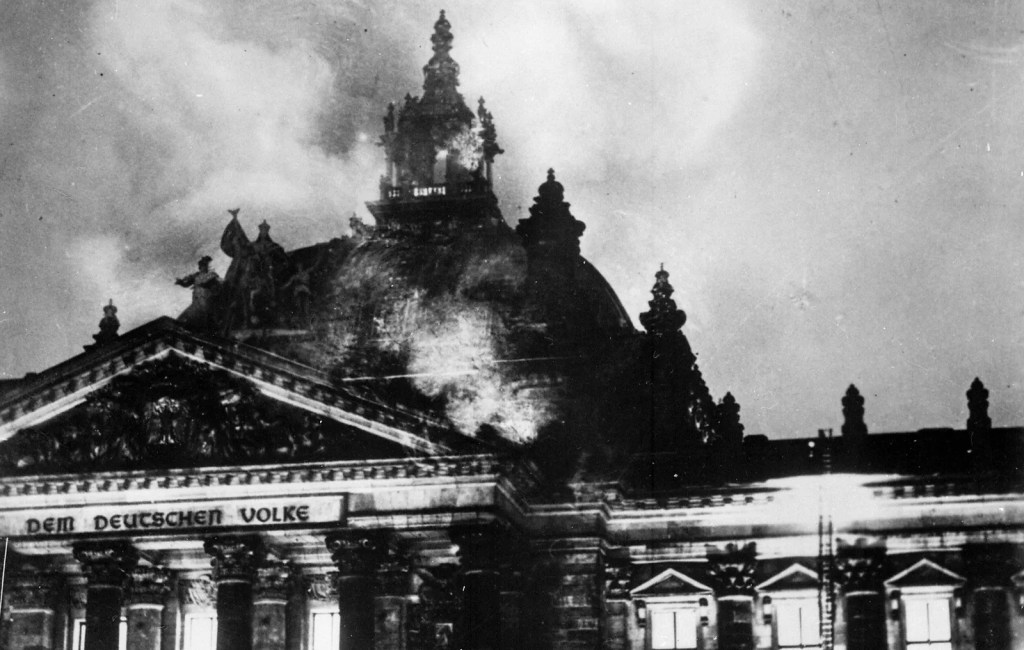


 thekingsnecktie.com