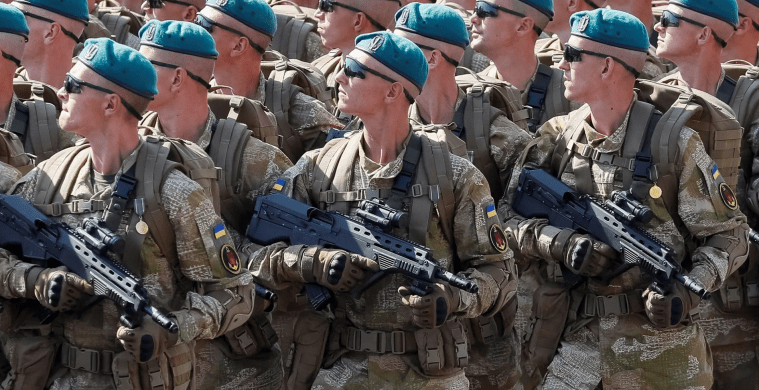
Ukrainegate: A High Crime in Plain Sight

Screen Shot 2019-09-20 at 8.19.27 PM.png

I had a couple of things I intended to write about this week, but then—as has happened repeatedly during the End Times that are the Trump presidency—something absolutely mindboggling happened that blew it all away and could not be ignored.

BLAST FROM THE VERY RECENT PAST

This past June I published an essay here titled The End of Outrage in which I wrote the following:

Uh, didn’t we just spend two excruciating years trying to determine whether Donald Trump, wittingly or otherwise, conspired with a foreign government to help vault him into the White House? And didn’t Donald Trump over the course of those two years swear up and down nearly every waking minute that he never did any such thing, that the mere allegation was a dirty lie by sore losers trying to delegitimize his presidency? And even now does he not continue to howl that there was “No collusion! no collusion! no collusion!”?

That happened, right? I didn’t dream it, did I?

All that only for Trump to go on national television with George Stephanopolous last week and volunteer that, sure, he’d do that, and what’s more, he didn’t see anything wrong with it.

It’s no wonder Emmet Flood wouldn’t let this guy sit down with Bob Mueller.

So to recap: after two years of work, Bob Mueller and the Angry Democrats (one of my favorite rockabilly bands) declined to indict Trump for conspiring with a foreign power, not because he didn’t or there was no evidence—he did and there was—but only because of legal technicalities and the special counsel’s meticulous and narrow interpretation of his remit. It all ended with a whimper not a bang.

Then Trump volunteered to ABC News that, irrespective of the outcome of the Russia investigation, he saw no problem with that sort of behavior. As I also wrote in June:

This of course is the classic evolution of a Trumpian self-defense:

1) I didn’t do it, and how dare you even ask!

2) Well, maybe I did do it, but I never said I didn’t, and anyway it’s not a crime,

And finally,

3) HELL YES, I ORDERED THE CODE RED!

And now, this past week, an even more explosive story broke exposing precisely that same behavior in plain sight.

If Mueller was looking for a smoking gun and failed to find it, Donald Trump just showed up holding a .38 special with a glowing orange muzzle spewing smoke like a Bob Marley joint.

ONE CHICKEN KIEV TO GO

The outlines of this new scandal are by now well known.

Let me be the millionth person to note that it would be hard to imagine a more outrageous abuse of presidential power than blackmailing an ally by withholding taxpayer dollars specifically allocated by Congress in an effort to force that ally to provide (or manufacture, if necessary) kompromat on a political opponent.

And it just got worse from there.

The administration inexplicably involved Attorney General Bill Barr and the Department Formerly Known as Justice, now more correctly described as Trump’s personal law firm and private police force. I say “inexplicably,” but the explanation was self-evident: with cover from the AG and the DFKNAJ, the acting DNI Joseph Maguire declined to obey the whistleblower law and forward the IG complaint to the House Intelligence Committee. At the time of this writing, the White House has yet to comply, or release tapes or transcripts of the phone call in question, thus openly flouting the law.

Which is weird, because they’re really not denying what happened.

Unlike Russiagate, there has been no need to dig for evidence in this case, because it’s all out there in the open. The White House has not denied the basic facts, only—incredibly—that they amount to any wrongdoing. In other words, they have leapfrogged forward to what, in the Russiagate scandal, proved to be a winning strategy: a Nixonian claim that, in effect, it’s not illegal when the president does it. No big whoop, nothing to see here folks, move along.

But Tom Nichols, a professor at the Naval War College and author of The Death of Expertise: The Campaign Against Established Knowledge and Why It Matters, gave the lie to this shameless spin and summarized the situation very neatly:

If this in itself is not impeachable, then the concept has no meaning. Trump’s grubby commandeering of the presidency’s fearsome and nearly uncheckable powers in foreign policy for his own ends is a gross abuse of power and an affront both to our constitutional order and to the integrity of our elections.

There is no spin, no deflection, no alternative theory of the case that can get around the central fact that President Trump reportedly attempted to use his office for his own gain, and that he put the foreign policy and the national security of the United States at risk while doing so. He ignored his duty as the commander in chief by intentionally trying to place an American citizen in jeopardy with a foreign government. He abandoned his obligations to the Constitution by elevating his own interests over the national interest. By comparison, Watergate was a complicated judgment call.

So what we have witnessed over the past few days is the revelation of an absolutely astonishing abuse of power—an undeniably impeachable offense by any definition—all laid out for us on a silver platter. Wow.

The big question now is: will Congress do jackshit about it?

SEE NO EVIL

Let’s start with the Republican reaction.

For now, the GOP leadership is reflexively bleating, “Let’s see what was actually in the transcript of the phone call before we jump to any conclusions.” Fair enough—but also highly ironic, since it’s their leader blocking the release of those transcripts. (Trump himself said, he’d “love to” release them, which is a sure sign that he never will.)

More to the point, no matter what is revealed in those tapes or transcripts, the Republican Party will find a way to excuse it. For a preview, see the reaction of the GOP’s hardcore Kool-Aid brigade—Gaetz, Jordan, Hawley, et al—who are already blathering about a Deep State conspiracy, Democratic sour grapes over 2016, and how Trump was undoubtedly acting on behalf of national interests and not for his own personal gain (sorry—just threw up in my mouth a little). And the mainstream media, with predictable gullibility, is aiding them by treating the thoroughly discredited aspersions about Biden & Son with the same seriousness as Trump’s wrongdoing, presumably in the interest of some faux sense of objectivity, or just because they can’t resist gossip. They ought to be ashamed.

Meanwhile the DNI (sorry—acting DNI) made the absurd argument that the President of the United States is not subject to the whistleblower law because he is not part of the US Intelligence Community…..even though in May 2017, when Trump impulsively and unilaterally handed Top Secret/SCI intelligence to Russian Foreign Minister Sergei Lavrov and Ambassador Sergei Kislyak, the White House claimed it was all fine because Trump was the head of that same Intelligence Community.

Then, of course, there is Rudy Giuliani, who has been scarce of late, but is always reliably trotted out when the White House needs someone to go on television and make the most insane argument humanly imaginable. They just send up the Batshit Signal and Rudy pulls on his cape and tights. So it was that America’s Erstwhile Mayor talked to CNN’s Chris Cuomo, and in the space of fifteen seconds first denied talking to the Ukrainians about Biden, then bragged about it. This in an interview in which he also spread a crazy and long-ago-debunked conspiracy theory about Biden’s corruption involving the Ukraine, and denied that Trump had any knowledge of his communications with Kiev while simultaneously claiming the President was fully looped in. The only thing that didn’t come up were Godfather-based anti-Italian-American slurs.

This is not to say that the White House and its GOP amen corner are keen to have evidence of the Ukraine affair made public. The latter (at least) understands the scope of the transgression, and the stakes, even if they pretend otherwise. But it is much easier to carry on that charade in the absence of transcripts and tape recordings that make the wrongdoing crystal clear and truly undeniable.

The Republican leadership knows full well that Trump has—again—crossed the reddest of red lines, and would in any other era already be on his way out of the Oval Office. Their refusal to admit that and do the right thing bespeaks their shameful (and shameless) and by now well-established valuation of their own power over the principles they claim to hold dear, to say nothing of the well-being of the country. Of this Republican hypocrisy, Tom Nichols writes:

Imagine, for example, if Bill Clinton had called his friend, Russian President Boris Yeltsin, in 1996, and asked him to investigate Bob Dole. Or if George W. Bush had called, say, President Vicente Fox of Mexico in 2004 and asked him—indeed, asked him eight times, according to The Wall Street Journal—to open a case against John Kerry……Is there any doubt that either man would have been put on trial in the Senate, and likely chased from office?

Or as anti-Trump conservative Jennifer Rubin writes in the Washington Post:

I do not expect enough Republicans will vote to remove Trump under any circumstances. Sens. Tom Cotton (R-Ark.), Ted Cruz (R-Tex.), Ben Sasse (R-Neb.) and others have proved time and again that their fear of Trump and his base outweighs any assault on our democracy no matter how devastating. These are hollow little men who find it impossible to put country above partisan loyalty and ambition. They will come up with whatever justification is necessary to avoid crossing Trump, even at the expense of allowing the most egregious “High Crime and Misdemeanor” in our history to go unpunished.

ALL ROADS LEAD TO MOSCOW

Trump himself, of course, is not even that conniving, as he truly does not think there are any lines that he is rightfully bound by. In line with last week’s post, it’s important to remember that at its core this scandal was driven by Trump’s effort to win re-election, a perfect example of the out-of-bounds and even illegal measures I predicted that he would take to achieve that goal.

How brazen is our Insane Clown President? This brazen: even as he denied any wrongdoing, Trump took the occasion of that denial to publicly pressure Ukraine AGAIN, knowing the Kiev was listening as he told the US press, ““It doesn’t matter what I discussed, but I will say this—somebody ought to look into Joe Biden.”

This technique is known as “saying the quiet part out loud.” As the WaPo’s Ashley Parker writes, “The president wears shamelessness as a badge of protection, under the implicit theory that any alleged offenses can’t be that serious if he commits them in full public view.” Not that MAGA Nation or the RNC needs much nudging to defend and excuse anything Trump does.

In fact, what Trump did in Ukrainegate is much much worse than what he did in Russiagate. In the latter case, Candidate Trump solicited and accepted illegal help from hostile foreign actors to help him win the White House, and failed to report offers of that help to the FBI and other authorities. (Oh, and also wantonly obstructed federal investigation into those matters.) In this one, President Trump actively extorted a foreign power to help him undermine a political opponent win an election….and used the massive power of the United States presidency to do so.

In the words of Council on Foreign Relations senior fellow and Never Trump conservative Max Boot, “It is hard to imagine a more glaring example of a “high crime and misdemeanor.”

Of course, the two scandals are really one. Ukraine is at the very center of Russiagate and many of the dirty little episodes associated with it, centering as it does on Putin’s goal of removing US sanctions imposed after his 2014 invasion of Crimea. That in turn was behind the change to the GOP platform regarding Ukraine during the 2016 Republican convention, Junior’s meeting with Natalia Veselnitskaya et al at Trump Tower, Kushner’s proposal of a backchannel with Moscow, and Flynn’s Logan Act-violating phone call, not to mention Paul Manafort’s long entanglement in Ukrainian politics and service to its former strongman Viktor Yanukovich, whose ouster led to the Russian invasion of Crimea in the first place.

NOW IS THE TIME FOR ALL GOOD MEN PEOPLE

And what of the Democrats? In that same Atlantic piece, Nichols writes:

Until now, there was room for reasonable disagreement over impeachment as both a matter of politics and a matter of tactics. The Mueller report revealed despicably unpatriotic behavior by Trump and his minions, but it did not trigger a political judgment with a majority of Americans that it warranted impeachment. The Democrats, for their part, remained unwilling to risk their new majority in Congress on a move destined to fail in a Republican-controlled Senate.

Now, however, we face an entirely new situation….

The Democratic candidates should now unite around a call for an impeachment investigation, not for Biden’s sake, but to protect the sanctity of our elections from a predatory president who has made it clear he will stop at nothing to stay in the White House.

Apparently a groundswell for impeachment is building among Democratic lawmakers, including many who have heretofore been reluctant on the matter. Of equal if not more significance, Nancy Pelosi has now signaled that we have entered a new stage in which she is open to impeachment proceedings, after months of stalling, presumably for fear of jeopardizing her House majority in 2020.

Ironically, the sheer blatantness of this latest scandal may make it easier for Democrats to do what they should have done long ago. Rubin again:

A single article of impeachment based on an incontrovertible abuse of power would make Democrats’ job much easier. The difficultly that at-risk Republicans face in explaining to voters why they countenance such conduct begins to outweigh any downside for Democrats in pursuing impeachment, even if the eventual outcome is acquittal in the Senate.

That is the practical side; there is, of course, also an angle here that concerns pure on principle, as Elizabeth Warren summarized well in a tweet:

After the Mueller report, Congress had a duty to begin impeachment. By failing to act, Congress is complicit in Trump’s latest attempt to solicit foreign interference to aid him in US elections. Do your constitutional duty and impeach the president.

Former Republican Congressman David Jolly of Florida seconded the point:

There’s no equivocating on this, no electoral math to calculate. The President held back foreign aid to a nation he was pressing to investigate his political opponent. Do your job and impeach him, or get out of the way.

In a subsequent tweet, Jolly went on to say:

It’s clear that, for many, this isn’t the breaking point for trust in the President. That’s long broken or never was. This is the breaking point for trust in Congress. Legacies are being forged around this moment.

In other words, a show of Democratic backbone is more essential than ever, because it is very clear that Trump pulled this Ukrainian bullshit because was emboldened by having gotten away with a similar, previous crime, thanks largely to the timidity of House Democrats in pursuing impeachment over the Russia scandal, based on Mueller’s plenty damning report. It’s no coincidence that the fateful July 25 call to newly elected Ukrainian President Volodymyr Zelensky came exactly one day after Mueller’s anticlimactic Congressional testimony put a definitive end to the fantasy that the Special Counsel was going to bring Trump down all by himself.

Philip Rucker, Robert Costa, and Rachael Bade write in the Post:

Trump’s sense of himself as above the law has been reinforced throughout his time in office. As detailed in the Mueller report, he received help from a foreign adversary in 2016 without legal consequence. He sought to thwart the Russia investigation and possibly obstruct justice without consequence. Through the government, he has earned profits for his businesses without consequence. He has blocked Congress’s ability to conduct oversight without consequence. Now he is alleged to have leveraged taxpayer dollars and U.S. military might to extort a foreign government for opposition research on a political opponent, and it is unclear what consequences, if any, he may face.

Greg Sargent, also writing in the Post, puts an even finer point of the negative impact of that precedent:

President Trump and his minions went to great lengths in 2016 to coordinate with a foreign power’s interference in our election on his behalf. Then Trump engaged in extensive corruption and lawlessness to try to prevent it from coming to light…….he basically got away with all of it, thanks to Justice Department regulations that protect a president from indictment, and to extensive help from a handpicked attorney general who subscribes to a theory of presidential power that in effect places presidents above the law.

So why wouldn’t Trump try something very similar a second time around?

Similarly, Charlie Sykes writes in The Bulwark:

Trump thinks that he skated on the Mueller probe and he has watched the fecklessness of congressional Democrats who have repeatedly failed to hold him accountable for much of anything. He also has figured out that he never—as in never—has to worry about his own party showing anything resembling a conscience. He does not belong to the Republican party. The Republican party belongs to him.

So let that be a lesson to us. If we fail to hold Trump accountable this time, and instead let him get away with it yet again on this even more blatant violation of his oath of office, imagine how brazenly he will act going forward! Especially if he manages to win re-election—legally or otherwise—and what few guardrails still remain are then removed.

As William A. Galston, a senior fellow at the Brookings Institution noted, “(Trump) appears to be daring the rest of the political system to stop him—and if it doesn’t, he’ll go further.”

INEVITABILITY

In a September 19th tweet, Trump reacted to the Ukraine allegations by asking, “is anybody dumb enough to believe that I would say something inappropriate with a foreign leader while on such a potentially ‘heavily populated’ call. I would only do what is right anyway, and only do good for the USA!”

Jesus, Don, if you’re gonna put a shotgun in our hands and stand us in front of a barrel of fish, you gotta expect that we’re gonna shoot.

At the risk of stating the blindingly obvious, it’s you whom we know are dumb enough to do exactly that, because you’ve done dumbass shit like that over and over again throughout your presidency. And gotten away with it. Which is precisely the problem.

Weirdly, since Special Counsel Mueller concluded his investigation and closed up shop, Trump has been more unhinged, inflicted more wounds on himself, and exposed himself to more existential jeopardy than ever. It’s almost as if the removal of that antagonist and the disappearance of the overarching threat of Russiagate has left him untethered. It will be very ironic if Trump is brought down by this scandal—not holding my breath, you understand—one in which he committed the exact crimes he miraculously dodged in the Mueller probe. Got a little greedy, I guess.

Way back in June 2017, in one of my earliest posts in this blog, I wrote about the “inevitability of Russiagate.” By that I meant that Donald Trump is such a pathological criminal, con man, and inveterate scumbag that it was inevitable he would eventually do something (or things) that would merit his removal from office. That partisan considerations have thus far precluded that removal does not change the veracity of the argument. And with the Ukraine fiasco, Trump has once again proved my point:

OF COURSE an administration as venal, immoral, self-aggrandizing, and contemptible as Trump’s would be involved in such crimes. It would be more surprising if they were not. This is an administration (and a campaign before that) whose stock-in-trade is lies, greed, xenophobia, racism, divisiveness, and wanton corruption on a scale never before seen in presidential politics, which is saying something. Are we surprised that such people might make secret deals with our enemies to gain power in exchange for favors and fealty to be named later?…..

Of course Trump would do such a shocking thing, and of course he would then try to squash the inquiry into it, and of course the venal and loathsome beast that is the modern Republican Party would stand by him and pretend it’s all OK. But the comeuppance that appears to be on the way (I’m not holding my breath) is, in the end, a matter of karma, if one believes in that sort of thing. Trump is a despicable, poisonous cretin with a long history of immoral, illegal, and unconscionable behavior in both his personal and professional lives. He is jawdroppingly unqualified for the presidency and should never have come within a mile of winning the Oval Office if there was anything resembling justice in this world. But he did. And as the cosmic scales now give signs of righting themselves, he may well get frogmarched out of that office in chains because of that very sort of behavior.

That said, I am not convinced that this scandal will be the one that finally brings Trump down, though of course it should. That would require a level of integrity, patriotism, and principle on the part of a critical mass of Republican politicians that they have consistently shown themselves incapable of mustering. On the contrary: I think the leadership of the contemporary GOP is so craven that it will once again close ranks and stand by Trump to the bitter end, no matter the gymnastics, yogi-like contortions, and general hypocrisy required to do so, to say nothing of disloyalty to the country they claim to serve.

Therefore I would argue that the real significance of this episode will be to take us into an even more fraught and dangerous new phase of our ongoing constitutional crisis, one in which blatant abuse of power and impeachable offenses have been committed in plain sight, abuses to which the White House cops (and even brags), and yet the president’s party refuses to do its duty and act in the national interest as the Constitution demands, and the opposition party refuses to stand up to it.

Max Boot again:

If there were any justice in the world, this would mark a turning point where Democrats find the courage to impeach and Republicans find the decency to stop defending the indefensible. Instead, so far we are getting a rerun of previous scandals characterized by Trump’s brazenness, Republicans’ servility and Democrats’ pusillanimity.

As long as Democrats do not proceed with impeachment—and perhaps even if they do—Trump has made clear that he will continue his all-out assault on the Constitution. And Republicans—who congratulate themselves on their alleged devotion to the Constitution—will not do anything about it except to cheer him on.

In short, we are at a severe crisis point for our republic—even more so than many of the numerous crisis points we have faced thus far. And it bears repeating yet again that, as absolutely stomach-turningly horrific as Donald John Trump is, the real villains here are his enablers and protectors in the Grand Old Party who are happy to simultaneously defend him and hide behind him, all in order to preserve their own anti-democratic chokehold on power.

Where is our Ellliot Richardson, our William Ruckelshaus, when we need them? Who is this new Deep Throat? Will he or she step forward and play the part of John Dean? And if not, what should we the people do about it?

Dithering over impeachment on the grounds of gamesmanship can no longer be condoned. We must demand that Congress acts, and if it does not, we must make our outrage deafening, even if it means getting out in the streets or launching a general strike that brings this country to a grinding halt. If we don’t, we will officially be an autocracy.

I return again to my June 2019 post, The End of Outrage:

I hesitate even to call (his comment to Stephanopolous) a gaffe, because he’s proud of it, but regardless of the uproar or lack thereof that Trump’s latest gaffe prompted, there is no reason to believe that it will deal him lethal political (or criminal) damage, or even mark a tipping point, death-of-a-thousand-cuts-style, that leads to his downfall. Which brings us to the crux of the issue, one that we have been continually returning to over and over in these pages:

A disturbingly large number of Americans—enough to put a chokehold on our representative democracy—simply do not care.

We know that MAGA Nation does not care, nor the GOP’s despicable leadership (if it can be called that). But for those of us who do care, now is the time to show it. The danger that we as a people have become numb to Trump’s daily assaults on the rule of law has never been greater than right now.

The sad reality is that, in the end, the checks and balances within our representative democracy only function properly when our elected officials act in good faith. When a sufficient number of well-placed people are acting in bad faith, the system breaks down. And right now it’s fucking broken.

I’ll give Professor Nichols the last word, because his words were very very good:

(I)f this kind of dangerous, unhinged hijacking of the powers of the presidency is not enough for either the citizens or their elected leaders to demand Trump’s removal, then we no longer have an accountable executive branch, and we might as well just admit that we have chosen to elect a monarch and be done with the illusion of constitutional order in the United States.

********

Photo: Ukrainian troops on parade, by Gleb Garanich/Reuters

Knives to a Gunfight

gunfight-at-the-corral-doing-the-walk1-640x335 copy

Two weeks ago in this blog I wrote about what surely must be the most obvious thing in the world to anyone paying even casual attention: that Donald Trump and the Republican Party intend to fight as dirty as dirty can be in the upcoming election, and use every means, legal and illegal, to win. (See The Fiasco to Come, September 4, 2019). Indeed, I stated bluntly that I do not believe they intend to surrender power in 2020 regardless of the outcome.

This week I’d like to explore that idea in more detail, as it increasingly strikes me as the most urgent danger presented by this toxic greasefire of a presidency.

O LOON OF ALABAMA

First a little context. Bear with me. If Rachel Maddow can spend twenty minutes winding up to her point every night, so can I, dammit.

Last week, in the midst of an epic hurricane threatening several southern states—but not Alabama—we saw Trump spend five days obsessively tweeting in an effort to defend his earlier off-the-cuff claim that it was. It was the worst case of the Streisand Effect I can think of.

The initial error was really no big deal. Once it became clear Alabama was not in the storm’s path, any rational person over the age of three would have known enough to say, “Oh. My bad,” and move on. Not Don. Instead, he characteristically made a circus out of what otherwise would have gone by in a blip.

We then saw the President of the United States take a black Sharpie and crudely, almost comically, alter an (outdated) National Weather Service map to include Alabama in the danger zone. The fact that he did that boggles the mind. The fact that he thought he could show that map to reporters on national television and no one would notice what he’d done is even more astonishing. That he would later respond to a reporter’s question about who wielded that Sharpie by putting on the most unconvincing pokerface ever and bleating “I don’t know, I don’t know, I don’t know” was the stuff of an SNL sketch. (For a guy who lies as readily as he breathes, he sure is bad at it.) It was later revealed that Trump had also ordered Mick Mulvaney (who ordered Wilbur Ross, who ordered the senior leadership of the National Oceanic and Atmospheric Administration, on penalty of being fired) to have NOAA defend his error, which it did—anonymously—even publicly rebuking its own scientists.

Though the episode itself was kind of trivial (unless you live in Alabama and were needlessly afraid for your life), Trump’s insane reaction to it was anything but. The Swiftian spectacle of our Dear Leader at war with the weather and demanding that federal officials bend objective reality to project his eggshell-like ego ought to have sent a chill down the spine of every sentient American.

Sharpiegate was so surreal that it obliterated the memory of the reigning bellylaugh-cum-freak show of the preceding week, which was a fuming Trump canceling a state visit to Denmark at the last minute because he was told he could not buy Greenland…..itself such an Onion-worthy moment that it took some time to fully grasp.

And of course, there were much greater horrors last week:

  • Trump torpedoing months of delicate diplomacy by clumsily inserting himself in the Afghan peace process, first by inviting the Taliban to Camp David on the eve of the anniversary of 9/11, and then disinviting them and likely destroying our best chance for peace in the region…..all for the sake of his ego and a splashy Obama-beating moment in his quest for the Nobel Peace Prize.
  • The revelation that, after Trump’s Oval Office meeting with Lavrov and Kislyak in May 2017, the CIA was so alarmed by his recklessness with classified material, and his possible larger compromise by the Kremlin, that it felt forced to extract from Russia the United States’ top spy inside Putin’s government, a grievous loss to US intelligence gathering capability there.
  • Trump unilaterally taking $3.6 billion from Pentagon construction projects and—in illegal defiance of Congressional authority—re-allocating to his idiotic border fence……and before you say that the Pentagon’s budget is bloated anyway, please note that among those were funds for the US Military Academy at West Point and the Department of Defense School Systems (the latter of which I am a proud graduate and my late mother a former teacher). Prominent among those DODDSS cuts was $62.2 million intended to build a badly needed middle school for children at Ft. Campbell, Kentucky, home of the 101st Airborne Division (Air Assault) and 5th Special Forces Group, two of the key units in ongoing operations in Iraq and Afghanistan. So just to be clear, Trump took a school away from the children of deployed American soldiers, consigning them to remain thirty to a classroom instead, in order to keep putting other even less fortunate children in concentration camps.

Why do I bother to recap all this? Because as terrible as those things were, the Alabama hurricane-that-wasn’t dwarfed them all. Sharpiegate captured the imagination of the American public precisely because it was so blatantly stupid and so perfectly highlights Trump’s lunacy and dangerousness. People could get their heads around it in a way they couldn’t with any of those more substantive outrages noted, or, say, laundering money for Russian oligarchs as part of a broader entanglement with the Kremlin that included complicity in stealing a presidential election. Go figure.

I also submit to you that we ought to recognize it as a terrifying harbinger of what awaits.

Sharpiegate is the ultimate example of Trump’s malignant and infantile stubbornness, his refusal to admit error or defeat, and willingness to go to absurd and terrifying normbreaking lengths (and possibly lawbreaking ones) to achieve his ends. If he went that far over a weather forecast, how far do you think he will go to remain President of the United States, and by extension, avoid the criminal prosecution that awaits him as soon as he is not?

POCKET LININGS PLAYBOOK

Here is my fear. My fear is that while we sit here discussing electability, and which states are red or blue or purple, and whether Biden’s “record player” comment will hurt him in Iowa, and generally treating this like a normal election—a high stakes one, for sure, but still within the bounds of what we have always thought of as an orthodox American presidential contest—Donald Trump and the Republican Party are not approaching it that way at all. They are approaching it like a gang of armed robbers walking into a bank.

They will suppress the vote where it doesn’t favor them. They will create obstacles to voting among demographics they think will go against them, like young people and minorities and immigrant communities. They will interfere with registration efforts, spread disinformation, close polling places and create confusion. (In 2016, Republican efforts to suppress the vote through insidious “voter ID” laws are believed to have cost the Democrats around 200,000 votes Wisconsin alone. Trump won that crucial state by a paltry 22,000.)

They have already tried to manipulate the census, likely knowing it would fail, but still succeeding both in intimidating even legal immigrants from voting and likely in skewing the drawing of congressional districts for the next decade.

They will flood the campaign with dark money, whip up hatred and division, scapegoat and demonize their foes and vulnerable populations, spread lies and “fake news” (while accusing the other side of doing so), and generally put on a master class in demagoguery. With Trump’s shockingly racist behavior of the past few months (shocking even by the already shocking standards of his own racist history), it ought to be clear just how ugly it’s gonna get.

They will cultivate and exploit and surreptitiously cooperate with foreign efforts to interfere in the election on their behalf. Interference by the Russians and other foreign actors has already begun; why shouldn’t it, given the greenlight that the Republican Party has overtly been flashing, through McConnell’s unconscionable blockage of attempts to harden our cyber defenses, and Trump’s public invitation for foreign help?

Once Election Day itself is upon us they will contest vote counts and sow chaos. They will attempt to rig the actual vote when they can. They will try to falsify the numbers so it appears that Trump won in places where he didn’t, and in places where it’s clear that he lost, they will dispute the results. (For a sneak preview, see how Don’s role model Mr. Putin and his United Russia party behaved in the Russian elections earlier this month.)

Trump himself will refuse to accept results that do not declare him the victor. He will call on his supporters to rise up in his defense and reject the legitimacy of a victory by his opponent. He will say the fix was in and that he really won despite what the numbers show, possibly even to the point of precipitating violent insurrection. Hell, if it looks like he’s going to lose he might even try to gin up a national emergency or foreign policy crisis to justify postponing or even suspending the election even before it takes place.

Think he won’t? Think that’s a line even he wouldn’t cross? You have obviously not been paying attention.

And as I wrote last week, if and when he does any or all of these things, I do not for a second believe that Mitch McConnell or any of the other leaders of the Republican Party, or the 5-4 right wing majority on the Supreme Court, will stand up and try to stop him.

Maybe I’m wrong. But can anyone cite an example of even one time in the last three years when those institutions stood up to Donald Trump?

WHEN SOMEONE SHOWS YOU WHO THEY ARE

It’s incredible that we are even contemplating this possibility, one that was utterly unthinkable just a few years ago, the stuff of bad counterfactual science fiction. But here we are.

I have pondered this before. (See Will Trump Leave Office Even If He Loses in 2020?, July 23, 2018.) As far back as the 2016 campaign, Trump suggested that he might not accept the legitimacy of the vote if he were to lose. It was a unprecedented moment in modern US politics and one that ought to have rattled the American public to its core. Indeed, his constant ranting about the election being “rigged”—in pre-emptive anticipation of defeat—was a regular feature of his campaign until it proved unnecessary and he suddenly decided all was perfectly fair. Since then he has repeated the trope again and again. He has mused about running for a third term and “joked’ about being president-for-life like so many of the foreign despots he openly admires. He “joked” about it again just last week at a rally in Fayetteville, NC (a place where I spent many years both as a military dependent and a military officer). He even tweeted out a sign reading TRUMP 2024, again using the fig leaf of “humor” to camouflage an obvious test run of an idea he is clearly keen on.

Ha ha—so hilarious! Incipient authoritarianism and the installation of a hereditary kleptocratic dynasty. LOL!

Don’t misunderstand me. I don’t think Trump will declare a Khmer Rouge-style Year Zero. But I do think he will concoct an excuse that allows him to mount a formidable crusade to stay in office—one that feels more or less justifiable and all-American, if you kinda squint and make your eyes fuzzy and don’t think about it too hard. (And are a fascist.) And I think the GOP will back him up.

For the first two plus years of the raging shitstorm that is the Trump presidency, there was the fantasy that Robert Mueller—or someone or something else—was going to swoop in with such explosive evidence of Trump’s wanton criminality that it would cause a national outcry and force him from office. Arguably such evidence has in fact been presented, almost daily, if not in so dramatic a fashion as we wished. But all these moments have come and gone, with a steady parade of crimes and scandals and the revelation of past sins and the commission of new ones right before our eyes, and none of it has really changed a thing. Because we are dealing with an opposition that is more like a religious cult than a rational political movement.

But all along—and especially now that the delusion of Mueller ex machina has been obliterated—there was always the comforting thought that we live in a representative democracy (sort of), and that another election was coming, painfully slowly perhaps, but inexorably coming nonetheless. If all else failed, we would suffer through four years of this nightmare and then vote the motherfucker out.

I am very worried that that hope to which we have clung, and continue to cling, is going to prove a mirage: not because we will lose the election (though we might, and that will be a bitter pill all its own), but because the Republican Party is going to break every rule in order to win it, or at least successfully claim that it won.

To believe otherwise would be to argue that the GOP is a principled organization dedicated to the integrity of our democracy.

THE TALE OF THE CORNERED RAT

Trump of course has an additional motivator to win a second term besides mere ego and lust for power. As Edward Luce of the Financial Times recently noted, “No other US president has faced the prospect of being re-elected or going to jail.” That exponentially raises the probability of him upending two and a half centuries of peaceful transitions of presidential power and simply refusing to leave office.

In a piece for Slate titled “What Happens If Trump Won’t Step Down?” Dahlia Lithwick notes that folks as diverse as Michael Cohen, Nancy Pelosi and Politico have raised this same disturbing possibility:

(F)or Trump, losing the 2020 election is an existential threat, and he has openly invited foreign interference, while Mitch McConnell refuses to even consider legislation to secure the vote. And even if Trump is truly joking when he tweets that he deserves to be credited two extra years in his existing term, years he believes were lost to the Mueller probe, or riffs on staying on the job long after he’d been term-limited out, the tweets send a dangerous message to his loyalists.

Lithwick goes on to interview one of the most prominent voices warning of this danger: Georgetown law professor Josh Geltzer, formerly Senior Director for Counterterrorism at the National Security Council, deputy legal adviser to the NSC, and counsel to the Assistant Attorney General for National Security. Geltzer dates his concern to a July 24, 2018 tweet in which Trump claimed to be “very concerned that Russia will be fighting very hard to have an impact on the upcoming Election,” opining that the Kremlin “will be pushing very hard for the Democrats.”

Geltzer suggests that Trump was auditioning a new lie—outrageous and absurd though it was—to see how it would fly, which is something he often seems to do:

“This notion that there might be foreign election interference in favor of the Democrats seemed to test Trump’s ability to call into question election results he didn’t like. So, if the Dems won big in a way that embarrassed Trump, he might say the results were inflated—and, at least conceivably, even contest them.”

I’ve heard some say that we have to beat Trump in a landslide to preclude him challenging the results. But does anyone really think that any margin of defeat will prevent him from doing that? He’s going to dig in his heels and cry “foul!” no matter what. Let’s get used to that fact and prepare for it now.

This is especially so with Trump incentivized to the absolute max because he needs to stay in office in order to stay out of prison…..for a second term, and a third, and even beyond, until the Big Macs and Diet Cokes finally kill him, or he can pass the presidency off to Ivanka who will pardon him and figure out a way to avoid state charges as well.

Lest we forget, in 2000 Gore won the nationwide popular vote, as did Hillary in 2016, and for that matter Barack Obama in both 2008 and 2012. In fact, of the last five presidential elections, the Republican candidate has won the popular vote in only one, 2004, when Bush was the incumbent in the midst of a war (that he had started). Yet the Republican candidate took office in three of those five elections, thanks to the antiquated anti-democratic chokehold of the Electoral College. The New York Times recently published a terrifying article explaining that, statistically, Trump may have an even easier path to an Electoral College victory in 2020 than in 2016, while losing the popular vote by an even greater margin.

In that way, Trump promises to make the popular vote even more irrelevant, and maybe the EC too.

Eyeroll all you want about Trump Derangement Syndrome, right wingers, but what evidence is there that Donald Trump is too principled for such behavior, or that it would cause McConnell, Graham, McCarthy, and the rest of the GOP leadership to rebel and rein him in? Go on: I dare you.

THE TALE OF THE GULLIBLE DONKEY

I am very concerned that the Democratic Party is not at all prepared for this fight. Sorry for the firearms imagery of the title of this essay at a time when we continue to be terrorized by mass shootings, chiefly by lonely white nationalist males. (But by all means, let’s deal with the dangers of vaping first!)

But the metaphor is apt.

Imagine we wake up on November 4, 2020 to find Trump declaring victory regardless of the vote. On that day, it will be a bitter pill to look back on how we bickered over debate stage theatrics, and whether Kamala was black enough, and which Democratic candidate was best positioned to peel away disaffected Republican voters in the Midwest. Remember when our main concern was the obstructionism President Hillary Clinton was going to face from a Republican Congress after she won in 2016, and how tough it was going to be to get her legislative agenda enacted, and to get the Senate to confirm her nominees to the Supreme Court? Good times.

As I wrote in this blog two weeks ago, we cannot afford a repeat of the too-polite-by-half Democratic response to the toss-up election in Florida in 2000, in contrast to the bare knuckles tactics that the GOP deployed. The same inappropriately deferential dynamic was in play in our reaction to the disgraceful Republican obstruction of the nomination of Merrick Garland in 2016. Knowing what we know now, the Obama administration should have raised holy hell and found a way to ram him through regardless, even if it meant precipitating a constitutional crisis—which, in retrospect, McConnell had already initiated. I do not mean to Monday morning quarterback. Back then, few people—myself very much included—understood the implications of what was going on. I certainly did not, and not just because we assumed Hillary would win and hardball was not necessary. But I damn sure do now, and we pretend otherwise at our own peril. A slow motion coup has been underway for some time now, and the old rules of decorum and even democracy itself are no longer be in effect.

(Note to Republican readers, if that is not an oxymoron: please don’t launch into your usual schoolyard retort the US is a republic, not a democracy. That tired Fox News talking point is the ultimate bad faith argument. We all understand that what we are discussing is a form of government that derives its mandate from the public, and—theoretically—elects leaders according to the will of the majority in one fashion or another. Everything else is semantics aimed purely at misdirection, distraction, and disinformation. Also, the dictionary definition of “republic” is a representative democracy, so piss off.)

In other words, if you thought 2016 was grim, you ain’t seen nothin’ yet. The sooner we come to terms with this reality and begin making serious preparations for it, the better the odds that we an survive it and prevail. As some dude once said, “Fool me once…..shame on….can’t get fooled again.”

Here’s an idea. Instead of hoping that Mitch McConnell will turn from a poisonous frog into a prince, let’s take the initiative ourselves and make it clear right now that we can see what’s coming and we will not stand for it. No more playing by Marquess of Queensbury rules when the other guys have gone full Gillooly.

If we do not take these possibilities seriously, we will live to regret it. I am certainly not reassured by Geltzer’s suggestion that the best defense against a Trumpian coup is the integrity of GOP leaders:

“We need political leaders—especially Republicans—to make clear, both publicly and privately, that for Trump to contest the valid results of an election would be a redline, and that he’d have zero support from them—indeed, impassioned opposition from them—should he cross it. We need it sooner rather than later, too.” 

Don’t hold your breath.

*********

Photo: L to R, Kirk Douglas, Burt Lancaster, Martin Milner, and DeForest Kelley in Gunfight at the OK Corral (1957)

“The Real Heroes Are Dead”

04HEART1-jumbo

On this, the 18th anniversary of the attacks of 9/11, I’m re-posting a blog entry from two years ago regarding Rick Rescorla, whom I was privileged to know. It was originally published in The King’s Necktie on September 7, 2017 under the title The Voice of the Prophet.

At a time when US policy regarding Afghanistan and global terrorism is in chaos, years of painstaking negations with the Taliban were blown to bits by the president’s ego, the US Air Force is being used to line his pockets, and his administration is trying to finance a “border wall” by taking appropriated funds from overcrowded schools serving children of US soldiers, I can’t think of anything new I can say that would commemorate today’s anniversary better than this.

*********

In November 1965, after what had thus far largely been a counterinsurgency against the guerrillas of the Viet Cong, US troops met North Vietnamese regulars in combat for the first time, amid the scrubby pines near a river in the Central Highlands of Pleiku Province. That place was the Ia Drang valley. In search of the enemy, an infantry battalion of the 1st Cavalry Division (Airmobile) helicoptered into what turned out to be the basecamp of several regiments of the People’s Army of Vietnam, setting off a three day battle in which more than two hundred Americans and well over a thousand Vietnamese lost their lives. The high commands of both sides took away from this fight crucial lessons that guided their respective strategies for the remainder of the war. Sadly for the United States, Washington took away precisely the wrong lesson: that we could win a war of attrition. Ironically, Hanoi agreed and avoided exactly that kind of fight; recognizing that it could not go toe to toe with conventional US forces, for the remainder of the war they almost never did. Yet in April 1975 the North Vietnamese conquered Saigon.

None of which detracted from the bravery of the American soldiers who fought that battle (nor that of their PAVN foe, for that matter), as the valor of a fighting man is wholly distinct from the agenda of the politicians he serves.

WE WERE SOLDIERS

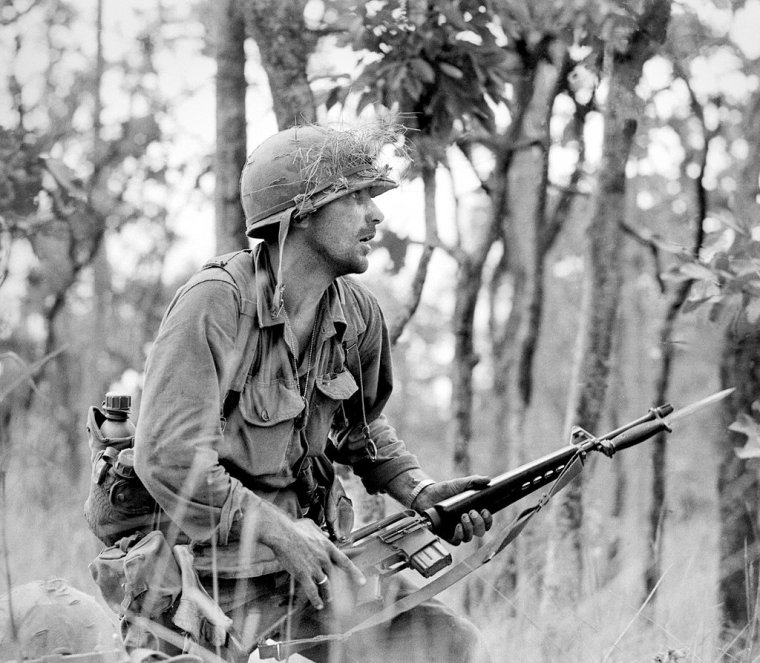
Twenty-seven years after the battle, Lieutenant General (Ret.) Harold Moore—who as a lieutenant colonel had been the American commander in the Ia Drang—and Joseph Galloway—who had been the only journalist present, celebrating his 24th birthday while on the battlefield—published We Were Soldiers Once…and Young, their meticulously researched, decades-in-the-making account of the fight. The book was released to great acclaim, including plaudits from the likes of David Halberstam, Neil Sheehan, David Hackworth, and Norman Schwarzkopf, and became an instant classic of American military history. The mesmerizing photo on the book jacket was of a rifle platoon leader taken on the second morning of the battle, leading his men through the ghostly trees of the river valley. This being so early in the war—1965—he looked more like a GI from World War II than what we would come to picture as Vietnam. Unshaven, haggard from combat, chinstrap dangling, bearing a rifle with bayonet affixed—he could easily have been a statue at front gates of Ft. Bragg, NC—Iron Mike—or the Infantry School at Ft. Benning, GA, embodying its motto, “Follow Me.”

That platoon leader was Lieutenant Rick Rescorla.

In 1998 I filmed interviews with Joe Galloway and Rick Rescorla for a documentary my collaborator Richard Berge and I intended to make about the battle. A true Renaissance man, Rick was a soldier, a lawyer, a security expert, a poet, playwright, wit, raconteur, and bon vivant. Born and raised in Cornwall, England, where he had been outstanding schoolboy rugby player, he joined the British Parachute Regiment at the age of 17 and soon found himself in Cyprus, fighting the separatist insurgency there. He eventually made his way into the colonial police in what was then Northern Rhodesia, then returned to Britain and joined Scotland Yard’s famed Flying Squad of detectives. Upon emigrating to the United States he enlisted in the US Army, where he was quickly chosen for Officer Candidate School at Ft. Benning. After earning his commission he was deployed to Vietnam in 1965 as an infantry platoon leader in B Company, 2nd Battalion 7th Cavalry, which was attached to Hal Moore’s 1/7th Cav for the insertion into Landing Zone X-Ray during the Ia Drang operation. He was not yet a US citizen.

In the Ia Drang Rick’s rifle company bore the brunt of the enemy attack on the second night of the battle, turning the tide for the Americans. It was here that he demonstrated the courage and bravado that were to make him a battlefield legend, belting out Cornish songs in the midst of combat to keep up the morale of his men, and rallying them against odds that rightly terrified lesser mortals. General Moore subsequently called Rick the finest platoon leader he ever saw.

After leaving active duty in 1968 Rick continued to serve in the Army Reserve, eventually retiring as a full colonel. In his civilian life he earned a master’s degree in literature, a law degree, and became a professor of criminal justice at the University of South Carolina. He authored a textbook on criminal justice as well as screenplays on subjects ranging from colonial warfare in Africa to the life of Audie Murphy. He later began working as a security expert, eventually signing on with Morgan Stanley Dean Witter as vice president for corporate security.

Some time in the early ‘90s I had heard Rescorla speak at a reunion of Ia Drang vets. (My father had been the commander of C Company, 1st Battalion 7th Cavalry during the fight.) Big and beefy now in contrast to the wiry lieutenant of 1965, he had the booming voice and charismatic manner of a natural orator and a warrior poet. It was easy to see why he had been such a well-respected troop leader. Contemplating a documentary about the battle, I mentally filed him away as a must-have interview subject. Around 1997 I contacted him and he agreed to be filmed. We arranged to shoot his interview in the MSDW offices in the World Trade Center.

THE LOOMING TOWER

Early on the morning of July 28, 1998, my team of Ferne Pearlstein, Justin Schein, and I pulled up to the WTC in a rented white van full of 16mm motion picture equipment. I was startled at how perfunctory the security was. In the underground garage beneath the towers, we were made to get out of the van and have our photographs taken for visitors’ badges, but that was about it. No one inspected our vehicle, which was packed to the gills with hard shipping crates. Those crates were full of camera gear, but might very well have been full of C4. If there were dogs or chemical sensors to detect explosives, I saw no evidence of them. Not five years before, the very building we were standing beneath had been bombed by terrorists. Yes, there was such a thing as closing the barn door after the cow had escaped….and then there was not even bothering to close the door at all.

We unloaded the van and hauled our gear up to the 44th floor of the South Tower, where Rick’s office was.

I knew that Rick would be a great interview and he did not disappoint. He discussed his background, his role in the Ia Drang, and his views on the nature of warfare in general. Speaking with the impeccable credentials of a bemedaled warrior whose patriotism was beyond reproach, he derided the 1991 Gulf war as an anomaly and a poor model for future conflicts, given the months we had to put forces in place, not to mention terrain tailor-made for big tank battles that played to American strengths. Turning to the broader geopolitical picture, he criticized the American reliance on high technology at the expense of old-fashioned infantry operations, and suggested that US foreign policy had been hampered by ill-considered actions by politicians with little understanding of military affairs or the limits of force as a tool of national interests. He also displayed a searing insight into how anti-American hatred incubates, and how the United States—with the chance to serve as a beacon of liberty and democracy for the rest of the world, or to squander the same—could pre-empt such opposition in the future. Of Vietnam, he said:

I don’t think we should have been deployed there. I don’t agree with the reason we were there, and if we went in, we probably should have gone in on Giap’s side. That’s the way I feel. That nation had no hope of being united under anybody but Vo Nguyen Giap. He was the man who lead the triumph over the French, he was the most honored man, and by us opposing him and thinking we could take puppet generals and back them up with our own American force was the utmost conceit, and it failed miserably. Although we won on the battlefield, (it) was not about the battlefield. It was about the national will. And Giap knew his national will, he was fighting for his homeland. We didn’t know our national will, and quite rightly, the American people—when they got to see for a long period of time that we weren’t going to win the war—said, “Get out.”

It was a remarkably critical, clear-eyed monologue bereft of even a trace of flag-waving. At the end of the interview Rick gave Ferne, our cinematographer, a framed black-and-white photo of the Twin Towers and autographed it on the back.

We packed up and I flew back home to California that same day. The night before, Ferne and I had had our first impromptu “date” and soon began a cross-country romance. A few months later I moved to New York and turned my attention to other projects. The Ia Drang documentary was never finished, as other outlets (including ABC’s “Day One” news magazine) told the story and beat me to the punch. The footage of Rick’s interview went on the shelf where it stayed for the next three years.

FALL IN NEW YORK

Ferne and I moved in together and got engaged, with the wedding set for the end of September 2001. Halfway across the world—in Hamburg and Riyadh—other people had other ideas.

On the morning of September 11th, Ferne and I sat in our Chinatown apartment, reeling at the collapse of the Twin Towers less than a mile away. Thinking of who we knew who might have been caught inside, our minds went to Rick. Over the next several days we learned what had happened, a tale which remains one of the most poignant stories in a day filled with them.

Morgan Stanley was the largest single tenant of the World Trade Center, with over 2700 employees on thirty floors of the South Tower and another thousand in an adjacent building across the plaza. Rick had been its head of security when Islamic militants bombed the WTC in 1993, and was credited with saving the lives of hundreds of employees that day by calmly leading them to safety. (Displaying the same unflappable cool as in Vietnam, he reportedly got the attention of the panicked crowd by jumping up on a desk and threatening to drop his pants.) Characteristically, he was the last man out of the building.

Afterward, he told his bosses that there would be similar attacks in the future, and insisted that the company institute an emergency plan. His superiors had reason to believe him: even before the 1993 bombing Rick had told them—and the Port Authority—that the Twin Towers were woefully lax in security and a ripe target for terrorist attack. He had even identified a truck bombing of the underground garage as the primary threat. So, with the blessing of the Morgan Stanley brass, for the next eight years Rick forced his co-workers to carry out regular evacuation drills. He even wrote to friends that he suspected that the next attack would be by air, probably a cargo plane loaded with chemical or biological weapons. Predictably, the brokers grumbled about their work being interrupted, about the money-making minutes lost, and about the indignity of being treated like schoolchildren. But on the morning of September 11th those drills arguably saved their lives.

Rick Rescorla was not even supposed to be at work that morning, but he had delayed a vacation in order to accommodate one of his deputies. That afternoon, in fact, he was scheduled to testify in a lawsuit that Morgan Stanley had filed against the Port Authority over inadequate security measures surrounding the ‘93 bombing. The following day he was supposed to fly to Italy for his stepdaughter’s wedding.

When the first plane hit the North Tower next door, Rick immediately began evacuating his company’s employees, exactly as they had practiced. He led by example, just as he had done in ’93, and in the Ia Drang valley before that, inspiring confidence with his booming voice and magnetic personality, singing Cornish folk songs to keep spirits up and distract his co-workers from the dangers at hand. When an announcement was made that their building was not at risk and that everyone should return to their offices, Rick prudently ignored the directive and insisted that they continue the evacuation. He then made his way as high as the 72nd floor, accosting dallying workers and other stragglers and hustling them out.

When the second plane hit the South Tower at approximately 9:07 am, most of Morgan Stanley’s employees were already on their way to safety thanks to Rick. He could easily have joined them, as his superiors at corporate headquarters pleaded. Instead he headed back into the building, believing that his job demanded that he continue to help rescue others. Realizing that this decision would likely cost him his life, he phoned his wife Susan to tell her that he loved her. He was last seen in a 10th floor stairwell, calmly but firmly directing the evacuation of those who remained. A photograph snapped by someone on the way out shows Rick wielding a bullhorn, exhorting the employees to keep moving toward the exits, assuring them that “Today is a day to be proud to be an American,” and “Tomorrow the whole world will be talking about you!” That photograph was the last picture of him ever taken, a bookend to the iconic photo of him in the Ia Drang.

It is impossible to know just how many survivors of the September 11th tragedy owe their survival to Rick’s selflessness, foresight, and leadership, but a simple statistic suffices. Of some 3700 Morgan Stanley employees who worked in the World Trade Center complex, all but six escaped the collapse of the buildings. Rick was one of those six. He and two of his deputies were still inside the building looking for stragglers when the tower collapsed. No remains of any of the three were ever located in the massive pulverization of casualties and debris that resulted.

CASSANDRA IN A BUSINESS SUIT

When we interviewed him three years earlier, we did not know that Rick had been diagnosed with prostate cancer, which had gone into remission following treatment. Indeed, he was due to retire just three months after September 11, and planned to devote himself to writing full time. But believing that he might not be long for this earth, he had begun making preparations for his death, a mindset that served him well on that terrible morning. It was a bitter irony that a man who had survived three wars, cancer, and the 1993 bombing should meet his end in this way, but no one who knew Rick was surprised by the heroic actions of the last hours of his life.

When we learned about Rick’s death, I dug out the 16mm rushes of his interview and watched them again. I was astonished. He is dressed in a business suit and sits in someone’s borrowed office on the 44th floor of the South Tower, the better to give us a good background for the shot, facing uptown. Through the large plate glass window behind him we can see the Manhattan skyline, and prominent within it, the city’s second tallest skyscraper, the Empire State Building. He speaks into the camera with confidence and passion. While the first part of the interview covered his personal history and his experience in Vietnam, I had largely forgotten his comments in the second half, which concerned the future of warfare. They now sounded eerily prescient:

When you’re talking about the future wars, we’re talking about engaging in Los Angeles. We’re talking about terrorist actions. Combat in cities, hunting down terrorists—this will be the nature of war in the future, not great battlefields, not great tanks rolling.

Now, they may well be Americans, as we saw in the Oklahoma City bombing. We’re talking about no specific groups, no specific religions. For example, people have blamed the Muslims. The Muslims are honorable people. It’s just small segments of fanatics and terrorists….They can hit us at our weakest point because they choose the time and the place. Terrorist forces can tie up conventional forces; they can bring them to their knees. A good example was in Beirut, the Beirut bombing, and the more recent Saudi bombings. One individual, one fanatic, one man willing to give his life for what he believes….

Watching this interview in mid September 2001, with the smoking hole of Ground Zero still spewing noxious ash into the air of my neighborhood, a chill ran down my spine. Rick even mentioned the possibility of anthrax attacks.

He went on to describe the context in which such terrorism would arise, recalling Eisenhower’s indictment of the military-industrial complex and criticizing American foreign policy for being more about economic self-interest than the values of freedom, democracy, and self-determination to which the United States was supposed to be devoted. Again he indicted the Gulf war for being all about oil, and condemned US involvement in Nicaragua and other places where we were “backing the wrong people” and propping up dictators for the benefit of corporate interests. He further argued that if the US did live up to its professed values, the rest of the world would applaud and follow suit, eliminating much of the anti-Americanism that motivated problematic US military interventions overseas in the first place—a perfect (and perfectly elegant) solution.

For a man with Rick’s history, from Cyprus to Rhodesia to Vietnam to Morgan Stanley, it was a remarkably left-of-center declaration, as well as a prophetic one.

He concluded with these words:

Finally I would say that the residue of hatred this is creating in these foreign countries where we’re doing these things and we don’t think there are any repercussions, those people should think about the World Trade Center bombing and things of this nature. Things will come home to roost—and they may be twenty years later—of cavalier actions that we’re taking now out there. And who is directing these cavalier actions? People in command and control who have never seen a shot fired in anger in their life.…

“THE REAL HEROES ARE DEAD”

As Rick’s story emerged over the days and weeks that followed, it became one of the most repeated tales of that tragic day. (Sometimes it was confused with the similar story of FBI agent John O’Neill, who also predicted a terrorist attack.) Pulitzer Prize-winning author James Stewart published a long profile of Rick in The New Yorker titled “The Real Heroes Are Dead,” taking its name from a remark Rick modestly made about his service in Vietnam. Stewart later expanded the article into a well-received full-length biography called Heart of a Soldier, which itself inspired an opera by the same name—a fittingly dramatic medium for a man whose life and death were so epic in scope. (Another detailed account of Rick’s actions on September 11th is to be found in Out of the Blue by Richard Bernstein of the New York Times.) Further tributes and honors were to follow over the  years, including a scholarship in Rick’s honor sponsored by Morgan Stanley, tributes in his Cornish homeland, and a full-length documentary on British television.

Not long after 9/11, I went to hear General Hal Moore honor Rick at a ceremony at an outdoor amphitheater in northern New Jersey. His speech was majestic, recounting Rick’s life, career, and his heroism in Vietnam as well as on 9/11. “Statues have been erected to lesser men,” Moore marveled, thundering like an Old Testament prophet himself.

From his mouth to God’s ears. Someone noticed that the iconic photograph of Rick on the cover of We Were Soldiers Once….and Young truly did look like a statue waiting to happen, and one modeled upon it was duly commissioned, and installed in front of the Office Candidate School at Ft. Benning, of which Rick now ranked among the foremost graduates.

My 1998 interview with Rick also became part of his legacy. The footage was so jaw-dropping that shortly after 9/11 I cut together an eight-minute short consisting simply of Rick addressing the camera, in jump cuts, with no B-roll or other footage and no editorial comment except a couple of simple cards at the beginning and end. The film, which I called The Voice of the Prophet, quickly found an audience and began a wide run on the film festival circuit, starting with Sundance, Toronto, DoubleTake, Human Rights Watch, and many others. It was shown at the Smithsonian Institution/National Museum of American History and excerpted on CNN, NBC, CBS, and international television around the world. In November 2001 Ferne and I went down to Virginia to attend another reunion of Ia Drang veterans, and showed The Voice of the Prophet at their annual dinner. For his fellow Skytroopers, many of whom hadn’t seen him in years, Rick’s image and voice must have been like a visitation from beyond the grave, to say nothing of his widow Susan, who was also in attendance, and whom we would get to know in the coming years.

Rick’s remarks were met with wide acclaim, although the comment about “things coming home to roost” raised a few hackles at the time. Of course, Rick had made those remarks three years before the attack; he might well have avoided such a loaded phrase in the immediate aftermath. I can safely say that he never would have blamed the United States for 9/11, any more than one would blame the US for Pearl Harbor, or Israel for the 1972 Munich massacre, or loyalist Spain for Guernica. In any case, Rick Rescorla’s patriotism could never ever be in question.

But his point remains valid. Almost two decades later, the “roosting” remark seems less inflammatory than undeniable. It is hardly “blaming the victim” to understand and acknowledge that misbegotten US foreign policy contributed in part to the rise of the violent anti-Americanism from which the 9/11 attackers sprung. That understanding in no way excuses or forgives or justifies their actions, nor eliminates other contributing factors. But it does help us understand those actions, which is crucial if we hope to prevent such enmity and such attacks in the future. To do otherwise is willful ignorance: stubborn, arrogant, head-in-the-sand self-destructiveness that is almost juvenile in nature. Sadly, it is that mentality, rather than Rick’s wiser one born of hard-earned first-person experience, that is currently ascendant. To me, the short film is at once a memorial to the man, a record of his startling foresight, and an eerie call to his countrymen from the beyond the grave, demanding sober self-examination and even-tempered statesmanship in place of arrogant chauvinism.

For those who seek a true understanding of September 11th in hopes of preventing such horrors in the future, few speak with the moral weight of a man whose ashes now lay at Ground Zero—an immigrant to this country, I hasten to note, who gave his very life for it. We throw the word “hero” around very loosely in our culture, but it does not rightly belong to professional athletes, entertainers, or hedge fund billionaires, let alone to draft dodging sociopathic reality TV con artists. It does belong to Rick Rescorla.

Hal Moore was right—statues have been erected to far lesser men.

And Rick was right too. The real heroes are dead.

*******

Photo: Peter Arnett

The Voice of the Prophet on Vimeo

Rick Rescorla Memorial website: http://rickrescorla.com/

The Fiasco to Come

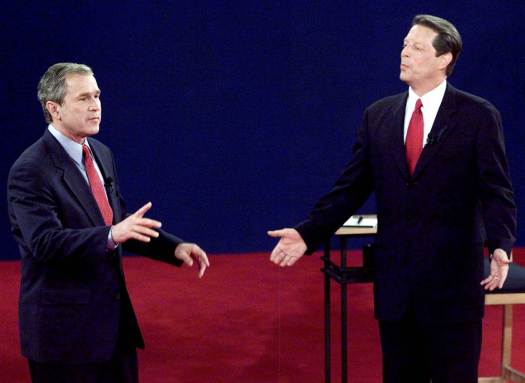
161021-bush_gore-0413_6a2cadb686e27862b813c37c3d63ac18.nbcnews-ux-2880-1000

I am a great fan of the podcaster Leon Neyfakh, whose two seasons of “Slow Burn” for Slate—the first about Watergate, the second about the impeachment of Bill Clinton—were riveting, and even more than that, highly instructive about our present moment. (See Slow Burn Is the Greatest Takedown of the Trump Presidency Yet, April 21, 2018.)

Now podcasting on the new platform Luminary, young Mr. Neyfakh’s latest is called “Fiasco,” and tells the tale of the chaotic 2000 presidential election and its ultimate resolution in the US Supreme Court. Again, Leon has picked a topic that could not be more relevant to the current state of play, all without ever uttering the dreaded name of the current occupant of 1600 Pennsylvania Avenue.

Man, can that boy pick ‘em.

Like his Watergate opus, Neyfakh’s latest offers a dark omen of what might well be to come; I highly recommend a deep dive to savor its pleasures. But at the end of the proverbial day, the core of “Fiasco” comes down to two essential points:

First, that the entire narrative of the 2000 election—the idea that Bush won and Gore was trying to overturn that result—was a fraud. An immensely effective fraud, but a fraud nonetheless.

And second, in the battle to make that fraudulent narrative a reality, the Republican Party brought brass knuckles, machine guns, flamethrowers, and a ferocious determination to win at all costs.

The Democratic Party brought acoustic guitars and a naïve belief in the rule of law.

OK, that’s not quite fair. There were plenty of hardnosed political pros on the Gore side who fought tooth and nail—like the brilliant Ron Klain, a young Jeremy Bash, and the flamboyant David Boies (currently embroiled in a mano a mano battle with Alan Dershowitz in the Jeffrey Epstein case). But there is no denying that time and again, at almost every turn in fact, the Democratic side consistently chose the most moderate, discreet, respectful approach, while the Republican team went balls out, unconcerned about breaking norms or the long term consequences for the country, and with absolutely no shame about being stone cold hypocrites. We all saw how that worked out.

What we didn’t really know was that it was going to be the template for all Republican politics going forward, forever and ever amen. And will be again in 2020.

DOING THE NUMBERS

For those too young to remember, or so old enough that they have begun to forget, here are the broad strokes.

On Election Night 2000, it became clear that Florida’s 25 electoral votes would decide the next President of the United States. Neither candidate could win without them.

Around 8pm Eastern Time, all four of the major broadcast networks called Florida for Gore (including Fox, which was only four years old at the time). The Bush team was distraught—and furious, as the polls were still open in the state’s heavily conservative panhandle, which was in Central Time. Their argument was that this was a hasty and premature conclusion that would tend to influence those who had not yet voted and thus prejudice the true result—a self-fulfilling prophecy. There was also the issue of absentee ballots, which they figured would skew heavily their way.

In short, they wanted all the votes counted before a winner was declared.

The broadcast news unanimity gave the appearance of certitude: all four networks agreed! But that was an illusion. The networks had all made this call based on data from the same company, one they jointly owned (along with CNN) called Voter News Service. It’s true that each network had the freedom to interpret that data as it wished, but it wasn’t four different statistical models saying Gore was going to win: it was only one. And given the competition for eyeballs, there was intense pressure to be first to make a call, far more than there was to get it right.

In fact, Bush was actually slightly ahead at the time the first network called Florida for his rival, but VNS’s model predicted that Gore would overtake him, and the company was very confident in the numbers it was seeing.

But by 10pm the model had shifted, and now showed Bush and Gore neck and neck, prompting all four networks to put Florida back in the “too close to call” column. (Not coincidentally, in the interim, the Bush team had mounted an all-out PR offensive, including TV appearances by the likes of Karl Rove and Newt Gingrich and even an unusual public statement by the candidate himself. But the change was driven by VNS’s algorithm, even if the Republican outcry put on the pressure.)

Here’s where it gets sketchy.

At 2am ET, with 96% of all the votes counted in Florida, VNS showed Bush ahead by a scant 29,000 votes. VNS’s boss, a statistician named Murray Edelman, was advising all the networks that the state remained too close to call, in keeping with a pre-Election Day memo he had circulated cautioning against jumping the gun when the margin was razor thin. Now they were in that precise situation.

But at 2:16am, Fox called Florida for Bush, disregarding Edelman’s warning. Eager to keep up, NBC, CBS, ABC and CNN soon followed suit. The man in charge of the “decision desk” at Fox who made that call was named John Ellis, and he had been in regular contact with the Bush campaign—and family—all night.

Because he was George Bush’s first cousin.

(Ironically, it was later revealed that a data entry error by VNS had mistakenly inflated Bush’s lead by 22,000 votes just before Fox put the state in his column.)

FRAMING THE STORY

Once the networks called the state for Bush, the GOP understandably held onto that claim like a dog with its jaws clamped down on a postal carrier’s femur.

But notwithstanding Ellis’s brazen usurpation of the win on his cousin’s behalf, under Florida law a margin of victory of half of a percentage point or less triggered an automatic statewide recount. Bush’s lead—about which had shrunk to a mere 4600 votes as of 3am—was well within that red zone.

So by dawn’s early light it was clear that there was no definitive winner in Florida, despite what the networks were saying, and what Team Bush was saying, and no way for VNS’s statistical model to accurately project one. The state was a complete tossup, with its 25 winner-take-all electoral votes dangling like hanging chads (we’ll get to that in a moment) as the difference between hearing “Hail to the Chief” and looking for a ghostwriter to pen a bitter memoir of what-might-have-been.

But nonetheless, it became dogma that Bush was the winner and Gore the one disputing the result…..and that was because George Bush’s cousin had established that narrative, and everyone—initially—accepted it.

Even Gore himself bought in. Around 2:30am he had called Bush to concede, and was in his limo on the way to the War Memorial Arena in Nashville to make his concession speech, when frantic staffers called to tell him to stop, because a by-law recount would soon be underway.

Gore called Bush again and “un-conceded” around 3:30 am, but the damage was done and the narrative set. To the right, Gore was a “sore loser” trying to steal an election his opponent had legitimately won. Even the left accepted the premise that Gore was seeking to “overturn” the result. A more aggressive Democratic counterattack might have hammered the idea that Bush was not the winner just because Fox News said so, that that the race remained too close to call, and could be decided only by a full and proper recount.

But once those Republican terms were set and accepted by both sides—once Bush and his team were able to position him as the winner and saddle Gore with the unenviable burden of trying to change the results, in the public mind if not in actual fact—the battle was really over even as it was only beginning.

As far as framing an argument goes, that was a crucial and devastating failure that the Gore team was never able to overcome.

SUNSHINE STATE

The legally-mandated recount was conducted—by machine—within 72 hours, according to Katherine Harris, Florida’s Republican Secretary of State who was in charge of the election, and who would over the course of the affair be vilified for what her critics said was blatant favoritism toward Bush. That recount shrunk Bush’s lead from an already tiny 4600 votes to a microscopic 327 out of six million cast. That difference—5/1000ths of one percent—was so infinitesimal that it led to demands for a hand recount, and raised the very real possibility that a true winner could never be determined.

Bedlam ensued, and supremely weird bedlam at that, befitting the land of Carl Hiassen and Dave Barry.

Continuing with their savvy strategy, Bush’s team cleverly had him continue to act like he had already won. They asked the Clinton White House to allow them to set up a transition office, publicly mused about Cabinet picks, and deployed an army of media surrogates to tut tut on the evening news about what a shame it was that Al Gore wouldn’t just graciously step aside and respect the will of the people. They portrayed any recount or other attempt to question the result—the one that they had unilaterally declared—as at best a nuisance and at worst an affront to our democracy, a would-be coup d’état. In that effort, it didn’t hurt Bush to have Florida’s governor (his brother Jeb) and its Republican Secretary of State (their colleague Katherine) on his side, just as he’d had the head of Fox’s decision desk (his cousin John).

By contrast, concerned with honoring the peaceful transition of power, the Gore team was too cautious and deferential by half, beginning with its aforementioned acceptance of the very premise. Indeed, at nearly every inflection point, the Democrats chose not to fight or to challenge Republican assertions or decisions by state authorities or the courts that did not go their way.

Which was a tragically lost opportunity, because for once the Democratic Party had a simple, ready-for-prime-time message: let every vote count! Ironically, that was what the Republicans had been saying at 8pm on Election Night; now, when it served their purposes, the GOP had done a 180. Seeking to preserve the canard of a Bush win, the Republicans wanted the recount stopped—which is to say, they didn’t want to make sure every vote was properly counted.

When a limited hand recount was ordered nonetheless, the GOP argued for strict, absolute adherence to the rules, which meant discounting ballots that, for instance, were clearly intended for a given candidate but had failed to completely punch through the perforated box: the infamous “dimpled,” “pregnant,” and “hanging chads.” That rigorous standard would have been fine…..except that the Republicans again shamelessly reversed themselves when it helped their cause to do so. When a trove of absentee ballots arrived from US military personnel overseas—ballots that were likely to break heavily for Bush—the GOP furiously demanded that they be counted even though many of them were mismarked, unsigned, or submitted after the deadline: transgressions that they refused to allow in constituencies that were likely to go for Gore. When the Democrats timidly noted the hypocrisy in that stance, the GOP set its collective hair on fire, accusing Gore’s camp of “disrespecting the troops.” The Democrats meekly acquiesced.

As Neyfakh says, the Republicans weren’t afraid of looking like hypocrites: they were afraid of losing.

That’s a scorched earth mentality that has become GOP gospel ever since.

THERE’S A RIOT GOIN’ ON

Then there was the infamous “butterfly ballot.”

The heavily Jewish community of Palm Beach County inexplicably delivered a jawdropping number of votes for the openly anti-Semitic third party candidate (and former Nixon speechwriter) Pat Buchanan. The reason soon became clear. Palm Beach had arranged its ballot in a confusing fashion, with the candidates staggered on two pages, like the wings of a butterfly. It was obvious that many citizens intending to vote for Gore had accidentally voted for Buchanan, as even Buchanan himself acknowledged. In a race as close as Florida’s, that screwup alone might have been enough to tilt the election to Gore.

At one point, as the hand recount continued, Republican operatives organized a group of young conservatives to protest outside the offices where the Palm Beach recount was taking place. Those protestors got rowdy, shouting and banging on windows, badly rattling the three-person team of officials trying to conduct the recount on the other side of the door…. so much so that the next day the county announced that it was abandoning the effort: a huge victory for the GOP and for mob rule. Because of Young Republican / Oxford-shirt-and-khakis look of the mob, it was later dubbed “the Brooks Brothers riot.”

Later, the Republican-controlled Florida legislature suggested that, given the chaos, it ought to just step in and decide the winner, on the straight-faced grounds that if the election were not certified in time, the state’s electoral votes would not be counted at all and its six million voters would go unrepresented. So Florida’s Republican state legislators thought it would be better to throw those votes out themselves and just give the election to Bush.

Similarly, an arcane legal process was considered that might have resulted in Florida delivering two different electoral vote counts, forcing the election to be decided in the US Senate, where the President of the Senate (the sitting Vice President of the United States) would choose whether to award those 25 electoral votes—and thereby the White House—to the Democrat or the Republican.

Under the US Constitution, the man making that call would have been Vice President Al Gore.

Gore, institutionalist that he was, knew that such an action would precipitate national outrage and a cloud over his presidency. Accordingly, he directed his team to abandon the legal strategy that might have led to that situation.

But imagine if it had been Vice President Dick Cheney in that position. Does anyone really believe he would have exercised that same discretion, putting the long term well-being of the republic over personal power and partisan politics? Not in a million years would Heartless Dick have even considered forgoing the chance to seize power just because it would have looked bad.

MARGIN CALL

As noted before, because the margin of victory for either candidate was inevitably going to be smaller than the margin of error—a few hundred votes out of six million—we could not then (nor even now) ever truly know who “won” Florida. In that case, perhaps the best thing would have been to nullify all of its 25 winner-take-all electoral votes. True, that would have denied Floridians a voice in choosing the 43rd president of the United States, as the state legislature claimed to fear. But at least it would have avoided having that voice raised incorrectly (or at least arbitrarily) in favor of the wrong candidate.

That option would, however, have led down an even weirder path.

Discounting Florida would have left Bush with 246 electoral votes and Gore with 267, both shy of the 270 necessary to win. Per the 12th Amendment to the US Constitution, that would have thrown the contest into the US House of Representatives (much as the “double vote” would have thrown it into the Senate). There, the narrow Republican majority in the House would likely have still delivered the election to Bush, but it would have at least been a logical and consistent process.

But none of those surreal scenarios came to pass. Instead, inevitably, the case wound up in the courts, where the issue became whether or not to allow the hand recount to continue. Eventually the question made its way to the highest court on the land, where—surprise!—the five justices named by Republican presidents outvoted their four liberal colleagues and effectively awarded the Presidency of the United States to George W. Bush.

The 5-4 decision was a shameless partisan split, of course, and even worse than it looks.

With their votes, the conservative justices were handing the presidency to Bush, and they knew it. But the progressive justices were not trying to hand it to Gore: they were merely advocating for a full recount to continue (or perhaps restart, this time in a uniform manner). That might have still given Bush the win, or it might have given it to Gore—who knows? That was the whole point of counting.

But the conservative justices were in a rush to conclude the recount, even if that meant stopping it while still in progress. Gee, I wonder why?

This is standard practice for an authoritarian state putting on the charade of a free election: halting the vote count when it looks like the Dear Leader might lose. (For a master class, see Ferdinand Marcos.)

I am not arguing that the United States, or even just the Florida, was a police state in 2000. I am merely saying that the dynamics of one were blatantly in play. By stopping the recount for the most specious of reasons, the conservative justices were allowing the victory to go to the candidate who had simply arbitrarily claimed it, and who just happened to be their preferred man.

COURTING DISASTER

As Leon Neyfakh pointedly notes, notwithstanding the inevitable handful of cynics and dirty tricksters, almost everyone involved in the Florida recount believed then—and still maintains now—that they acted honorably and in the interest of the public good. A prime example is Katherine Harris’s insistence to Neyfakh in a contemporary interview that she actually gave the recount extra time above and beyond what the law required, until he politely confronted her with evidence that she had in fact done quite the opposite, and used the power of her office to curtail the recount when she didn’t have to. Harris was flummoxed, as the idealized false memory of her own partisan behavior was bluntly exposed. Such are the stories we tell ourselves in order to sleep at night.

We can assume that the members of the Rehnquist Court were subject to that same dynamic. For all their wisdom, the justices are human, and here—as in many Court decisions—we see a suspicious pattern of seeking rationalizations for outcomes that favor their respective ideological bents.

Few justices in recent memory have been so consistently culpable on that count as Antonin Scalia. Among the reasons that Scalia cited in blocking the recount—incredibly, but not surprisingly—was the fear that Bush’s win would be tainted as illegitimate even if he were ultimately declared the winner, no matter the importance of a fair reckoning of the vote. (I refer you back to the thought experiment involving Mr. Cheney, faced with those same circumstances.)

That logic presupposed that a recount was unnecessary in the first place. But even from a purely practical point of view it was absurd. How a man so ostensibly brilliant (we are constantly told) could not see that a victory delivered by a 5-4 party line vote in the Supreme Court would also look tainted remains a mystery that would stump Sherlock Holmes. Or perhaps Nino just did not care.

In the years after Bush v. Gore, Scalia was known to blithely respond to criticism of the decision with the words, “Get over it”—a kind of smug, cavalier attitude that bespeaks his contempt for genuine representative democracy. Yeah, get over it, crybaby liberals: it was just the leadership of the Free World being decided! Needless to say, one cannot imagine Scalia taking that laissez faire attitude if his vote had been in the minority and the Court’s decision had ultimately put Gore in the White House. He certainly didn’t meekly keep his trap shut on other issues he was famously passionate about, like the insinuation of religion in public life. (Spoiler alert: he was for it.)

In his dissent, John Paul Stevens wrote: “Although we may never know with complete certainty the identity of the winner of this year’s Presidential election, the identity of the loser is perfectly clear. It is the Nation’s confidence in the judge as an impartial guardian of the rule of law.”

Never were truer words. With Bush v. Gore, the Court’s reputation for being an impartial, honest broker and above politics—never fully deserved over the course of American history, despite the enduring myth and our best hopes—took a severe hit from which it has yet to rebound. Indeed, it has degraded even further since then.

And its biggest test may yet lay ahead, fourteen months from now.

CHRONICLE OF A SHITSHOW FORETOLD

On that point, It hardly needs mentioning the lessons that the 2000 election holds for 2020. Let’s start with the top two:

First, it shows the paramount importance of controlling the narrative—which is to say, spin. The modern Republican Party excels at that, given its inherent lack of principle, win-at-all-costs mentality, and penchant for simplistic but catchy sloganeering, even if the slogans are wantonly dishonest. We cannot again cede them the narrative or the terms of the fight.

Second, it suggests that Republicans will again do anything and everything to win in 2020, legal and illegal, and that we have to be prepared to fight back. I am not trying to engage in hindsight, or cast aspersions on decisions made twenty years ago in a different set of circumstances. But in the current political climate, if we adopt the overcautious, institutionalist approach of the Gore campaign, we will lose and deserve to. For as bad as 2000 was, 2020 is shaping up to be even worse.

Now we have not just a garden variety Republican candidate the way we did twenty years ago, but a brazen criminal pretender to the throne who is already in office and desperate to stay there: a man who ascended to the presidency 34 months ago with the assistance of a hostile foreign power (which he welcomed, and indicated that he will again); who has shown utter contempt for democracy and not only a willingness to trample the rule of law but a gleefulness in doing so; who has openly mused about a third term and even the appeal of being “president-for-life”; who has suggested he might not accept the results of the election if he loses; and who has hinted that his supporters may rise up in violent unrest should he be unseated—a none-too-subtle winking at them to do so.

In light of all that, to NOT anticipate an attempt by Trump to contest or even steal the upcoming election would be foolhardy.

What is to stop him? Let us not forget that the contemporary Republican Party is even more venal and extremist than its turn-of- the-millennium incarnation. Does anyone seriously think that if Donald Trump contests the 2020 vote, or worse, balks at refusing to leave the White House in January 2021, Mitch McConnell will man up, pull out a copy of the Constitution, and march into the Oval Office and tell him he has to do the right thing? (Pause here for hysterical laughter.)

Or will Mitch find some convoluted, transparently dishonest reason to defend that action, one that he will deliver with his usual straight, chinless face? Over the past three years McConnell has made it very clear that he will do everything he can, howlingly hypocritical or not, to maintain and maximize Republican power. I refer you to his recent remark that if a vacancy on the Supreme Court were to emerge in Trump’s last year in office, the Republican majority in the Senate would absolutely confirm and seat his nominee, the precedent of Merrick Garland be damned, exposed for the sham and the travesty we all knew it was from the jump.

So if you are counting on Mitch McConnell to come to the rescue of American democracy should Trump go full Mugabe, you’re living in a fantasy world.

Or perhaps you think the Supreme Court will step in and settle a contested election, force a defeated Trump out, or otherwise maintain order? We’re talking about a highly conservative, Republican-dominated Supreme Court with a 5-4 majority much more right wing than the one in 2000, including two justices named by Trump himself (so far), a Court that has almost always backed this president*, even when he’s done his level best to make it hard for them do so, as with the Muslim ban.

I am unconvinced that the right wing members of this Court will have a sudden attack of integrity.

And even if the Roberts & Co. somehow surprise us all, would Trump care? If he would try to defy the SCOTUS on a census question, do you doubt that the would defy it when his own criminal jeopardy is at stake?

THE BARRICADES ARE CALLING

So let us make no mistake: not only Donald Trump but the entire GOP has no intention of surrendering power in 2020, no matter what happens at the polls. (See Will Trump Ever Leave Office (Even If He Loses in 2020)?July 23, 2018)

Alarmism? Hysteria? Trump Derangement Syndrome? OK, if you say so. But history suggests that alarmism is well advised here, as this administration has consistently proven to be much, much worse than even the most pessimistic predictions. Time and again Republicans have sneered at warnings of how dangerous and destructive Trump might be and how far he might go, repeatedly suggesting that his critics were overwrought Cassandras. But I would remind you that we now have concentration camps on our southern border.

In one sense, these Trump defenders are inadvertently correct, though not in the way they intend. The term “Cassandra” has gone into common usage in complete opposition to its actual meaning, often slung about as an insult to someone making a poor and reckless prediction. But in Greek mythology, the prophetess Cassandra was cursed to be right, but not believed.

So how should we prepare for this potential crisis, one that no living American has ever experienced, and that promises to dwarf the fiasco of 2000?

On that count, the “Brooks Brothers riot” of that election debacle is instructive. When I first heard that story, I was incensed. Could there be a more egregious example of anti-democratic thuggery? But there is another way to look at it. Those Young Republican protestors fully expected to be met by an equally large force of equally passionate Democratic counterprotestors. If they had been, the result might well have been very different. But they weren’t. Yes, their actions amounted to brazen intimidation, but only because no one stepped up to push back. A bevy of loud, adamant Young Democrats defending the Palm Beach recount and shouting down the GOP’s frat boy/Laura Ashley contingent might have encouraged the local officials to keep at it rather than surrendering. So the success of the Brooks Brothers riot is really on Team Gore. If Trump were to try to steal the 2020 election and a rowdy group of young anti-Trump partisans went down to loudly protest outside the place where a recount was taking place, I would applaud them.

I am not advocating that we become hypocrites or trample over the rule of law as the Republican Party of 2000 did……or the Republican Party of 2019 routinely does. But I am saying that we must expect the GOP to behave in that manner (and much worse) no matter what happens on November 3, 2020, and that we need to be prepared to fight back as ferociously as possible within the framework of the law. Where they go outside the law—and do you doubt that they will?—we must be prepared to counter that as well, with legal strategies, with political and public relations offensives, and if necessary, with civil disobedience. I stress the word “civil.”

If we can’t muster the kind of fervor and determination that we didn’t in 2000, we deserve to lose again, even if the other side cheats.

But first we have to beat Trump at the polls—by no means a sure thing. We can’t have a constitutional crisis in which Trump refuses to leave office unless and until he loses in the first place.

We may come to look back on this period of Democratic primaries and routine business-as-usual talk of electoral strategy as the calm before the proverbial storm, an interval of tragic naiveté in which we foolishly thought the customary mechanisms of American representative democracy would operate as we have come to expect (sort of), and that the Democratic candidate could oust Trump in a legitimate, fair election.

But if the events of the past three years have taught is anything—not to mention the twenty years of Gingrichian prologue prior to that—it is that the modern Republican Party is no longer interested in representative democracy, and no longer feels constrained by the rule of law.

I hope that, in retrospect, from the perspective of January 21, 2021, this essay looks absurd. (I’m sure many conservatives think it already does.) I would welcome that ridicule after the fact. But for now, the prudent course of action, to borrow a favorite word of the late George H.W. Bush, would be to assume the worst of the Grand Old Party, and to prepare for a battle that will make the Florida recount of 2000 look like a Fourth of July picnic.

You heard it here first.

Your friend, Cassandra

*********

Photo by Jeff Mitchell, Reuters